Category Archives: Hymenoptera

The Hitch-hiker

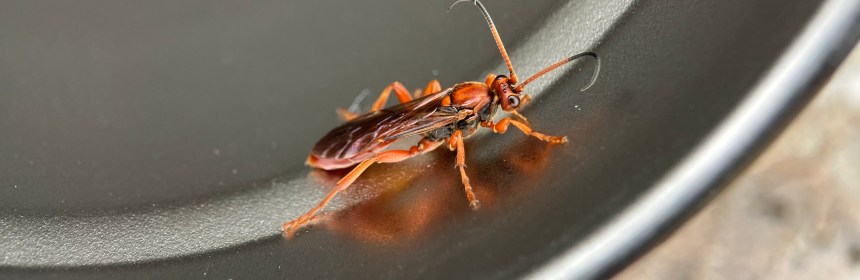
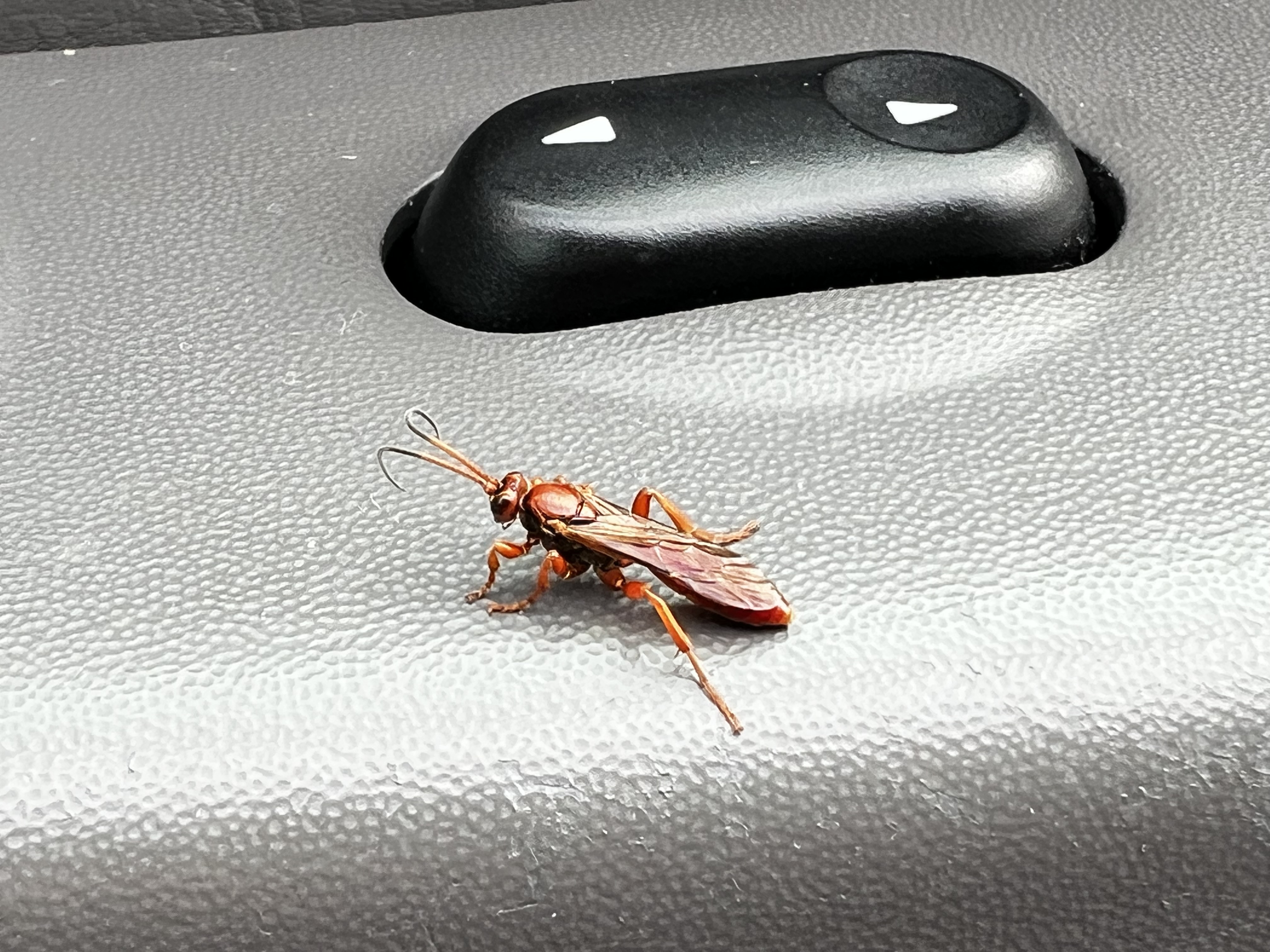
Spilichneumon Wasp at Marketplace in Friday Harbor

Today as I was leaving the store after grocery shopping in Friday Harbor at Marketplace (the store it took me forever to find when I first moved here, and known as the store for the “locals”), I opened the door to my truck and found this cute little red wasp on the door handle. I’m not sure how it got there, but this is one hitch-hiker I had no problem picking up. And, pick it up, I did! I conveniently scooped it to safety in a brand new insulated cup I scored on sale at our local Ace Hardware for $10. It has little bears and forest trees on it. It was also perfect for securing the wasp for our ride back to the house.

When I got home, I left the cup by the door for a bit to unload my groceries, but got my camera afterwards and carried my hitch-hiker over to a stack of alder logs we collected and piled up into a wildlife stack. Those logs are “dead” to most humans, but for all the little critters that were in them when they blew over and broke into chunks, they are FULL of life! One had a perfect knot hole that my wasp targeted right away and will probably stay holed up for the better part of next week since we have rain in the forecast. I wish more people would see dead and dying trees as something of value (other than to chip or burn). They are stores of food for birds, and shelter for many other organisms. Dead and dying trees are often more interesting to me than live ones. You just have to change your perspective and perhaps you will see what I do too!

The wasp critter is in the family Ichneumonidae. It’s in the Genus Spilichneumon, I believe. These wasps hunt and parasitize Noctuid moth caterpillars. They are most excellent pest predators! The female wasp will lay one egg inside each caterpillar she finds and then her egg will hatch and the larva will develop in the caterpillar’s body. That’s THE END of the caterpillar. 🐛

Thanks for reading!
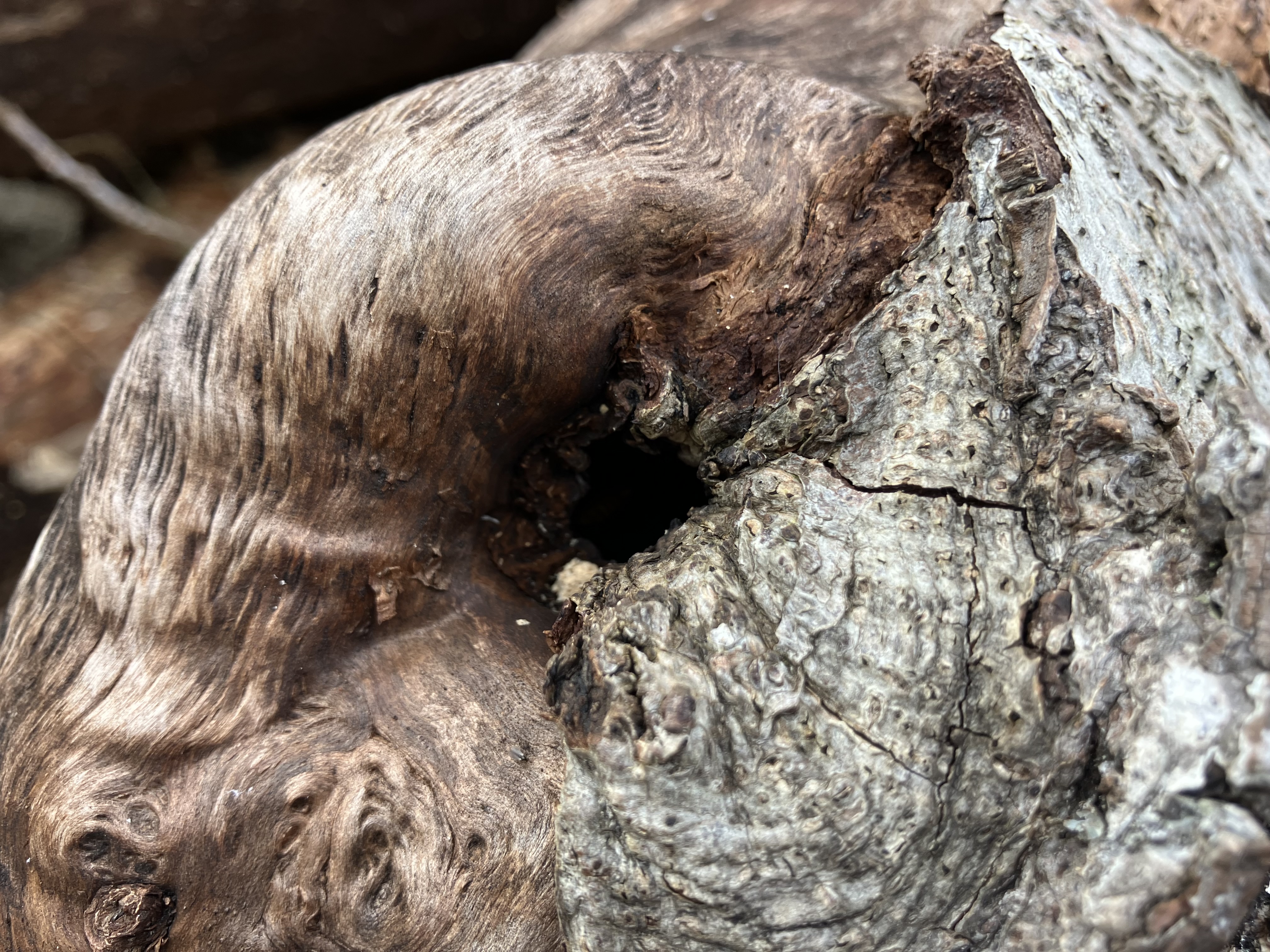
Knothole in tree

If you are curious to learn more, here are two links to get you started. https://bugeric.blogspot.com/2012/03/wasp-wednesday-spilichneumon.html and https://bugguide.net/node/view/444129

Dolerus sp. Sawfly

I found another species of Sawfly in our above ground pool today. This one is entirely black. Size is approximately 7-8mm. This looks to be in the genus Dolerus. From what I’ve found about host plants, it looks like the larvae feed on most grasses and horsetail. Females deposit eggs into the plant tissue where they hatch and the larvae will feed for approximately one month before exiting and pupating overwinter in the surrounding soil. There is one generation (univoltine) per year and adults emerge in early spring. Adults are recorded as feeding on tree sap from Maple (Acer), Apple (Malus), and Pear (Pyrus). They also take nectar from Willow (Salix) flowers, and from Cherry and Plum (Prunus) flowers. This means they do provide some pollination activity.

Looks like WWU Biology Department is working on a web page for Sawfly identification, but it’s not up and running yet. You can find their link below and bookmark it to check out at a later date.

Dolerus sp. Sawfly
Dolerus sp. Sawfly – San Juan Island, WA 03.29.2022
Dolerus Sawfly – Specimen #2

References and Further Reading

Baine Q, Looney C (2019) Plant associations for three sawfly species (Hymenoptera, Tenthredinidae) in the Pacific Northwest. Journal of Hymenoptera Research 74: 27–33. https://doi.org/10.3897/jhr.74.46795

bugguide.net https://bugguide.net/node/view/13561

Looney C, Smith DR, Collman SJ, Langor DW, Peterson MA (2016) Sawflies (Hymenoptera, Symphyta) newly recorded from Washington State. Journal of Hymenoptera Research 49: 129–159. doi: 10.3897/JHR.49.7104

Sawfly GenUS https://idtools.org/id/sawfly/factsheet.php?name=17498

WWU Biology PNW Sawflies http://pnwsawflies.biol.wwu.edu/accounts/login/

Second Post in the Series: “NOT A MURDERER! JUST BECAUSE WE WEAR STRIPES, WE DIDN’T ESCAPE FROM PRISON AND WE AREN’T OUT TO KILL YOU!” I’m not BAAAAd, I’m A Wool Carder BEE 🐝

Meet Woolly Wool Carder. Woolly gets a bad rep because Woolly LOOKS like a Yellowjacket Wasp. All Woolly wants to do is find that patch of Lambswool in your garden or flower bed and take enough to make a nice cozy bed for its babies.

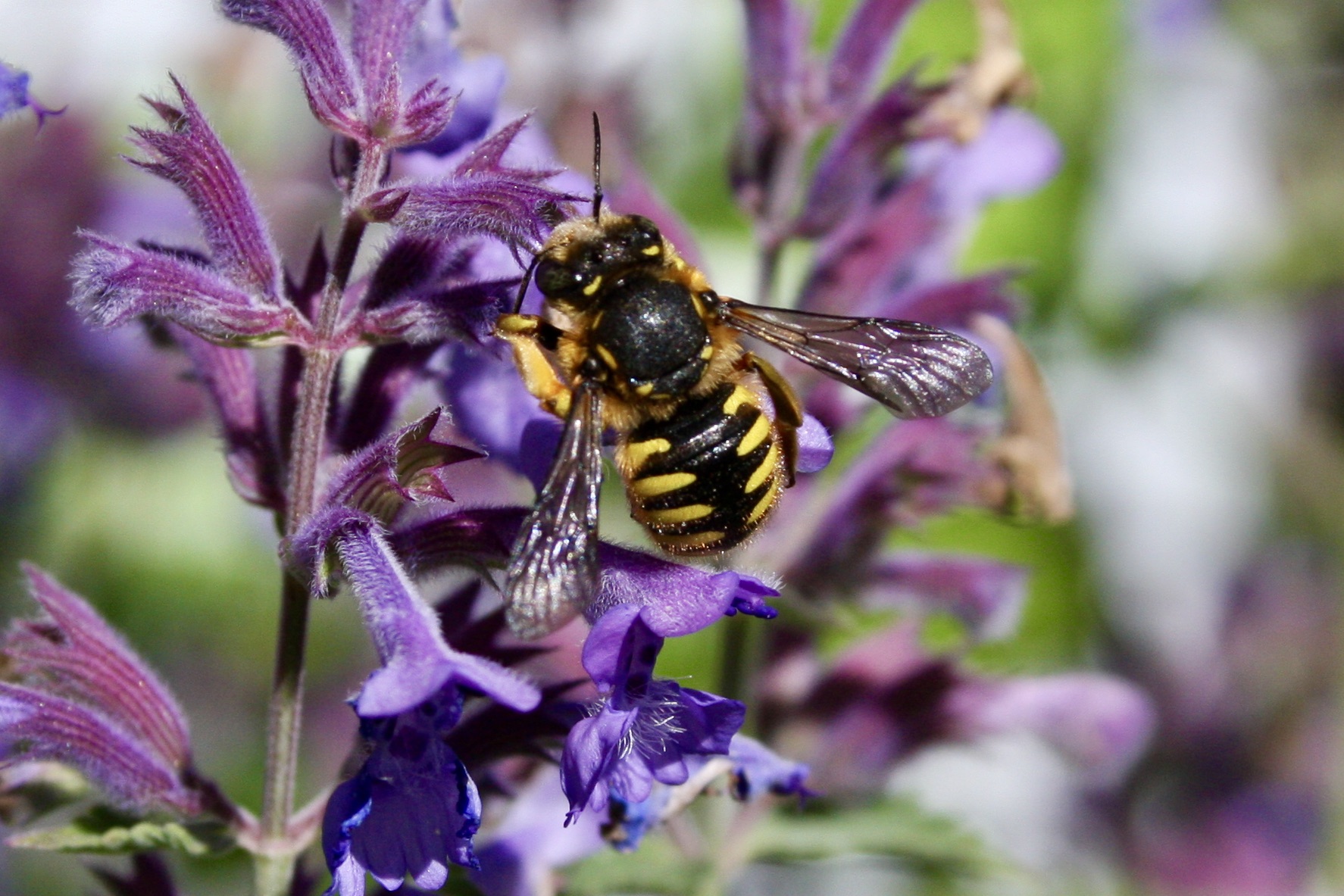
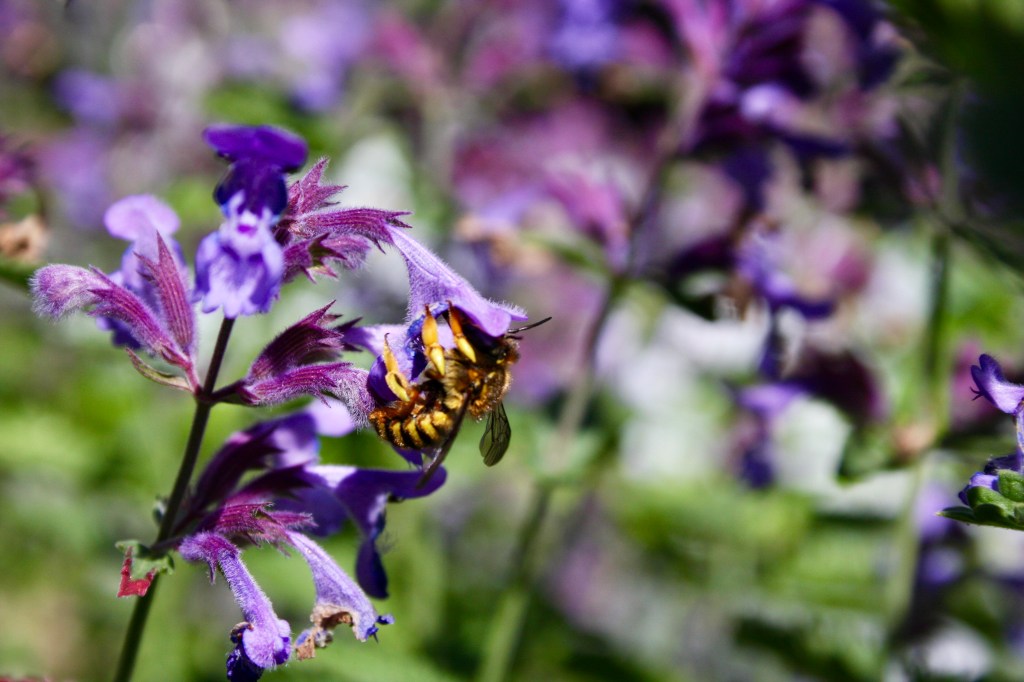
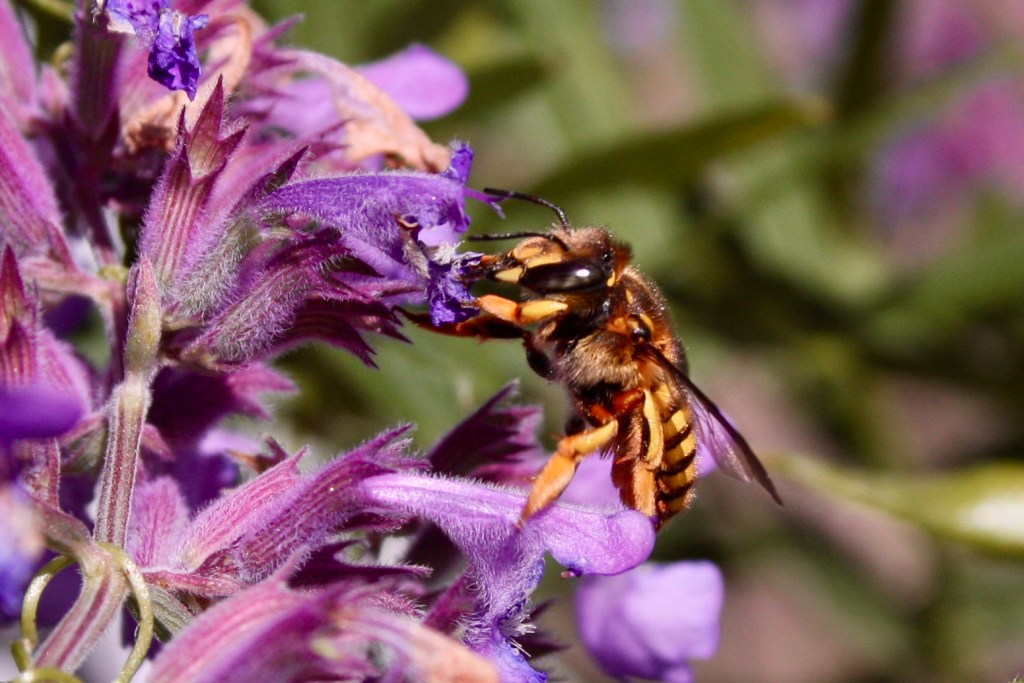
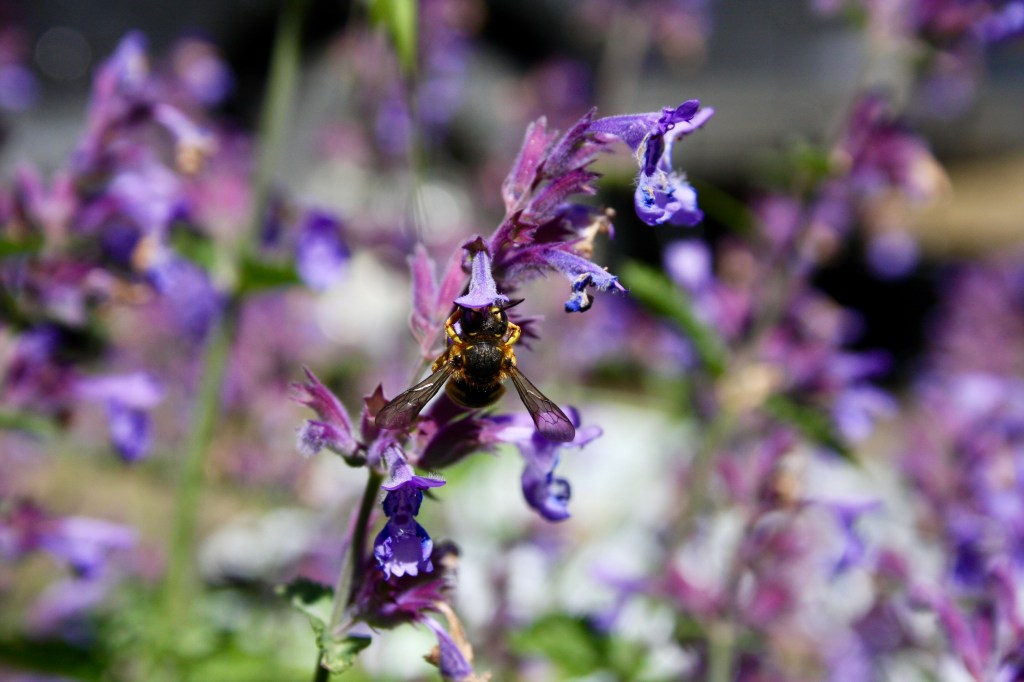
Wool Carder Bee (Anthidium manicatum) on Nepeta spp. (Catmint)

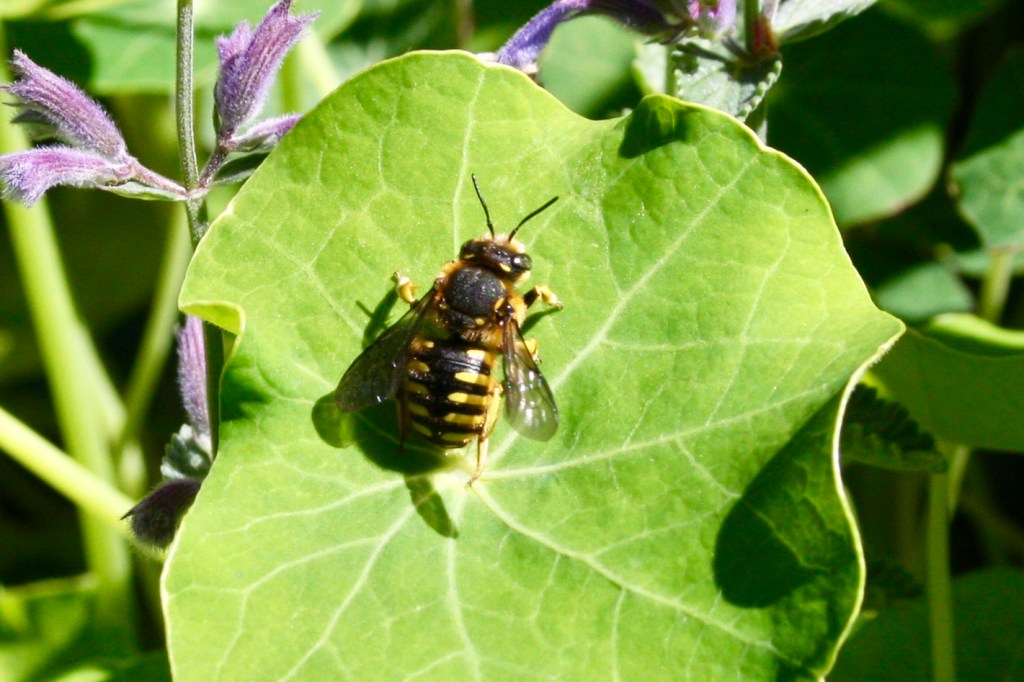
The European Wool Carder Bee (Anthidium manicatum) at first glance, looks like a somewhat chubby Yellowjacket. While these stouter and hairy-bodied bees mimic the barbed stingers everyone wants to avoid, they aren’t going to harm you at all. They don’t even have stingers, though the males do have some spines at the end of their abdomen they can use defensively against other flying insects that might be perceived as a threat to their food source or territory.

Wool Carders are smaller than most Yellowjackets. They are about the size of honey bees or between 11 and 17 mm. They are very brightly colored with yellow and black markings, but again, the distinguishing features to differentiate them from Yellowjackets are 1) they’re hairy and 2) they’re stout!

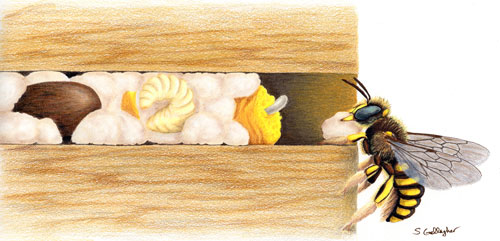
Other than sipping nectar from flowers, these solitary, cavity nesters are all about finding wool to make a cozy bed for their babies. Actually, aside from the uhm…deed, the female is the one doing all the provisioning for a nest. She will card “wool,” using her mandibles to scrape bits of trichomes (or hairs) from lambs ears or other fuzzy plants (especially those in the mint family) to make a cushioned bed on which to lay her egg. Each egg is provisioned with enough nectar and pollen to supply the developing larva with nutrients to reach pupation.

Wool Carder Bee nest – Illustration by Samantha Gallagher, University of Florida

The European Wool Carder Bee is native to Europe, Northern Africa, and Western Asia, but has become cosmopolitan in distribution. While non-native, it has become widely adapted to various habitats in North America. These bees are not dangerous to humans or pets. They are effective pollinators, but sometimes outcompete native bees for resources.

Human or Pet Risk factor NONE

References and Additional Reading:

  1. Species Anthidium manicatum – European Woolcarder http://Species Anthidium manicatum – European Woolcarder

2. Featured Creatures http://entnemdept.ufl.edu/creatures/MISC/BEES/Anthidium_manicatum.html

3. Campion, A. European Wool Carder Bees: Likable Bullies The World’s Best Gardening Blog

4. Bumblebee Conservation Trust Wool carder bee (Anthidium manicatum) https://www.bumblebeeconservation.org/woolcarderbee/