Category Archives: Uncategorized

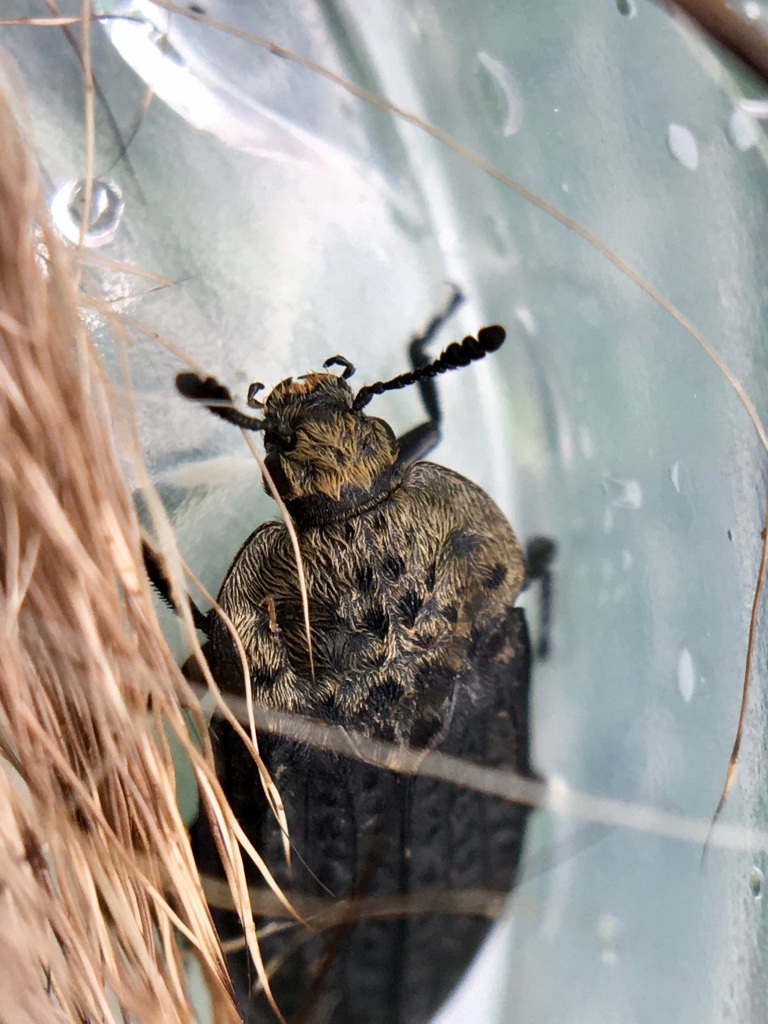
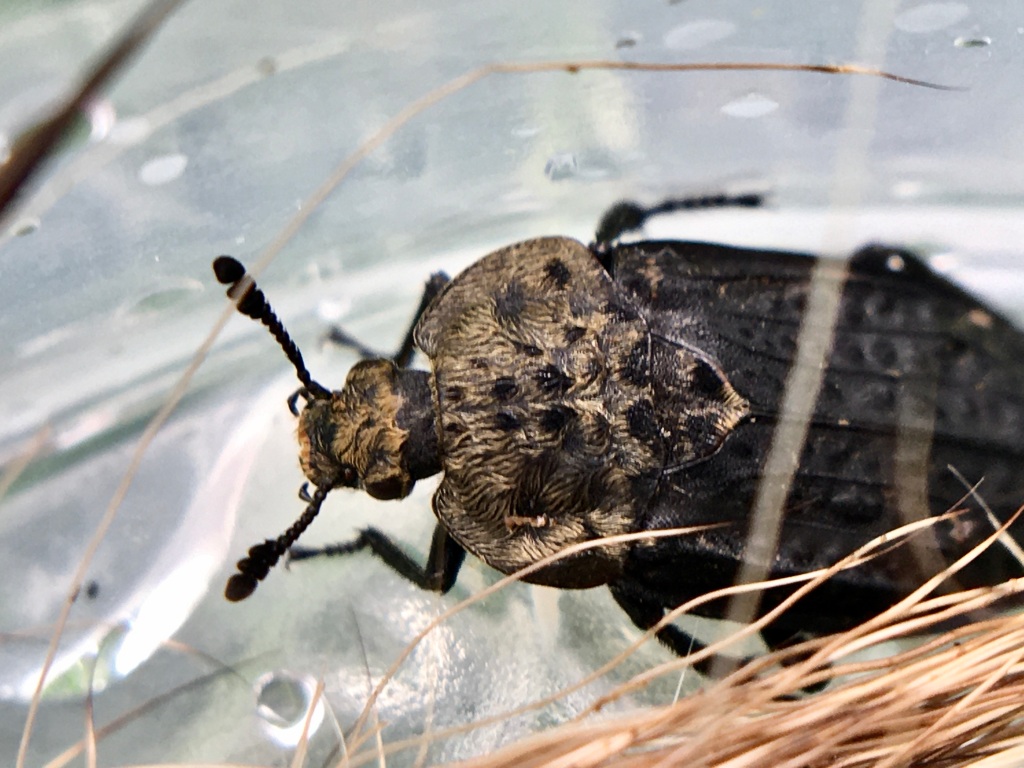
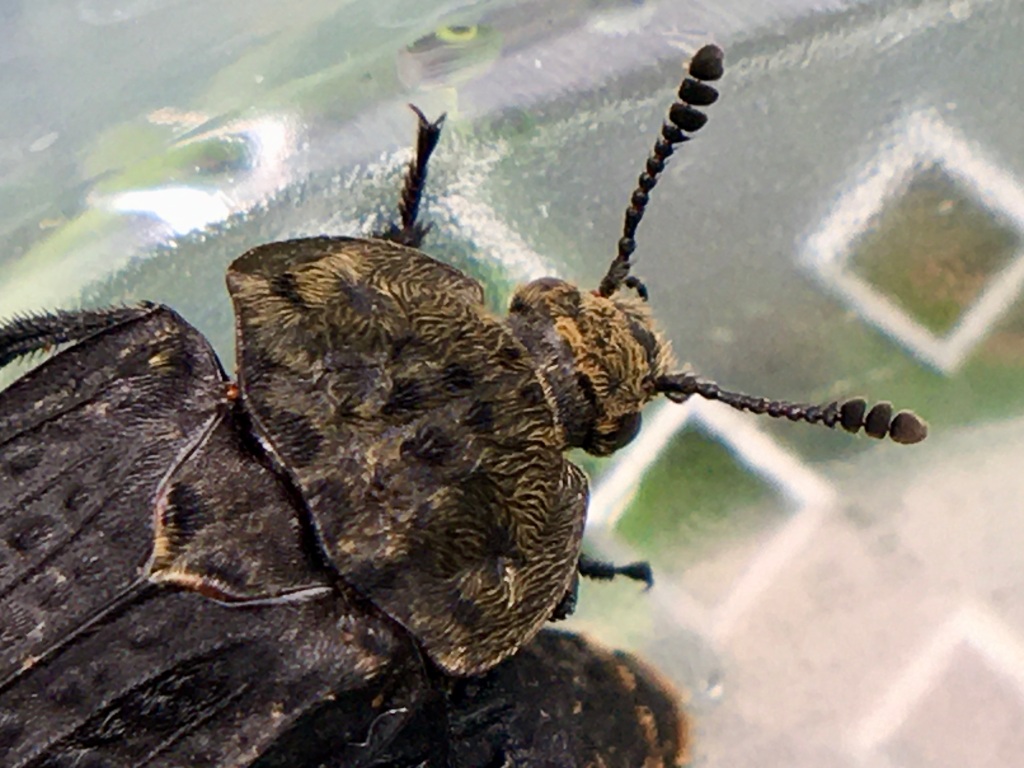
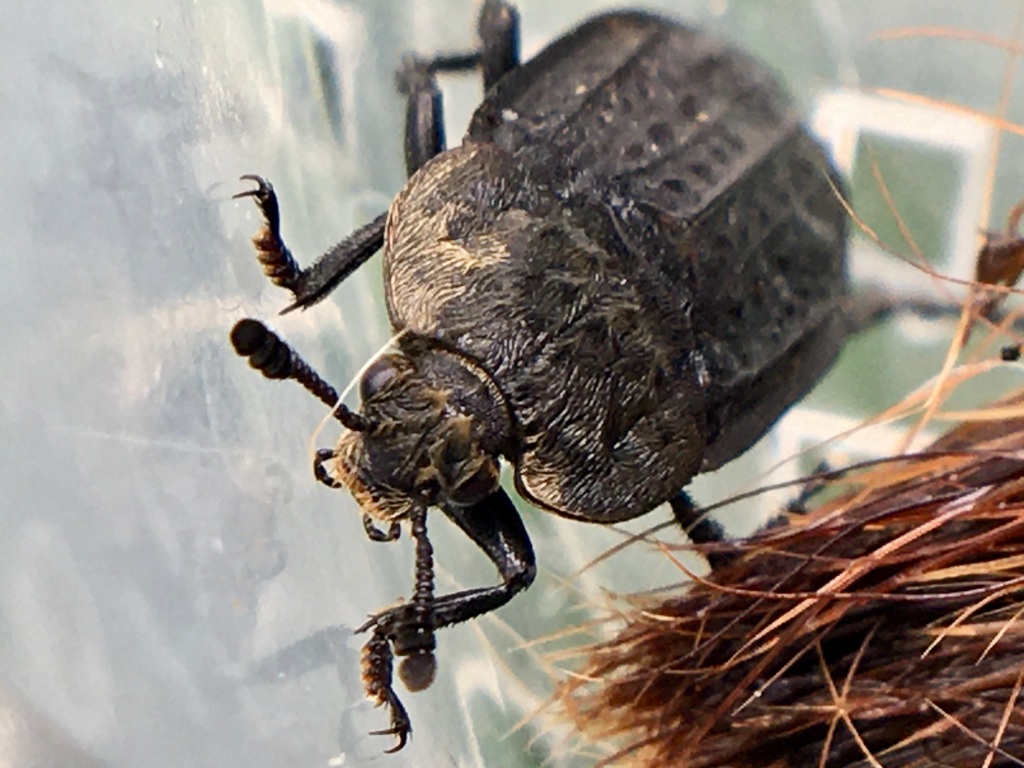
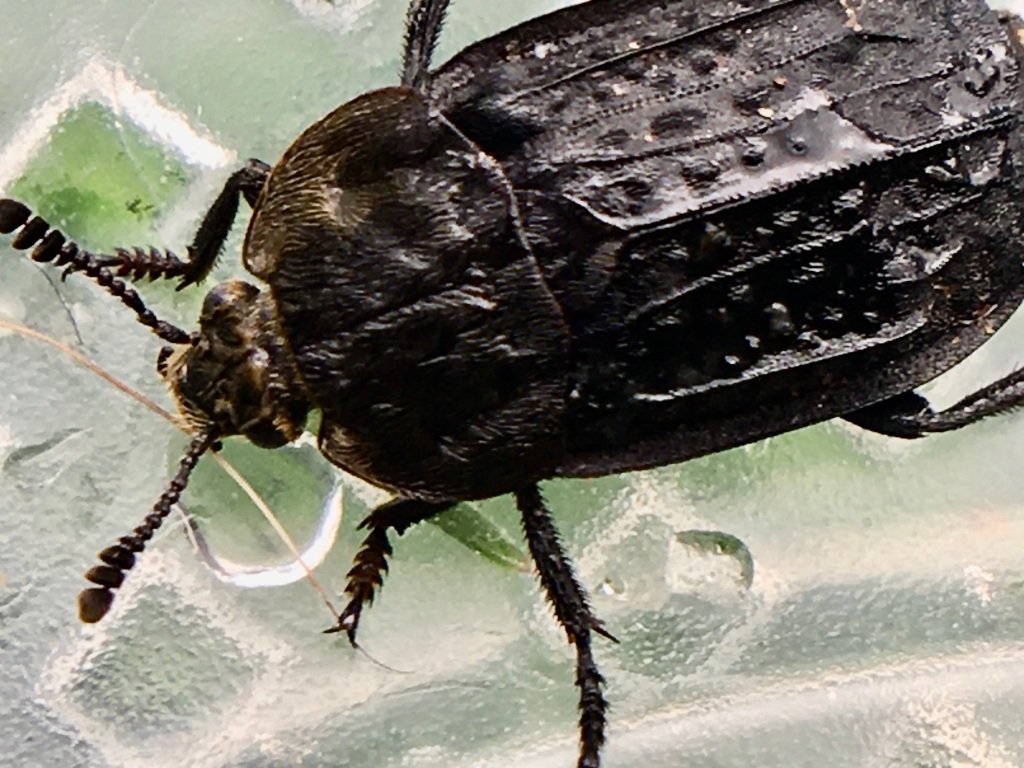
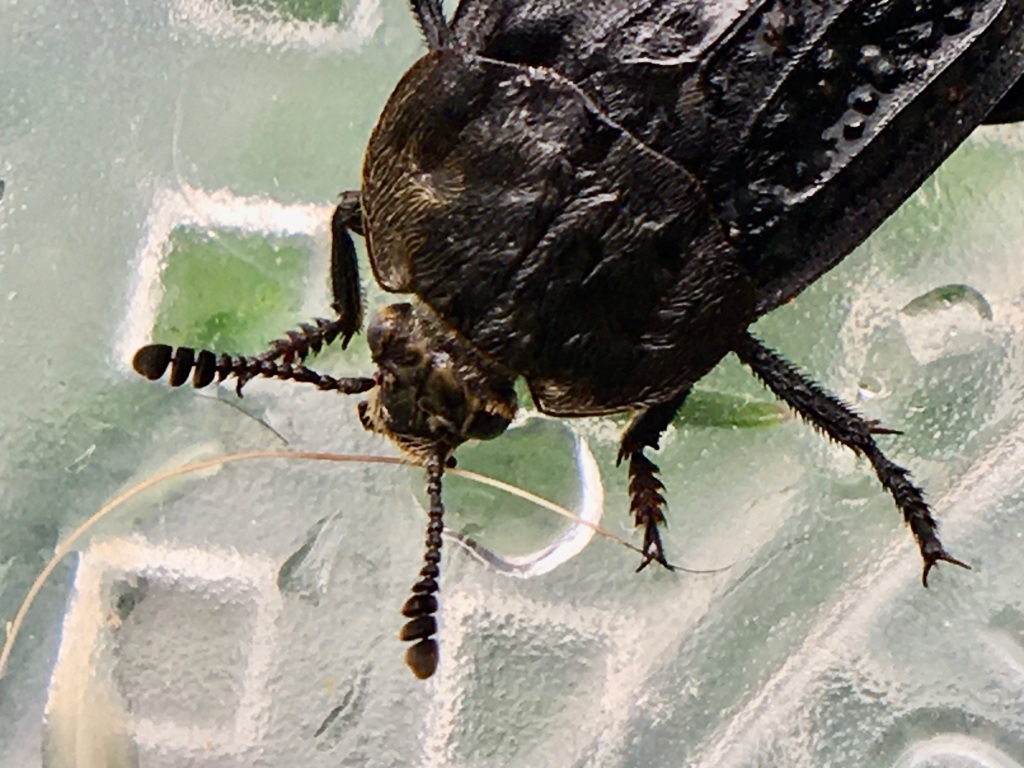
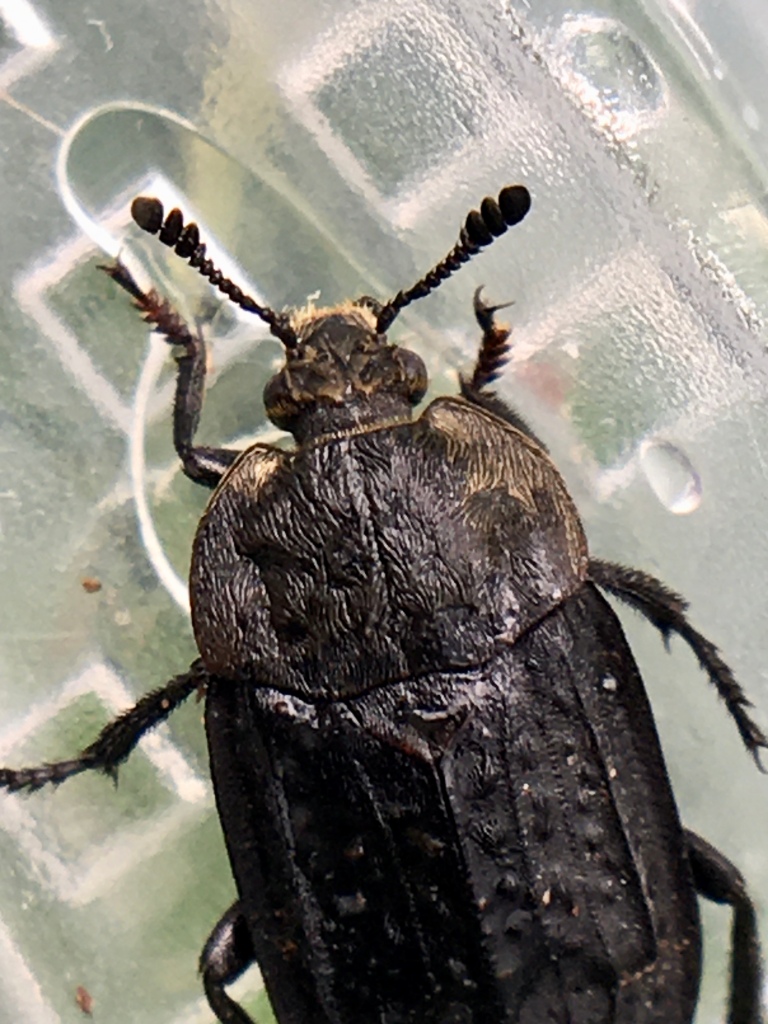
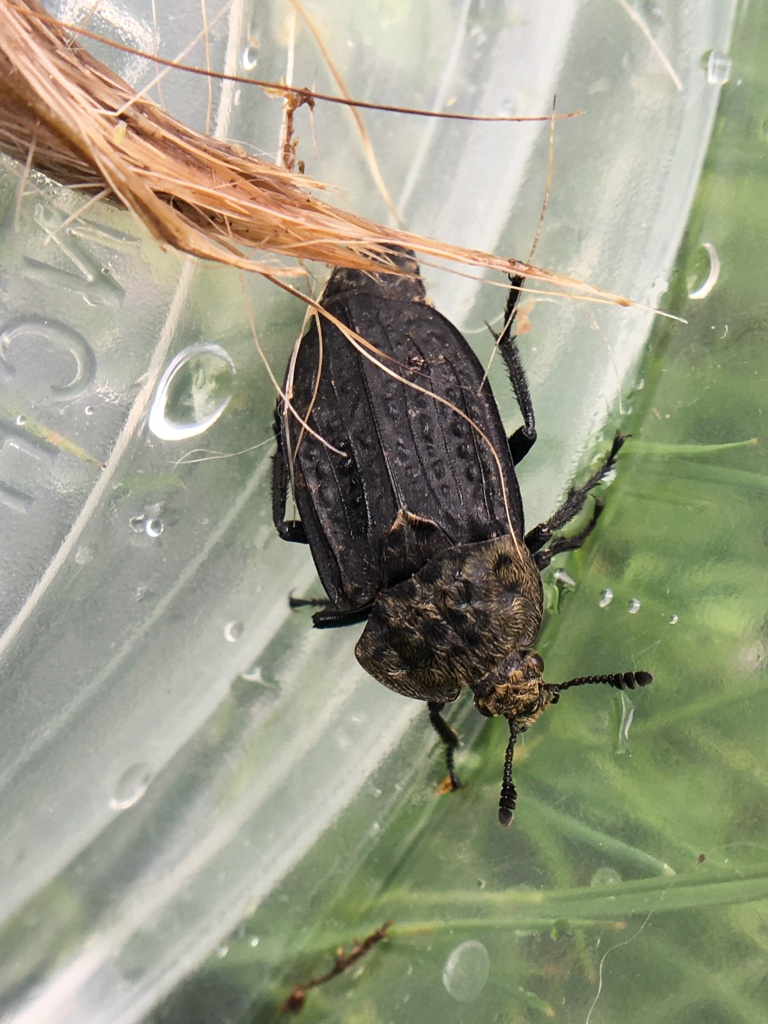
Northern Carrion Beetle – Thanatophilus lapponicus

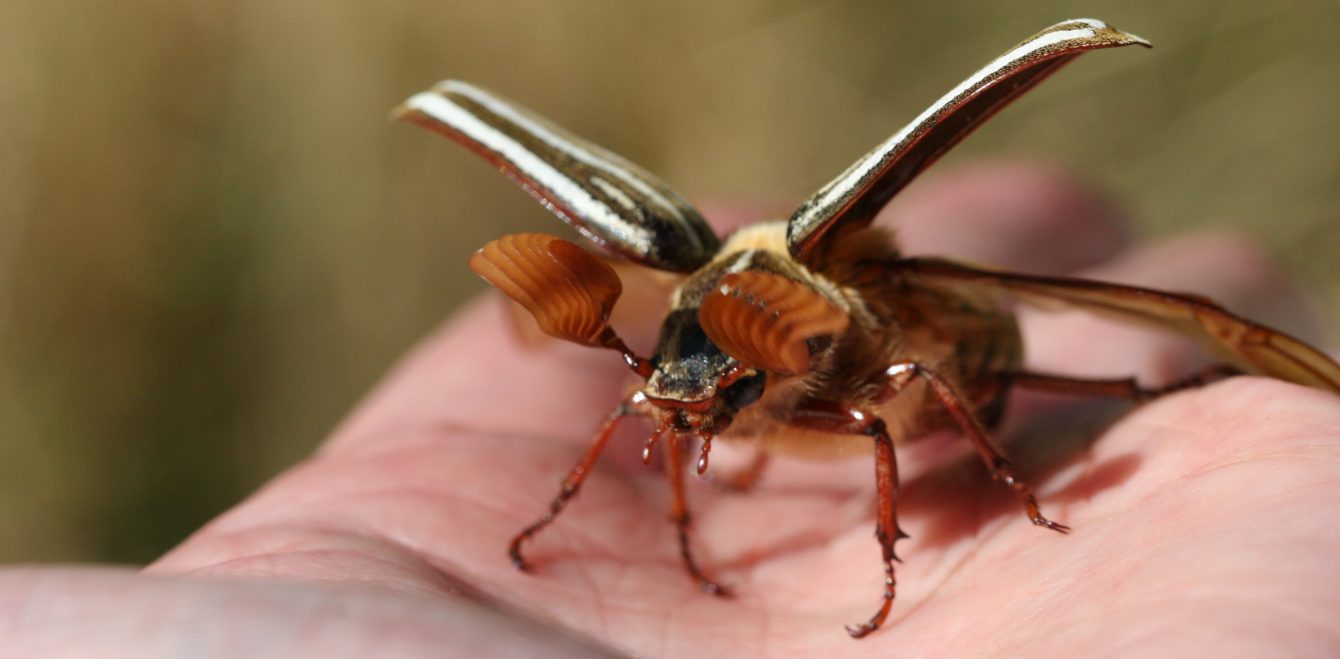
This is a Northern Carrion Beetle – Thanatophilus lapponicus, one of the carrion beetles in the family Silphidae. The origin of the name Thanatophilus is from Greek thanatos (θανατος)- “death” + philos (φιλος)- “loving, liking” (Bugguide.net, 2003-2021).

Northern Carrion Beetle (Thanatophilus lapponicus)

Death is part of a biological process that can be unsettling for many of us. That said, death makes way for new life. This past February, a small fawn died on our property.
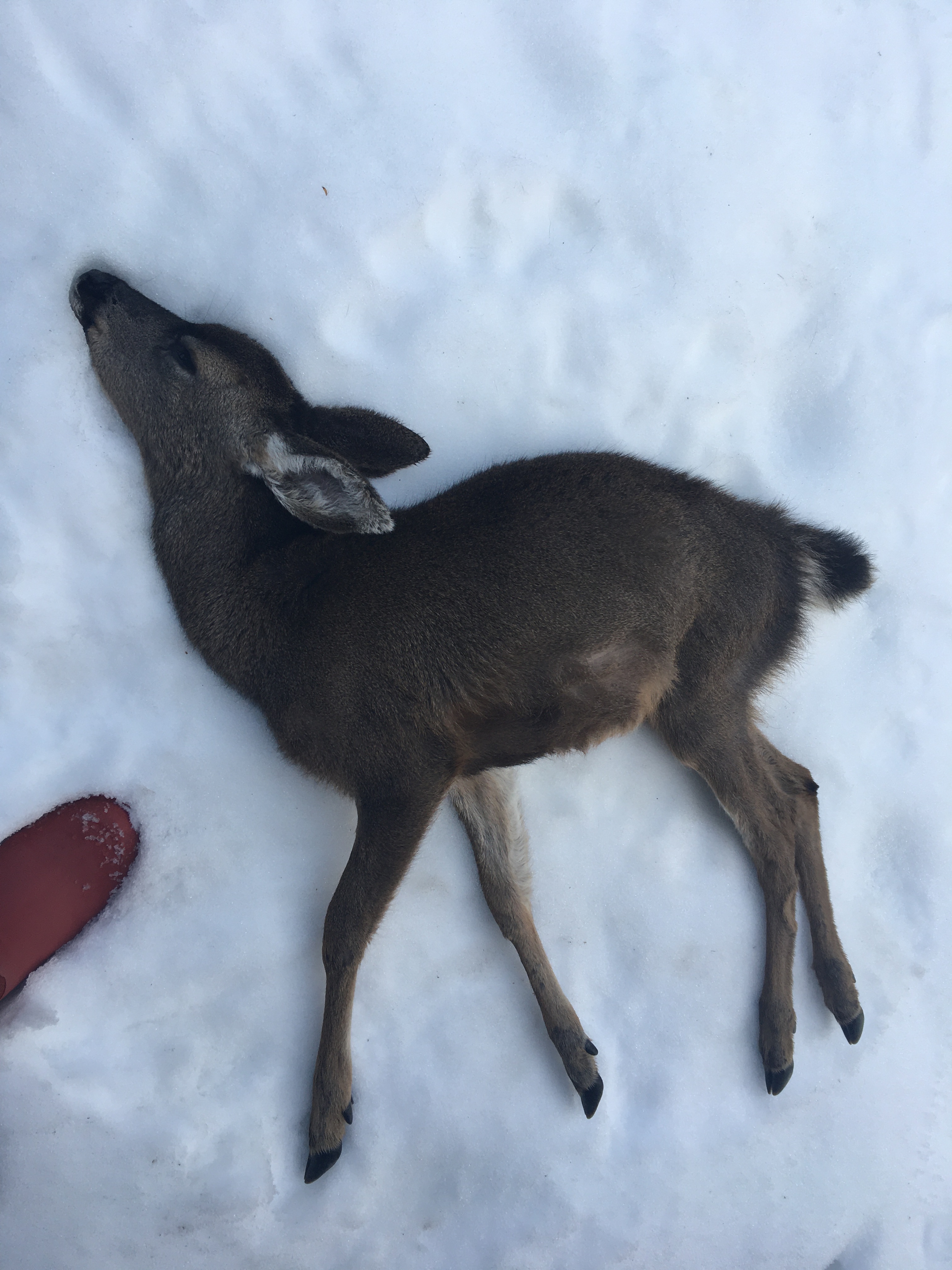
February 17, 2021

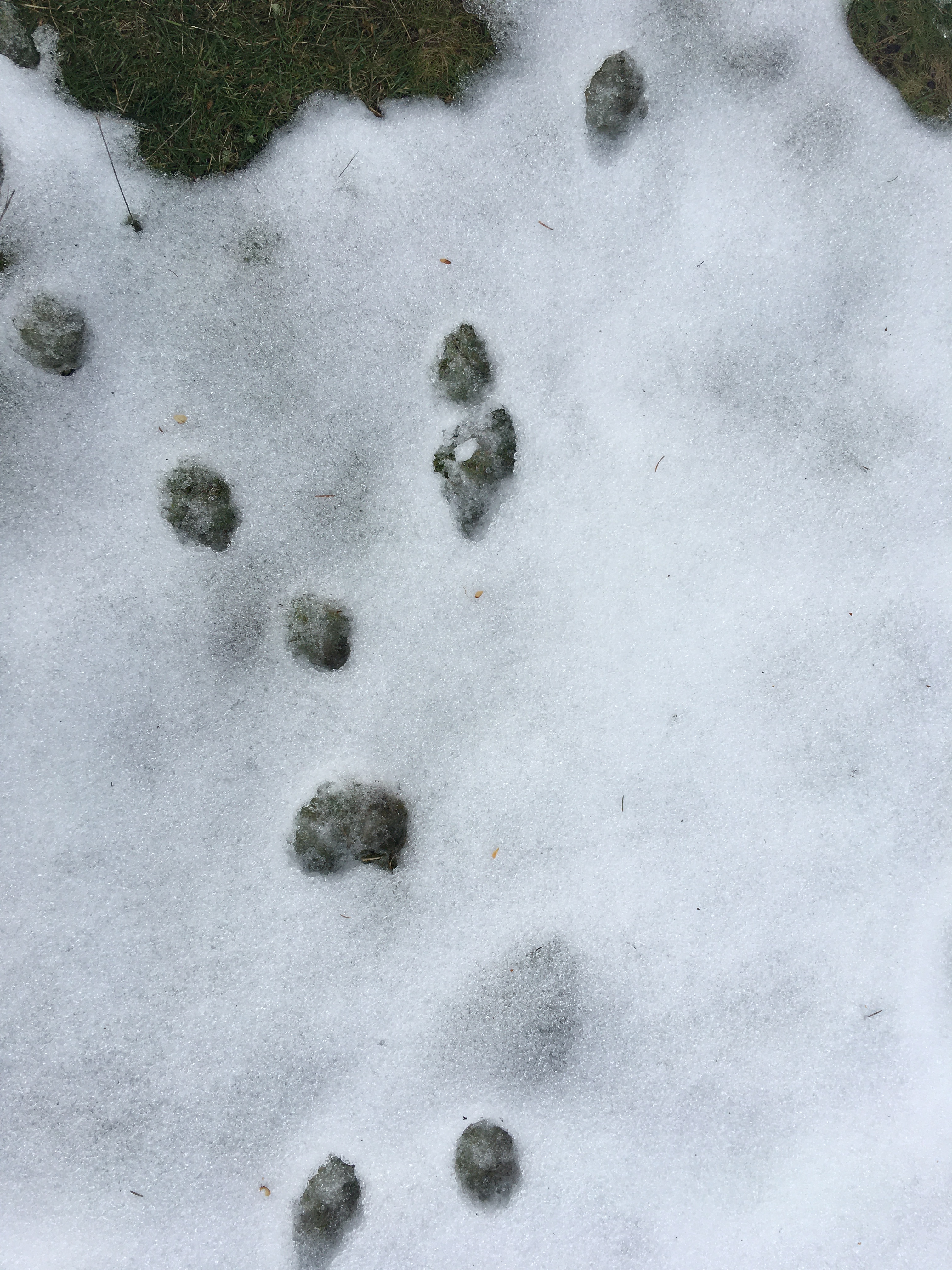
We left the body where it lay. First the eagles came, then a pair of ravens. I believe a fox visited too (tracks in the snow).
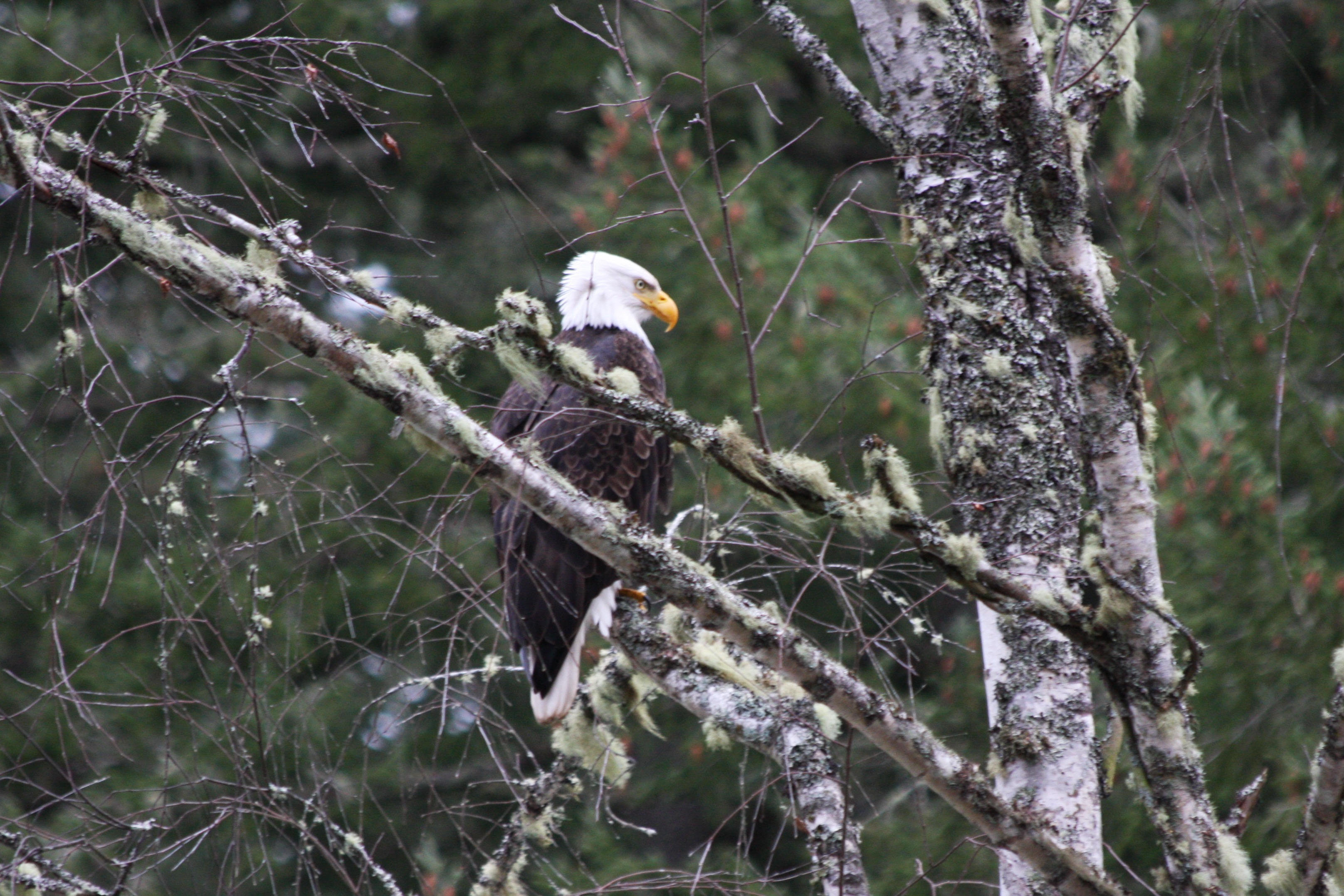
Bald Eagle 2.18.2021

Fox (?) tracks in snow

Over the course of the past 12 weeks, I’ve found some very cool bugs developing in the carcass, even now in the bits of hide and bones that remain.

Did you know?

There is actually an entire field of scientific study (Forensic Entomology) where time of death of a body can be estimated by the presence and developmental stage of certain insects involved in the decomposition process. This is called determining the Post Mortem Interval or PMI. Forensic entomologists can aid law enforcement in crime investigations by surveying for species of arthropods on a corpse, and determining stages of development and feeding behavior of the arthropods present (Barnes, 2000).

Carrion beetles in the family Silphidae fall into two subfamilies: the Nicrophorinae and Silphinae. While both feed on the remains of animals, the Nicrophorinae or Burying Beetles are associated with smaller corpses like birds, mice, voles, etc., weighing under 300g, while the Silphinae utilize larger cadavers (Watson & Carlton, 2005). This preference or niche, makes them ideal for investigations related to human death or death of larger species of wildlife (as in poaching or other crimes against animals).
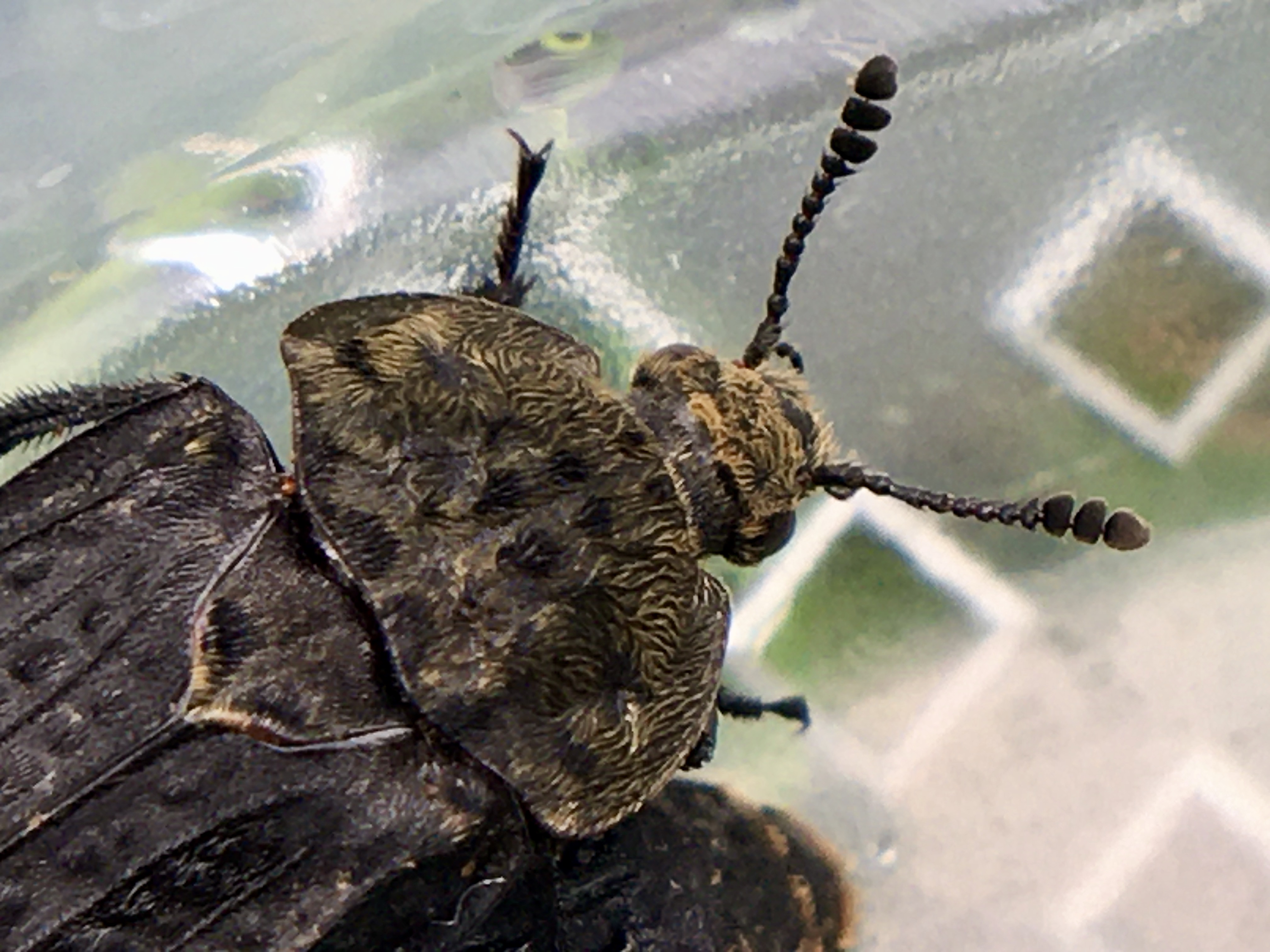
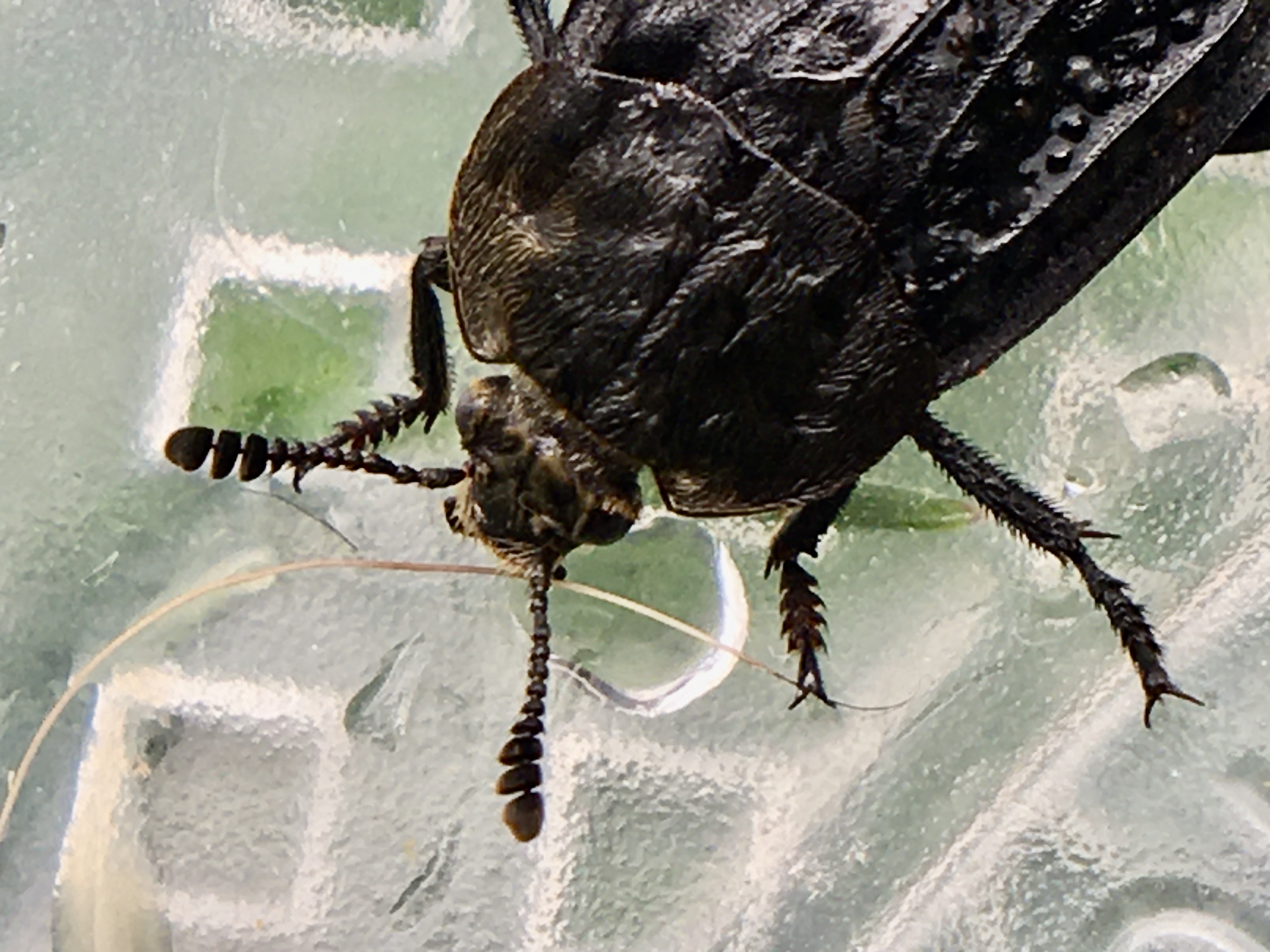
Northern Carrion Beetle (Thanatophilus lapponicus)

From Ratcliffe, 1996.

Distribution. Thanatophilus lapponicus ranges broadly throughout Canada and Alaska, across the norther United States from coast to coast, and south to Southern California, Arizona, and New Mexico (Anderson and Peck 1985, Peck and Kaulbars 1987). It is also found in Northern Europe and Asia (Hatch 1928, Schwaller 1982).

Remarks. Thanatophilus lapponicus is readily identified because of the presence of a row of small tubercles on each of the elytra intervals (Figs. 31-32, 62); it is the only silphid in North America with this distinctive form of elytra sculpturing.

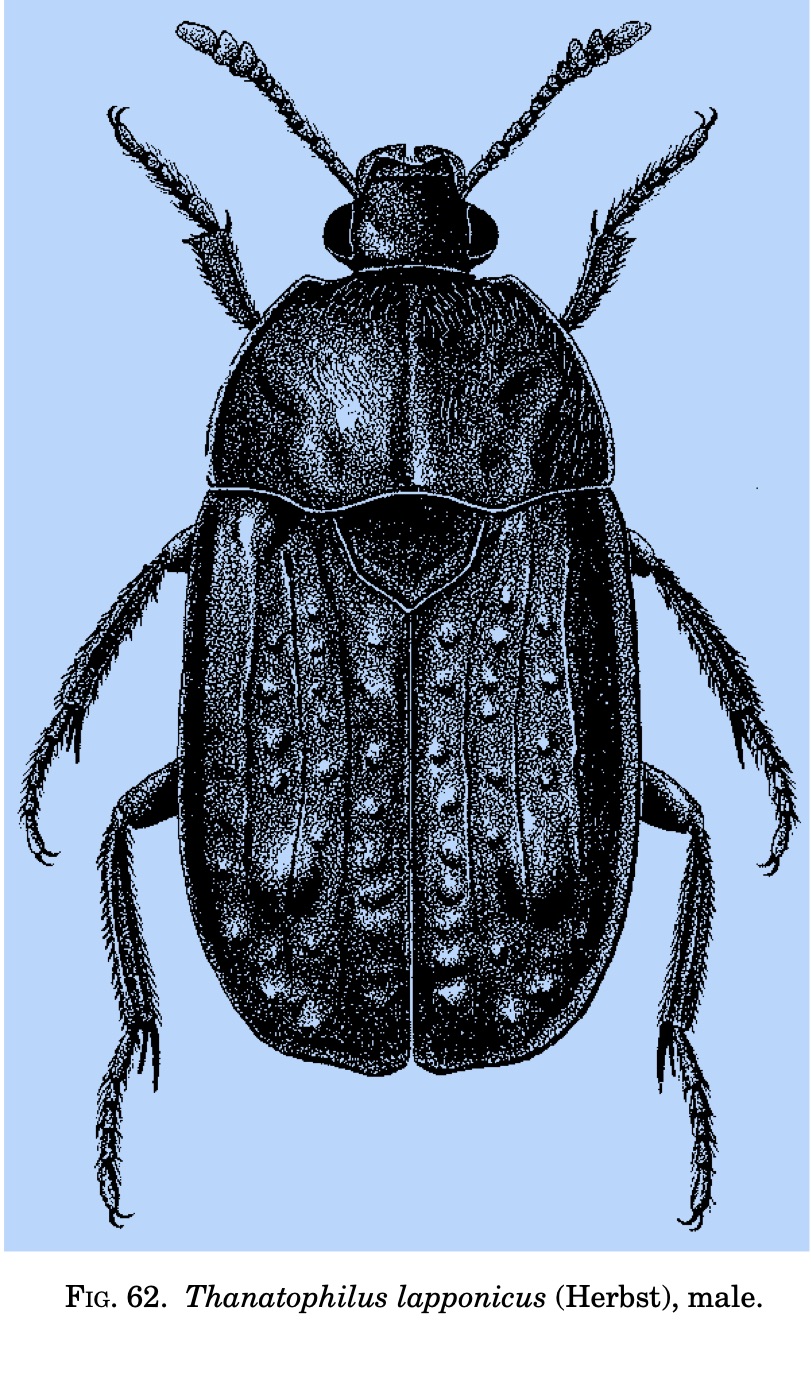
https://museum.unl.edu/file_download/inline/1bde566e-27c3-4c55-9345-59057400e350

The larval stage was described by Dorsey (1940) , and a brief synopsis was given by Anderson and Peck (1985). The larva of this species is characterized by a dark brown to black color on the dorsal surface, urogomphi that are about two times the length of the 10th abdominal segment, and antennae with a large sense cone on the second segment (as in Fig. 40).

Anderson and Peck (1985) reported that individual females lay about ten eggs in the soil surrounding a carcass. The egg stage lasts 5-6 days, the first instar about 7 days, the second instar 8-10 days, and the third instar 10-12 days. While Anderson and Peck did not observe pupae, they did note that T. lapponicus is a cold-adapted species that occurs at higher elevations in the western Mountains of North America. It is often the only silphid present in some of these areas. Thanatophilus lapponicus shows a strong preference for open areas (Anderson 1982c).

Clark (1895) observed extensive predation on fly larvae by adult beetles.

Size. 9-14mm

Time of Year Seen. March-October

References:

Anderson, R.S. and Peck, S.B. (1985) The carrion beetles of Canada and Alaska. The insects and arachnids of Canada, part 13, 1–121.

Barnes, S. 2000. Forensic entomological case study and comparison of burned and unburned Sus scrofa specimens in the biogeoclimatic zone of northwestern Montana. Graduate Student Theses, Dissertations, & Professional Papers. 4655. https://scholarworks.umt.edu/etd/4655/?utm_source=scholarworks.umt.edu/etd/4655&utm_medium=PDF&utm_campaign=PDFCoverPages

Bugguide.net. https://bugguide.net/node/view/37875

Ratcliffe, B.C. 1996. The Carrion Beetles (Coleoptera: Silphidae) of Nebraska. Bull Univ. Nebr State Mus 13:1-100 https://museum.unl.edu/file_download/inline/1bde566e-27c3-4c55-9345-59057400e350

Watson, E., & Carlton, C. 2005. Succession of Forensically Significant Carrion Beetle Larvae on Large Carcasses (Coleoptera: Silphidae). Southeastern Naturalist, 4(2), 335-346. Retrieved April 27, 2021, from http://www.jstor.org/stable/3877967

TreeHugger Soldier

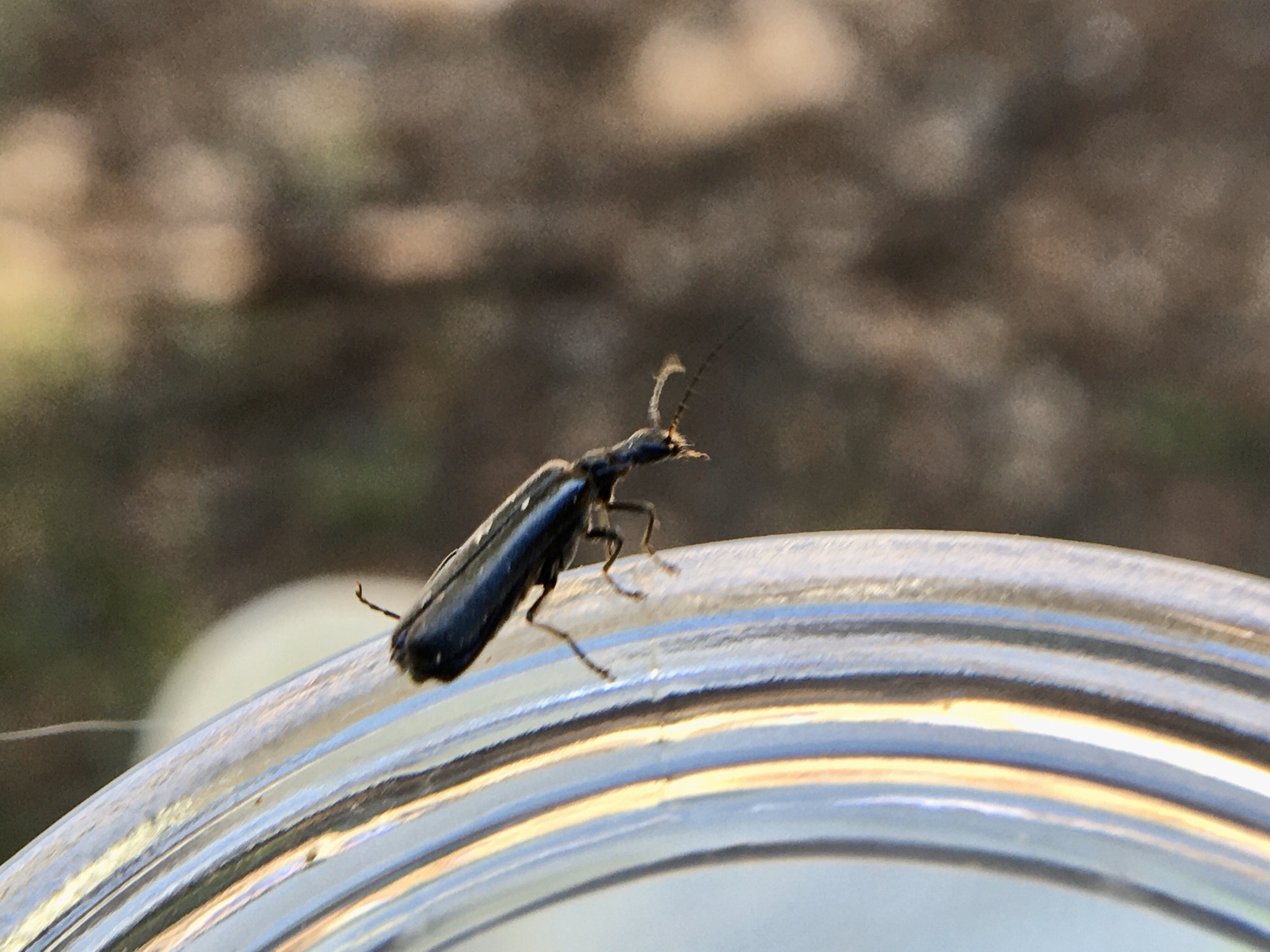
This little guy got into my pants yesterday! 😁 What is it? This is a Treehugger Soldier Beetle (Dichelotarsus piniphilus) in the family Cantharidae or soldier beetles ( because their wings resemble military uniforms). More interesting though is the Greek translation of Cantharis or κανθαρισ, translating to ‘blister beetle.’

Treehugger Soldier Beetle (Dichelotarsus piniphilus)


I’m pointing this out because this little Treehugger got confused yesterday and when it was hugging my leg and my pants were hugging back a bit too tightly, it either bit me or exuded some of the defensive chemicals that they use to repel would-be predators . In either case, I was fine aside from a bit of a temporary stinging sensation.

Treehugger Soldier Beetle


This species is common in the west. Surprisingly, very little is known about the life histories of these beetles. I’ve spotted them on nettle this time of year. Adults are known to feed on insects (including aphids), nectar, and pollen.


I wondered if there is some uptake of the chemical constituents of the nettle to produce the defense secretions in the beetle, either via consuming pollen from the nettle, or via feeding on another insect feeding on the nettle. A literature search failed to yield any supporting information, though I did find an older publication listing insects found in association with nettle. Quite a few were some of our lovely Lepidoptera, so you might want to leave those nettle patches instead of clearing them away 🦋

Treehugger Soldier Beetle

Read more here:


https://bugguide.net/node/view/279953?fbclid=IwAR2meHyQsnxdeb94MKL3YEpRMWo29-4oBmuSsru0M5nkX_aaMDN_Vxe639I


https://biologicalsurvey.ca/ejournal/ph_25/ph_25.pdf


https://en.wikipedia.org/wiki/Cantharidin

The Phoenix Rises

Hermetia illucens

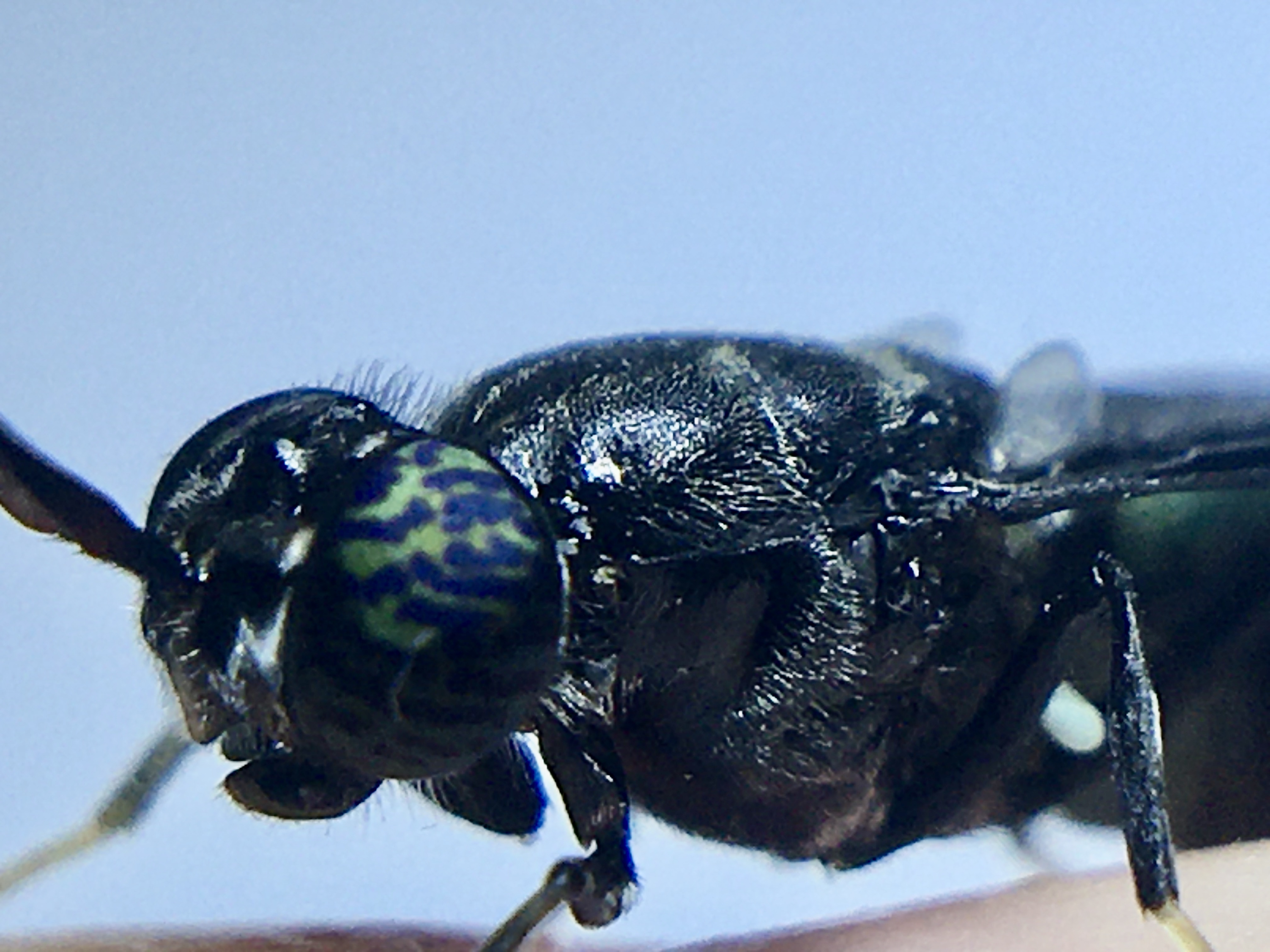
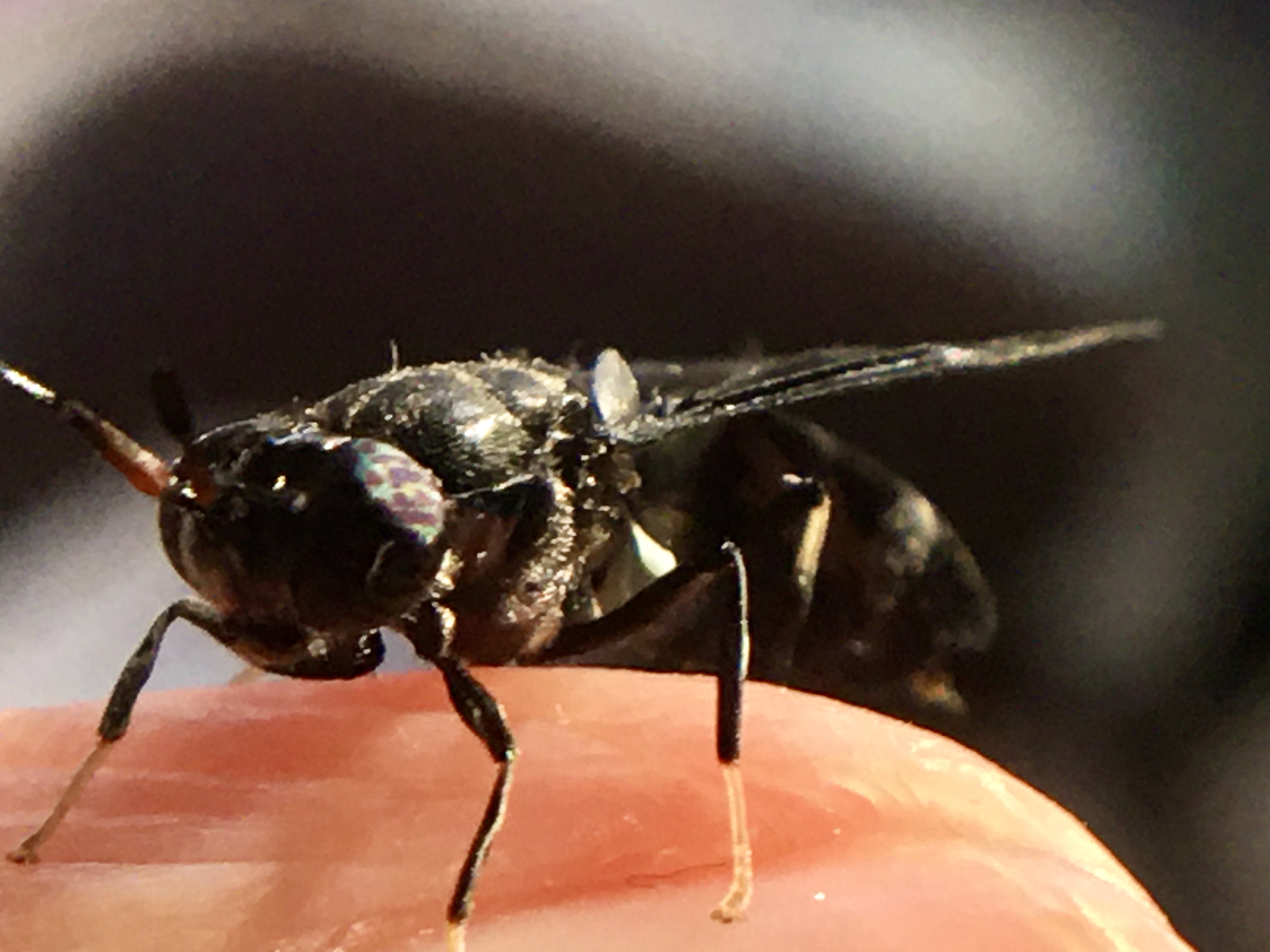
In the middle of January, nothing excites me quite like finding a bug on the floor in the house. Yesterday, I found this rather beautiful creature on the floor in our sunroom. At first I thought I had a mud dauber type of wasp, but in fact, I have become a fly momma. An adult soldier fly emerged from the cup of pupated larva or phoenix worms I had ordered for Drago. The name soldier fly really doesn’t do it justice. Given its transition from the dark, drab pupal case, the adult indeed appears to have risen from the ashes into an exquisite new form.

Hermetia illucens
Hermetia illucens
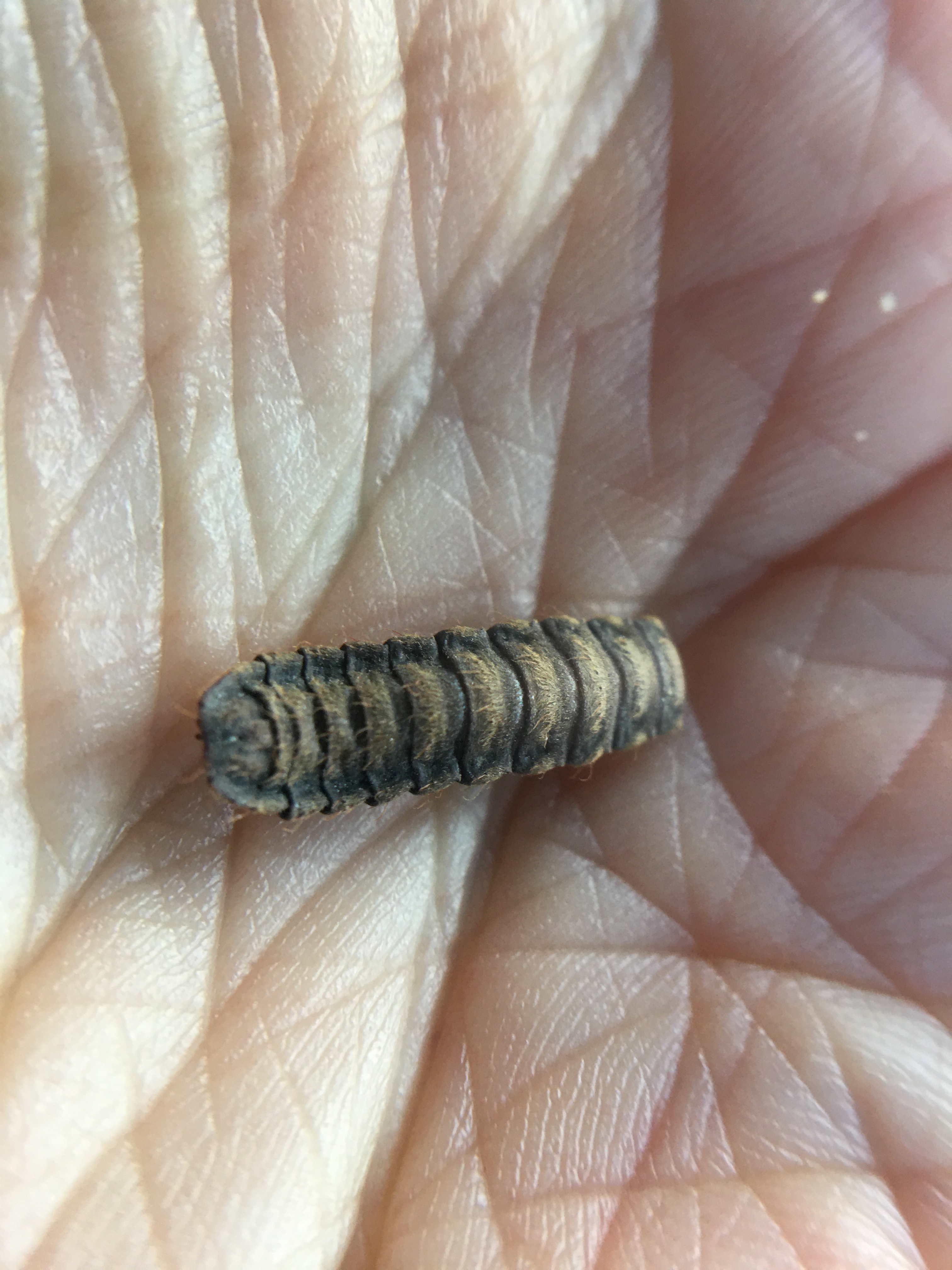
Hermetia illucens pupal case

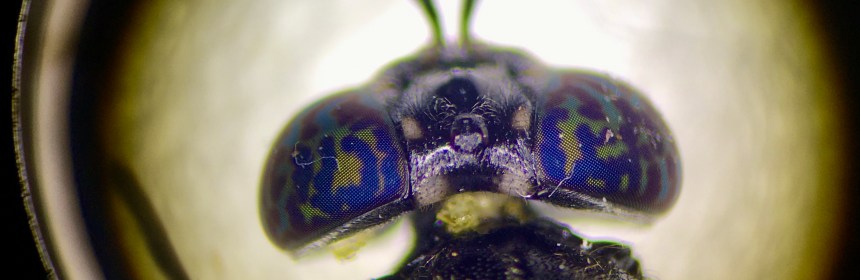
This particular soldier fly is Hermetia illucens. If you look closely, you will notice the fly-like eyes and the tell-tale halteres just below the attachment point of the single pair of wings. Those little fan-like tufts above the haltere aren’t fluffy shoulder pads or pseudo wings, but are called calypters. They are one of the distinguishing features of this group of flies. You can read more about calypters here – https://bugguide.net/node/view/114118

Hermetia illucens with calypter above haltere
Robin’s egg blue haltere with calypter above

How did soldier flies get their name? Well, they are in the family Stratiomyidae and these flies are so named because they are “armed” with some spines on their thorax. Check out this link to read more about that – https://uwm.edu/field-station/soldier-fly/ . Personally, I think the part that caused me to hesitate before picking it up was wondering if it could sting me since I thought it was a wasp. The mimicry serves it well!

Hermetia illucens (calypter above haltere)

What is cool about these flies? Well, aside from all the beautiful blue accent coloring and the pretty bands on their legs, these flies do some amazing jobs for us. They are so great at eating poop and recycling food waste that they are now being utilized in commercial operations. Hermetia lllucens Black soldier fly larvae (BSFL) are also being reared commercially as food for fish, pets, livestock, and for humans. The larvae are said to outcompete other fly species that are pests to humans and livestock. They don’t transmit diseases like houseflies and blowflies, and they actually reduce the levels of Salmonella and E coli found in manure. Even more astounding is their application in the field of Entoremediation. This means they are effective at reducing harmful contaminants in biomass.

I will be ordering some to add to our compost pile this spring!

Hermetia illucens with sponging mouthpart
Newly emerged Black Soldier Fly (Hermetia illucens)

Thanks for reading!

References and further reading:

http://entnemdept.ufl.edu/creatures/livestock/black_soldier_fly.htm

https://bugguide.net/node/view/6994

https://www.eatcrickster.com/blog/black-soldier-fly

https://www.researchgate.net/publication/5503265_Development_of_Black_Soldier_Fly_Diptera_Stratiomyidae_Larvae_Fed_Dairy_Manure

https://wiki.nus.edu.sg/display/TAX/Hermetia+illucens+-+Black+Soldier+Fly

Bill the Beetle, aka Zeke the Greek

I thought I’d post about something new I discovered today when reading about the Darkling Beetle species Zophobas morio.  These are beetles that some folks will know by the common name for their larval form, Superworms.  

First off, the beetle I’ll be using as my representative here is named “Bill.” I discovered Bill one day in my bin of feeder roaches for my Bearded Dragon (Drago).  When I first met Bill, he was a weird waxy, mummy-looking mutant lying motionless amongst the frass (roach poo) at the bottom of the plastic bin. 

He almost got dumped into the trash, but I gently picked him out recognizing the wax museum-like form as the pupal stage of some sort of bug.  It definitely was NOT a roach since roaches have hemimetabolous development.  This means their intermediary stages or nymphs, basically look like mini replicas of their adult parents. 

Zophabus morio, “Bill”

Bill didn’t stay red for very long and in fact, the next day he was pretty BLACK.  While investigating a bit about the meaning of his scientific or Latin name, I couldn’t find much in the entomological references I checked.  I delved a bit deeper and came up with this and thought you might find it interesting.  

In Greek, Zophos refers to “black” or “black darkness of the nether world.”  Mori refers to “death.”   

I think I like the name Bill if he’s going to hang out on my kitchen counter, but maybe for Halloween he can be scary Zeke the Greek, herald of black death of the netherworld.  

Bill is also going to be a family member for about as long as Drago.  I’m not sure how my husband will feel about this.  He asked me when I got Drago how long Bearded Dragons live.  I said “about 15 years with good care.”  Wow!  That means we will be in our 60’s.  

Drago was 3 when he came to live with us in March 2020, so if he lives to be 15, I will be the very old age of 68.  Well, BILL can live for about the exact same amount of time!  FIFTEEN years.  That’s right!  I read it here -https://sciencing.com/superworm-life-cycle-5347598.html

Bill in his habitat

If you’re interested in a pet beetle like mine, here’s a link to a care sheet. They are easy to keep, low maintenance, and don’t bite! https://beta-static.fishersci.com/content/dam/fishersci/en_US/documents/programs/education/technical-documents/data-sheets/carolina-biological-darkling-beetle-data-sheet.pdf

Thanks for reading! 🐞🦋🐝🐛🐜🦗🦟

Sparrow Bee

Doodles

I find doodling is a great way to reduce stress. Here are my morning doodles (and Japanese interpretation) of the most scary insect in the news in the United States.

They say laughter is another good way to reduce stress and I admit I chuckled a bit watching the sensationalized CBS video of the kevlar?-suited team taking on the “Murder Hornets.” https://www.cbsnews.com/news/murder-hornets-85-killed-13-captured-alive-washington-state/

These hornets INVADING North America (hyperbole here), are native to Asia. It’s also very likely they’ve entered the US illegally in someone’s suitcase. At least that’s what I think! My sense of this came from reading the US Dept of Agriculture bulletin titled New Pest Response Guidelines linked here – https://cms.agr.wa.gov/WSDAKentico/Documents/PP/PestProgram/Vespa_mandarinia_NPRG_10Feb2020-(002).pdf Note page 16 of the guide where it reviews how Asian cultures place a high value on the wasps as a delicacy, especially how expensive the market price for the wasps are in Japan. Hmmm.

Yesterday I thought I’d do some research on how the Japanese live amongst these giant wasps, known to entomologists as Vespa mandarinia or the Asian Giant Hornet (AGH).

What I found out was pretty interesting!

First off, the Japanese name for the wasps is Suzumebachi. Say “Sue zoom eh ba chee” and you’re close. Suzumebachi translates into “sparrow-bee.”

In my quest to uncover the history of these insects in Japanese culture, I found they are actually revered. The Japanese bee hunters climb into the mountains to dig up the subterranean nests and collect the adults, larvae, and pupae. Check out this bloggers adventure as she hikes into the mountain to help her guide dig up a subterranean nest http://www.libertyruth.com/blog/vespa-mandarinia-finally-finally-i-can-write-about-the-venom?fbclid=IwAR30J9hbyB6xtRx5zqVZrodcfG6U2DFKdPPDlV9CGolOBc1HwR7CbAV5S5c

Japanese anime’ has a character based on the “bee sparrow,” and you can buy a variety of costume garments to dress just like her if you’re inclined. If you can believe it, many of the online stores selling these costumes are SOLD OUT! You can read about the anime’ character of Suzumebachi here https://naruto.fandom.com/wiki/Suzumebachi

The Japanese eat these highly prized wasps. I found one story online originally published in Munchies. It’s titled, I Got Buzzed on Japanese Hornet Cocktails and takes place in a bar in Japan. Guess what the bar is named? Suzumebachi! According to the blogger, the owner has gone all out and even has a giant hornet nest displayed behind the bar. Read more here – https://www.vice.com/amp/en/article/aeyp4k/i-got-buzzed-on-killer-japanese-hornet-cocktails

More about hornet sake here – https://youtu.be/r6k60yo_nZo

While some hornets are kept in captivity and bred because of their great value, in rural village communities, you can still find traditional Suzumebachi hunters and attend annual festivals themed around the collection of the hornets https://travel.gaijinpot.com/edible-wasp-festival/ and https://www.splendidtable.org/story/2019/02/08/the-japanese-tradition-of-raising-and-eating-wasps

It’s pretty incredible how prized these hornets are for their medicinal and culinary properties. Japanese athletes are even touting increased energy after drinking hornet juice https://youtu.be/sfdSPW-cwgM or using bee protein powder.

While I don’t discount the intimidation factor of these wasps, we may be missing something in our eradication efforts.

Eating insects is in our future. It could be a lucrative investment!

Thanks for reading.

Author’s note: I am in no way encouraging the importation of exotic species, or species deemed invasive, but only writing this to present an alternate perspective as a means of balancing the extraordinary sensationalization of the Asian Giant Hornet. They aren’t the Winged Horsemen of the Apocalypse!

Aphodiine Dung Beetle – October 21, 2020

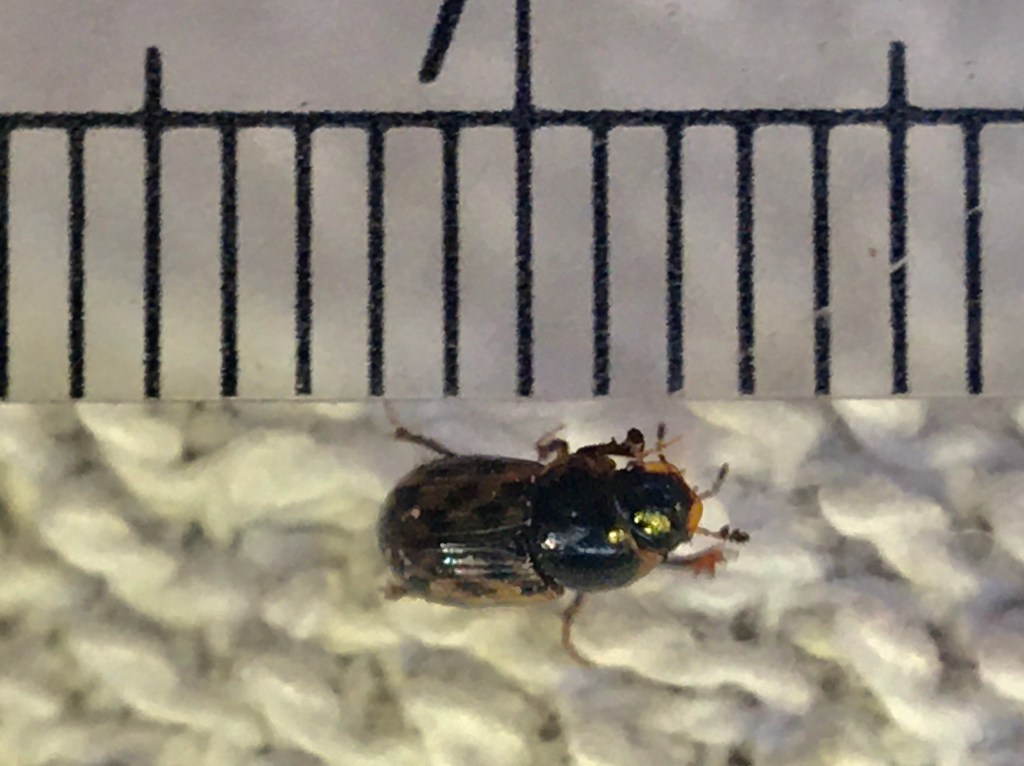
I found this tiny (approx 4.5mm) Scarab yesterday when I went out to pick the remaining few tomatoes in the garden. It came in with me just long enough to get a few photos so I could attempt an ID. If I’d kept it long enough to realize what I had, I might have tried for better pics. Instead, I returned it to a sunny spot outdoors and let it go about its business in the garden.

After an internet search, I came up with a preliminary ID to subfamily Aphodiinae, but I believe this specimen to be in the tribe Aphodiini and possibly (Agoliinus sigmoideus). This is where my frustration begins as I definitely need my specimen back for further examination in order to confirm. For now, we’ll leave it at Aphodiinae.

The Aphodiinae are dung beetles that feed on detritus and more. Bugguide references the work of Skelley (2008) and states, “many feed on dung, some are detritivores, psammophiles, saprophages, inquilines with ants or termites, or may potentially be predators; adults with reduced mandibles are suspected to feed primarily on bacteria or yeast-rich fluids in dung or decaying materials.”

Reading about dung beetles in general, I came across an interesting publication in Biological Control that examined how some species of coprophagous dung beetles can reduce the contamination of bacteria like Escherichia coli in agricultural systems when flies, livestock, or wildlife are present. Aside from providing other important ecosystem services like feces removal and nutrient recycling, the aspect that they also help with food safety by reducing harmful bacteria is another reason we need to invest in organic agricultural systems that do not rely on harmful pesticides, fertilizers, and herbicides which alter the natural biological processes at work. In short, nature does it best!

Aphodiini San Juan Island, WA 10.21.2020

References

Bugguide.net – https://bugguide.net/node/view/13137

Skelley P.E. (2008) Aphodiinae. In: Generic guide to New World scarab beetles

Key to genera of New World Aphodiini (Scarabaeidae: Aphodiinae) http://unsm-ento.unl.edu/Guide/Scarabaeoidea/Scarabaeidae/Aphodiinae/AphodiinaeTribes/Aphodiini/Key/AphodiiniK.html

Nicrophorus Burying Beetle Powerpoint – Grave to Cradle

The links here are for a project I worked on in grad school about Burying Beetles. I was having some trouble getting the code to share it on WordPress, so if you have trouble viewing, let me know. Powerpoint link is via OneDrive at https://1drv.ms/b/s!AnuXRWM_ynxHcba_40yxFvTJCgw?e=toCNNE but I also have it on Slideshare.net at https://www.slideshare.net/CyndiBormann/burying-beetles-powerpoint?qid=e930baf4-87e9-4553-a366-0044098db422&v=&b=&from_search=1

Freaky FridAY!

I had a feeling today was going to be one of THOSE days, but really had no idea how bad it would get.   This time of year on the island, we’ve lost our sunshine and are headed into the Time of DARKNESS.  I have no idea who got away with marketing the “Sunny San Juan’s!” They advertise that HERE is the special place where you’ll have a whopping 247 Days of Sunshine, but that is just WRONG! 

This statistic has been creatively manipulated and someone got away counting an entire day of sunshine when the sun maybe, just MAYBE peeks out for a whole 5 minutes.  Yep, two bits of advice I received when I moved here was 1) if the sun is out at all anytime between October and April, go outside and, 2) get a raincoat.  

But I digress from the events of the day!  So, being under the umbrella of COVID, I hardly ever, go to town anymore.  There is the likelihood that I might venture out only once during the week for a grocery/mail run.  Well, that was today.  

I stopped first at the post office.  There was the now normal line winding down the hall.  I waited my turn patiently.  It’s an island and I’ve learned to be on island time.  There’s always someone who hasn’t yet learned this yet, and that was the guy in line ahead of me.  

He was complaining loudly.  He went into the office even though the sign clearly states “only THREE people at a time.”  Poor postal staff had to point this out.  His reaction?  Well, you might ask that.  He was even louder about having to WAIT and HE had MUCH MORE IMPORTANT THINGS TO DO!  

“J” whispered to me when it was my turn at the counter, “Did you HEAR that guy?”   I nodded my head, commenting “there’s always one!”  Little did I know there was one more someone who would be breaking the RULES.  

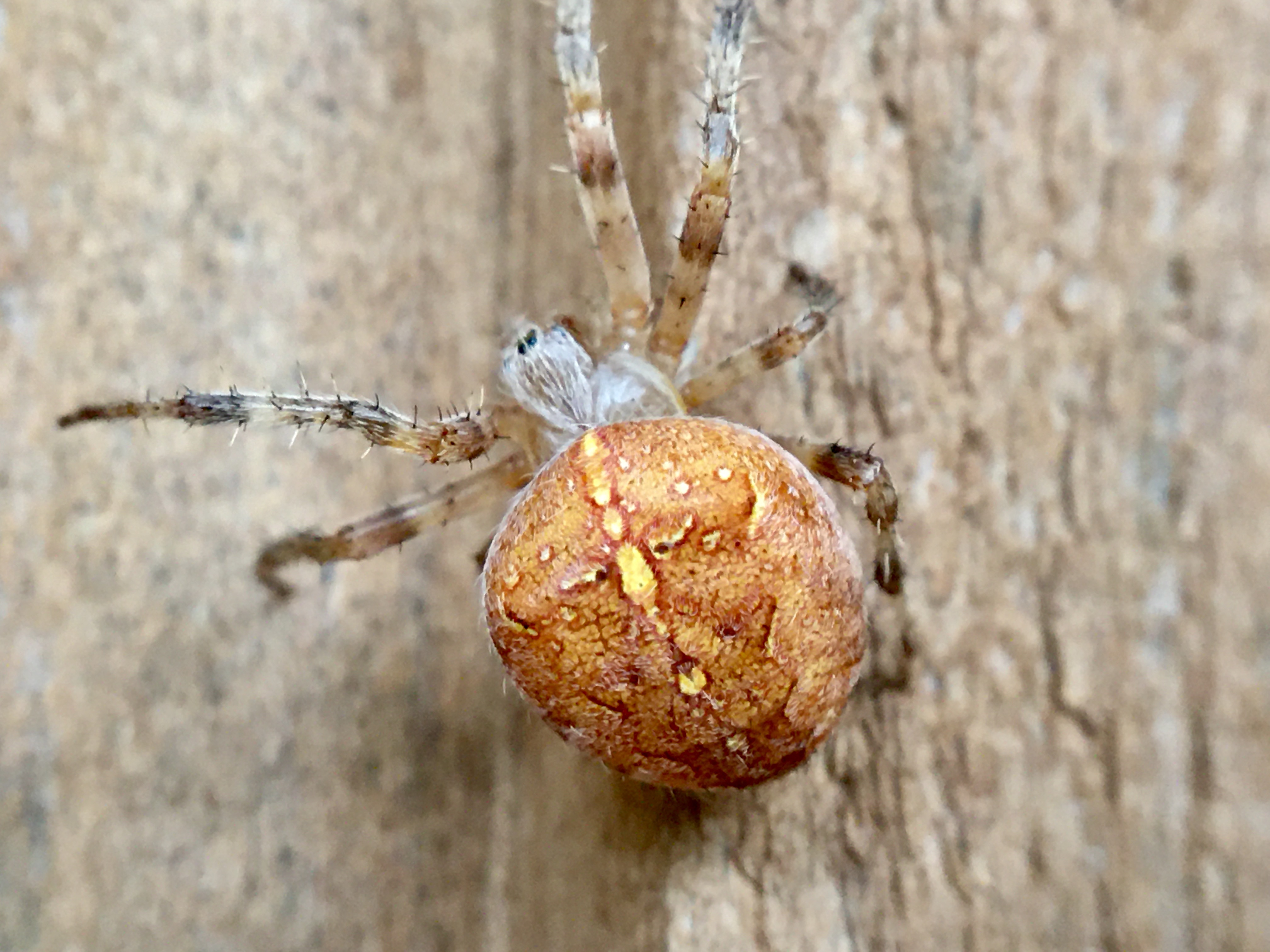
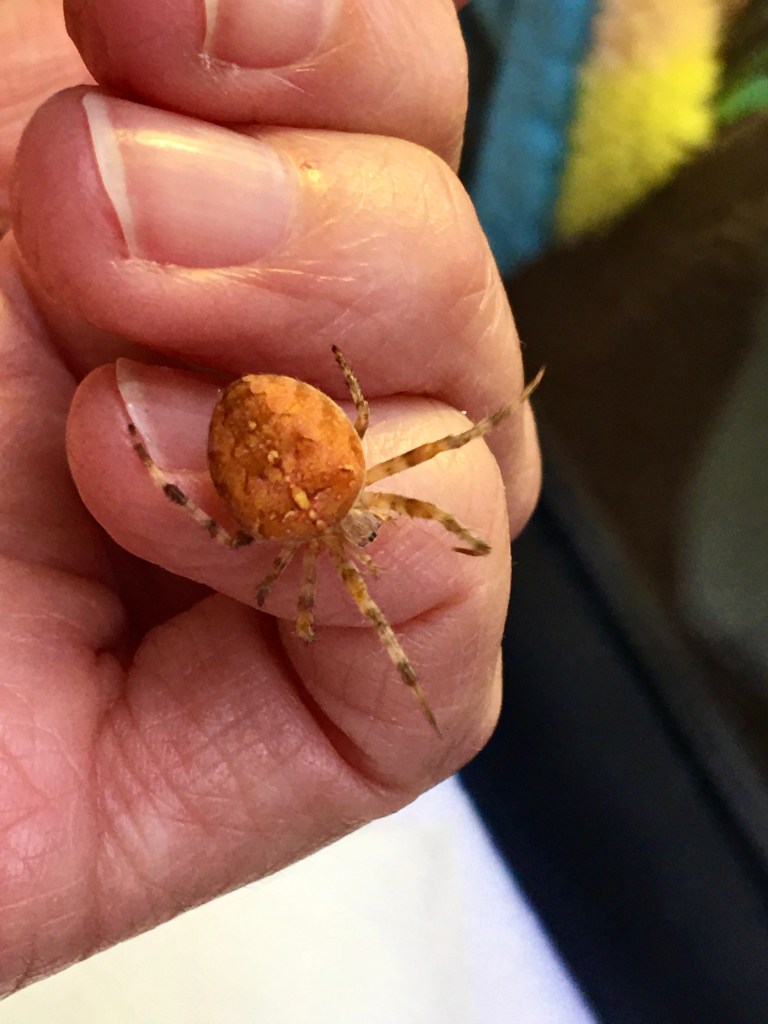
My next stop was to grab a spider left for me at my husband’s office.  A pumpkin-colored Orb Weaver.  I love spiders!!!   After collecting my 8-legged friend, I made my next stop at the Market.  

At this point, I’m feeling a bit scattered.  I have my purse, keys in hand, my “list” of things I need to pick up for the next few nights of dinners, and I walk across the parking lot and into the store.  The next thing I hear is “MA’am, Ma’am!”  I looked towards the voice and all of a sudden the sound is ringing in my ears as I realize the “Ma’am” is meant for ME. 

 “You forgot your mask,” the store employee is saying as she walks in my direction!  I feel my face, groping for my mask, that I JUST HAD ON at the post office, which seemingly has disintegrated, leaving feeling the equivalent of walking into the store NAKED.  

I was MORTIFIED!!!  Thankfully she handed me a mask as I pretty much just stood there, unable to move.  “Don’t worry,” says another clerk.   “People all over the island are pretty much losing it.  You’re not the first!”  I feel marginally better, but not much.  

Somehow I managed to finish my shopping, check out, and make it back to my vehicle.  I called my daughter on the way home.  Hands free.  She tried to make me feel better and we had a good laugh about it.  

“It’s getting to everyone! ”she says.  Then, “I am starting to feel like there’s no point in figuring out what I want to do with my life, because I really wonder if we are going to have a LIFE after all of this.”  I want to tell her it will be fine, but even though we joke about it, there is really nothing funny about the state of the world…OUR world.  I find myself wanting to tell her to take up retail therapy to make herself feel better.  Exactly how much is the limit on that credit card? 

My daughter asked if I got my ballot at the post office.  Then, she laughed and told me her friend, who says he ISN’T voting because he hates both parties wrote in FIDEL CASTRO and dropped his ballot in the box.  Yes, I do believe folks are losing it!  Big time.  

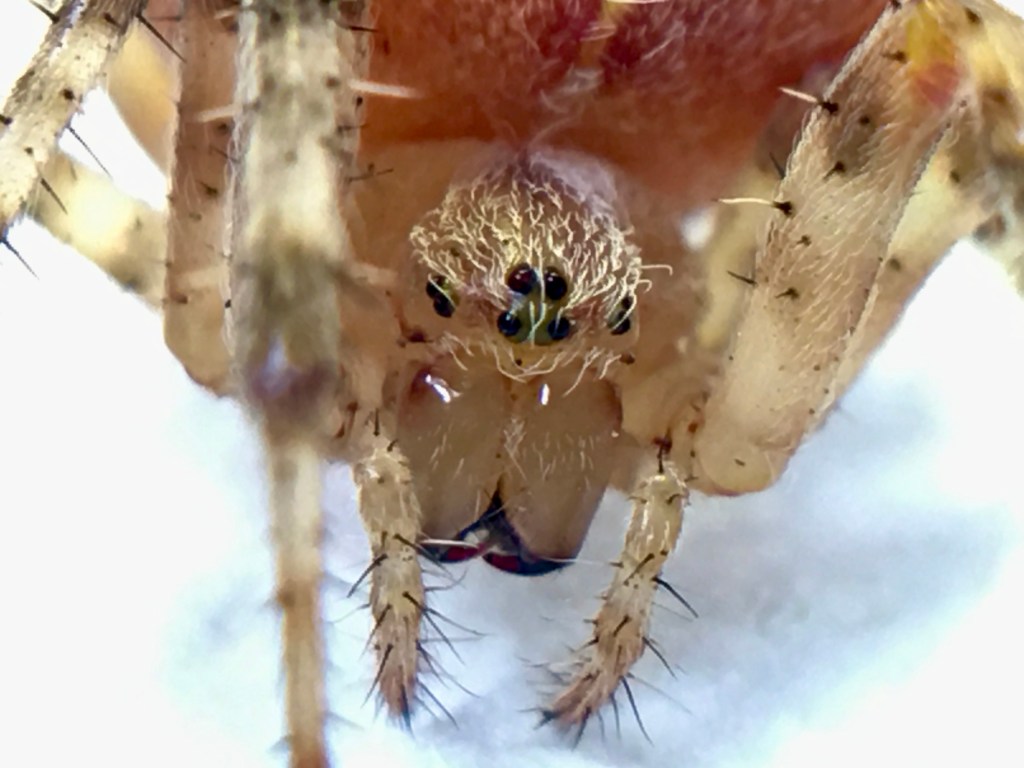
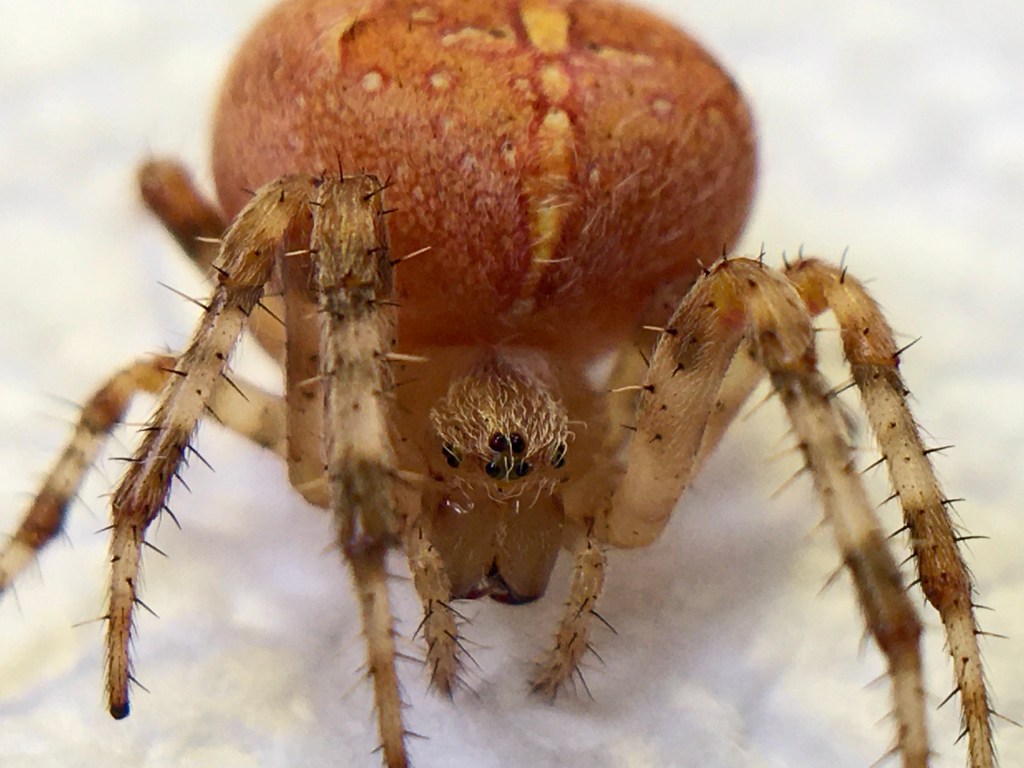
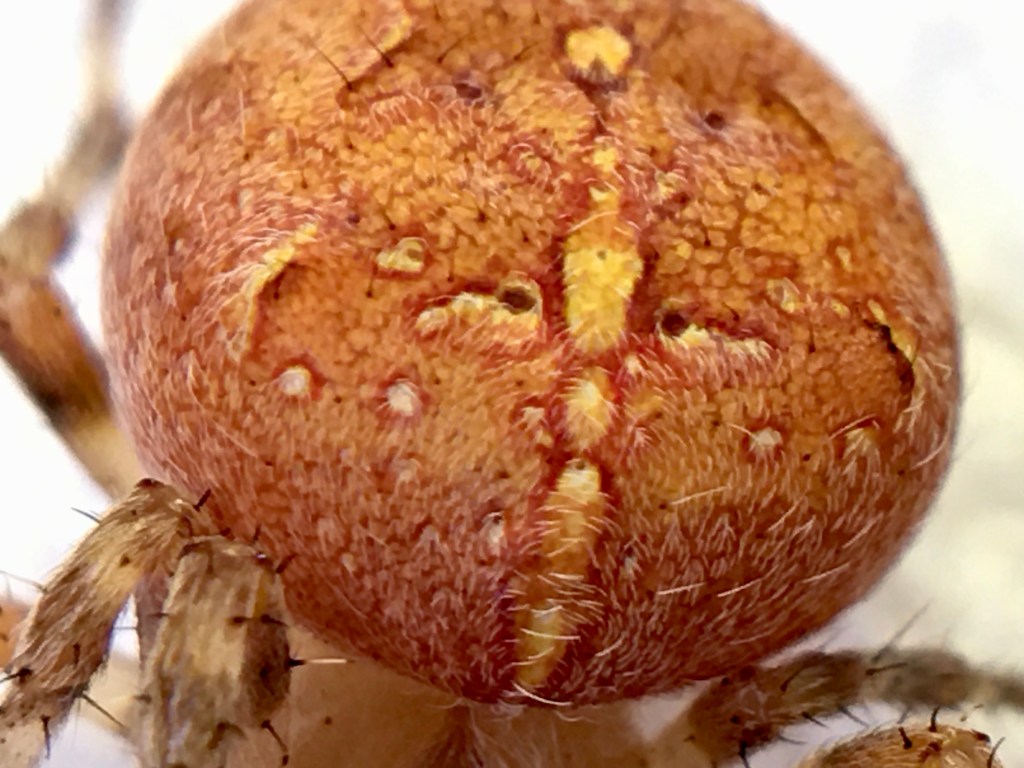
Oh, and here are some photos of that lovely Orb Weaver I brought home (and released). This spider is Araneus diadematus, one commonly seen about in early fall. Now that I’m back in my “safe” zone, I can focus on Bugs that don’t require me to wear a mask!

Araneus diadematus Cross Orb Weaver
Professor Drago and the Orb Weaver Spider

SPIDER SLEUTHING IN THE SAN JUANS – DAY 14 – Arach-no-phobia

Let’s break down this fear you have about spiders! Take the word ARACHNOPHOBIA here. If you break it into parts Arach -NO-phobia, it will be easier. Just focus on the NO PHOBIA part, and watch the short clip below of my jumping spider friend who came out daily to “play” in our sunroom for over a week. Yes…every day at 3 o’clock, it would peek out from behind our door trim and hop onto my finger.

Spiders don’t want to bite you. They are our friends! Sweet little souls who provide wonderful (free) pest control services in and around our homes.

Salticus scenicus jumping spider wants to play

Spider Sleuthing in the San Juans – Day 13 – She has an umbrella!

Come in out of the rain children

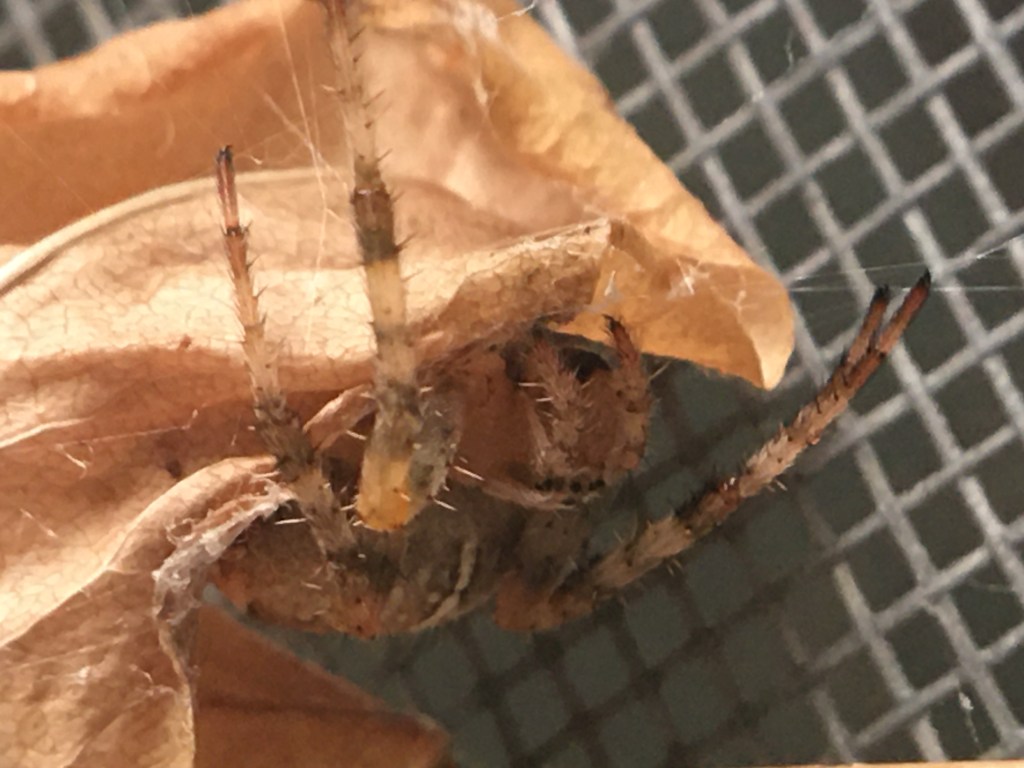
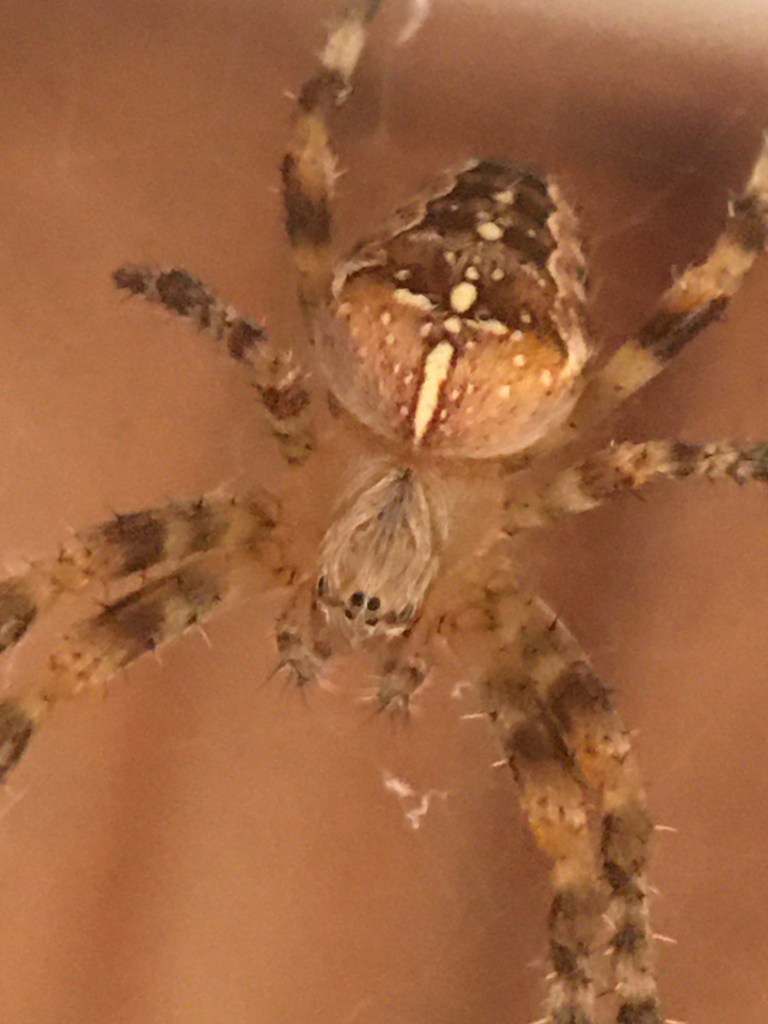
Meet Scarlette! She is my sweet little resident Cross Orb Weaver (Araneus diadematus). Scarlette has a web, but she knew it was going to rain and sought shelter in this leaf stuck to the screen door. I just went and checked on her and she is securely tucked into her little leaf hidey, safe from the wind and rain in the San Juan’s today.

If you’re an observant person, you may have the good fortune to see one of Scarlette’s relatives at your house. Orb Weavers are very common and often found hanging out near your doorway, under an eave, or on shrubs near your home or in your garden.

If you are actually reading this, you’re likely already a spider lover or at least someone who appreciates the natural world. Sadly, many folks are extremely fearful and reactive around spiders. Before I go today, I have a request. Will you share with this with your friends who may be arachnophobes?

Maybe we can work together to dispel some of those unfounded rumors about spiders biting folks. It just doesn’t (or very rarely) ever happen! Spiders don’t go around biting people. They need to conserve their energy for hunting and catching their own food, and for spiders that means little invertebrates like flies and occasionally other spiders. They don’t want to eat people. Also, their fangs aren’t designed to penetrate tough human skin. It’s way more likely for a human to harm a spider than the other way around.

So, show your friends this link https://arthropodecology.com/2012/02/15/spiders-do-not-bite/?fbclid=IwAR3Lg36-1Fc7VK_oBdc1ctpTbcUMr81AXZSnQV9lRFUeye-wZ5KhEP4AThM – and share my post with them. Let’s be nice to SPIDERS! They are our friends.

Scarlette, the Orb Weaver
San Juan Island, WA 09.18.2020
Scarlette the Cross Orbweaver
Scarlette is sheltering under her leaf
Scarlette’s web
Cross Orbweaver (Araneus diadematus)

For more about Cross Orbweavers, take a look at the link below:

https://bugguide.net/node/view/3376

Thanks for reading!

Be Nice To Spiders!
« Older Entries Recent Entries »