Western Blood-red Lady Beetle

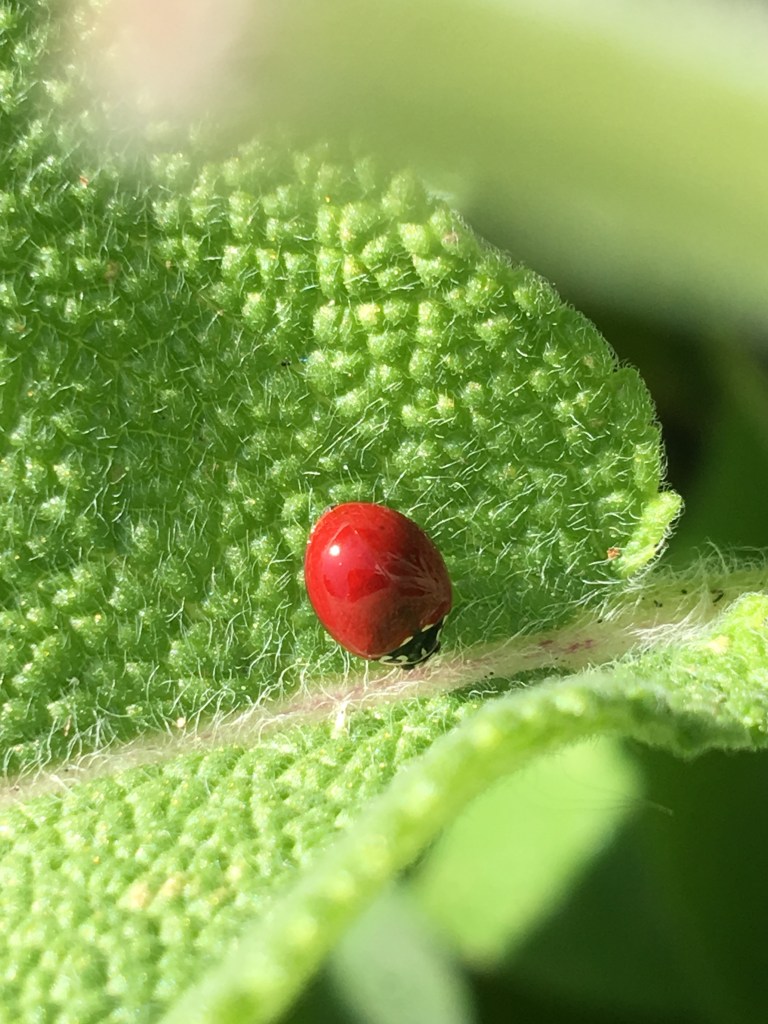
I found three different species of Lady Beetles in my garden this past weekend and wanted to share a bit about them with you. I’ll start with the Western Blood-red Lady Beetle or (Cycloneda polita), also sometimes called the “Polished Lady Bug.”

If you are someone who needs reading glasses (like me) to see things up close, you could easily be fooled into thinking the spot of red on the plant leaf is a drop of blood. Given how accident prone I am, when I first spotted this one, I figured I’d poked my finger again on one of the prickly berry vines that are coming up in my raised garden beds. Upon closer inspection, I was glad I had my camera phone handy.

Western Blood-red Lady Beetle (Cycloneda polita)
July 14, 2019
San Juan Island, WA

Ladybird or ladybug beetles are a large and very diverse group of beetles. They are classified in the insect order Coleoptera, family Coccinellidae. Most are known to be highly beneficial, feeding on garden pests like aphids. The Western Blood-red Lady Beetle is one of our native ladybird beetle species. Unfortunately, research is indicating we are losing our native ladybird beetle populations as they are outcompeted by imported non-native ladybird beetles released for biological control.

Western Blood Red Ladybird Beetle (Cycloneda polita) on Daisy
July 19, 2019
San Juan Island, WA
Western Blood red Ladybird Beetle (Cycloneda polita)
July 19, 2019
San Juan Island, WA

Further information can be found by following the links below.

*Distribution of Cycloneda politahttps://www.discoverlife.org/mp/20p?res=720&see=I_JEL1585;&start=http://www.discoverlife.org/users/l/Losey,_John/JEL.html

*Lost Ladybug project http://www.lostladybug.org/files/LLP%204HSet3-6.pdf

*Bugguide https://bugguide.net/node/view/15623

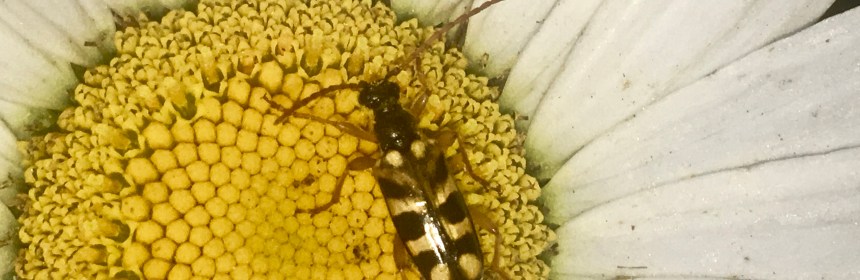
Xestoleptura crassipes

Xestoleptura crassipes
San Juan Island, WA
July 16, 2019

Xestoleptura crassipes is a species of flower longhorn beetle. Taxonomically it is placed in order Coleoptera, family Cerambycidae. The species name “crassipes” means “thick-legged.” Adults are attracted to flowers (June-September) and larvae are wood borers, found in forested areas and associated with firs and oaks. Adult body length approximately 10-17mm.

I photographed this specimen on July 16, 2019. It was the only one on the daisy plant by my front door. On the morning of July 18, there remained the single beetle (or I believed it to be the same one). That evening, I observed a 2nd beetle feeding on an adjacent flower. This morning (July 19th, 2019), they were both gone. Perhaps this was a successful meetup for finding a mate. 🌼

Xestoleptura crassipes feeding on daisy pollen

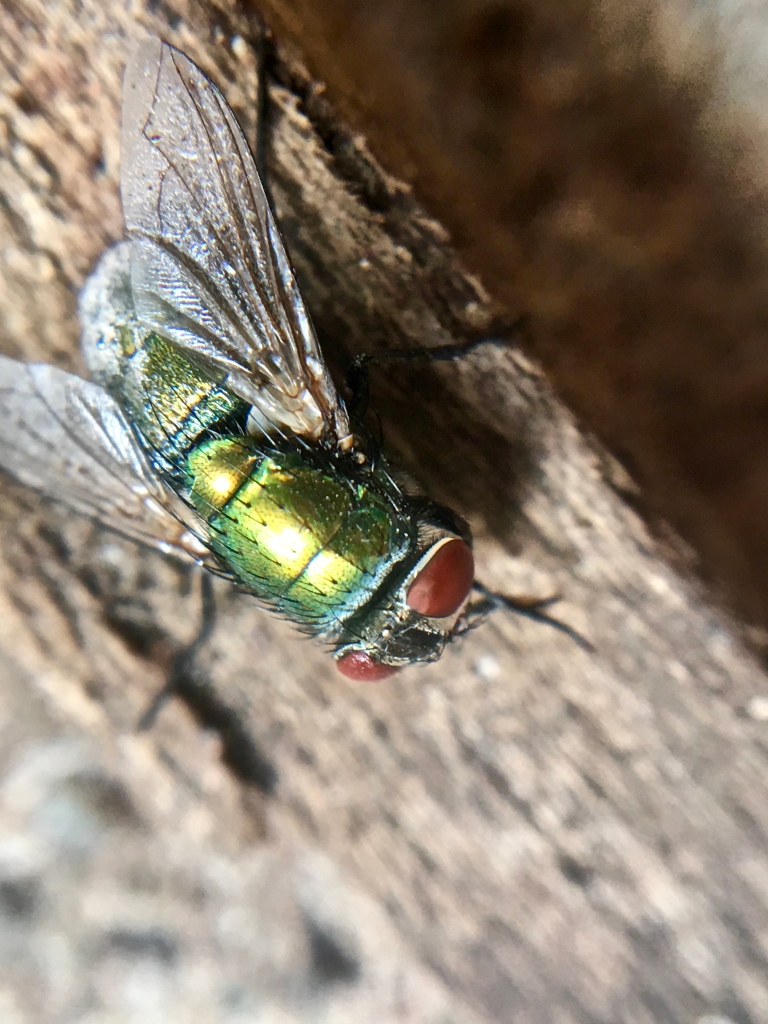
Green Bottle Fly (Lucilia sericata)

Green Bottle Fly (Lucilia sericata) July 9, 2019 San Juan Island, WA

This shiny green bottle fly, a blow fly in the family Calliphoridae, is widely distributed across North America. A frequent visitor to garbage, feces, and carrion, it can mechanically transmit disease, but it is probably more well known for other notable roles it plays in veterinary, medical, and forensic science.

In veterinary science, Lucilia sericata can cause loss of livestock when animals are affected by the larval form of the fly in a condition known as myiasis or fly strike. Animals affected by fly strike can die when fly larva invade living tissue if they are not treated.

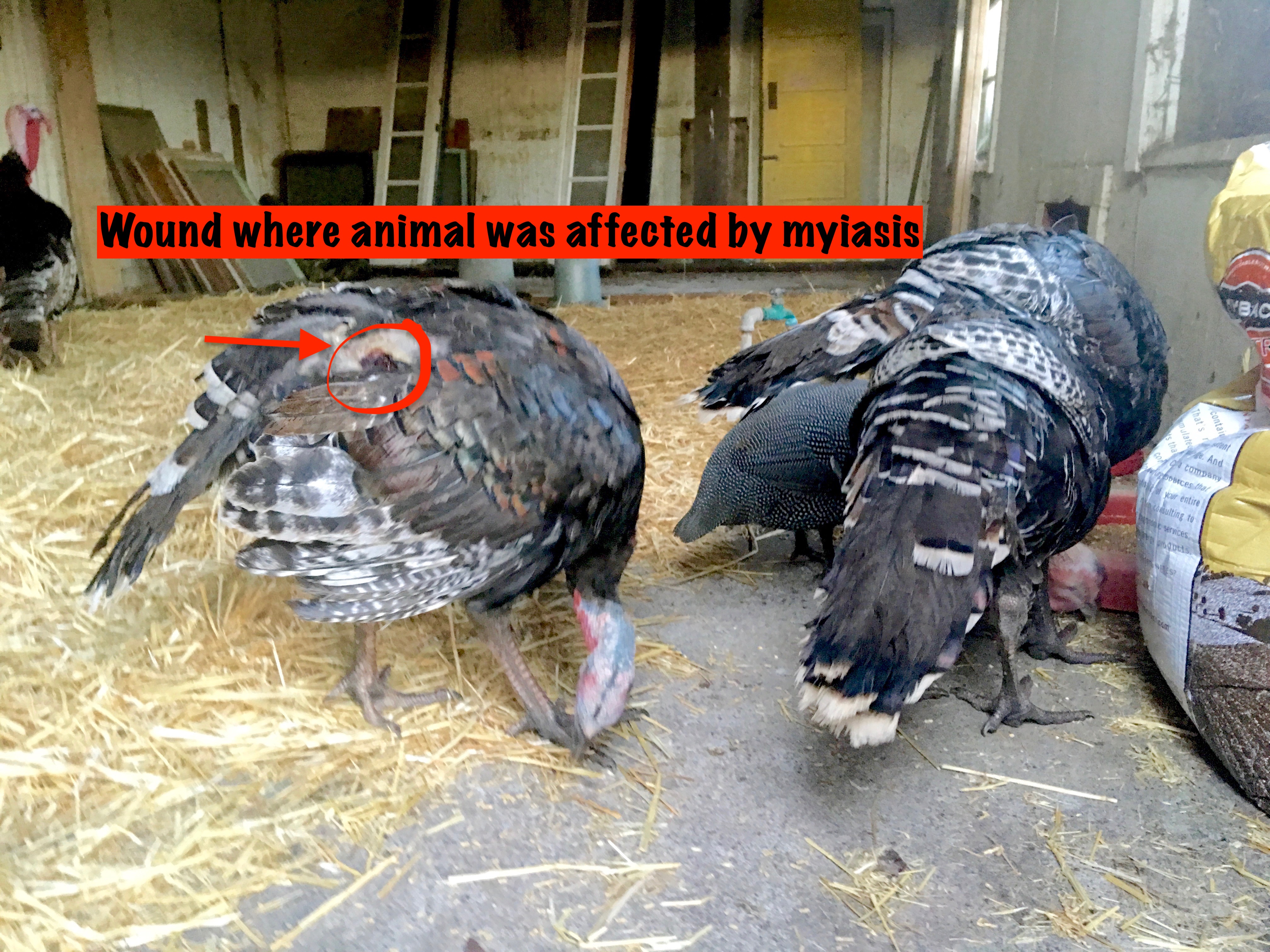
In July of 2016, I helped rescue some turkeys someone had dumped near our home. Upon closer examination of the photos I had taken of them, I was able to see a wound one of the turkeys had. The veterinarian who examined the turkey determined there was serious tissue damage due to fly strike and the turkey was euthanized. So, all animals (even birds) are subject to this condition. Good animal husbandry includes regular examination of animals and treating wounds promptly, with appropriate wound care/dressing to protect the animal from fly contact.

In medical science, Green bottle fly larva are known for their role in wound care. In a practice called maggot therapy, larva of Lucilia sericata are placed on an infected wound to clean out the necrotic tissue. Interestingly, as the larvae feed on the dying tissue, they secrete enzymes that are bactericidal, further aiding in healing the wound.

Finally, in forensic science, the timing of the development of this fly has been adapted and well utilized for establishing a time of death, aiding in law enforcement investigations when a body is found.

If you’d like to read more about this shiny little fly, please check out the links below.

http://entnemdept.ufl.edu/creatures/livestock/flies/lucilia_sericata.htm

htthttps://bugguide.net/node/view/53775

https://www.hindawi.com/journals/criid/2018/5067569/

https://pdfs.semanticscholar.org/d1a4/97c592968996ff73b91740b25e9005f09433.pdf

Pale Tiger Swallowtail (Papilio eurymedon) on Walkers Low Catmint (Nepeta racemosa)

I love my catmint!  The deer don’t like it, but pollinators absolutely DO!  Every year, I wait in anticipation to see what visits the tiny purple-indigo flowers.  I’ve had everything from hummingbirds to bumblebees, moths, and butterflies.  Today, I took two short clips of the Pale Tiger Swallowtail (Papilio eurymedon) visiting the blooms.  There have been as many as seven or eight fluttering about at a time.


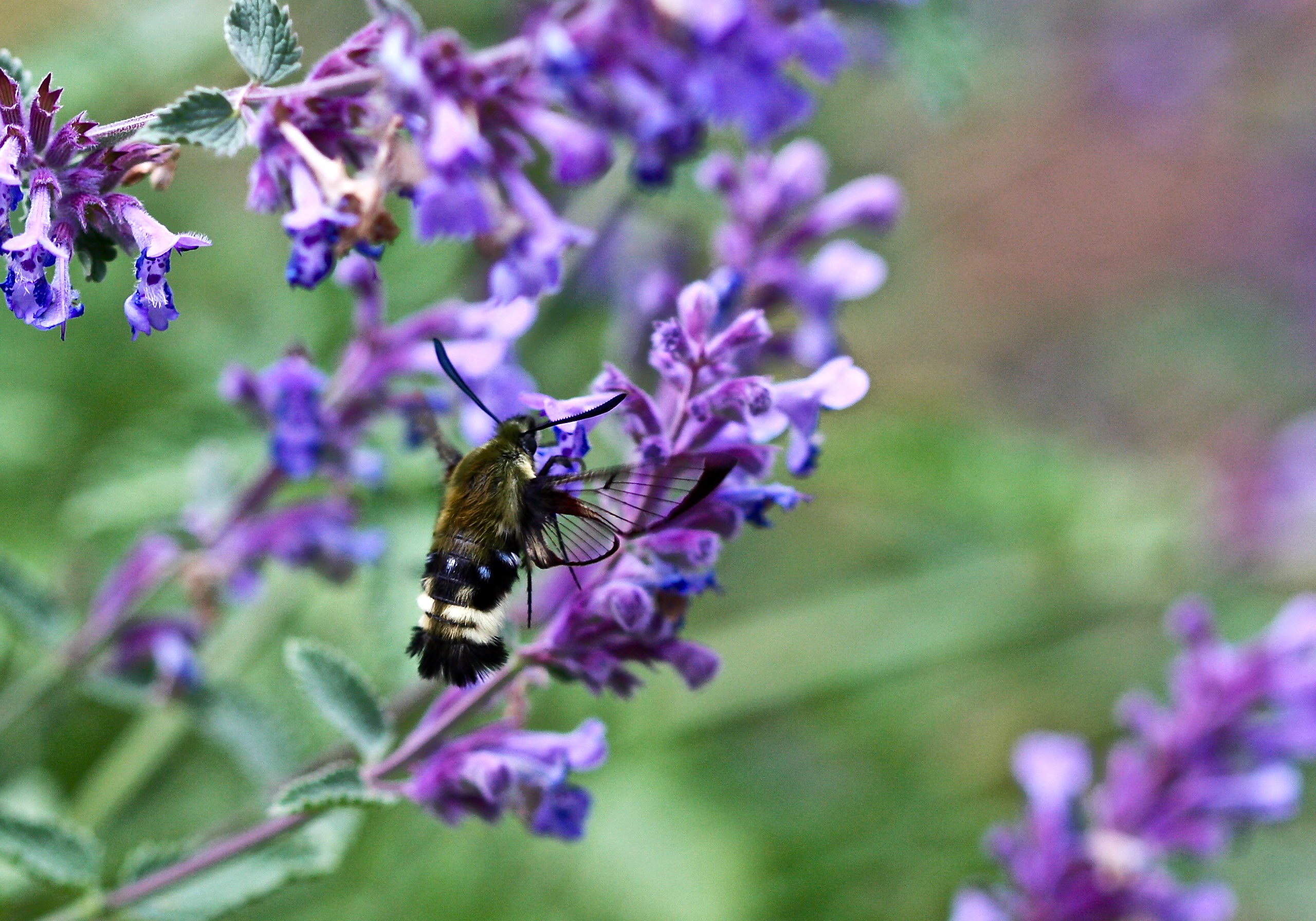
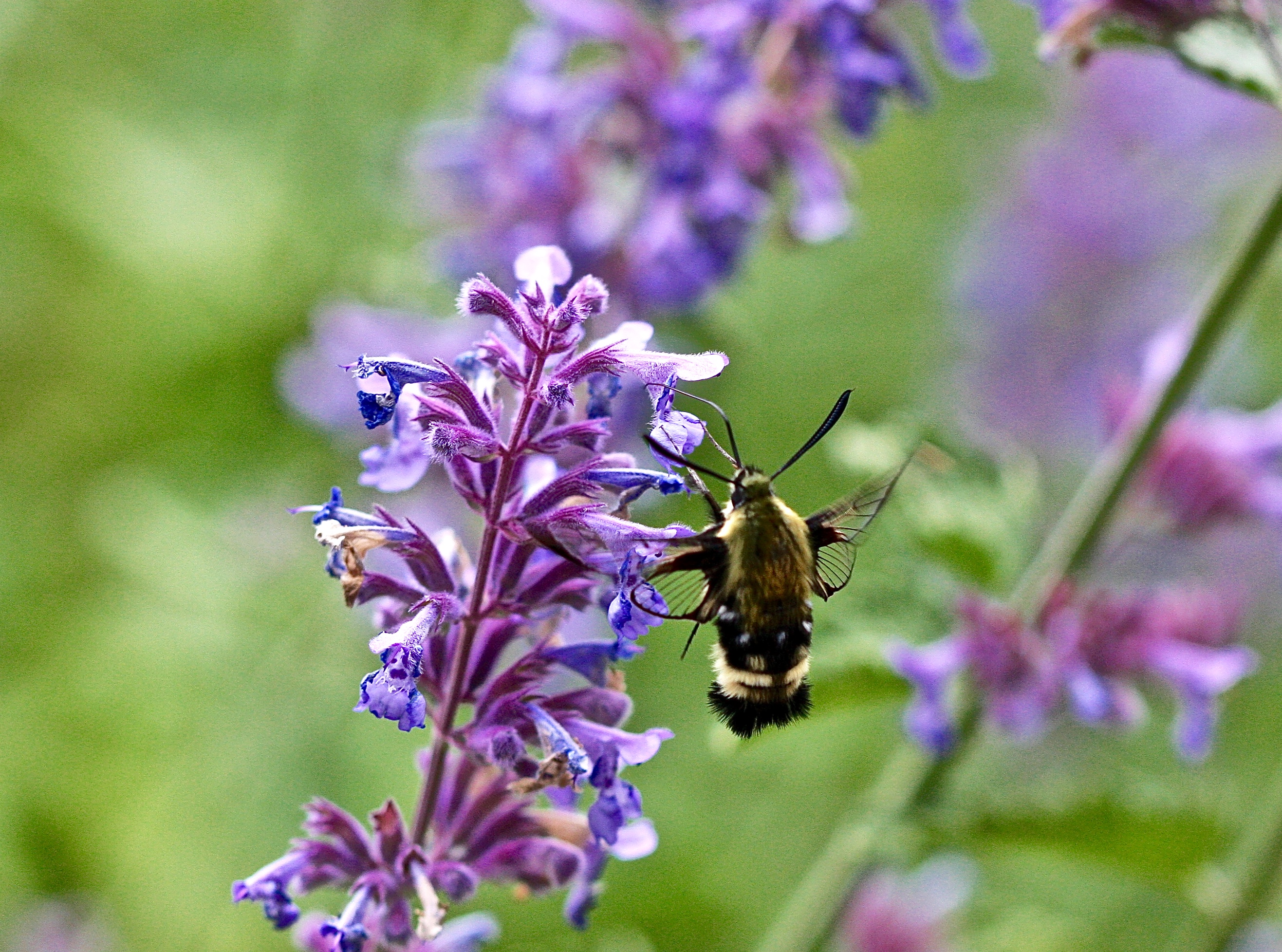
I keep hoping to see my very favorite of the pollinators visiting the catmint, but have to make a point of going around dusk.  It’s been a few years, but the catmint is also a favorite of the elusive hummingbird moth (Hemaris diffinis).  Here is one I photographed in June of 2016.   Also known as the Snowberry Clearwing moth, these fuzzy, large-bodied but nimble fliers are also called Bumblebee or Hawk moths.

Hemaris diffinis on Catmint

Hemaris diffinis on Catmint photo by Cynthia Brast June 1, 2016. San Juan Island, WA

Hemaris diffinis on Catmint

Hummingbird moth (Hemaris diffinis) on Catmint

Sheep Moth Larvae (Hemileuca eglanterina)

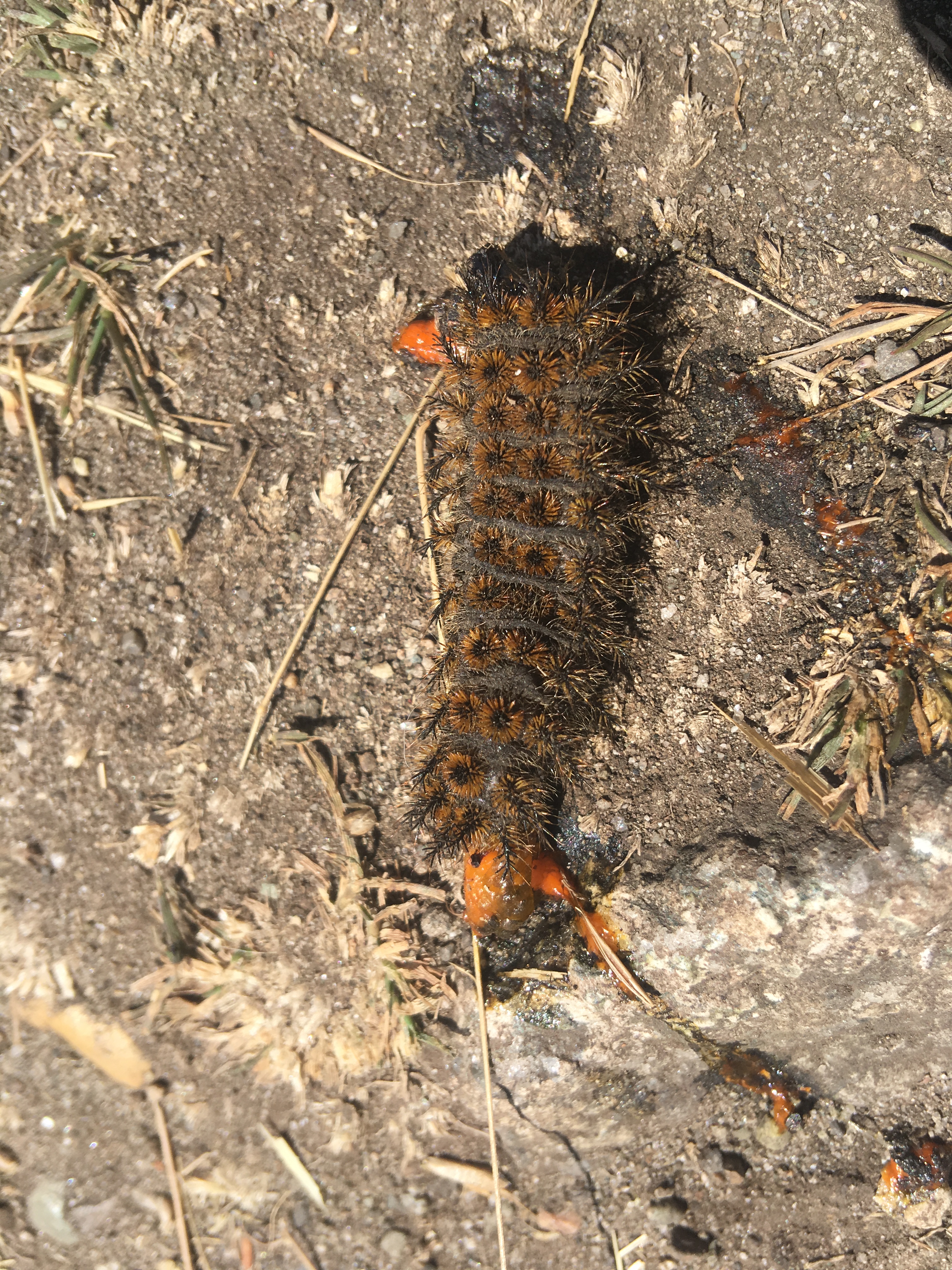
These were on the trail at American Camp, San Juan Island National Historical Park. One had unfortunately been stepped on. I recommend looking down at the trail when you’re on a hike as lots of insects seem to travel along it too! These are larvae of the Sheep Moth (Hemileuca eglanterina). Check out this link if you’d like to see what they’ll be as adults! http://pnwmoths.biol.wwu.edu/…/hemil…/hemileuca-eglanterina/Photos taken 08-VII-2017.

Image may contain: plant, outdoor and nature

Sheep Moth larva (Hemileuca eglanterina)

Sheep Moth Larva (Hemileuca eglanterina)

Sheep moth larva (Hemileuca eglanterina), American Camp, San Juan Island National Historical Park. This one had unfortunately been stepped on. I recommend looking down at the trail when you’re on a hike as lots of insects seem to travel along it too! Check out this link if you’d like to see what they’ll be as adults! http://pnwmoths.biol.wwu.edu/…/hemil…/hemileuca-eglanterina/ Photos taken 08-VII-2017. Image may contain: plant, outdoor and nature

Xestoleptura crassipes on Pearly Everlasting (Anaphalis margaritacea)

Xestoleptura crassipes

Flower Long-horned Beetle (Xestoleptura crassipes) on Pearly Everlasting (Anaphalis margaritacea)

Western Conifer Seed Bug (Leptoglossus occidentalis)

I’ve been stuck in the house all week with the flu…a BAD case of the flu. You don’t want it! Trust me. So, what does the very bored, sniffling, coughing entomologist do to pass the time when she’s sick? Why play with bugs of course!

My honey brought me this from the back deck…(such a thoughtful man!). fullsizeoutput_184b.jpeg

I wonder if he knew that had he not been more careful, our house could have been filled with “le pew de le bug,” a very unpleasant odor! While I probably wouldn’t have suffered (since I’m all stopped up), he certainly would have noticed.

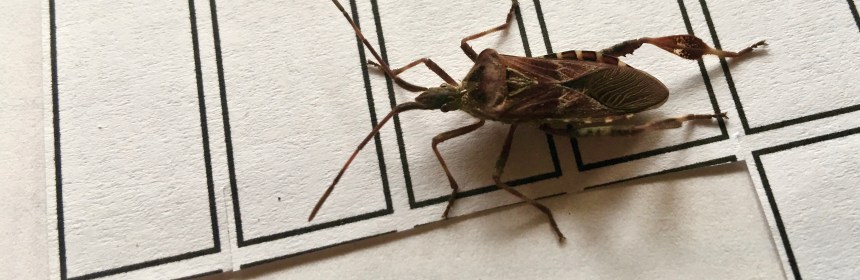
So, what is this bug? Well, it’s not a “bug,” it’s an INSECT. You know….6 legs, chitinous exoskeleton, antennae, three main body parts (head, thorax, and abdomen).  More specifically, THIS INSECT is a Western Conifer Seed Bug (Leptoglossus occidentalis).  It is classified in the order Hemiptera, family Coreidae (Leaf-footed Bugs and Squash Bugs).

No….please don’t take that literally.  I’m certain this fella (or femme) would not like to be “squashed!”  I don’t advocate squashing any insect.  They’re ALL interesting…in one way or another.

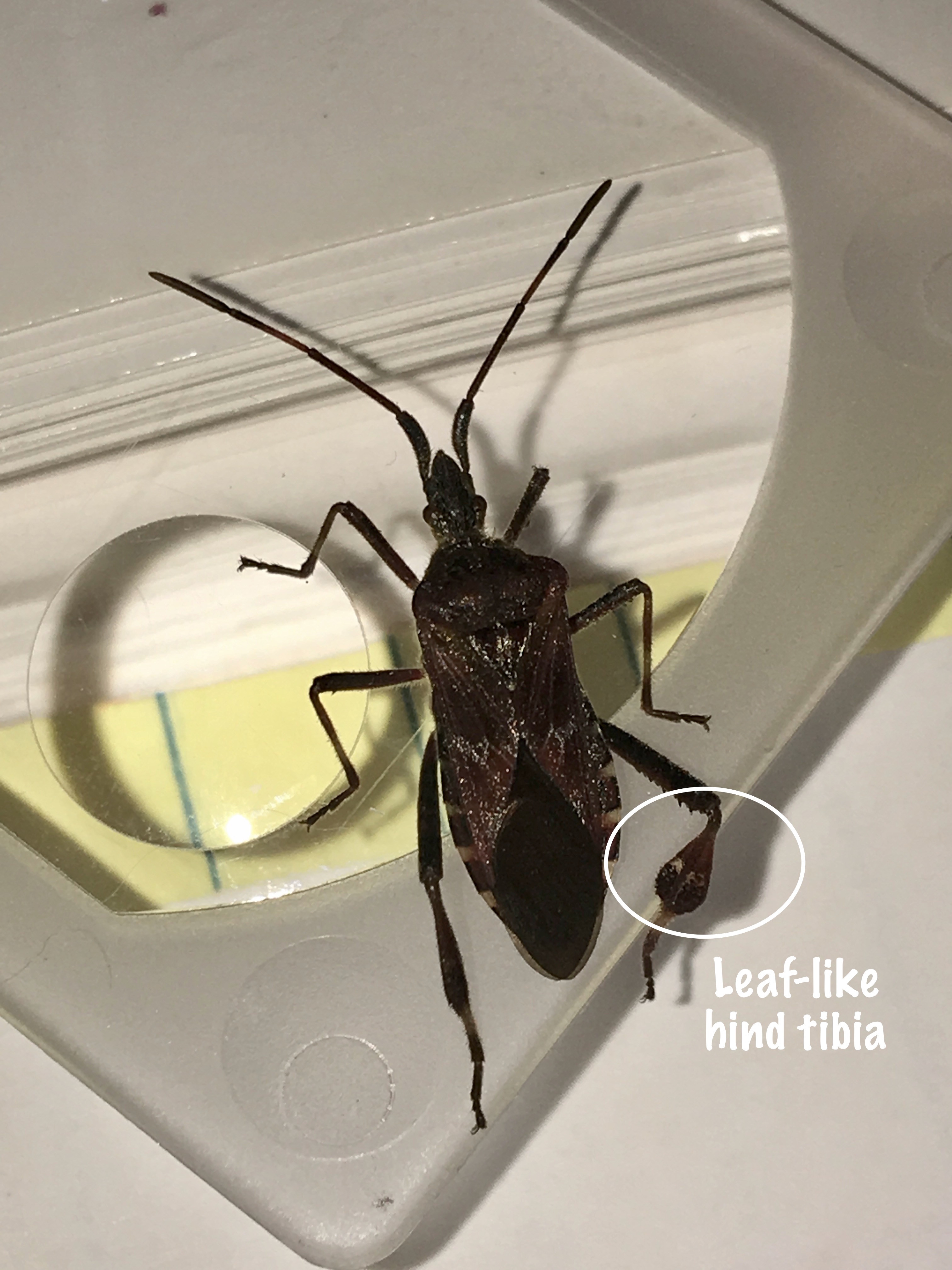
The Coreidae or Squash Bugs are medium to large in size.  They are usually brownish colored.  This one has what I would describe as the beautiful color, Bronze! Please also note the leaf-like hind tibia, a feature characteristic of some species in this particular family. img_1869-2

What does it eat? It feeds on vegetation.  Check out the very long, piercing Rostrum or Proboscis tucked carefully along the underside of this one’s body.  western-conifer-seed-bug-leptoglossus-occidentalis

The Rostrum is used like a straw to suck the juices from conifers including Douglas Fir (Pseudotsuga menziesii) and Lodgepole Pine (Pinus contorta).  Other species are vegetable pests.  Hence the “Squash Bug” moniker.  It also has the characteristic SCENT GLANDS that will secrete the particularly stinky odor if you poke it too much when you are trying to get it to pose for a picture!  “Le pew de le bug!”


Working Checklist of San Juan Island, WA Coleoptera

This is a checklist I’ve put together of the Coleoptera of San Juan island. Beetles with (*) asterisks are those I have actually seen, photographed, or have in my collection. It is a work in progress!San Juan Island – List of Coleoptera 2016 by Cynthia Brast


The Fainting Bug! Enoclerus sphegeus

IMG_0997I like beetles. There are interesting ones all over the place…and they do REALLY interesting things. Some can cry like babies. Some like to pat poo into nice little balls and roll them back to their home. Some hang around to take care of their offspring and even “play music” to call them to breakfast…or lunch…or dinner! Some do “bad” things like eat your plants …or your trees…or your house! Some wear really cool suits of shiny armor. They can look like miniature versions of dinosaurs or imaginary space aliens! Some have really cool names…like this one I found the other day…with many friends…hanging out on a dead fir tree. Its name? The FAINTING beetle! That’s exactly what it did when I walked up….fainted right over onto the ground! Stayed that way too…for about 30 seconds with its bright red (aposmatically colored) abdomen warning me it would taste VERY bad if I decided to eat it. No worries there little bug. I was only going to take your photo. Now the scientific name of this fella (or maybe it was a “she”) is Enoclerus sphegeus. It eats the bark beetles that eat fir and pine trees. Check out the photos and next time you see a beetle, take a moment to “admire and inquire” before you automatically stomp it! Not all bugs are bad.

Interested to know more.  Check out some of these references for further reading:

Boone, C., Six, D., and K. Raffa. 2008. The enemy of my enemy is still my enemy: competitors add to predator load of a tree-killing bark beetle. Agricultural and Forest Entomology, 10(4), 411-421.

http://onlinelibrary.wiley.com/doi/10.1111/j.1461-9563.2008.00402.x/full

Cowan, B., and W.P. Nagel. 1965. Predators of the Douglas Fir Beetle in Western Oregon.  Agricultural Experiment Station, Oregon State University, Corvallis, OR. Technical Bulletiin 86 http://ir.library.oregonstate.edu/xmlui/bitstream/handle/1957/8806/?sequence=1

Rasmussen, L. 1976.  Keys to Common Parasites and Predators of the Mountain Pine Beetle. USDA Forest Service Intermountain Forest and Range Experiment Station. Ogden, UT. General Technical Report INT-29

Click to access 1976Rasmussen_Key%20to%20Common%20Parasites.pdf

Fainting Bug, Enoclerus sphegeus IMG_0990Enoclerus sphegeus, the Fainting Bug IMG_0992Enoclerus sphegeus, the Fainting Bug IMG_0994 IMG_0997 IMG_0999 IMG_1000 IMG_1001

Meditations from San Juan Island and the story of Jerry the June Beetle (Polyphylla decemlineata)

Last year I had to put together a collection of insects for my graduate course at the University of Florida.  In this photo, I have a Ten-lined June Beetle that I pretty much stole away from a robin that was after it.  The beetle came home with me and I’m sorry to say I put it in the freezer and later added it with the rest of the bugs that eventually got me an “A”.

A few days ago, a friend called me up.  “Would you like another June Beetle?”  he asked.  I drove over to pick it up and afterwards, took a few photos with my new macro lens, fixed up a nice plastic box insect habitat and thought I’d take a few days to decide what to do with it next.

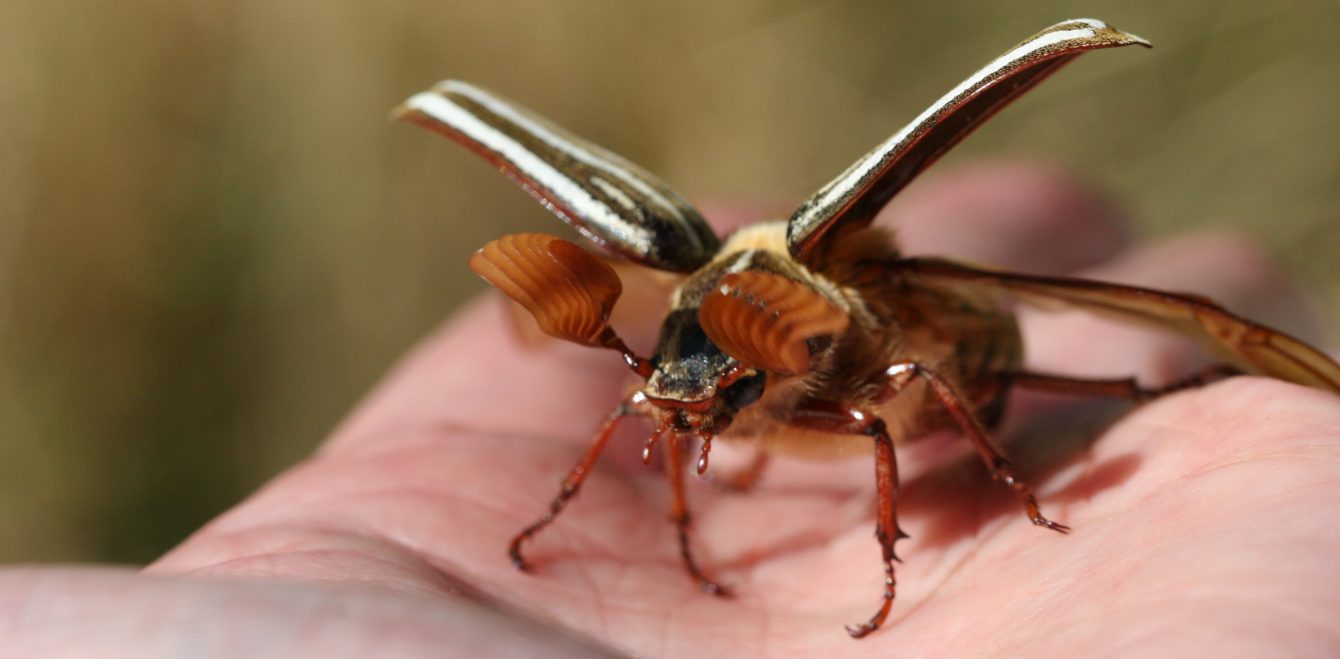
Daily, I peeked into the box.  Not sure what to feed it, I thought a little about whether my June Beetle might be hungry.  Yesterday though, when I looked into the box, I found him buried into the grass.  What was most noticeable to me was the fact that his antennae which had been upwards directed, were now pointing down.  He looked depressed – like he’d just accepted the fate that had come his way.  No! I thought to myself….I can’t keep him locked up like this.  So, grabbing my camera, I took my June Beetle (now named Jerry) outside.  I carefully took him out of the box and set him on a branch propped against a rock.  The sun was shining and warm and almost instantly, he perked up.  Those antennae started to rise, then waved around and spread open into intricately designed fans that were getting signals only he could interpret.

I snapped away with my camera, enjoying the experience of watching life come into him.  It wasn’t more than maybe five minutes and “Jerry” June Beetle decided to try his wings.  His first attempt to take-off failed.  So did his second….but he got it right on the third try and I watched amazed as he lifted into the air.  He rose almost directly upward and as he reached about 20 feet, he circled over me twice before heading over to the big Douglas Fir tree in my yard.  Freedom was his!  And me?  Well, I have come full circle.  You can learn so much more from observing a creature in its natural habitat than in captivity.  Thank you “Jerry” June Beetle.  It was nice making your acquaintance.  🙂

See more of Jerry and his transformation below! fullsizeoutput_958fullsizeoutput_955

fullsizeoutput_94e

Thank you for setting me free! Love, Jerry the Ten-Lined June Beetle

Recent Entries »