Sleuthing Spiders in the San Juans- Day TWO (It’s all about the NAME!)

Sleuthing Spiders Day TWO! It’s all about the NAME.

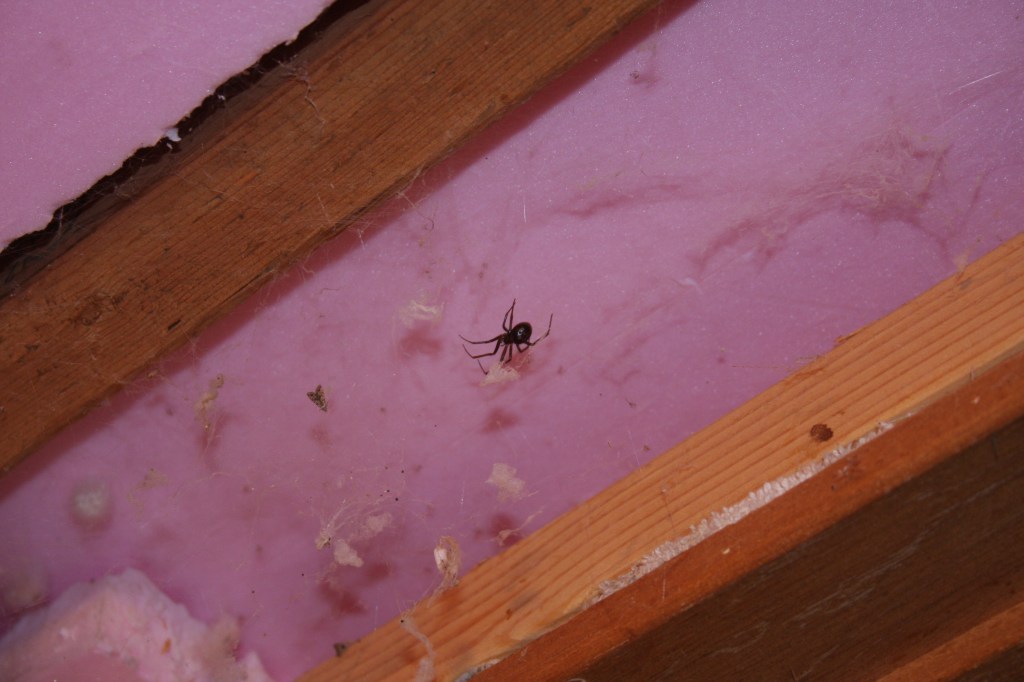
Did you know I name the spiders in my house? I also can recognize some of the cuties that are repeat offenders. Repeat offenders? Oh yes! These are the ones who I find in my kitchen or bathroom sink on a regular basis.

I even have some that end up in the shower or bathtub. The toilet you ask? Well, we keep our toilet lids down so they don’t accidentally fall in and drown. Also, keeping that toilet lid down (especially when you flush) prevents weird germy bacteria and viruses from spewing out into the air where you might breathe it back in! That’s another topic entirely though. Tomorrow, I’ll cover why spiders end up in bathrooms in the first place, so stay tuned!

Are any of these spiders in my house going to bite me? Doubtful. And, even if they did, most likely all that would happen is NOTHING! At most, I might feel a small pinch like I did when the one hanging out in my bath towel bit me.

I knew it was a spider because I was patting myself dry, felt it bite my leg, then watched it drop to the floor. Sadly, I was the one inflicting pain and had mortally wounded the poor creature. All I suffered was a tiny raised red mark on my skin that went away in less than 20 minutes.

Was I worried about the bite? First off, I’m no spider expert because entomologists study INSECTS and spiders are ARACHNIDS. It’s all about legs (and math). Entomologists can’t count beyond 6 and Arachnologists can count to 8. Bad joke, right? I wasn’t worried because most spiders (and I’m referring to the ones that are found in the San Juan Islands) are harmless (or you can use the scientific description of “medically insignificant” to impress your friends)!

Learning to correctly identify some of these spiders will put your fears to rest. We’ll go through some of the ones commonly found in homes, especially at this time of year. We will learn to identify a black widow and where they might be found. Also, we’ll be learning about widow look-a-likes that you might not want to squish in your home because they chase the real widows away!

But today! Today, we are going to NAME that spider in our house. I found a list of very cool spider names online (check out either of these links if you need ideas – https://animalhype.com/arachnids/spider-names/ and https://petpress.net/pet-spider-names/ My favorites were Zorro, Otto, Blossom, Skreech, Jinx, Twitch, Tinkerbelle, and get this…SPINDRA!

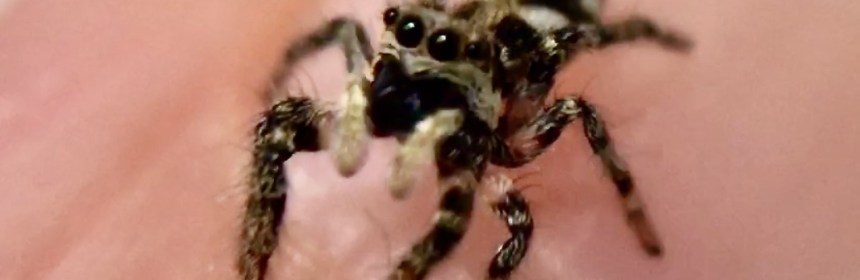
I named my spider Tinkerbelle! I think Tinkerbelle is a SHE spider. Tinkerbelle is giant house spider hanging out in my bathroom this week. Her scientific name is Eratigena duellica.

Giant House Spider (Eratigena duellica)
Shelf-like spider webs in bathroom

I looked around the ceiling of the bathroom and can see little shelf-like webs where some of those super irritating fruit flies are landing. I’ve resisted my OCD urges to clean the webs away and actually appreciating the natural pest control that is free of toxic chemicals.

If you want to become FEAR-Less of Giant House Spiders, and we’ll be seeing LOTS of them through the upcoming fall months, someone I know put together an awesome YouTube video about them. You can check out Arlo’s video here –

AND, don’t forget! Post your spider photos at Bugs of the San Juan Islands https://www.facebook.com/groups/bugsofthesanjuanislands!

Brownie points for whoever has the most creative name!

Happy Hour and Bug Beer!

For all you foodies out there, here’s a new one for you. Beer brewers are isolating yeast from insects, including bees, wasps, and even crickets. Don’t worry, no actual bug parts are going to be in your drink. Drink up and enjoy the buzz!

https://www.foodandwine.com/drinks/researchers-brewing-beer-bug-yeast

Cicurina spp. February 19, 2020

This spider is in the genus Cicurina, also known as the Cave Meshweaver or Cave Spider. Pronounced “sik-uhr-EYE-nuh,” the Latin name translates to “tame” or “mild.”

From Buggide.net and according to Rod Crawford:

Cicurina of Western Washington: “C. pusilla is by far the commonest. C. simplex and C. “idahoana” (really an undescribed species related to idahoana, in my opinion) are moderately common. Cicurina tersa is less common than the previous three. The other Cicurina of western Washington are actually rare here, C. tacomaand C. intermedia.” ~Rod Crawford

Cicurina spp.
Found in Rotting Fir log. 2.19.2020. Three Corner Lake Road, San Juan Island, WA
Size – approx 5mm
Photo by Cynthia Brast-Bormann
Identified by A. Pelegrin and L. Paxson at Pacfic Norwest Bugs
Cicurina spp.
Found in Rotting Fir log. 2.19.2020. Three Corner Lake Road, San Juan Island, WA
Size – approx 5mm
Photo by Cynthia Brast-Bormann
Identified by A. Pelegrin and L. Paxson at Pacfic Norwest Bugs

References:

Adams, R.J. 1970. Field Guide to the Spiders of California and the Pacific Coast States. California Natural History Guides. University of California Press. Los Angeles.

https://www.facebook.com/photo.php?fbid=10219387419670050&set=gm.3092310434134350&type=3&theater&ifg=1

https://bugguide.net/node/view/236713

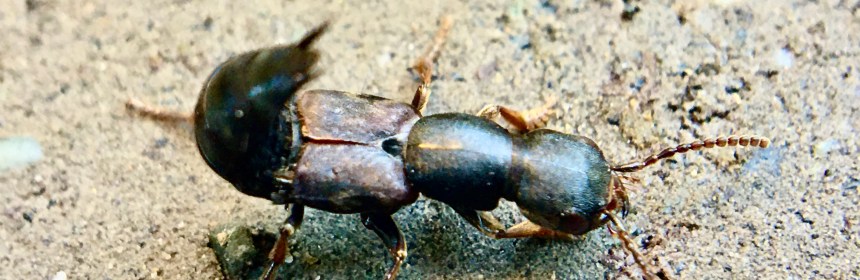
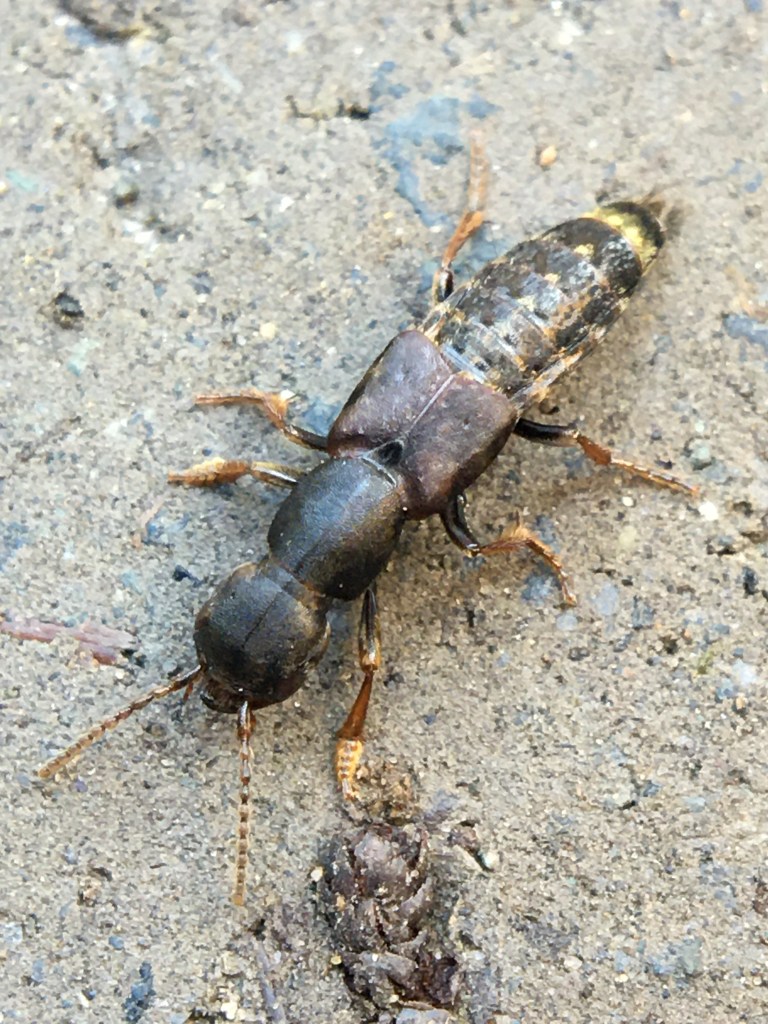
Gold and Brown Rove Beetle (Ontholestes cingulatus)

I only saw a handful of insects yesterday when I went out to look along the road near my home. The most remarkable of these (and the easiest to see) without magnifying tools, was the slender, brown rove beetle with the sunshine tail!

Gold and Brown Rove Beetles are fairly small, slender, and typically pretty agile. They have a brown body with little yellow hairs (setae) at the end of their “tail.” Another patch of this golden setae wraps around their “belly,” like a little yellow ‘belt,’ This one was indeed on the smaller side at about 12 mm. However, given the outdoor temperature was still pretty low, it wasn’t agile enough to escape a short photo session.

Ontholestes cingulatus (Gold and Brown Rove Beetle) 2.19.2020
Three Corner Lake Road, San Juan Island, WA

I’ll admit, I poked it (very gently) to see if I could get a photo of it with its tail up. When threatened, they have defense glands that emit a chemical fluid. I found out (after reading through the Journal of Chemical Ecology from 1990) that researchers found this defense fluid is made up primarily of a chemical called iridodial (Huth and Dettner, 1990).

Here’s a photo of my beetle exuding the defense fluid! Note the little white bubble at the end of its tail.

Ontholestes cingulatus Gold and Brown Rove Beetle emitting defense fluid
2.19.2020
San Juan Island, WA

Here in the next photo, you can see it without the defense fluid.

Ontholestes cingulatus Gold and Brown Rove Beetle
2.19.2020
San Juan Island, WA

Being curious, I had to investigate a bit about the chemical properties of iridoids. I was intrigued to learn that “iridoids are secondary metabolites present in various plants, especially in species belonging to the Apocynaceae, Lamiaceae, Loganiaceae, Rubiaceae, Scrophulariaceae and Verbenaceae families, Viljoen et al., (2012).” Tundis et. al., (2008) found that “iridoids exhibit a wide range of bioactivity, such as neuroprotective, antinflammatory and immunomodulator, hepatoprotective and cardioprotective effects.” Findings also included iridoid compounds also possessed anticancer, antioxidant, antimicrobic, hypoglycaemic, hypolipidemic, choleretic, antispasmodic and purgative properties (Tundis et al., 2008).

While I didn’t find much information (yet) utilizing iridoid secretions from insects, I did begin to wonder if that tiny drop of fluid could have provided some anti-inflammatory benefit for the migraine headache I’d been suffering from for days. I’ve been working with a friend of mine who is a research pharmacokineticist, helping to edit his papers and those of some associates he has in China. Probably, I’ll pass this along since they’re always looking for ideas on how to develop/synthesize new pharmaceuticals and biomimicry seems to be the new frontier.

Ontholestes cingulatus Gold and Brown Rove Beetle
2.19.2020
San Juan Island, WA

References:

Huth, A. and K. Dettner. 1990. Defense chemicals from abdominal glands of 13 rove beetle species of sub tribe Staphylinia (Coleoptera:Staphylinidae, Staphylininae). Journal of Chemical Ecology, 16:9, pp 2691-2711.

Tundis, R., Loizzo, M.R., Menichini, F., Statti, G.A., and F. Menichini. 2008. Biological and Pharmacological Activities of Iridoids: Recent Developments, Mini-Reviews in Medicinal Chemistry. 8: 399. https://doi.org/10.2174/138955708783955926

Viljoen A., Mncwangi N., Vermaak I. Anti-inflammatory iridoids of botanical origin. 2012. Curr. Med. Chem. 19:2104–2127. doi: 10.2174/092986712800229005

Steotoda grossa (The False Widow)

It’s been raining a lot in the Pacific Northwest. Between the deluge and the cool temps, it’s definitely not the season for bug viewing. Being indoors, in rainy winter weather, when you live on an island equals boredom, cabin fever, and winter blues. You have to make your own sunshine or you get SADD.

I found my sunshine today in the barn. I went down to take better photos of the spiders I discovered over the weekend residing in the well pump house (inside the barn). I get really excited finding any sort of invertebrate this time of year.

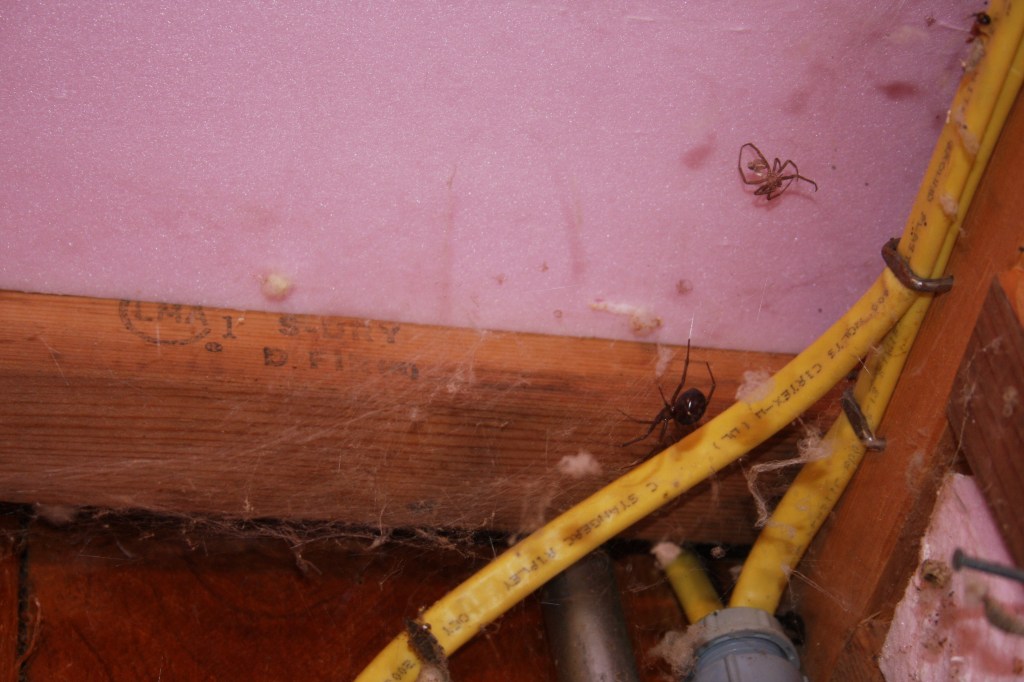
This shiny arachnid had me fooled the first time I found one. She’s not a real widow, but a False Widow (Steotoda grossa). False widow spiders are not native to Washington. They were imported from Europe, but are widely distributed and considered a cosmopolitan species. We have lots in the basement of our house!

When I was in the well pump house, I found three females, each in her own corner, tending her egg sacks.

A very shiny Steotoda grossa female

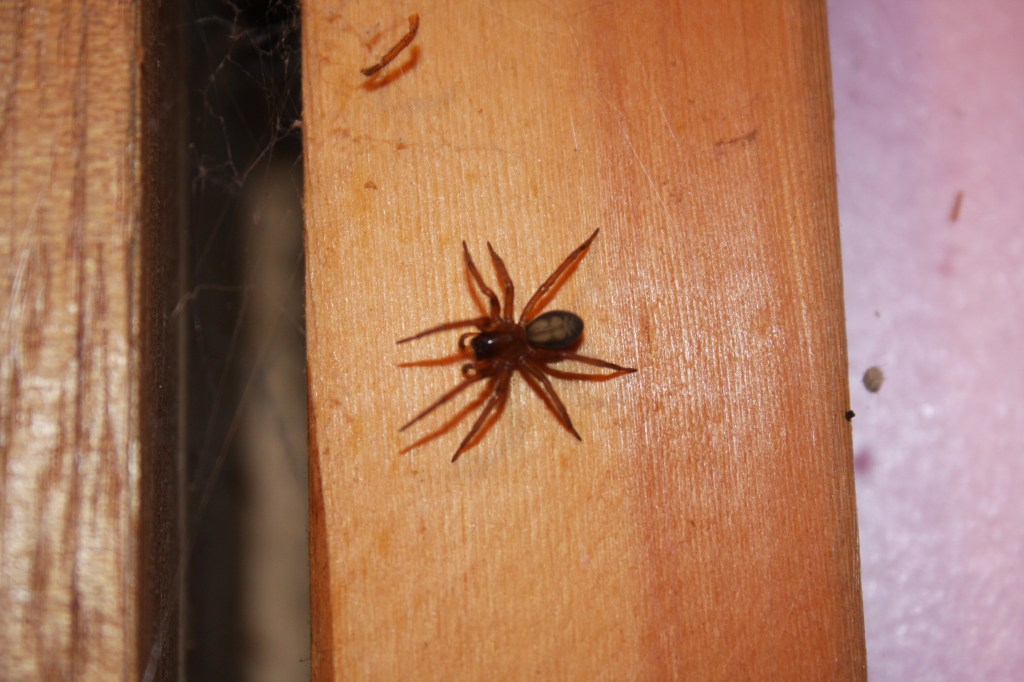
I also found a lone Callobius severus (male?) on the wall… just hanging out. He was alive. I gently blew on him to see if he moved. He did.

Callobius severus (male?)

Steotoda grossa spiders are actually quite beneficial, preying on invertebrates like pillbugs, but they are famous for eating other spiders that humans don’t particularly want to encounter, like Hobo spiders or Black Widows. They construct flimsy or loosely woven, somewhat messy webs and seem to love corners in outbuildings and basements (at least from my personal experience). Female Steotoda grossa spiders have been recorded living as long as 6 years, while males have a much shorter lifespan no longer than 1.5 years.

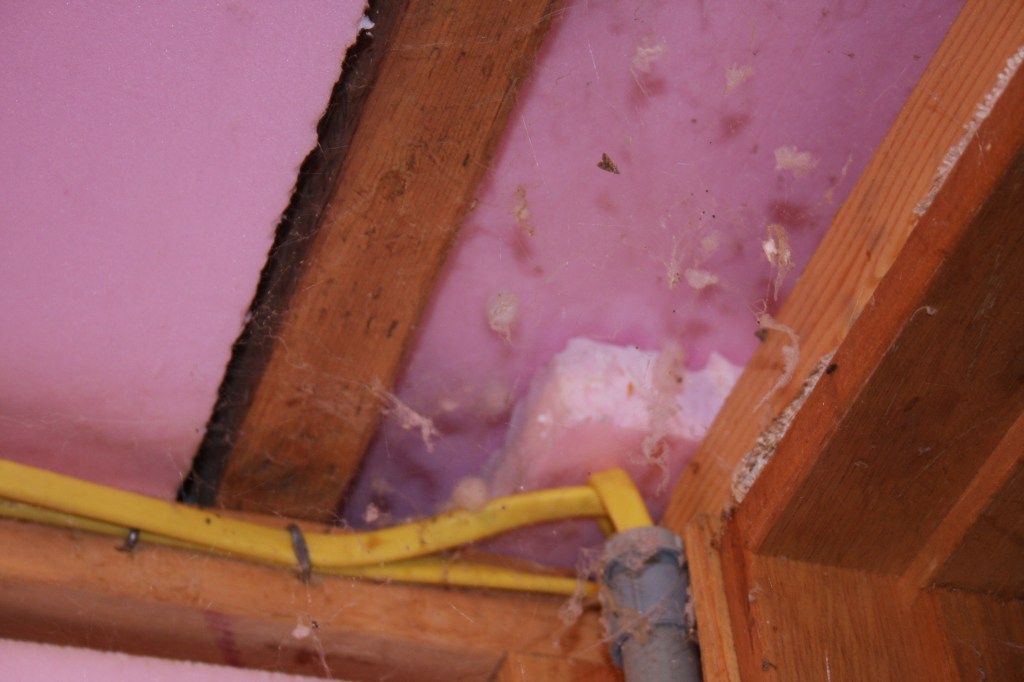
Loosely constructed Steotoda grossa web with round egg sacks

While not aggressive, Steotoda grossa spiders will sometimes bite people. They see very poorly and react mostly to vibrations when responding to threats. A bite from a False Widow is not life threatening, but some individuals may have a localized reaction to the bite.

Thanks for reading! 🕸🕷

Steotoda grossa female with egg sack

Steotoda grossa female (upper center, above red mark) with egg sacks

We know what happened to him!

Avec sa tête
European Mantis (Mantis religiosa)
San Juan Island, WA 09-07-19

A picture says it all, right? I found this poor fellow when I attended the San Juan County Land Bank’s open house at the new Zylstra Lake Preserve on September 7, 2019 ~ http://sjclandbank.org/zylstra-lake-preserve-san-juan-island/ .

We know what activity he must have been participating in!

Lots of amazing artwork by Steve Thompson available on tees and posters here ~ https://www.redbubble.com/people/stevet3214/works/26202642-praying-mantis-family-photo?p=poster

Yes, it’s that time of year. You may be seeing lots of European Mantids (Mantis religiosa) about right now. They’re mate seeking. While not native, don’t worry, they aren’t taking over the island. If you’re curious about them, read my post from last year when there were rumors of them invading the San Juan’s and devouring hummingbirds (not true) https://sanjuanislander.com/news-articles/environment-science-whales/environment/28146/revenge-of-the-mantids .

While they are generalist feeders, they aren’t going to decimate our native pollinators OR eat birds. It’s far more likely they’ll be eaten (or beheaded) before they take over!

My pet mantis, Merlina
San Juan Island, 2010

Not a Spider!

Harvestman probably Phalangium opilio

I found this the other morning (Sept. 8, 2018) when my husband had to drive over to unlock the gates at Mount Grant, San Juan Island Land Bank Preserve.

While I was waiting for him at the top, I had a chance to photograph this really interesting spider (or so I thought). It had 8 legs and looked like a spider to me, but not one I’d seen before on San Juan Island. I spent that evening going through my spider ID book without any luck.

So I sent off an email to Rod Crawford, curator of the arachnid collection at the Burke Museum in Seattle and all around “spider man” genius. Here was his response.

“Dear Cyndi,
The reason you could not find the top specimen in the Adams spider book, is that it isn’t a spider. It’s a harvestman (member of a separate order of arachnids). Even a scorpion is more closely related to a spider, than a harvestman is. Harvestmen have segmented bodies that are all in one piece (not 2 separate pieces), 2 eyes close together on a little bump, totally different mouthparts, respiratory system and reproductive system, no venom and no silk. Yours is probably the common European import Phalangium opilio.”

So, I learned something new today. I hope this will inspire you to read up on Harvestmen or Opiliones. I know that’s what I’ll be doing this evening for my light reading! Here’s a link to get you started ~ https://bugguide.net/node/view/33857 and while you’re at it, check out Rod Crawford’s great spider myth’s website at https://www.burkemuseum.org/collections-and-research/biology/arachnology-and-entomology/spider-myths

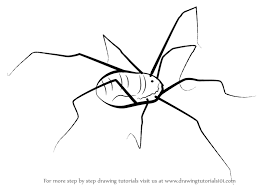
Illustration of a Harvestman

Rough Stink Bug, Brochymena spp.

This is a quick post! I just wanted to share the stink bug nymph I found over the weekend (Sunday, Sept. 1, 2019). It’s a Rough Stink Bug nymph, in the genus Brochymena. I believe it’s Brochymena quadripustulata, the Four-humped Stink Bug. However, Brochymena sulcata and B. affinis are two other species found in our area so similar, they are difficult to distinguish.

Brochymena quadripustulata nymph

Often Brochymena stink bugs are confused with the Brown Marmorated Stink Bug, Halyomorpha halys. These two species can be distinguished by the teeth on the outer edge of the pronoun found on Brochymena spp. and the lack of white rings on Brochymena spp. antennae. Great diagram here ~ http://www.stopbmsb.org/stink-bug-basics/look-alike-insects/%23nbsb

I’m not certain what the red spot is on the bug in my photo, but curiously, I found another photo on bugguide.net with a similar spot https://bugguide.net/node/view/1596719/bgimage . I wish I’d kept my specimen for further investigation, but let it go after taking a few photos. The quality of the photo when enlarged just isn’t good enough to determine if the spot is a parasite. My first thought was it sure looks like a honey bee varroa mite, but I haven’t found any literature describing mites on stink bugs. For the time being, it’s on my “shelf” of things to figure out.

References/Further Reading

https://webdoc.agsci.colostate.edu/bspm/Hexapoda%20(Insects)/Rough%20Stink%20Bugs.pdf

https://bugguide.net/node/view/156717

https://www.oregon.gov/ODA/shared/Documents/Publications/IPPM/StinkBugGuide.pdf

Monochamus scutellatus, the Whitespotted Sawyer Beetle

Monochamus scutellatus
Canoe Island
August 12, 2019
Photo by Chase Stoddard
Monochamus scutellatus
Canoe Island, August 12, 2019

I received this photo yesterday of a very cool Cerambycid (Long-horned) beetle from Chase S. on Canoe Island, WA. This is a Whitespotted Sawyer beetle (Monochamus scutellatus). These beetles are found in forested areas across the continent. The first time I saw one on San Juan Island, I almost mistook it for a giant black spider. Its long antennae give it the appearance of having eight legs, like an arachnid.

The larvae (known as sawyers) of Monochamus beetles develop in the wood of fire-scorched, diseased or injured, dying pine, Douglas fir, true firs, and spruce trees. The adult beetles lay eggs in slits in tree bark. Larvae (grubs) develop through several instars before pupating. The younger larvae feed on wood beneath the bark and filling the void with long, fibrous borings, then move into the wood, forming holes that will become almost perfectly round as the tunnel grows deeper. The tunnels can eventually reach the heartwood of the tree.

Prior to pupation, the larvae will pack the deep gallery with grass, leaving a space at the end for the pupal cell or chamber. Adults will emerge by gnawing through the cell and a thin layer of wood and bark to the surface. Telltale signs of boring damage is the accumulation of debris along infested logs. As they can attack and damage recently felled trees, they are considered a pest in logging areas. According to Furniss and Caroline’s 1977 Department of Agriculture Forest Service Publication No. 1339, utilization of preventative methods that avoid leaving logs exposed during the beetles’ egg laying period ( July-September ) is the best approach.

Monochamus scutellatus White-spotted Sawyer
August 30, 2010
Photo by Cynthia Brast
San Juan Island, WA

References:

Furniss, R. L. (Robert Livingston)., Carolin, V. M. (Valentine M.)., United States. Forest Service. (1977). Western forest insects. [Washington]: Dept. of Agriculture, Forest Service : for sale by the Supt. of Docs., U.S. Govt. Print. Off..

Haggard, P. and Haggard, J. (2006). Insects of the Pacific Northwest. Timber Press Field Guide.

Peterson, M.A. (2018) Pacific Northwest Insects. Seattle Audubon Society.

Black-headed Grosbeak (Pheucticus melanocephalus)

I had to share because I don’t just love bugs. I really love birds too! This visitor and family have been a true delight to observe at our feeder. I’d been hearing a strange high-low whistle around our property and finally figured out this is the sound the baby makes when I watched the parent feeding it while it made this call and shook its wings. They’re not subtle! Listen to the two note call here ~

Black headed Grosbeak chick calling

I believe the photos below are of the juvenile, dated August 7, 2019

Black-headed Grosbeak August 7, 2019
ps://animaldiversity.org/accounts/Pheucticus_melanocephalus/
Black-headed Grosbeak at feeder

Read more about these beautiful birds here ~ https://animaldiversity.org/accounts/Pheucticus_melanocephalus/

« Older Entries Recent Entries »