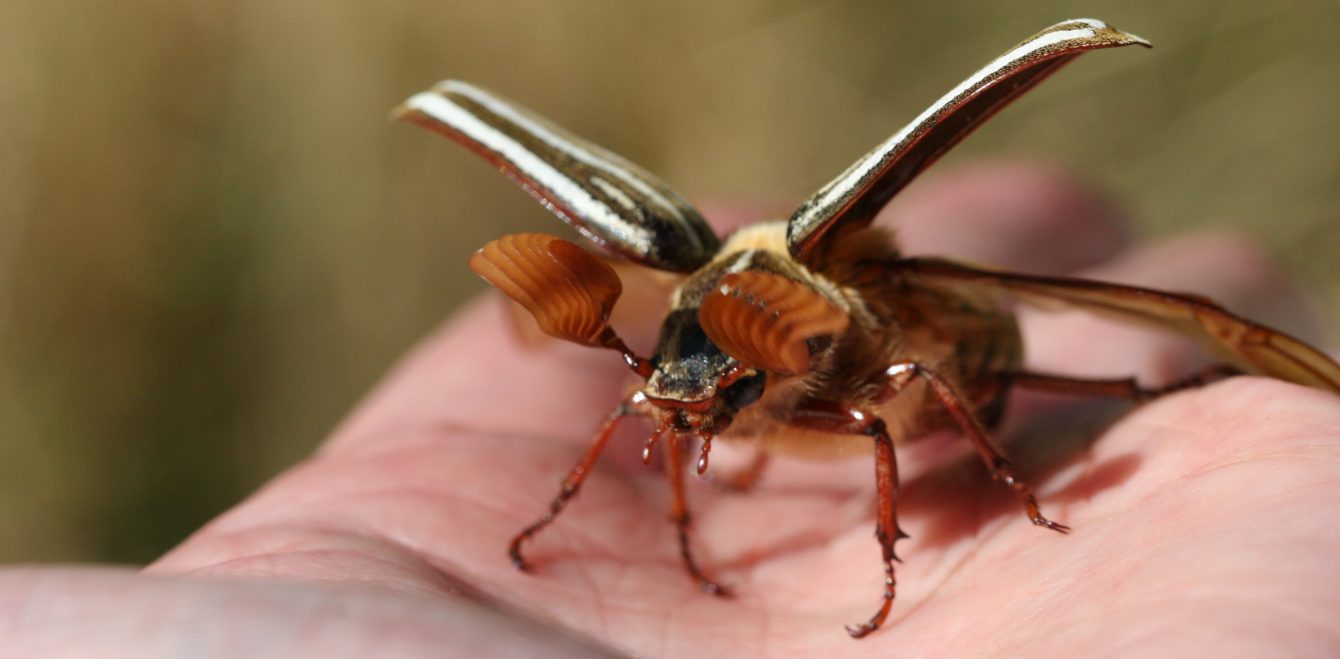
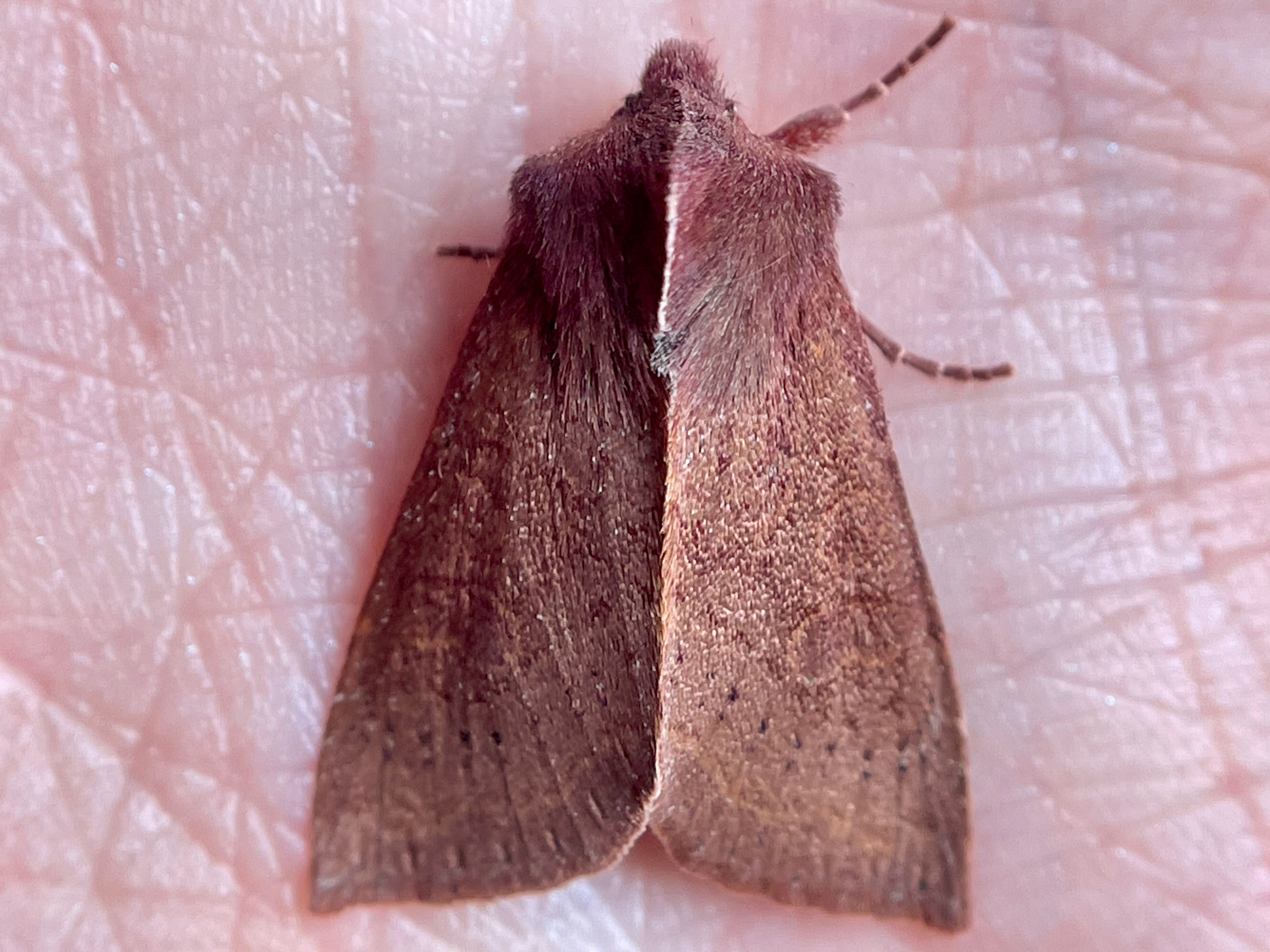
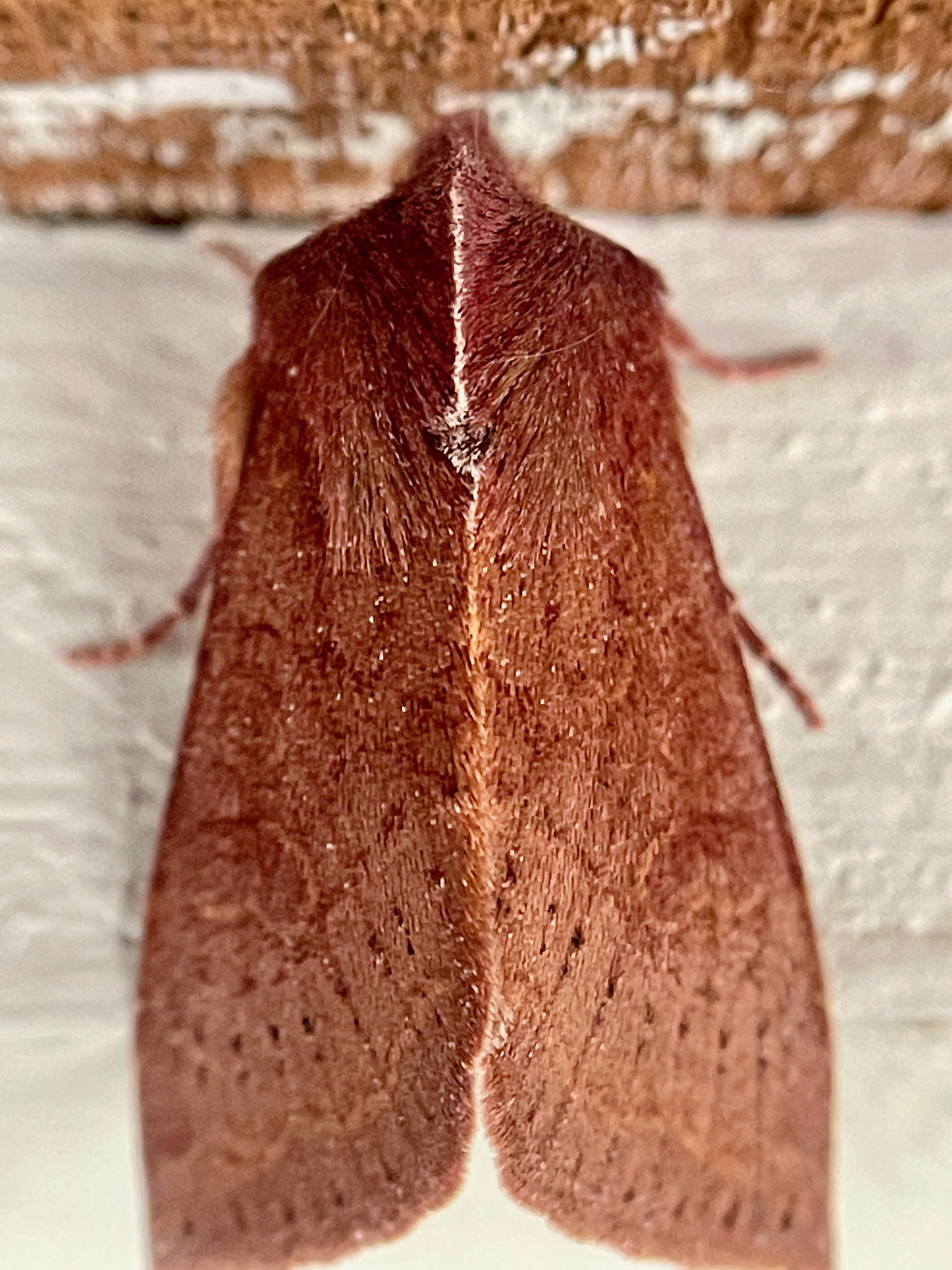
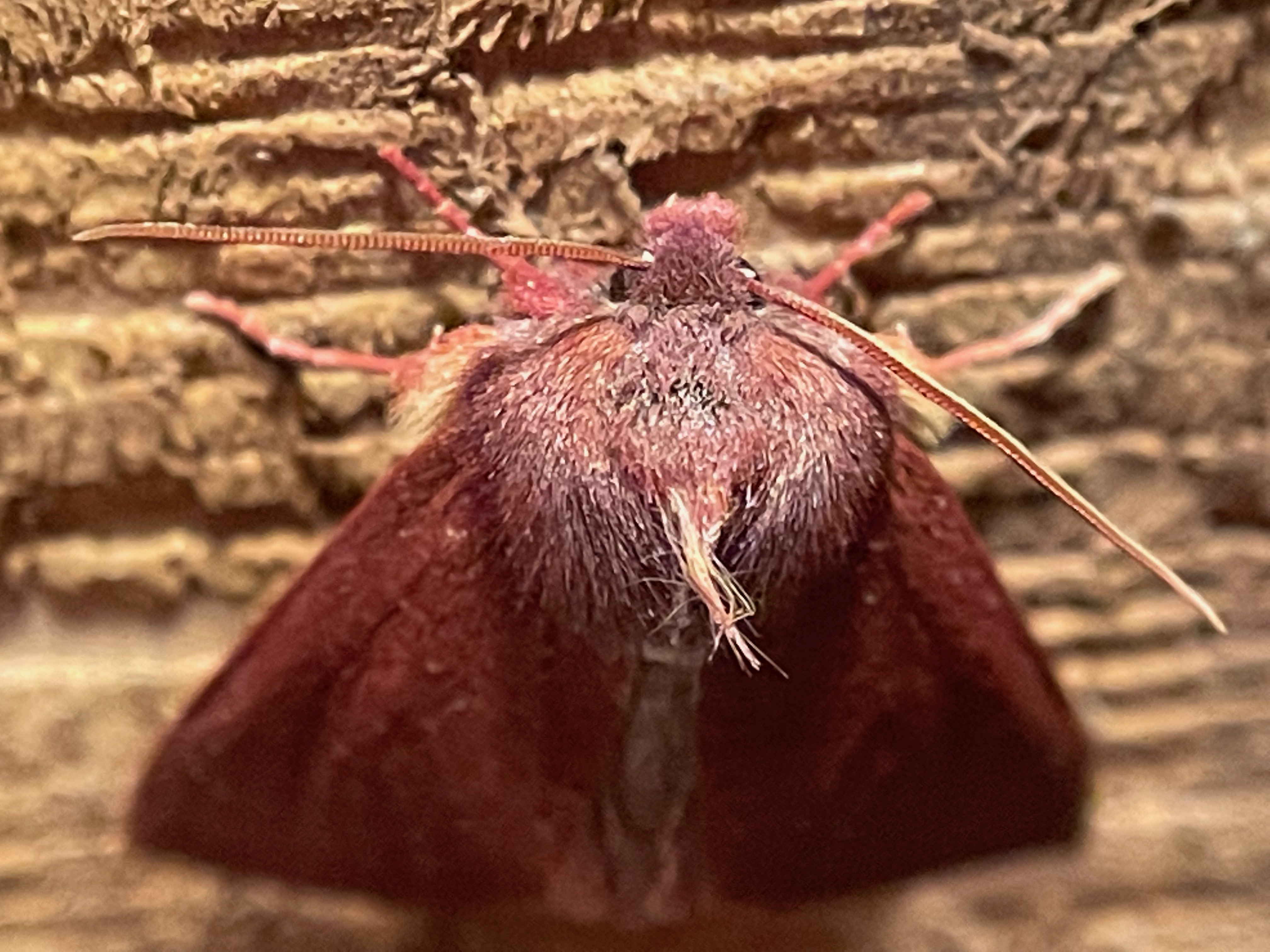
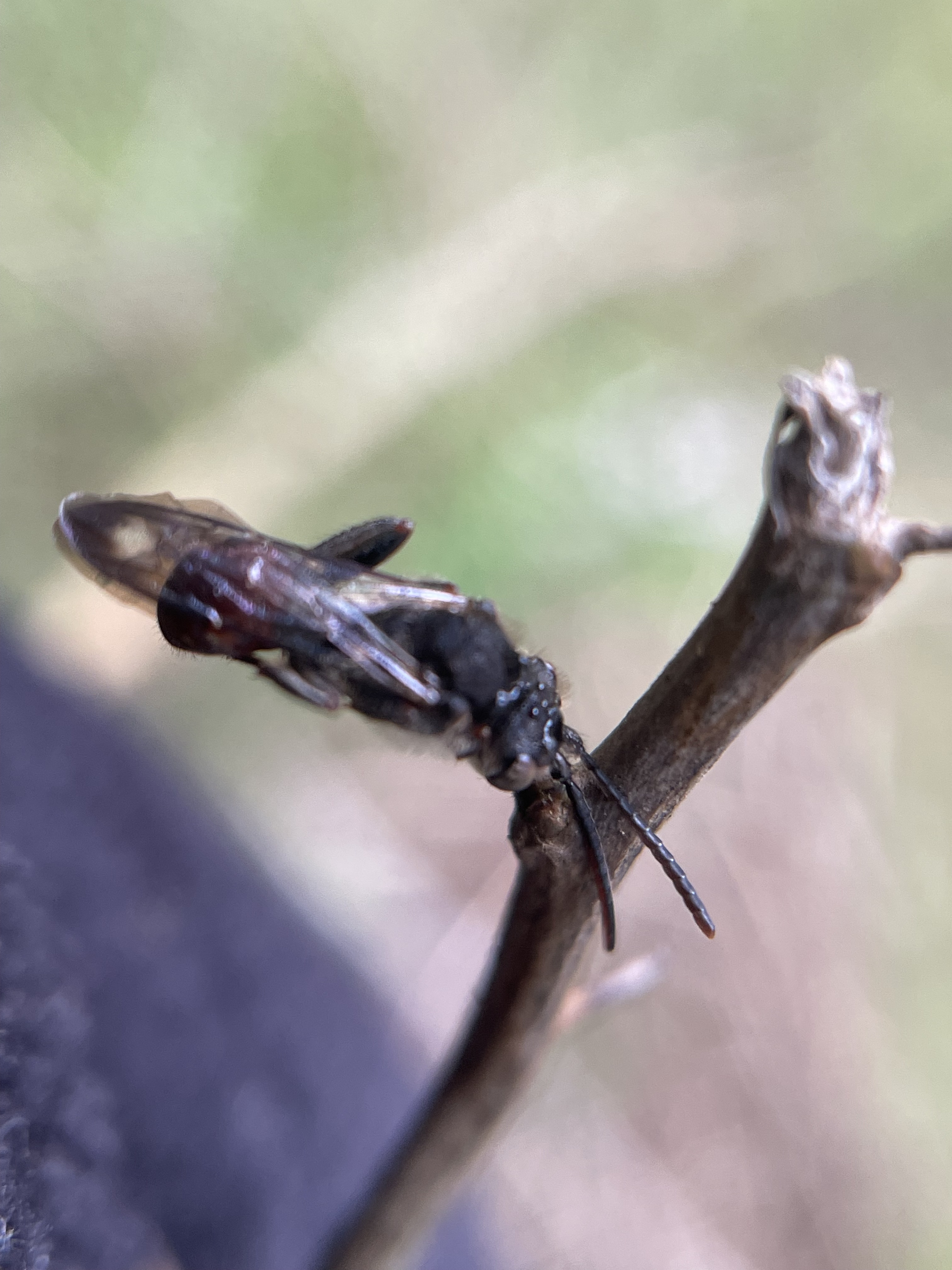
I found another species of Sawfly in our above ground pool today. This one is entirely black. Size is approximately 7-8mm. This looks to be in the genus Dolerus. From what I’ve found about host plants, it looks like the larvae feed on most grasses and horsetail. Females deposit eggs into the plant tissue where they hatch and the larvae will feed for approximately one month before exiting and pupating overwinter in the surrounding soil. There is one generation (univoltine) per year and adults emerge in early spring. Adults are recorded as feeding on tree sap from Maple (Acer), Apple (Malus), and Pear (Pyrus). They also take nectar from Willow (Salix) flowers, and from Cherry and Plum (Prunus) flowers. This means they do provide some pollination activity.
Looks like WWU Biology Department is working on a web page for Sawfly identification, but it’s not up and running yet. You can find their link below and bookmark it to check out at a later date.
Dolerus sp. SawflyDolerus sp. Sawfly – San Juan Island, WA 03.29.2022
Dolerus Sawfly – Specimen #2
References and Further Reading
Baine Q, Looney C (2019) Plant associations for three sawfly species (Hymenoptera, Tenthredinidae) in the Pacific Northwest. Journal of Hymenoptera Research 74: 27–33. https://doi.org/10.3897/jhr.74.46795
Looney C, Smith DR, Collman SJ, Langor DW, Peterson MA (2016) Sawflies (Hymenoptera, Symphyta) newly recorded from Washington State. Journal of Hymenoptera Research 49: 129–159. doi: 10.3897/JHR.49.7104
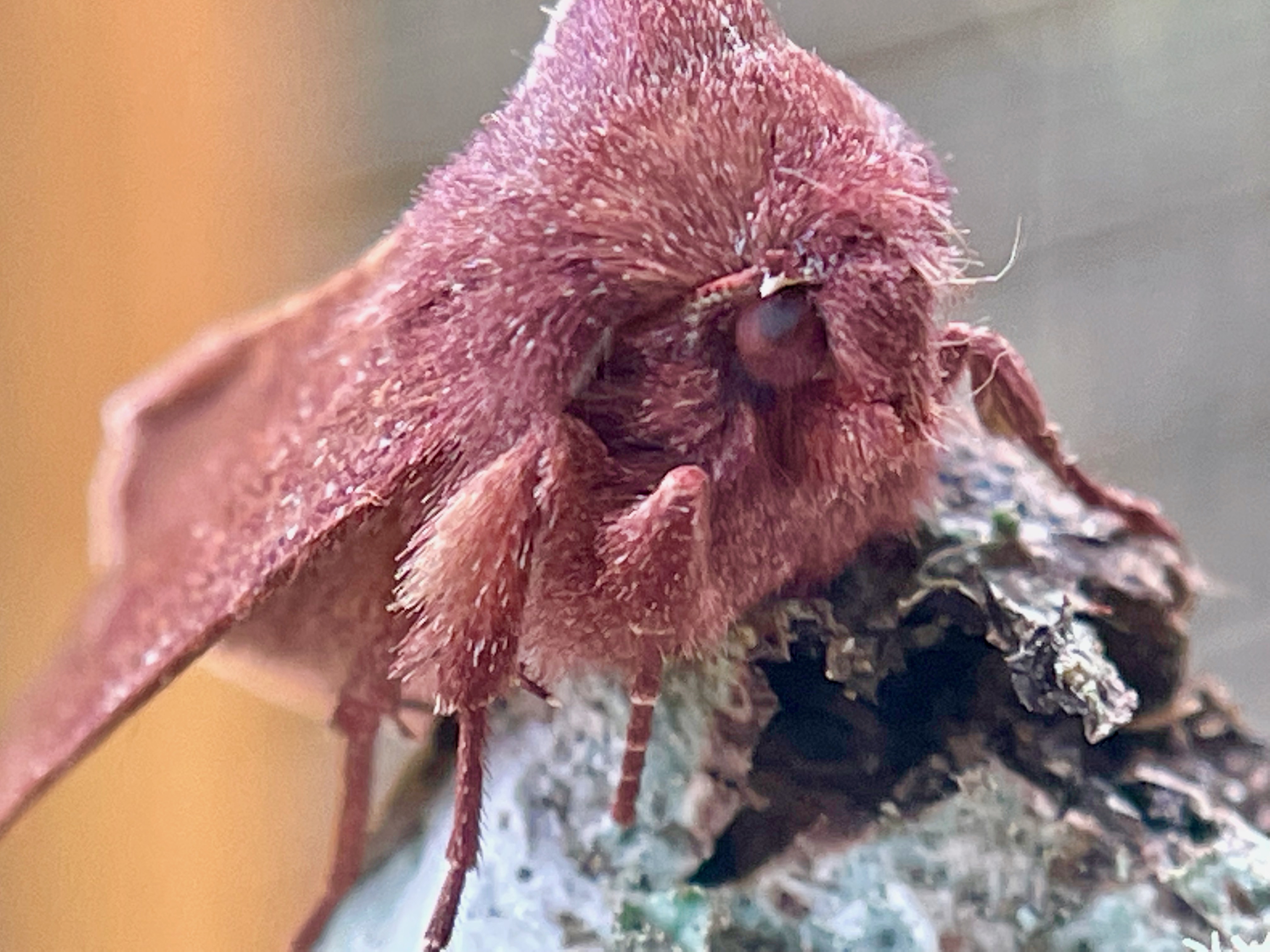
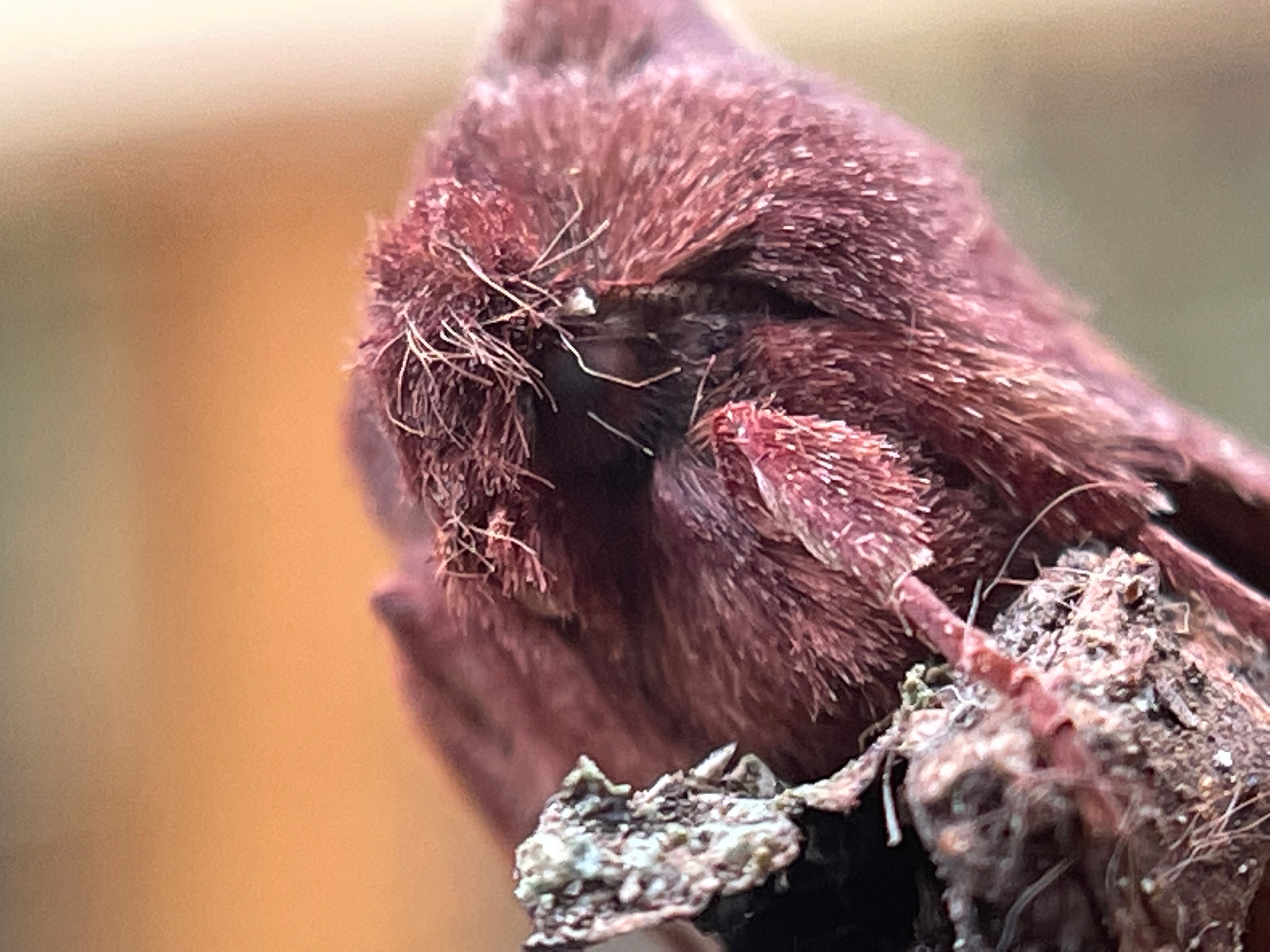
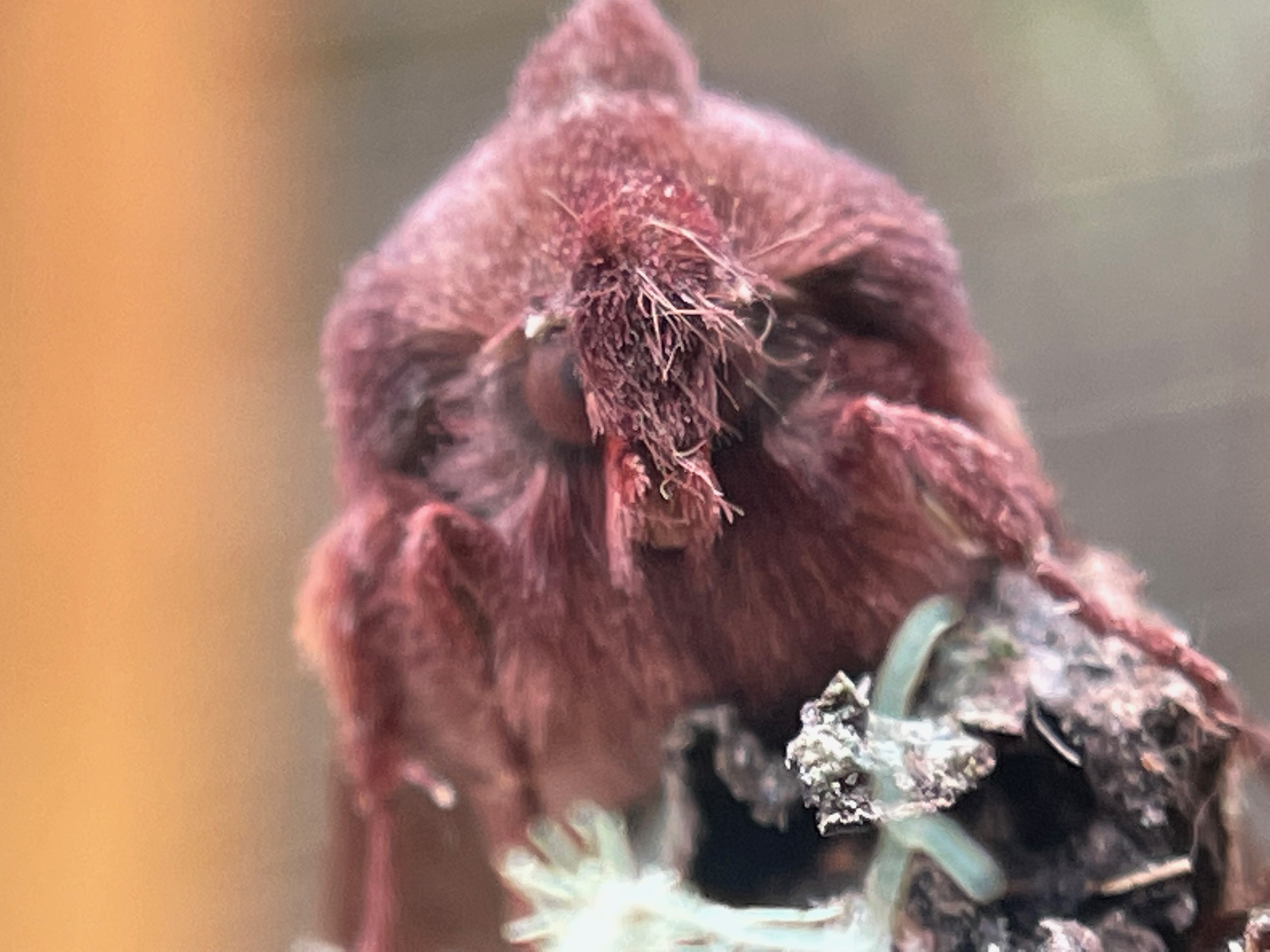
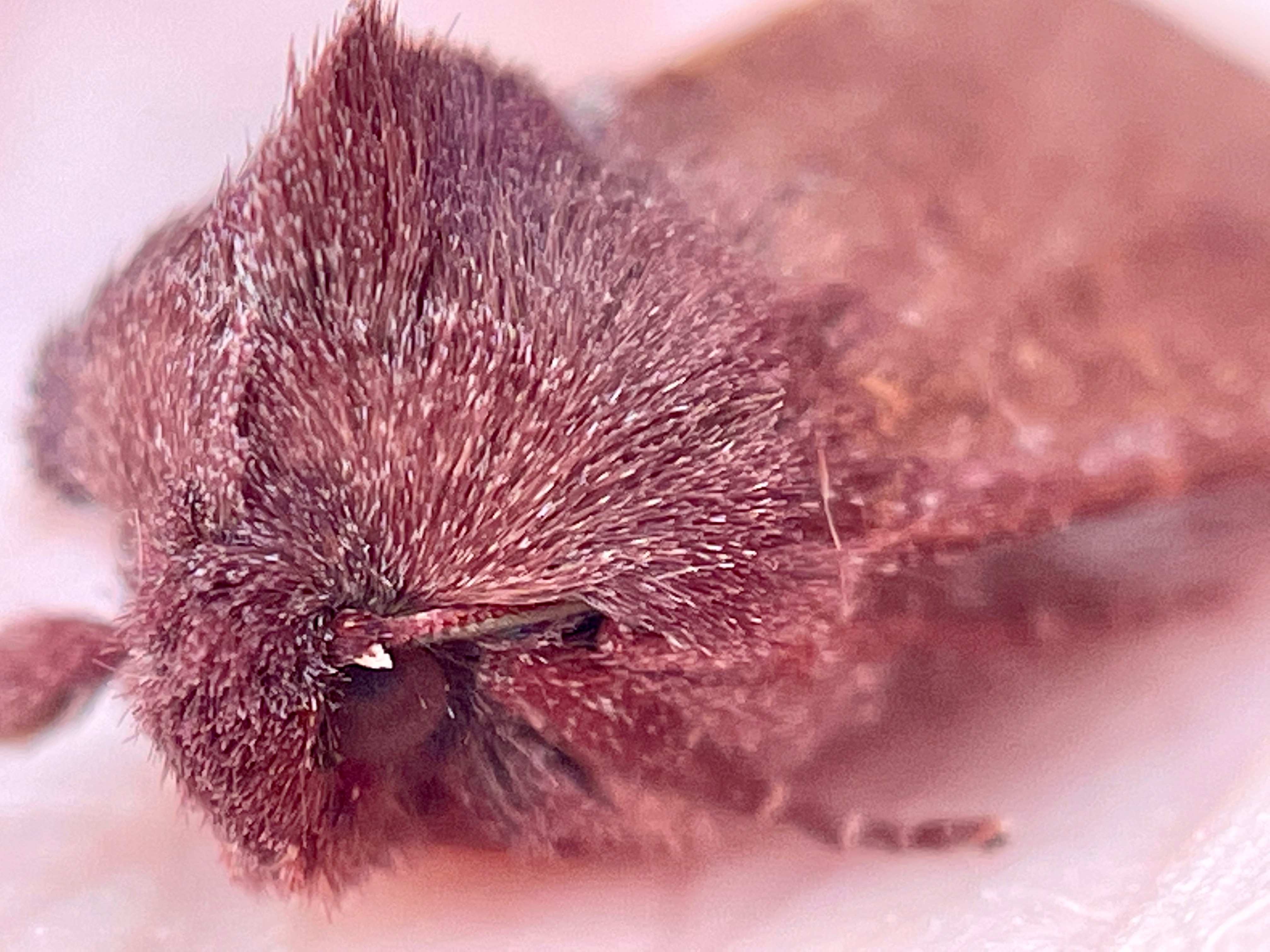
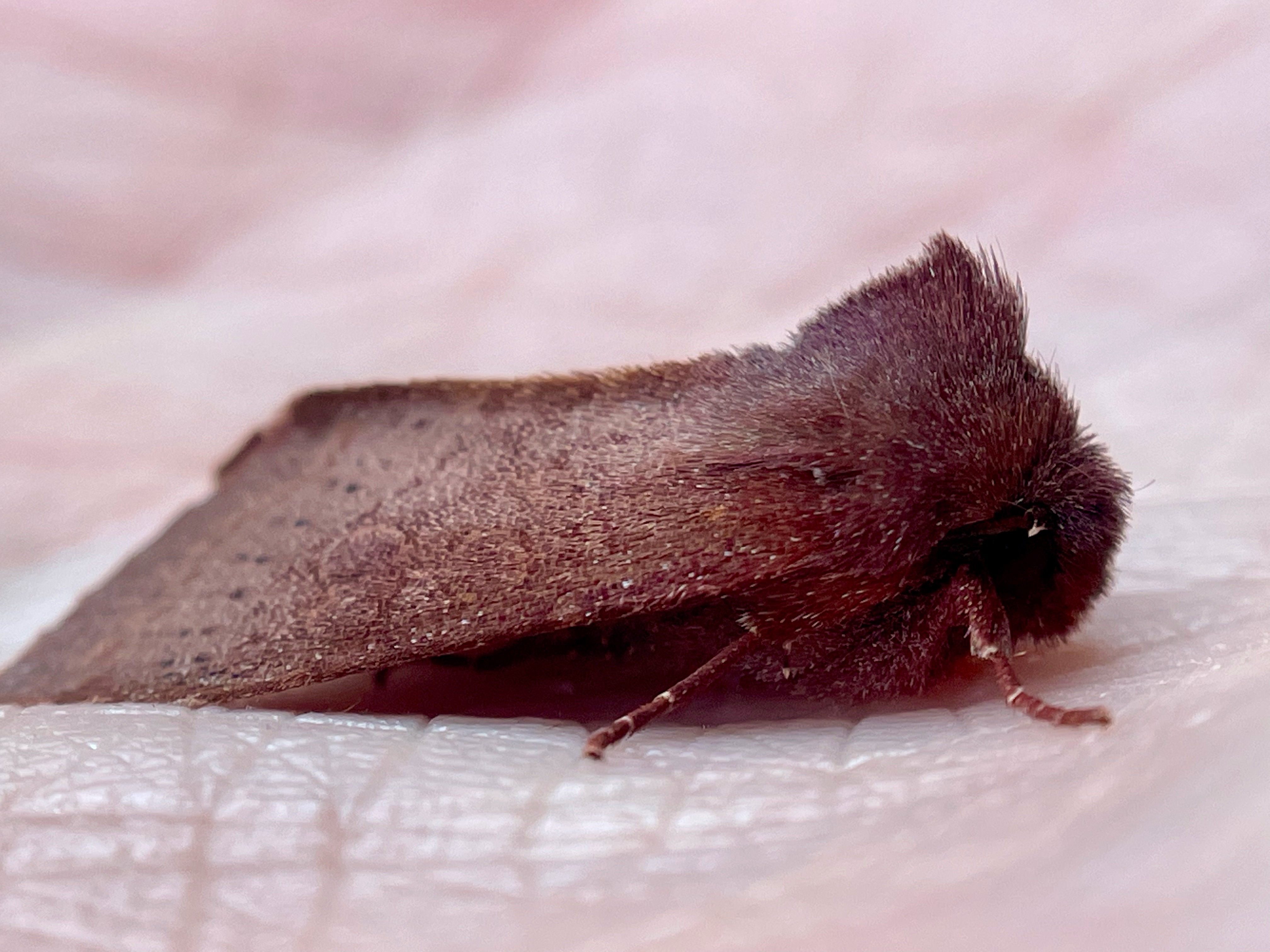
Orthosia transparens – the Transparent Quaker Moth
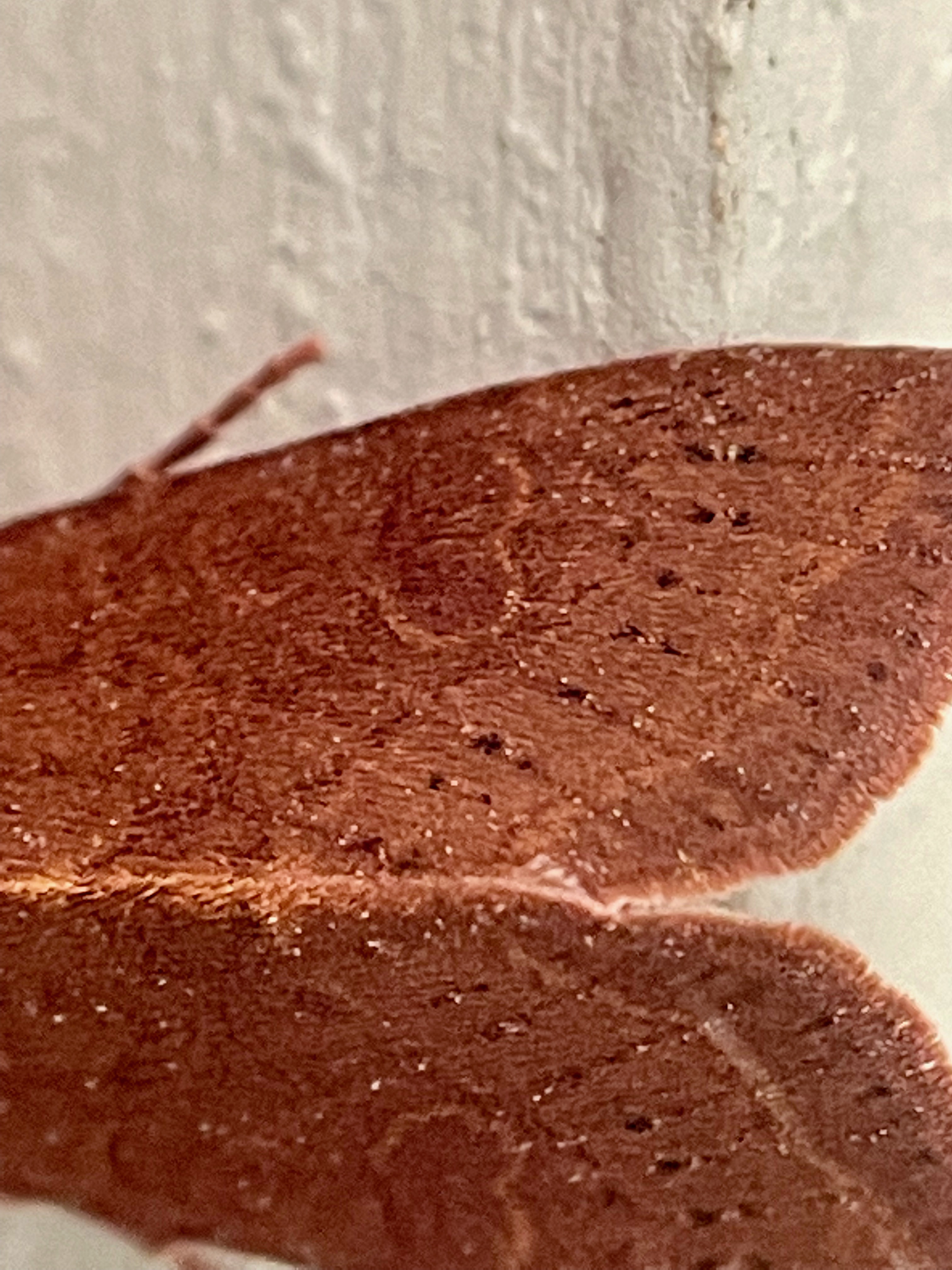
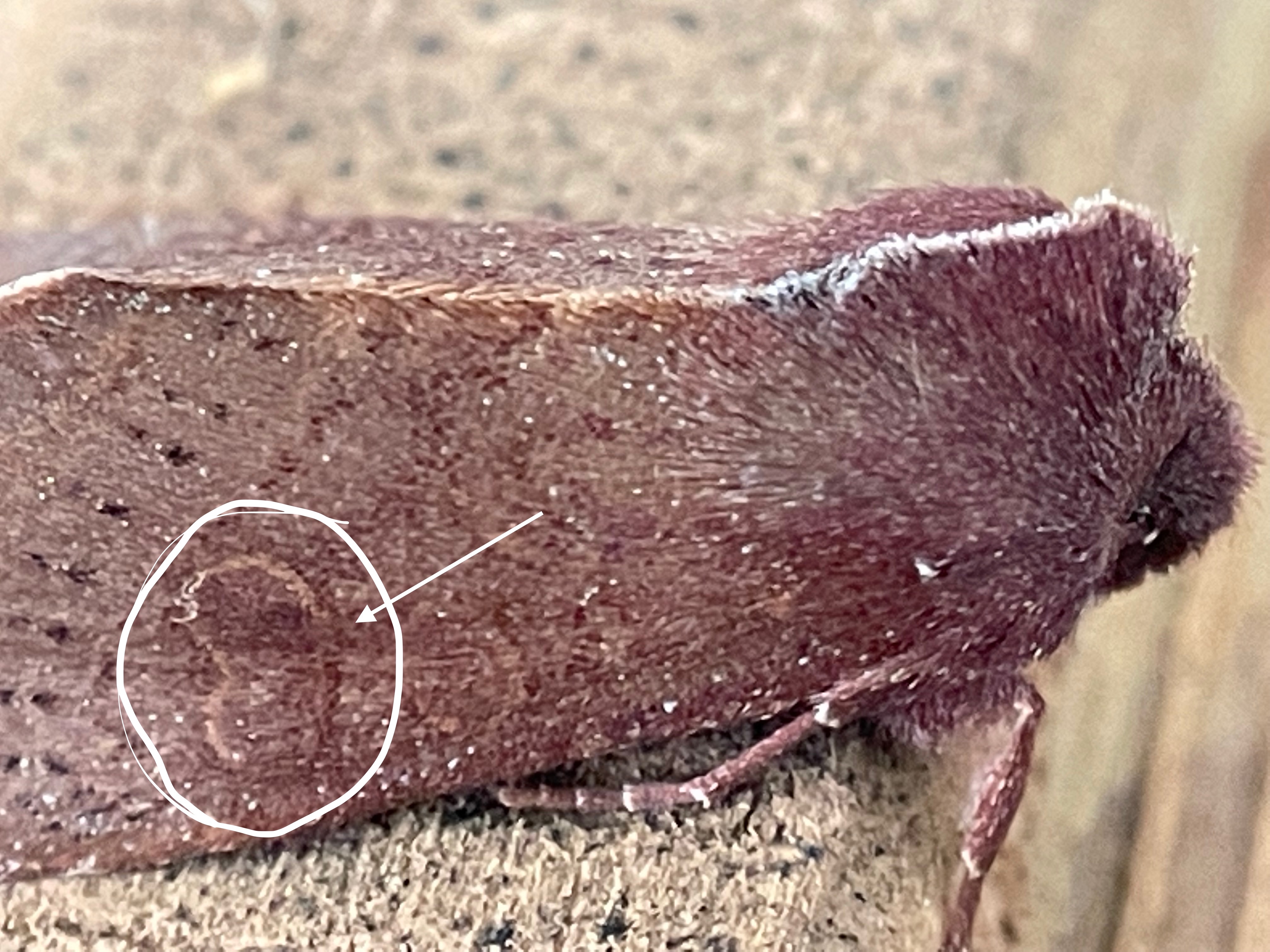
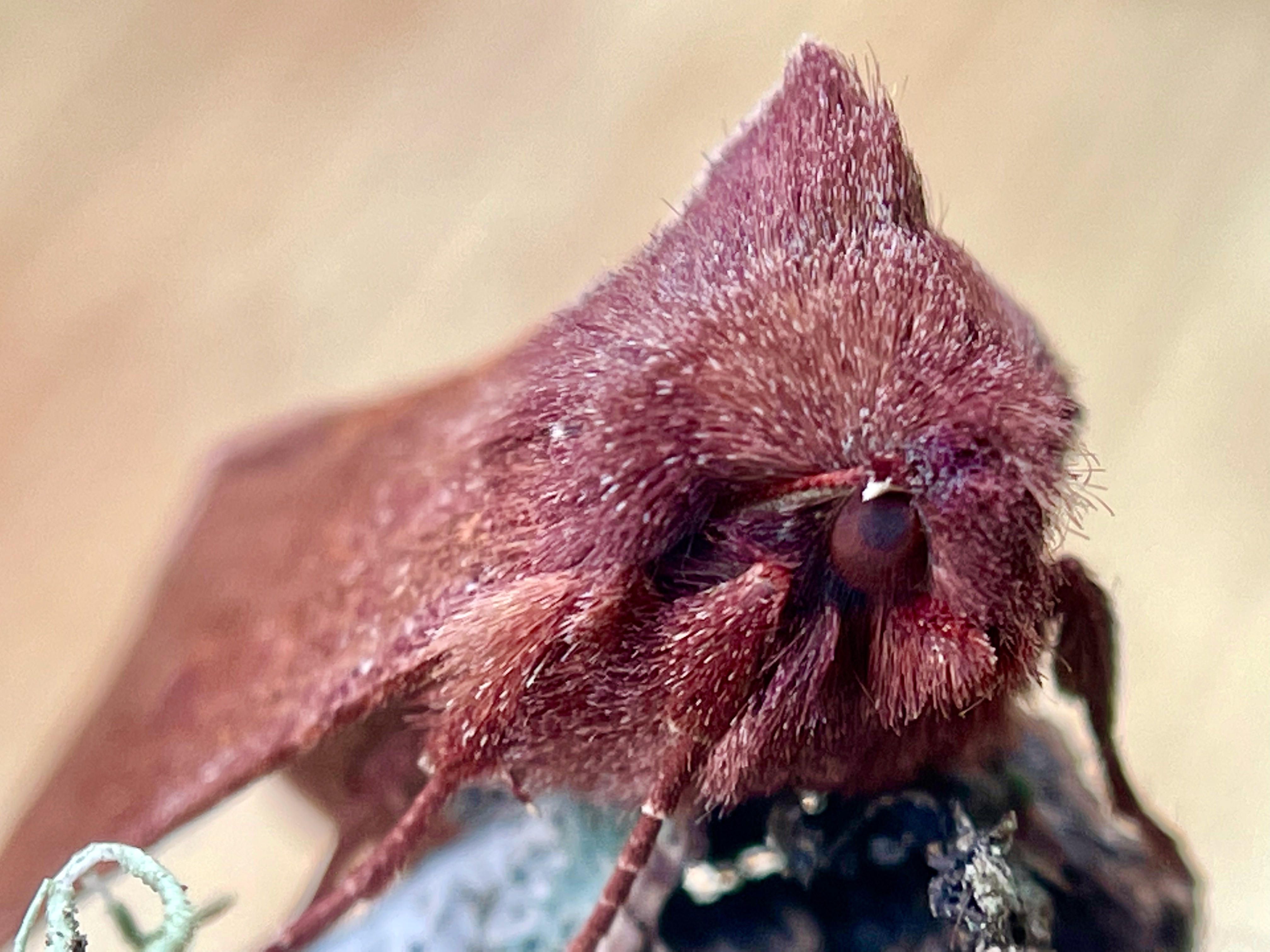
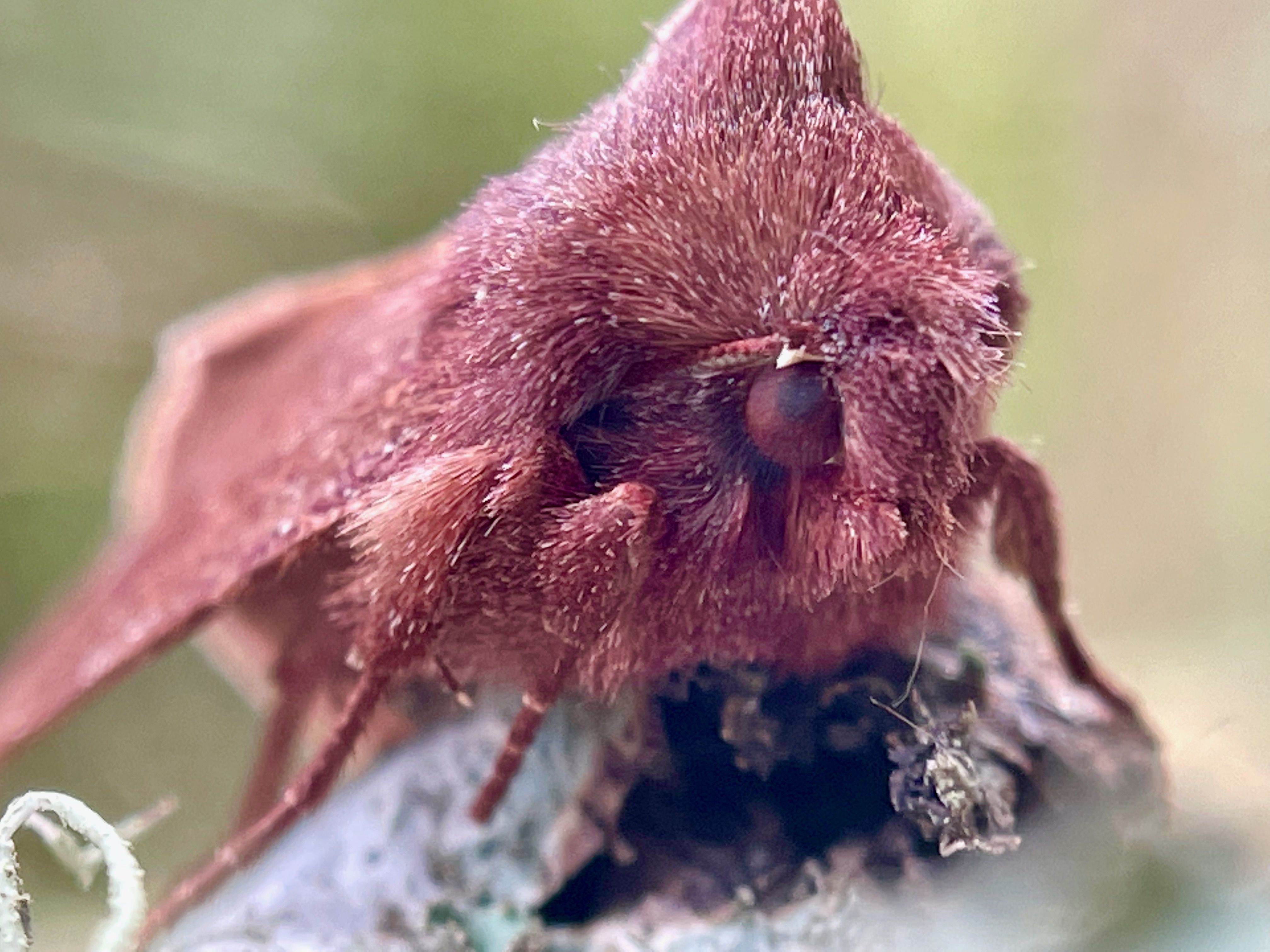
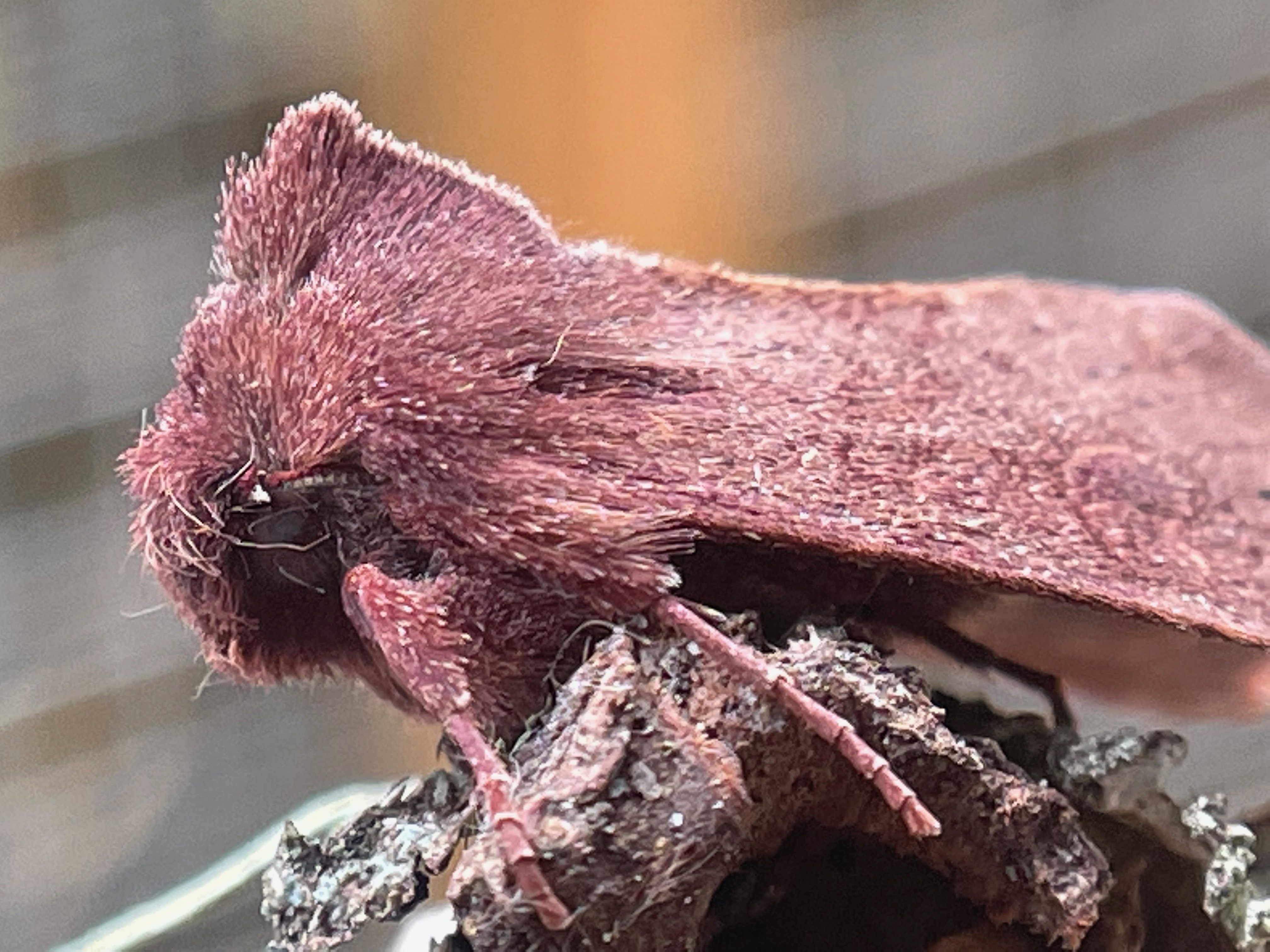
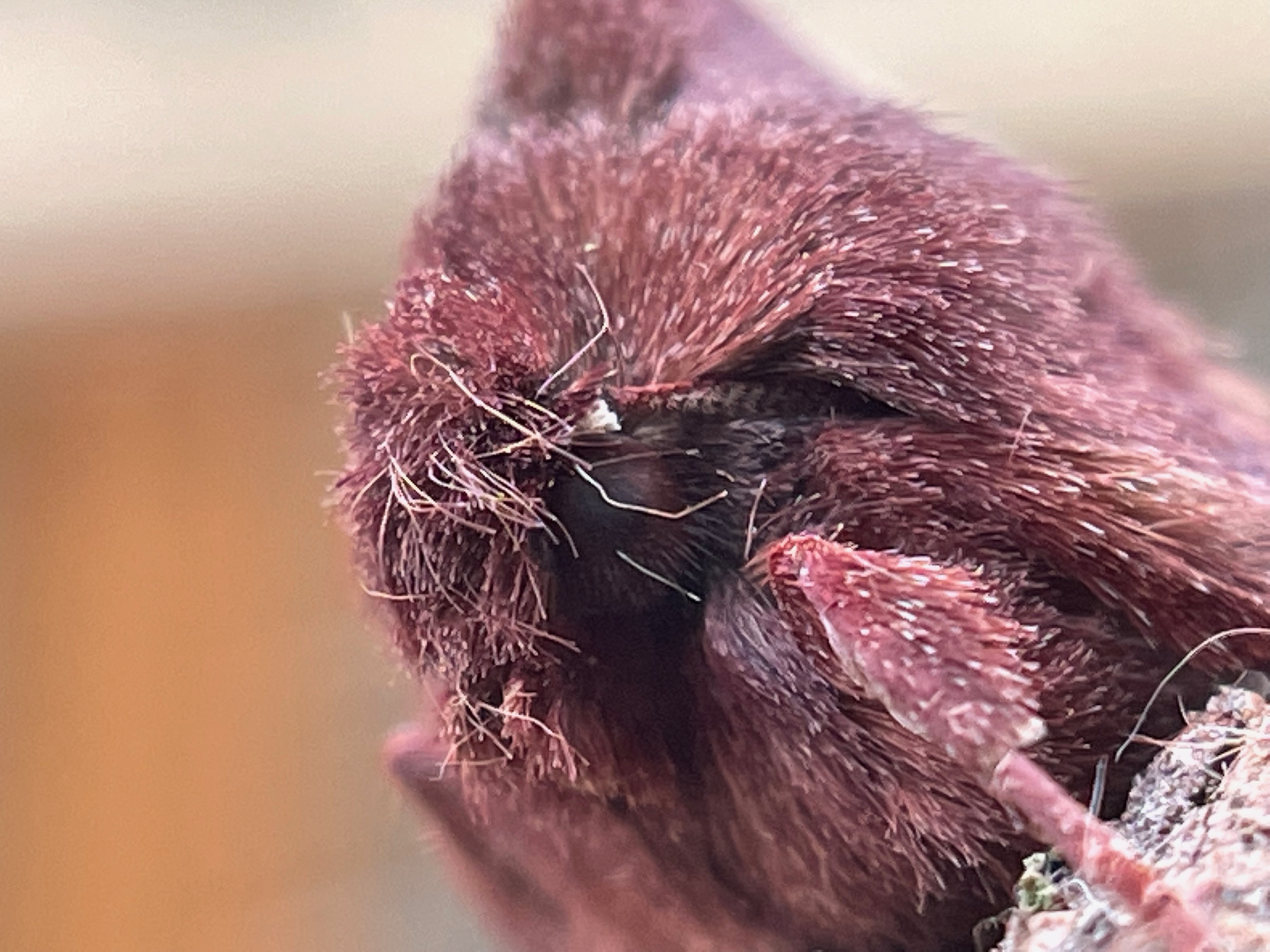
I’d really love it if I could rename this moth. Strawberry muppet heart moth is what I’d call it. Check out the little heart-shaped markings on it’s wings.
Orthosia transparensOrthosia transparensOrthosia transparensOrthosia transparens – with heart mark on wing
Orthosia transparens is a medium sized (15-17mm) , brownish red Noctuid moth that flies in our region in early spring. The common name for the species is Transparent Quaker Moth. Caterpillar food plants include salal (Gaultheria shallon), madrone (Arbutus menziesii), and rhododendron (Rhododendron macrophyllum). This species is native to the PNW region and not considered pests of economic significance. A map of the geographic distribution can be accessed here – http://mothphotographersgroup.msstate.edu/species.php?hodges=10479
Noctuidae is the family with the awful common name, “cutworm,” which leads folks to deem them evil little garden gremlins that should be stomped on or tossed out on the ground for birds to scavenge. Not all cutworms are bad, and certainly many more of us would embrace them if we knew they were going to turn out to be so cute.
I’m fine with a bit of herbivory on our salal, madrone, and rhododendrons. These little Strawberry Muppets are welcome to fly to my porch light any spring night.
I found this tiny bee who looked to be stuck to a thorn on my Bois D’Arc tree this afternoon. At first glance, I thought perhaps a March fly, and a dead one at that, but it turned out this is a most likely a “he” Nomad bee, and he wasn’t stuck at all, but just sleeping.
Nomad Bee – Stuck or Just Sleeping (March 26, 2022)
I learned something new today about bees that I did not know. My friend, Eric Eaton’s wife (link to Eric’s book about wasps in my Read More section) , shared with me that some bees will often sleep in this manner, attached to a substrate like this thorn or a twig, by their mandibles. Thanks Heidi! 🙂
Nomad Bee – Stuck or Just Sleeping (March 26, 2022)Nomad Bee – Stuck or Just Sleeping (March 26, 2022)Nomad Bee (March 26, 2022)
My bee was definitely gripping the end of the thorn with its mandibles. Before I found out my bee was only napping, I wasn’t certain what was going on. I worried maybe the bee had fallen victim to some weird fungus and was now locked in a death vise. Worries unfounded! The little bee released his grip as I was about to clip the end of the twig (with bee attached) and take it into the house to view under the microscope.
Nomad bees are pretty cool. They are cuckoo bees, cleptoparasites of other bees (usually Andrena bees or Melitta bees) and target the nest provisions gathered by the host bees for their own young. Nomad bees will find the nests of host bees using olfactory and visual cues. The fertilized female will lay her eggs in these nests, where her offspring will develop after devouring the offspring of the host bee, and eating the food the host parent had provisioned.
Nomad Bee (March 26, 2022)
Check out the video footage of this little bee as he woke up this afternoon and read more about Nomad bees in the attached links in my Read More section.
Alexander, B. A. 1994. Species-groups and cladistic analysis of the cleptoparasitic bee genus Nomada (Hymenoptera: Apoidea). University of Kansas Science Bulletin 55: 175-238. (Full Text)
Cynthia Brast is an independent entomologist living on San Juan Island. Check out her YouTube Channel, Bugging You From San Juan Island to see more amazing 6 and 8-legged creatures found in the San Juans. https://www.youtube.com/user/buggingyoufromsji/featured
I picked up these acorns (Quercus sp.) when I visited my folks recently in Texas. They have several oak trees on their property and there was an abundance of acorns all over the ground this year, so I brought a few home with me in a ziplock bag. I like acorns. My mom used to draw little faces on them and I had acorn “people” to play with when I was a child.
Acorn “person”
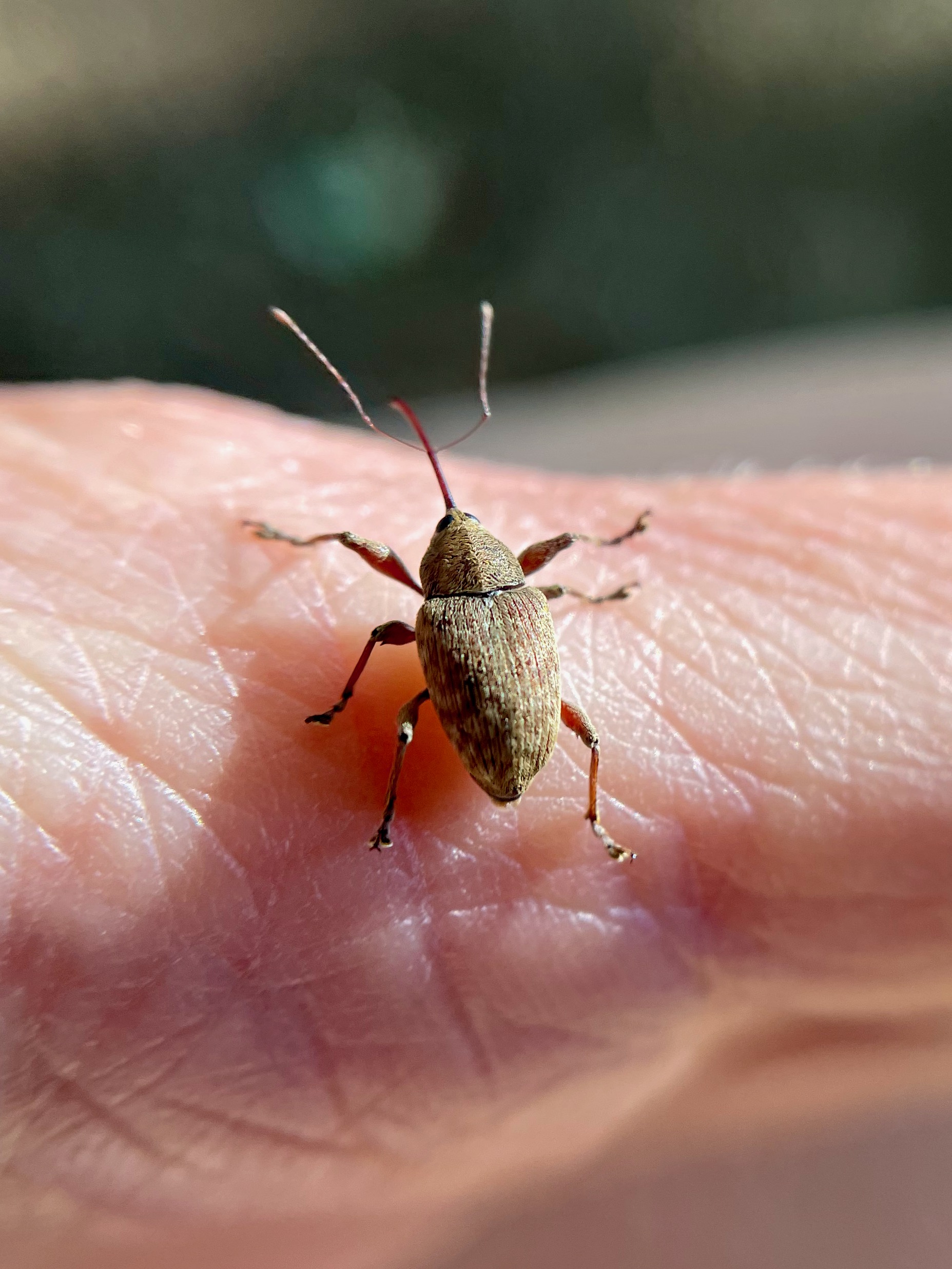
I also found a very cool bug under one of those oak trees while I was there. This strange looking creature is one of the Nut and Acorn Weevils (Curculio sp). It has an extremely long snout. When you find out how this weevil uses it to DRILL, you may be amazed. The adult female weevil will use this drill on her very long snout to make a hole in those acorns!
Nut and Acorn Weevil (Curculio sp).Nut and Acorn Weevil (Curculio sp).Nut and Acorn Weevil (Curculio sp).
Keep reading. It really is amazing.
A female weevil will make a hole in the acorn so she can put her eggs inside it!
Hole drilled by Nut and Acorn Weevil
Because I like word games, I thought I’d point out to you that rearranging the letters in the word weevil will make the words “we live?” Well, those eggs hatch into baby weevils who LIVE in a little house that is an acorn (and sometimes in other nuts too). Some folks call them grubs or worms. They are actually the larvae of the adult weevil mom who selected the acorn for her nursery.
If you are assessing this situation from an agricultural perspective (say that nut is a pecan), invested in harvesting a profitable crop, you might be feeling very worried. Sometimes the worry may indeed be justified, but in many cases, like with these acorns, the tree has evolved a strategy to deal with occasional waves of weevils and other insects we consider pests. In actuality, they are just utilizing the resources of the tree like we do when WE (the humans) eat the nut or fruit.
Larvae of Nut and Acorn Weevil (Curculio sp).
I’m going to name the trees’ strategy of dealing with this bug FEAR NO WEEVIL. However, the actual scientific moniker for this strategy (and it applies to other pests and adverse weather stressors as well) is MASTING. The word mast has been used since way back in the Middle Ages to refer to the acorns and seeds of forest trees that drop and accumulate on the ground. It comes from Old English, mæst. Essentially, masting is an ecological term referring to the highly variable and often synchronized periodic cycles of fruiting/seeding in the reproductive processes of trees (both forest and fruit trees).
How is it a strategy for circumventing the deleterious affects of pests? Well, the idea is that in some years, bumper crops of nuts and seeds are produced in order to satiate the predators, so some are left to germinate and continue new generations. In this particular case, you could think of it as the oak trees sacrificing some of their offspring to the weevil gods. When there are more acorns than there are adult female weevils, some of those acorns will escape the weevil drill and makeover into little bug nurseries.
In reality, this relationship is much more complicated. In some cases, acorns parasitized by only a few weevil larvae will germinate, while those acorns with many larvae will not. The trees’ bumper crops of seeds and nuts will also cycle with years of low production, where resources are scarce for the weevil (and other organisms). Nature is incredibly dynamic though. Studies show some species of weevils have adapted a counter mechanism to circumvent the trees’ strategy of masting. It’s called prolonged diapause. This means these weevils are able to sleep longer (more than one year) as they develop in order to synchronize adult emergence with years when the trees’ seed/nut production is high.
If you are interested in reading more about the history and MYSTERY of masting, I encourage you to delve into the literature I’ve listed in the references below. It’s quite fascinating – especially going back in history to the link between masting and pannage. Way more than I can cover here. Check it out.
Higaki M (2016) Prolonged diapause and seed predation by the acorn weevil, Curculio robustus, in relation to masting of the deciduous oak Quercus acutissima. Entomol Exp Appl 159:338–346. https://doi.org/10.1111/eea.12444
Koenig WD. 2021 A brief history of masting research. Phil. Trans. R. Soc. B 376: 20200423. https://doi.org/10.1098/rstb.2020.0423 Koenig, W. D., & Knops, J. M. H. (2005). The Mystery of Masting in Trees: Some trees reproduce synchronously over large areas, with widespread ecological effects, but how and why? American Scientist, 93(4), 340–347. http://www.jstor.org/stable/27858609
I first spotted this beauty on October 1, 2021 while I was taking a walk along our road on San Juan Island. There was a cluster of sun loving mullein (Verbascum thapsus) mixed with one or two thistles (probably Canada thistle) growing along the road. The glistening silk threads woven between them drew me over to investigate. There were several Cross Orb Weavers sharing the space here, but one of these was not like the other. The spider that caught my attention was quite a bit darker than the others. Describing it as brown just doesn’t do it justice. Brown sounds much too plain. She was a lovely brunette amongst a few redheads!
Since I often enjoy walking on our road on sunny days, I started looking for her when I passed her home – the Mullein “apartments.” It wasn’t just the spiders enjoying the sunny housing complex, but these units housed a few other species as well. I found some Stilt Bugs (Neoneides sp.) and some Pentatomidae hiding in the fuzzy star shaped trichomes (little hairs) of the Mullein leaves.
Now that autumn has ushered in falling leaves, falling temperatures, and a good bit of rain, I thought of my friend Louisa, the Orb Weaver out in the cold. Had she managed to find a sheltered spot to survive the recent storms? Several times over the past two weeks I’ve looked for her, but she was just gone. Since the lifespan for this species is only a year or less, I suspected she’d reached her end with our last dip in temperatures, gusty winds, and precipitation. I held out a tiny bit of hope though. Just a bit!
Today (November 6, 2021), my husband and I walked our road. It was sprinkling and the precipitation was cold. When we got down to the point on the road to turn around, shortening our walk to just the point where the old cabin used to be, I asked him to wait one second while I looked one more time at that patch of Mullein and the drying stand of thistles.
As I bent down to look closely, I saw a single strand of silk. Examining the attachment and following closely, it led me to Louisa. She was tucked under the dried nodding inflorescence of the thistle. Once a purply-pink sugar treat for pollinators, the now nodding blooms have been repurposed into a thatch roof to keep this little spider dry.
I’ve thought about relocating her so the county doesn’t mow her when they scalp the roadside vegetation. It is bound to happen at some point. For now, I’m going to leave her be, and just keep a close eye on her. Maybe I’ll make a sign! Be Nice to Spiders. ❤️ Louisa lives here!
Fun Fact! Did you know that 25% of the diet of Orb Weaver spiderlings is pollen? Check it out. Article linked in my list of sources below.
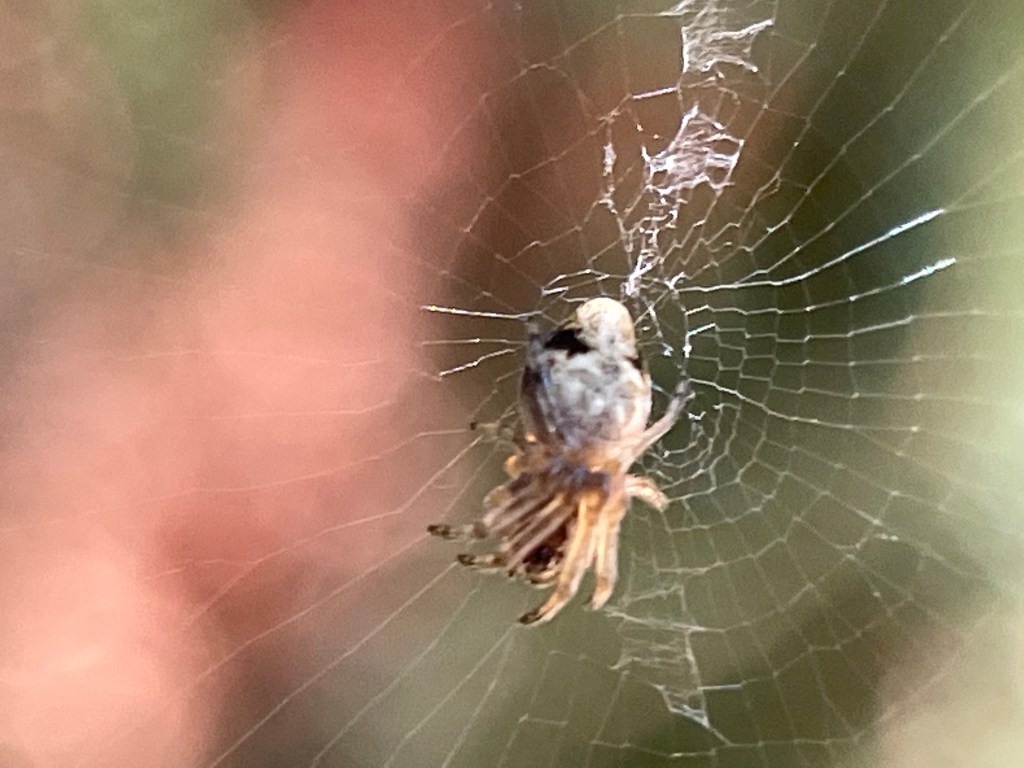
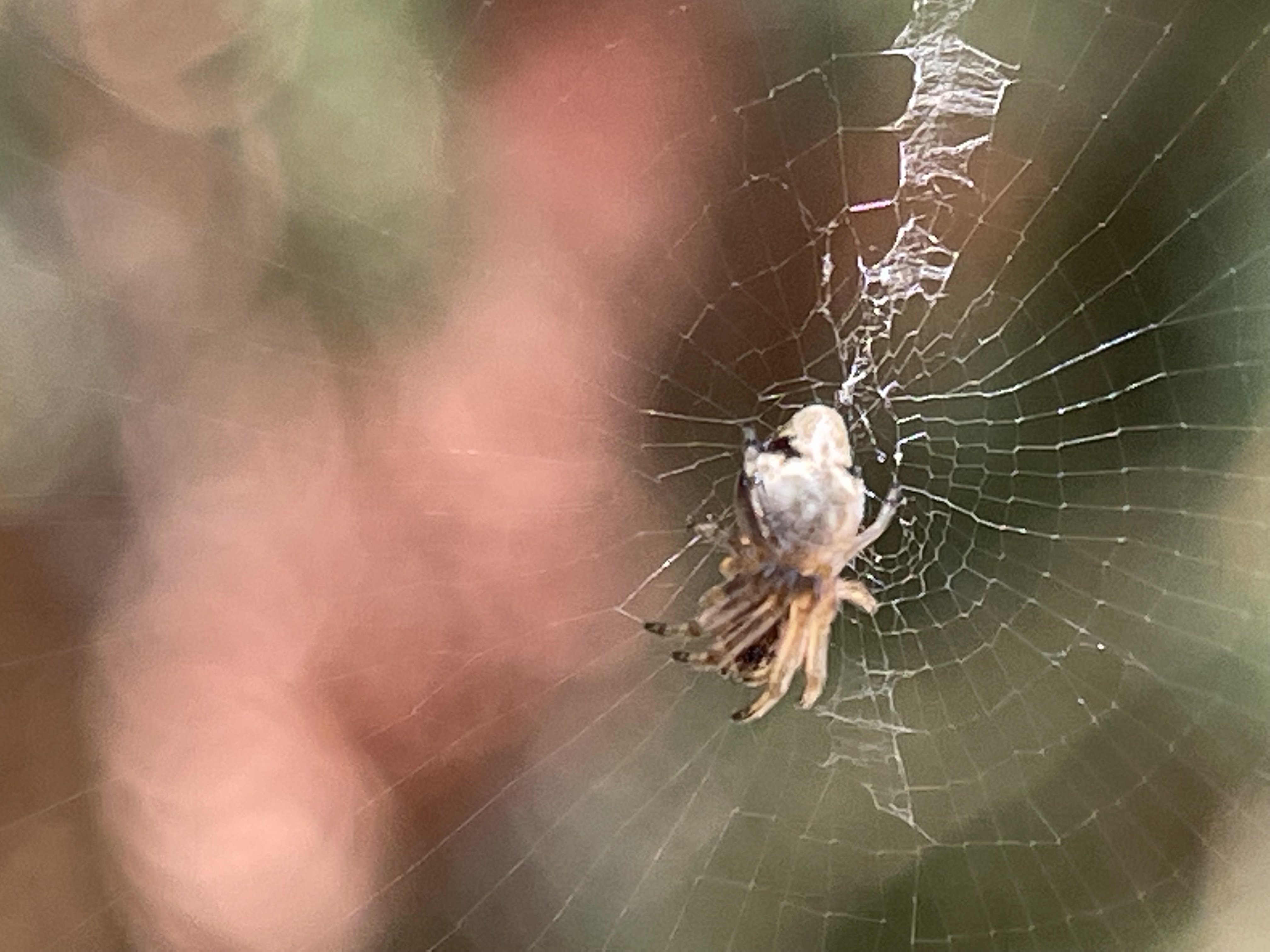
Araneus diadematus (Cross Orb Weaver) October 1, 2021 – San Juan Island, WA
Araneus diadematus (Cross Orb Weaver) October 1, 2021 – San Juan Island, WA
Araneus diadematus (Cross Orb Weaver) October 1, 2021 – San Juan Island, WA
Araneus diadematus (Cross Orb Weaver) October 13, 2021 – San Juan Island, WAAraneus diadematus (Cross Orb Weaver) October 16, 2021 – San Juan Island, WA
This is “Louisa,” the Land Bank Orb Weaver Spider. She lives on a Mullein plant alongside the road. I’ve been watching her since October 1, 2021. Hoping she will not become a casualty of San Juan County’s pre-winter roadside mowing. She’s also an expecting mom!
This is “Louisa,” the Land Bank Orb Weaver Spider. She lives on a Mullein plant alongside the road. I’ve been watching her since October 1, 2021. Hoping she will not become a casualty of San Juan County’s pre-winter roadside mowing. She’s also an expecting mom!
Araneus diadematus (Cross Orb Weaver) November 6, 2021 – San Juan Island, WAAraneus diadematus (Cross Orb Weaver) November 6, 2021 – San Juan Island, WAAraneus diadematus (Cross Orb Weaver) November 6, 2021 – San Juan Island, WA
Gucker, Corey L. 2008. Verbascum thapsus. In: Fire Effects Information System, [Online]. U.S. Department of Agriculture, Forest Service, Rocky Mountain Research Station, Fire Sciences Laboratory (Producer). Available: https://www.fs.fed.us/database/feis/plants/forb/vertha/all.html [2021, November 6].
Horton DR, Lewis TM (2003) Numbers and types of arthropods overwintering on common mullein, Verbacsum thapsus L. (Scrophulariacae), in a central Washington fruit-growing region. Journal of the Entomology Society of British Columbia 100, 79–87.
Oxford, Geoff & Gillespie, Rosemary. (1998). Evolution and ecology of spider coloration. Annual review of entomology. 43. 619-43. 10.1146/annurev.ento.43.1.619.
I found a’nutter weevil! They’ve been everywhere this week! Looks like this may be the Nut Leaf Weevil (Strophosoma melanogrammum). These weevils feed on the leaves of broad leafed shrubs. I saw it on a chunk of rotting alder. It was pretty small and tough to photograph in low light. Probably about 3.2 mm in size. San Juan Island, WA October 13, 2021.
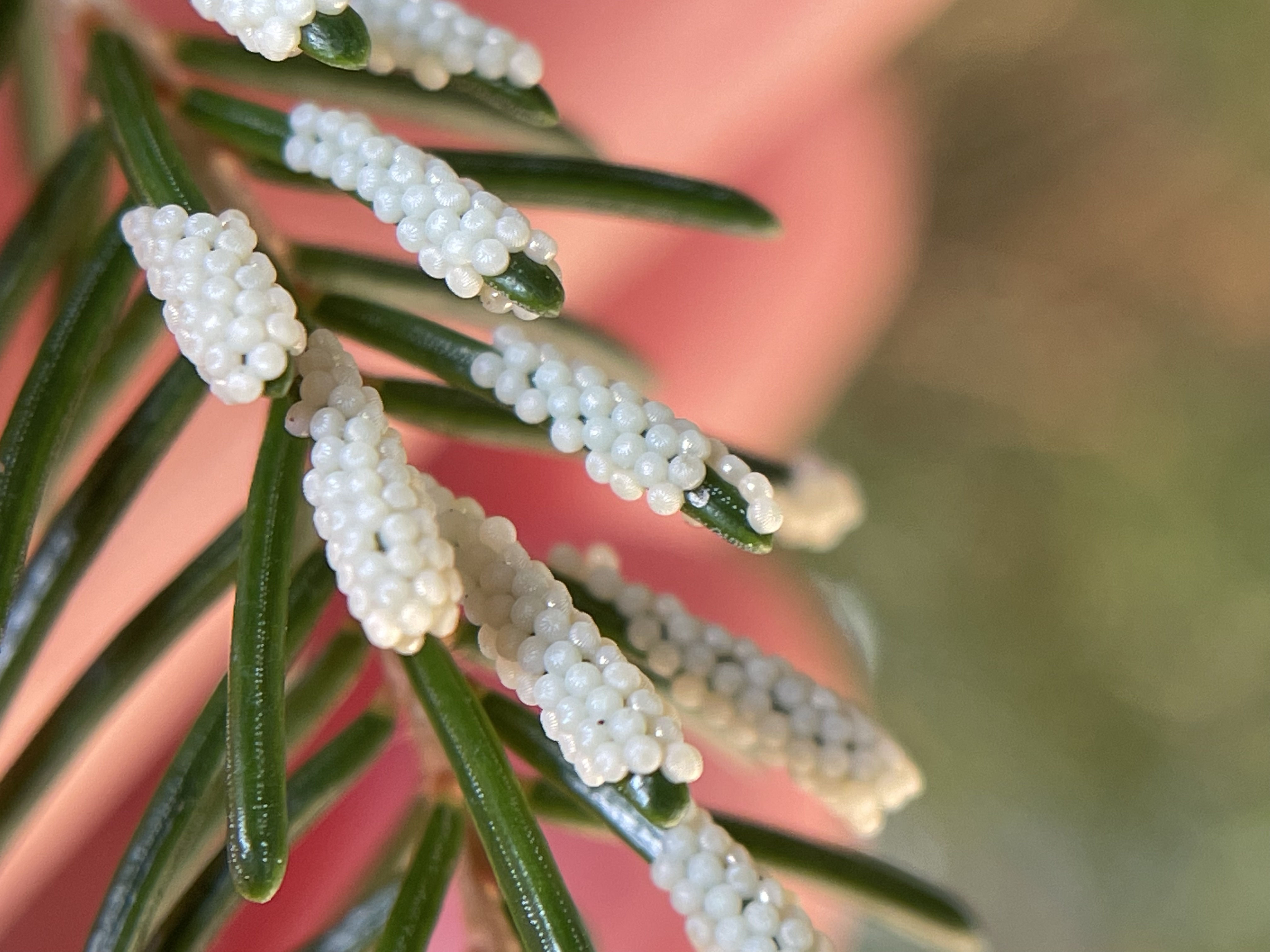
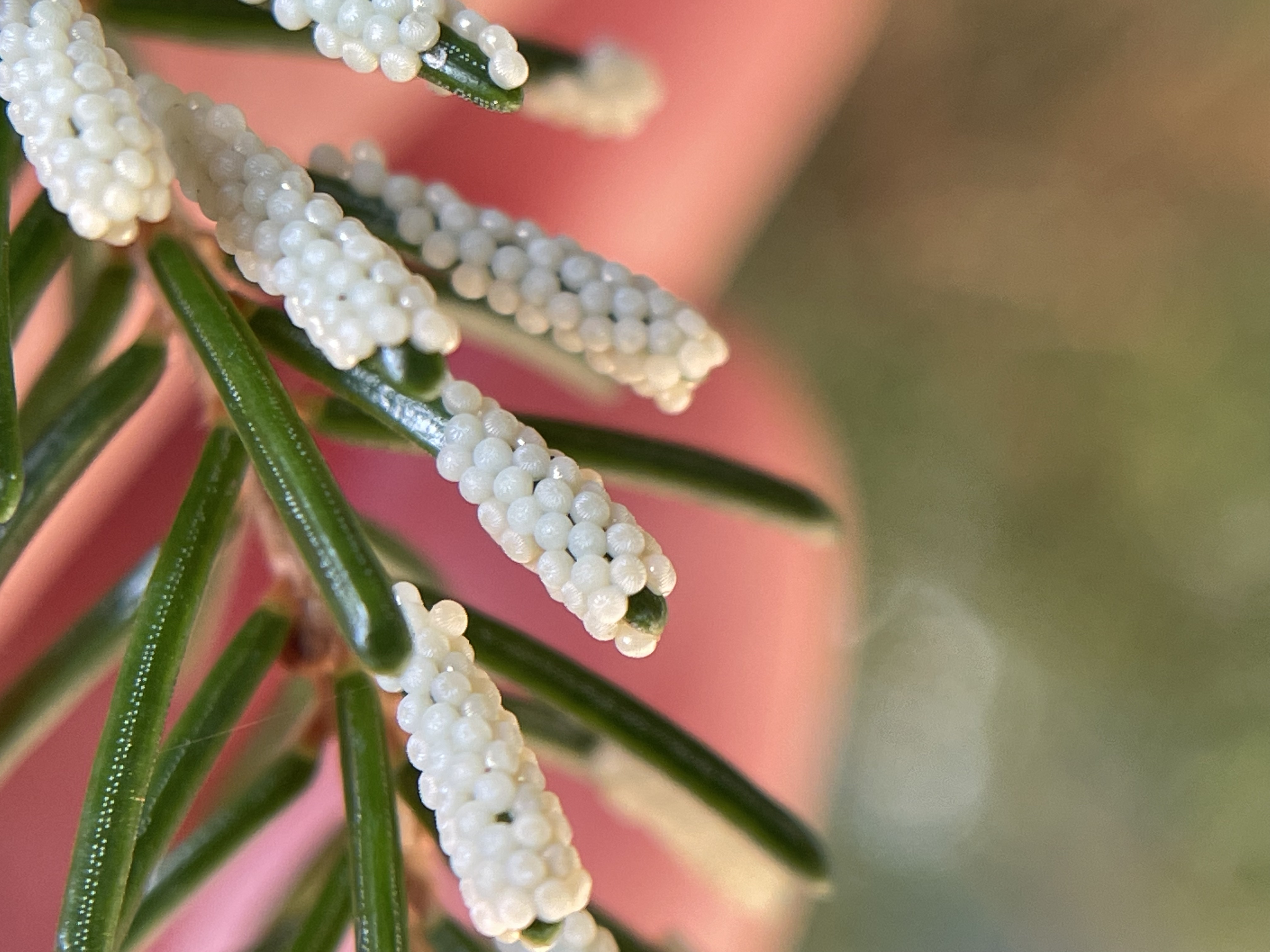
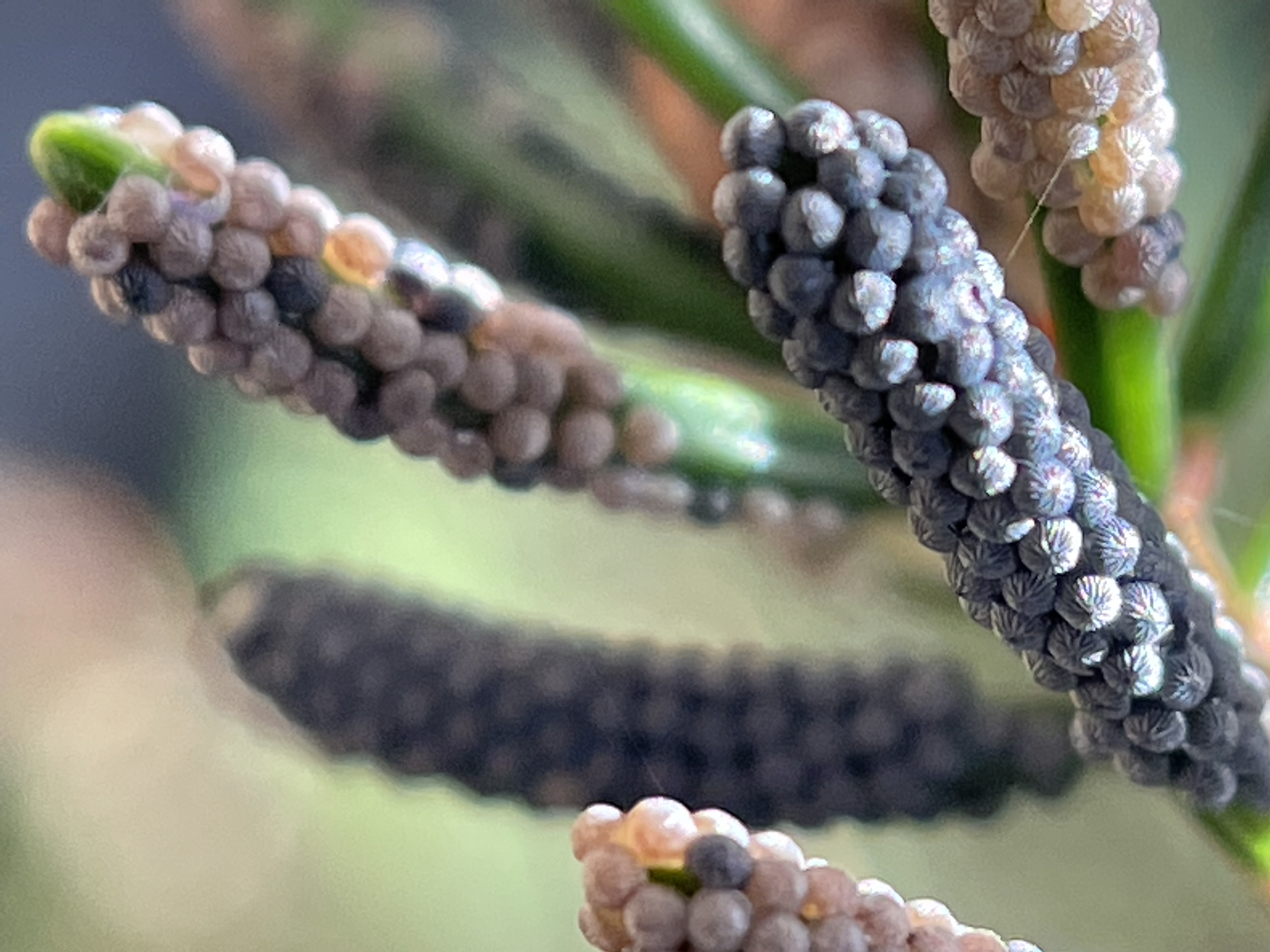
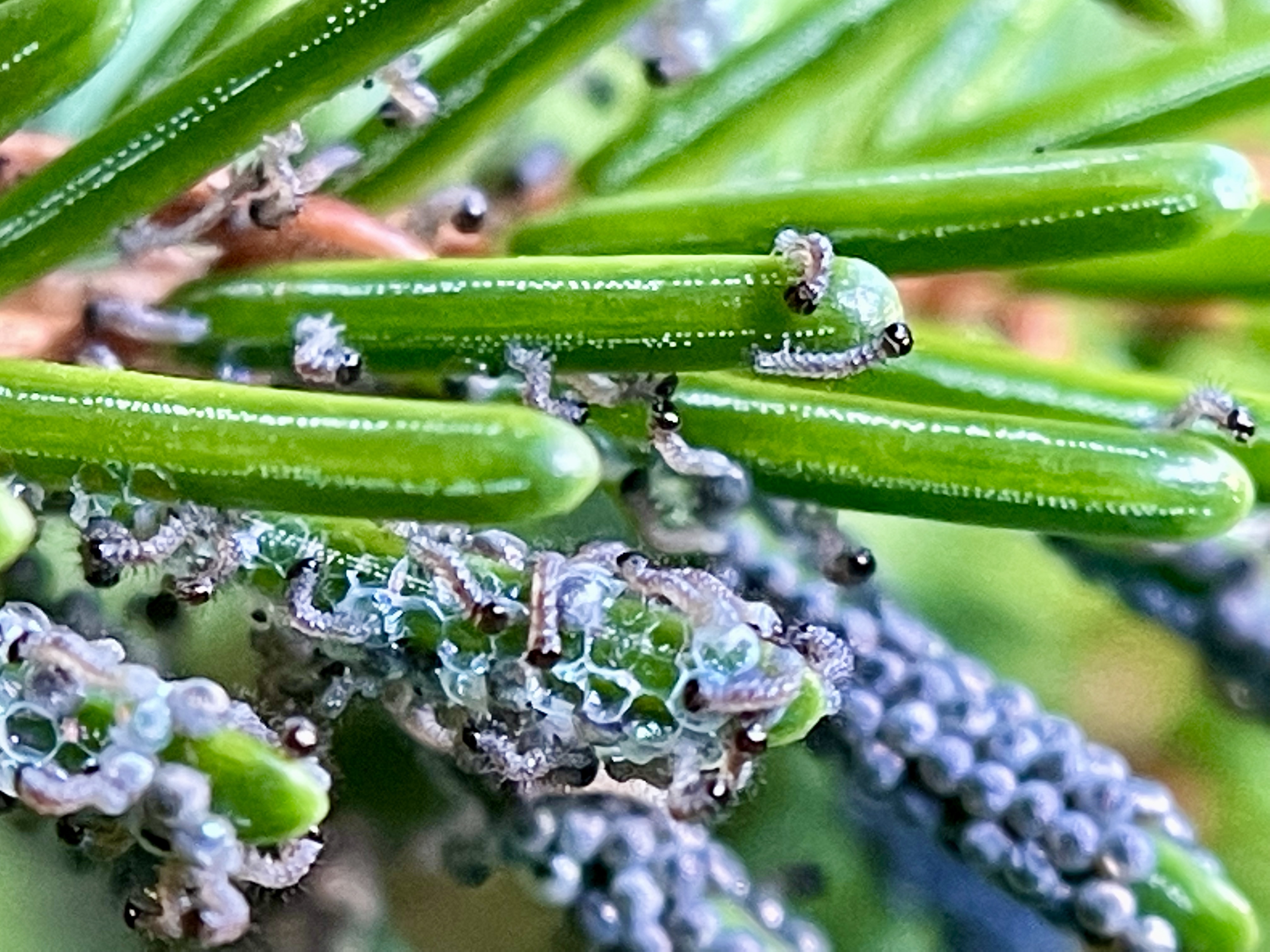
Editing here to update identification. These are Noctua pronuba or Yellow Underwing moth eggs. They will hatch, caterpillars will drop to the ground on tiny threads of silk and feed through the winter on mostly weedy vegetation like Dock, Dandelions, Plantains, and Hawkweed, but will also sometimes feed on turf grasses and winter vegetables.
Well, I was wrong in my theory about these possibly being Nepytia phantasmaria orPhantom Hemlock Loopereggs, so my next steps will be to review all my moth photos from early September to try and thread out any other possibilities. That may take some time. Initial observation (date eggs laid) was Sept. 12, 2021. Today is Oct. 7, 2021. They are indeed pretty tiny and if you look closely, you can see the caterpillar body rolled up in the eggs that haven’t hatched. The tree is a Caucasian Fir (Abies nordmanniana).
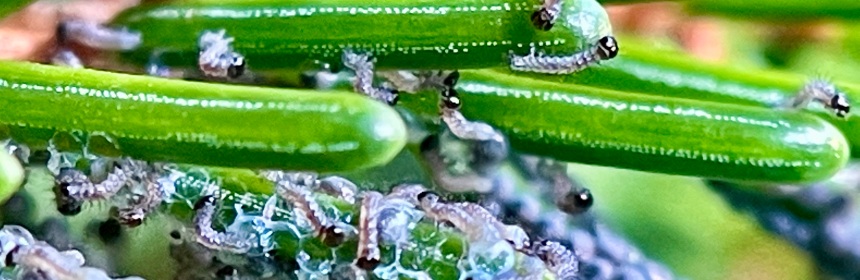
eggs on Caucasian Fir, San Juan Island, WA 09.12.2021eggs on Caucasian Fir, San Juan Island, WA 09.12.2021Eggs darkening – September 18, 2021 San Juan Island They hatched! Oct. 7, 2021
Mystery moth eggs hatch – October 7, 2021
Thanks for reading! Stay tuned for further updates. I’ll do my best to figure out an ID for these. 🙂
Trashline Orb Weaver (Cyclosa sp.) San Juan Island, WA 09.06.2021
I am very nearly blind when I try to see things up close, so it truly surprises me how I SEE things like the tiny “laundry” line of dead bugs this little orb weaver had strewn along a filmy thread between the boughs of our fir tree. At first, I thought it was just debris, stuck to the remnant of a spider thread, long abandoned. Upon closer inspection, I saw more threads and then my attention focused on the center, where I was able to discern what looked like teeny legs curled up around a body.
Trashline Orb Weaver
I used my clip on macro lens to get a better look. Indeed, there was a tiny spider in the center. I thought it was dead. That’s EXACTLY what the spider was hoping I’d think, and then I’d move on and the spider could enjoy the morning sun, and maybe a tiny bug for breakfast too.
Trashline Orb Weaver
Cyclosa sp. Trashline Orb Weaver 09.07.2021
Trashline Orb Weaver (Cyclosa sp.) San Juan Island, WA 09.07.2021
Trashline Orb Weaver
I had a hard time getting decent photos. Even with the macro lens, focusing was tough. The wind would blow at just the WRONG second and I’d have to start all over again. I couldn’t find my tripod, but finally got a decent pole to help me balance, and went out to take photos at different times over a period of 2 days. I even went out last night and took a picture.
Awake or Sleeping? Trashline Orb Weaver (Cyclosa sp.) at night. San Juan Island 09.07.2021
It was fairly easy to identify the spider to Genus (Cyclosa), but species ???? . After going through the literature I had, I narrowed it to 2 possibilities, but reached out to Rod Crawford for help. Rod is the curator of arachnids at Seattle’s Burke Museum and this is what he says,
“Yes, it’s a Cyclosa. This time of year all Cyclosa are juvenile, and I for one cannot distinguish between our 2 species (C. conica, C. turbinata) as juveniles. However, C. conica is more common.”
So, my little spider with a laundry line of bugs is either Cyclosa conica or Cyclosa turbinata.
Why exactly do they string the debris along their web lines? Well, again, this debris is usually made up of dead bugs and other tiny bits of debris attached to the silk line. Typically, the spider is positioned somewhere in the middle, using the debris as camouflage against predators. Often, the female spiders’ egg sacks are attached to this “laundry line” too. I think laundry line sounds better than trash line, but I don’t think I get to rename the spider.
There are five species of Cyclosa spiders in North America, north of Mexico. I believe we only have the two mentioned by Rod here. I’m going back out to check on my new friend after I finish my post. Enjoy the day and remember to Be Nice to Spiders!
My husband said this title was far to risque’ but I’m going with it anyway. I would tell you to “get your mind out of the gutter,” but this is a SPIDER sex story. Sex education is not a bad thing and it’s good to know how it all works, right?
So male spiders have these fuzzy, enlarged “paws” that sort of hang down in front of their face. People who study spiders call them palps. They are sort of like a 5th pair of legs, but used by the spider to manipulate food and “smell” things. These palps are also where the sex organs are housed in adult male. The hairs on the palps have chemoreceptors that help the fellas follow the pheromone trails of SHE spiders. This is the mating season for one of our commonly seen spiders in the San Juans…the Giant House Spider (Eratigena duellica) who happens to be harmless, just horny.
How do spiders DO it? Well, an adult male spider will weave a small silken sheet called a sperm web. He deposits a drop of semen on the sheet and then dips the tips of his palps into the semen, drawing it up into what is called the emboli. The emboli act like a syringe, drawing the fluid up to be held in the palp for transfer to a SHE spider. With his palps “charged and loaded,” he gleefully wanders off to woo all the ladies.
Some of these male spiders really go all out to impress a gal. They will drum (with their palps), dance, and display all sorts of postures to show how great they are. They better do EVERYTHING they can to impress her too since SHE might eat them if it’s not good enough. Watch a jumping spider perform his quirky courtship ritual here –