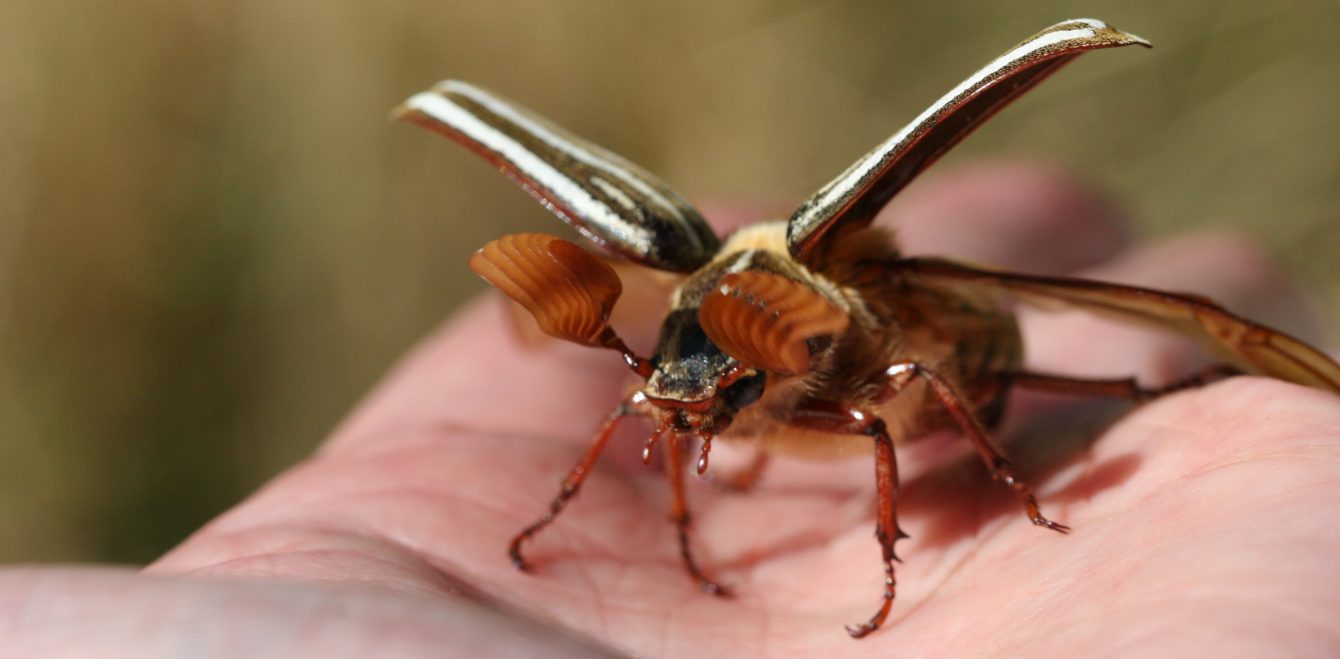
The social media giant we all have become overly dependent on in recent years, had a big, giant F-A-I-L today. The entire site was down. I couldn’t share bug photos or look to see what crazy or amazing things my friends had been up to. I also couldn’t watch the fabulous video of the frog and bearded dragon that I’ve been replaying over, and over, and over because it’s so DARN cute! You can find it on Tik Tok if you can’t find it on Facebook.
In the void, I resorted to the fail safe backup. It’s called E-mail. I really feel old because I actually remember how we communicated before the advent of cyberspace – handwriting letters that you put a stamp on and eventually were delivered by USPS.
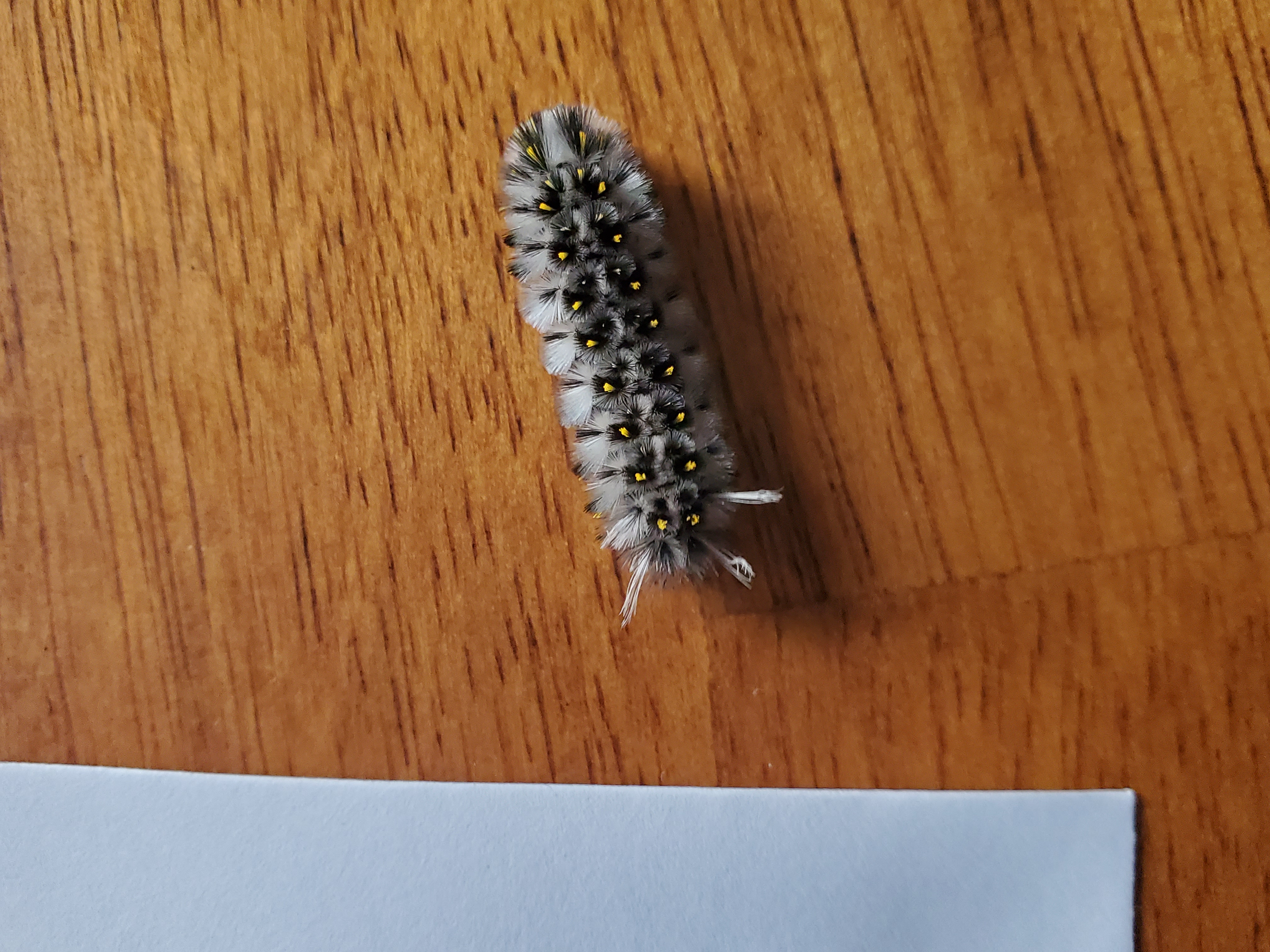
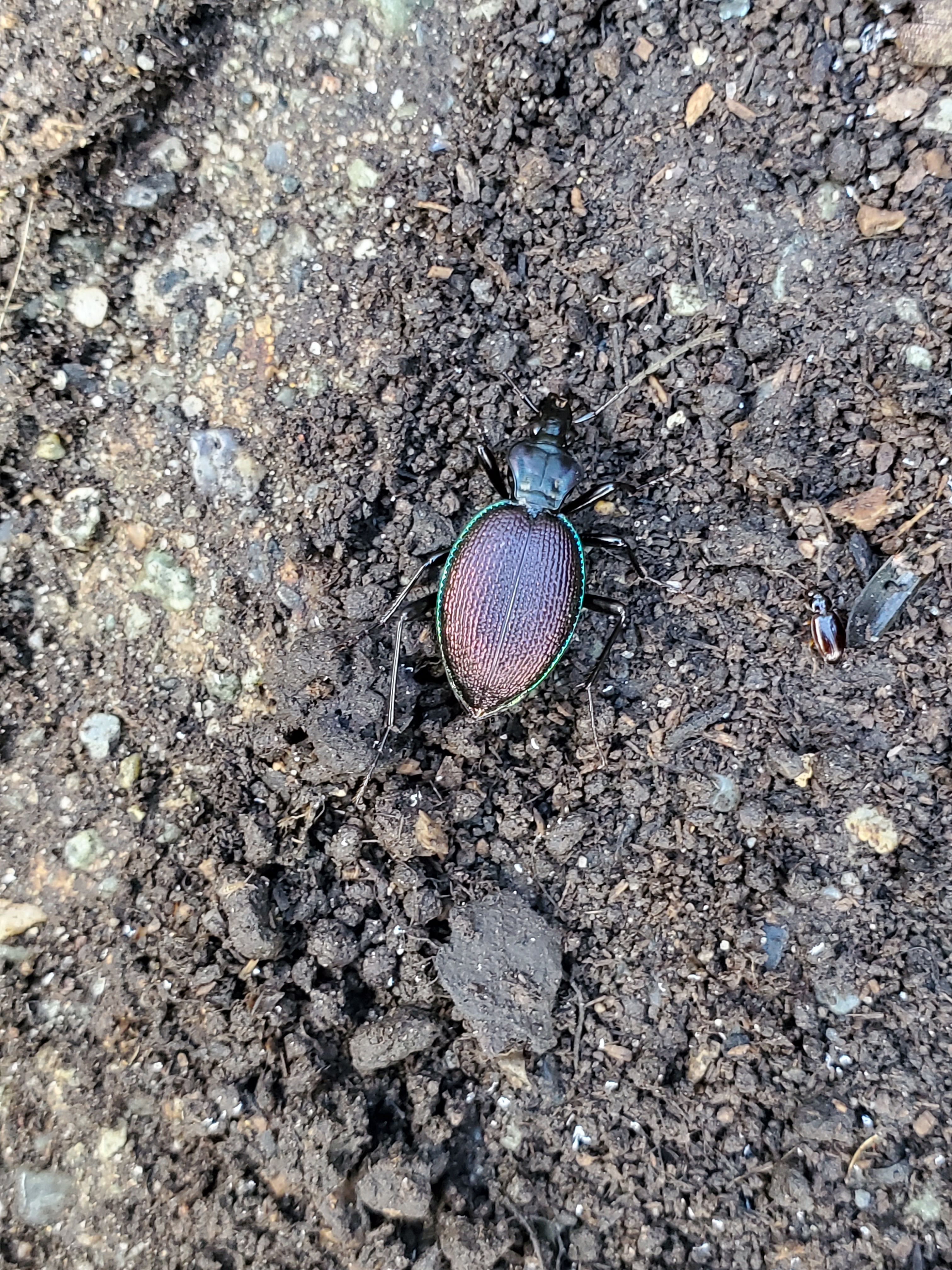
So, in my email, I actually had received two nice bug pictures I want to share with you. Victoria Compton (who is running for Friday Harbor Port Commissioner btw) sent these to me. The first, a caterpillar, is going to turn into my favorite moth, Lophocampa roseata or the Rosy Amelia Moth. The 2nd, is a ground beetle in the family Carabidae (Scaphinotus marginatus) – also sometimes called the Margined Snail-eating Carabid Beetle.
Happy Bug Viewing! Thanks for checking these out and thanks for sending the photos Victoria! You have my vote. 😉
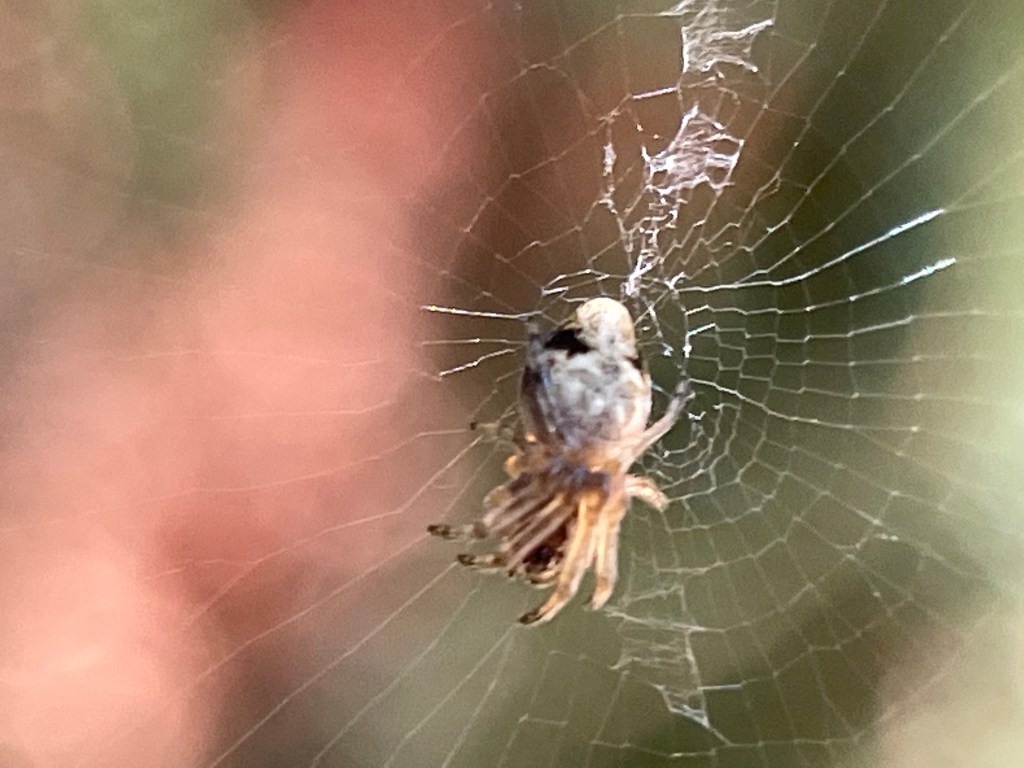
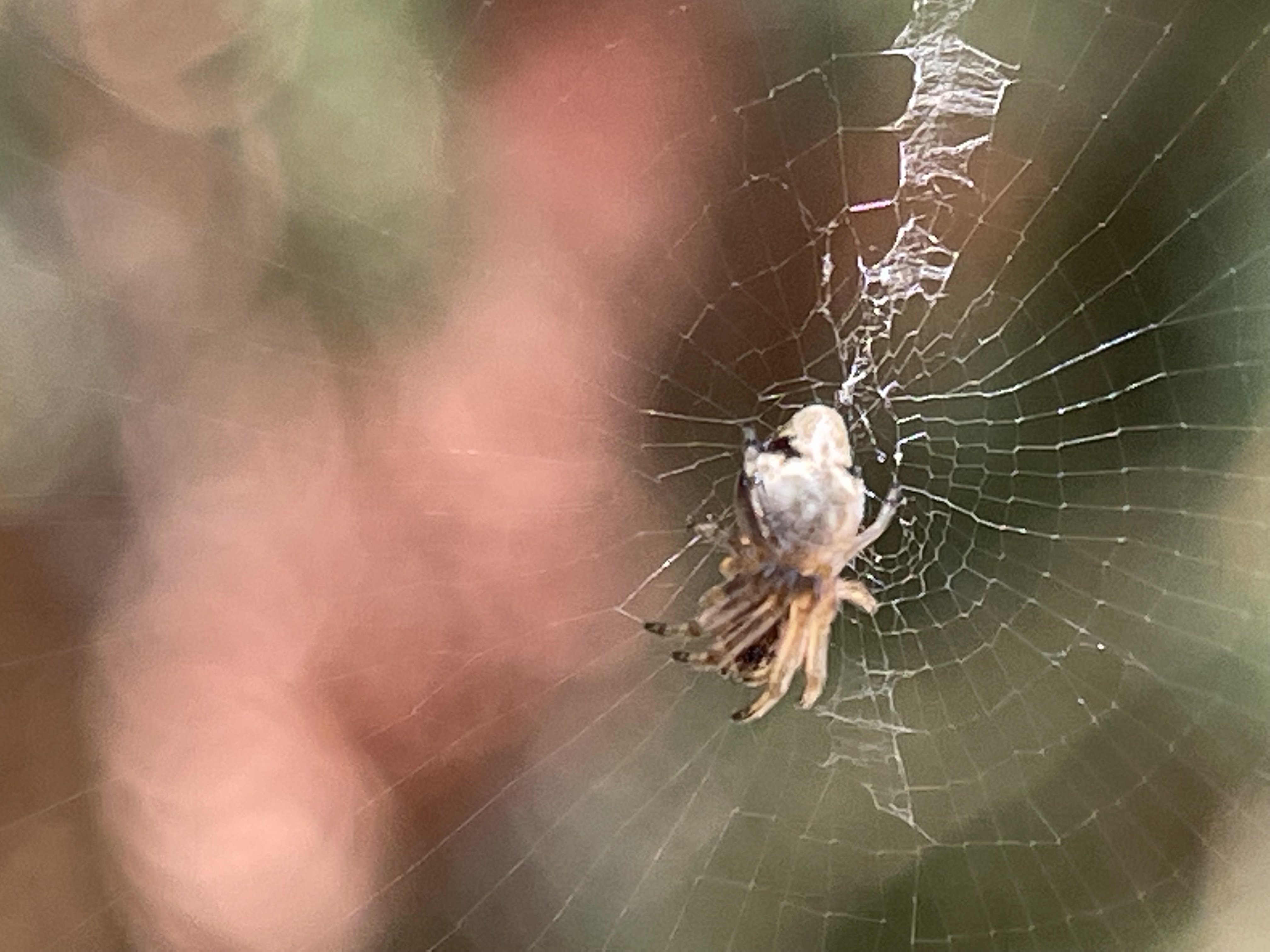
Trashline Orb Weaver (Cyclosa sp.) San Juan Island, WA 09.06.2021
I am very nearly blind when I try to see things up close, so it truly surprises me how I SEE things like the tiny “laundry” line of dead bugs this little orb weaver had strewn along a filmy thread between the boughs of our fir tree. At first, I thought it was just debris, stuck to the remnant of a spider thread, long abandoned. Upon closer inspection, I saw more threads and then my attention focused on the center, where I was able to discern what looked like teeny legs curled up around a body.
Trashline Orb Weaver
I used my clip on macro lens to get a better look. Indeed, there was a tiny spider in the center. I thought it was dead. That’s EXACTLY what the spider was hoping I’d think, and then I’d move on and the spider could enjoy the morning sun, and maybe a tiny bug for breakfast too.
Trashline Orb Weaver
Cyclosa sp. Trashline Orb Weaver 09.07.2021
Trashline Orb Weaver (Cyclosa sp.) San Juan Island, WA 09.07.2021
Trashline Orb Weaver
I had a hard time getting decent photos. Even with the macro lens, focusing was tough. The wind would blow at just the WRONG second and I’d have to start all over again. I couldn’t find my tripod, but finally got a decent pole to help me balance, and went out to take photos at different times over a period of 2 days. I even went out last night and took a picture.
Awake or Sleeping? Trashline Orb Weaver (Cyclosa sp.) at night. San Juan Island 09.07.2021
It was fairly easy to identify the spider to Genus (Cyclosa), but species ???? . After going through the literature I had, I narrowed it to 2 possibilities, but reached out to Rod Crawford for help. Rod is the curator of arachnids at Seattle’s Burke Museum and this is what he says,
“Yes, it’s a Cyclosa. This time of year all Cyclosa are juvenile, and I for one cannot distinguish between our 2 species (C. conica, C. turbinata) as juveniles. However, C. conica is more common.”
So, my little spider with a laundry line of bugs is either Cyclosa conica or Cyclosa turbinata.
Why exactly do they string the debris along their web lines? Well, again, this debris is usually made up of dead bugs and other tiny bits of debris attached to the silk line. Typically, the spider is positioned somewhere in the middle, using the debris as camouflage against predators. Often, the female spiders’ egg sacks are attached to this “laundry line” too. I think laundry line sounds better than trash line, but I don’t think I get to rename the spider.
There are five species of Cyclosa spiders in North America, north of Mexico. I believe we only have the two mentioned by Rod here. I’m going back out to check on my new friend after I finish my post. Enjoy the day and remember to Be Nice to Spiders!
I had a feeling today was going to be one of THOSE days, but really had no idea how bad it would get. This time of year on the island, we’ve lost our sunshine and are headed into the Time of DARKNESS. I have no idea who got away with marketing the “Sunny San Juan’s!” They advertise that HERE is the special place where you’ll have a whopping 247 Days of Sunshine, but that is just WRONG!
This statistic has been creatively manipulated and someone got away counting an entire day of sunshine when the sun maybe, just MAYBE peeks out for a whole 5 minutes. Yep, two bits of advice I received when I moved here was 1) if the sun is out at all anytime between October and April, go outside and, 2) get a raincoat.
But I digress from the events of the day! So, being under the umbrella of COVID, I hardly ever, go to town anymore. There is the likelihood that I might venture out only once during the week for a grocery/mail run. Well, that was today.
I stopped first at the post office. There was the now normal line winding down the hall. I waited my turn patiently. It’s an island and I’ve learned to be on island time. There’s always someone who hasn’t yet learned this yet, and that was the guy in line ahead of me.
He was complaining loudly. He went into the office even though the sign clearly states “only THREE people at a time.” Poor postal staff had to point this out. His reaction? Well, you might ask that. He was even louder about having to WAIT and HE had MUCH MORE IMPORTANT THINGS TO DO!
“J” whispered to me when it was my turn at the counter, “Did you HEAR that guy?” I nodded my head, commenting “there’s always one!” Little did I know there was one more someone who would be breaking the RULES.
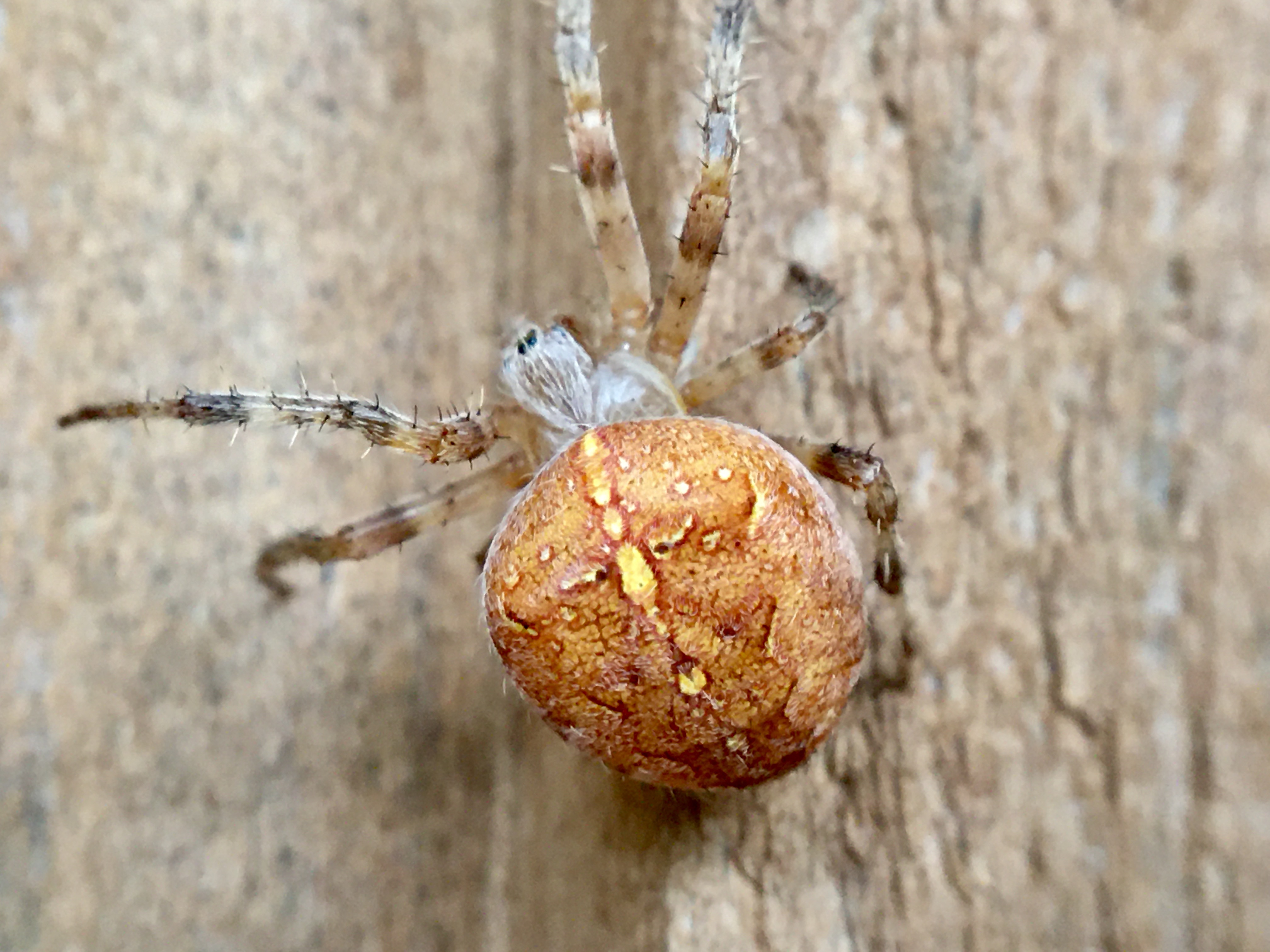
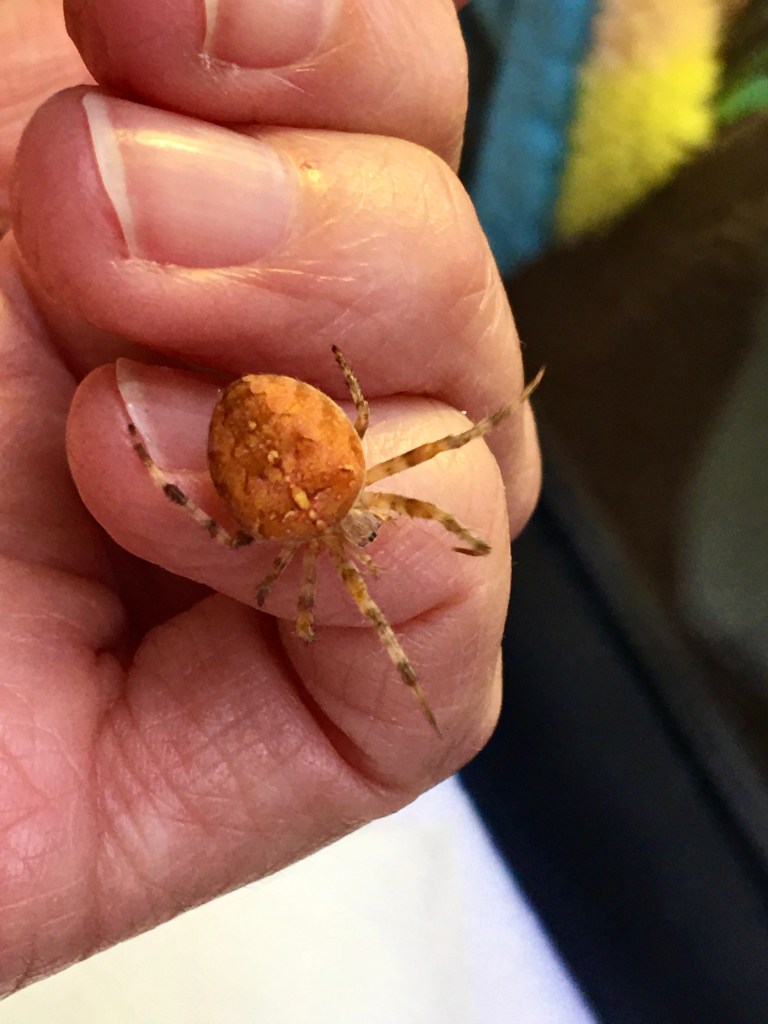
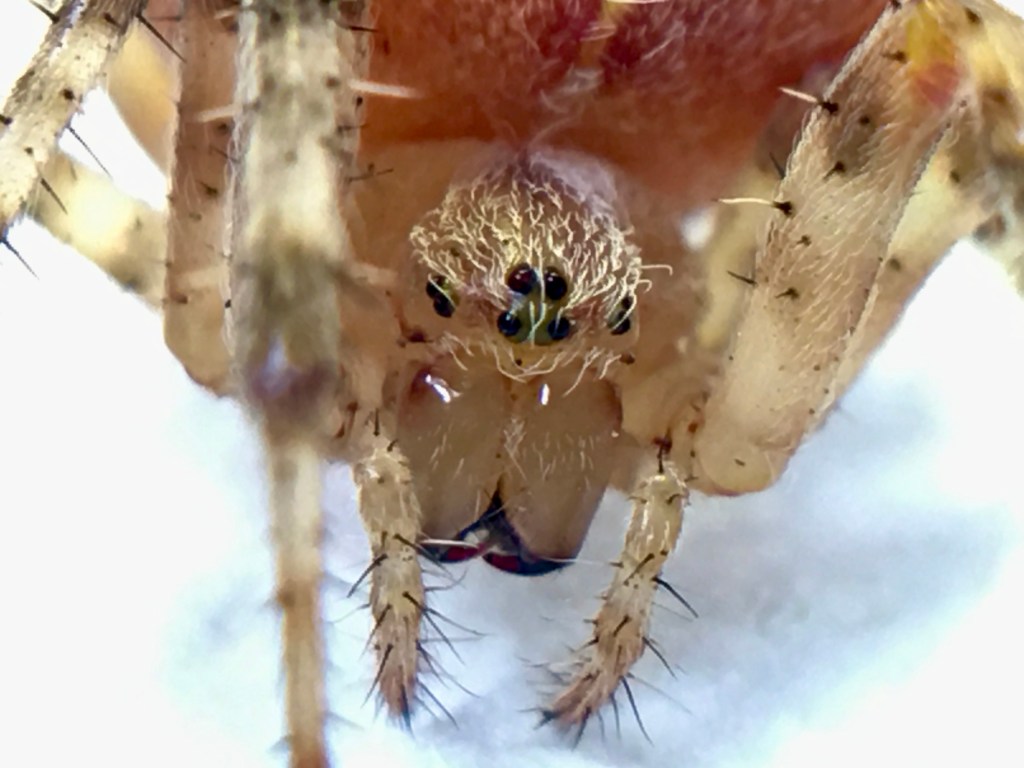
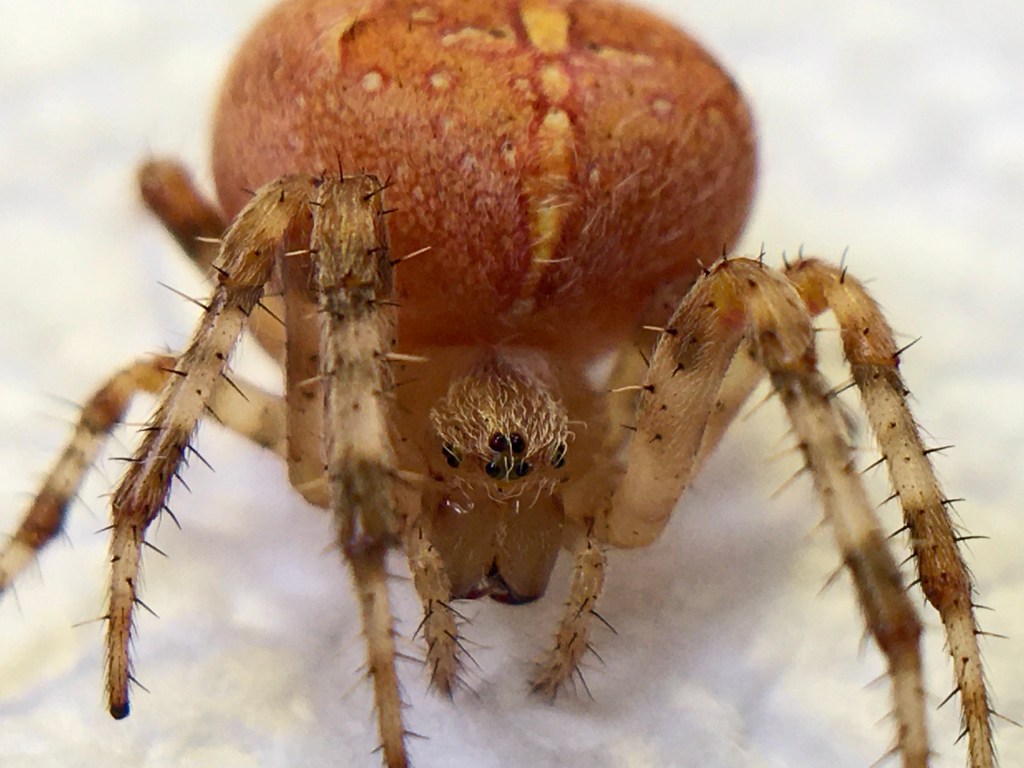
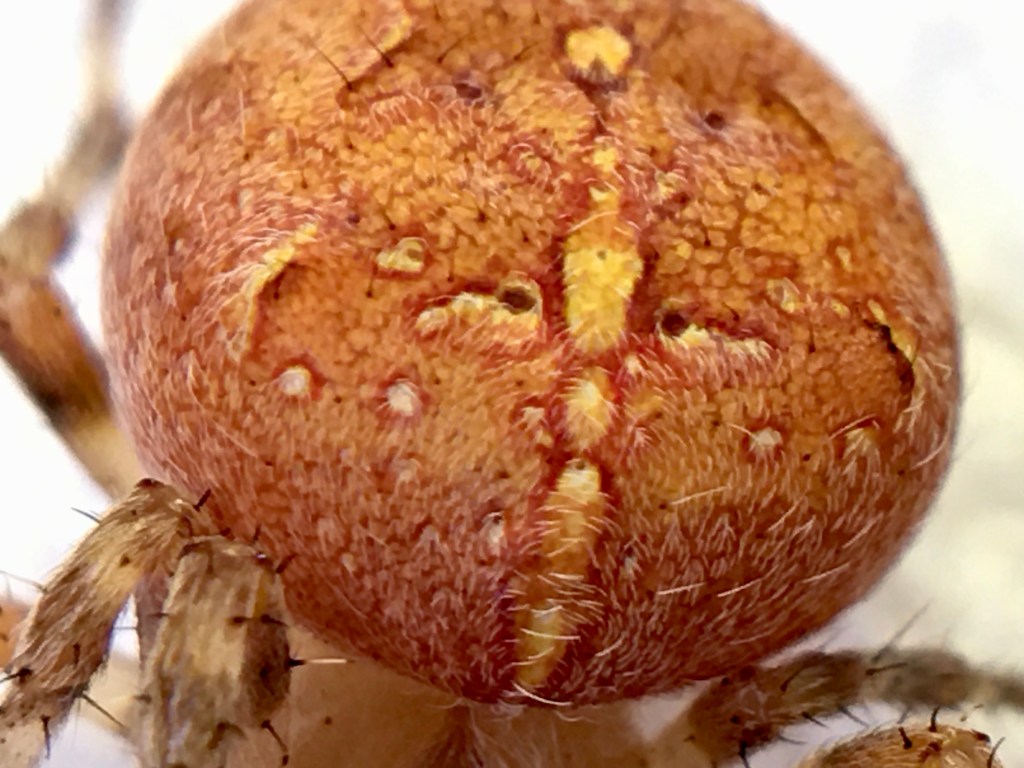
My next stop was to grab a spider left for me at my husband’s office. A pumpkin-colored Orb Weaver. I love spiders!!! After collecting my 8-legged friend, I made my next stop at the Market.
At this point, I’m feeling a bit scattered. I have my purse, keys in hand, my “list” of things I need to pick up for the next few nights of dinners, and I walk across the parking lot and into the store. The next thing I hear is “MA’am, Ma’am!” I looked towards the voice and all of a sudden the sound is ringing in my ears as I realize the “Ma’am” is meant for ME.
“You forgot your mask,” the store employee is saying as she walks in my direction! I feel my face, groping for my mask, that I JUST HAD ON at the post office, which seemingly has disintegrated, leaving feeling the equivalent of walking into the store NAKED.
I was MORTIFIED!!! Thankfully she handed me a mask as I pretty much just stood there, unable to move. “Don’t worry,” says another clerk. “People all over the island are pretty much losing it. You’re not the first!” I feel marginally better, but not much.
Somehow I managed to finish my shopping, check out, and make it back to my vehicle. I called my daughter on the way home. Hands free. She tried to make me feel better and we had a good laugh about it.
“It’s getting to everyone! ”she says. Then, “I am starting to feel like there’s no point in figuring out what I want to do with my life, because I really wonder if we are going to have a LIFE after all of this.” I want to tell her it will be fine, but even though we joke about it, there is really nothing funny about the state of the world…OUR world. I find myself wanting to tell her to take up retail therapy to make herself feel better. Exactly how much is the limit on that credit card?
My daughter asked if I got my ballot at the post office. Then, she laughed and told me her friend, who says he ISN’T voting because he hates both parties wrote in FIDEL CASTRO and dropped his ballot in the box. Yes, I do believe folks are losing it! Big time.
Oh, and here are some photos of that lovely Orb Weaver I brought home (and released). This spider is Araneus diadematus, one commonly seen about in early fall. Now that I’m back in my “safe” zone, I can focus on Bugs that don’t require me to wear a mask!
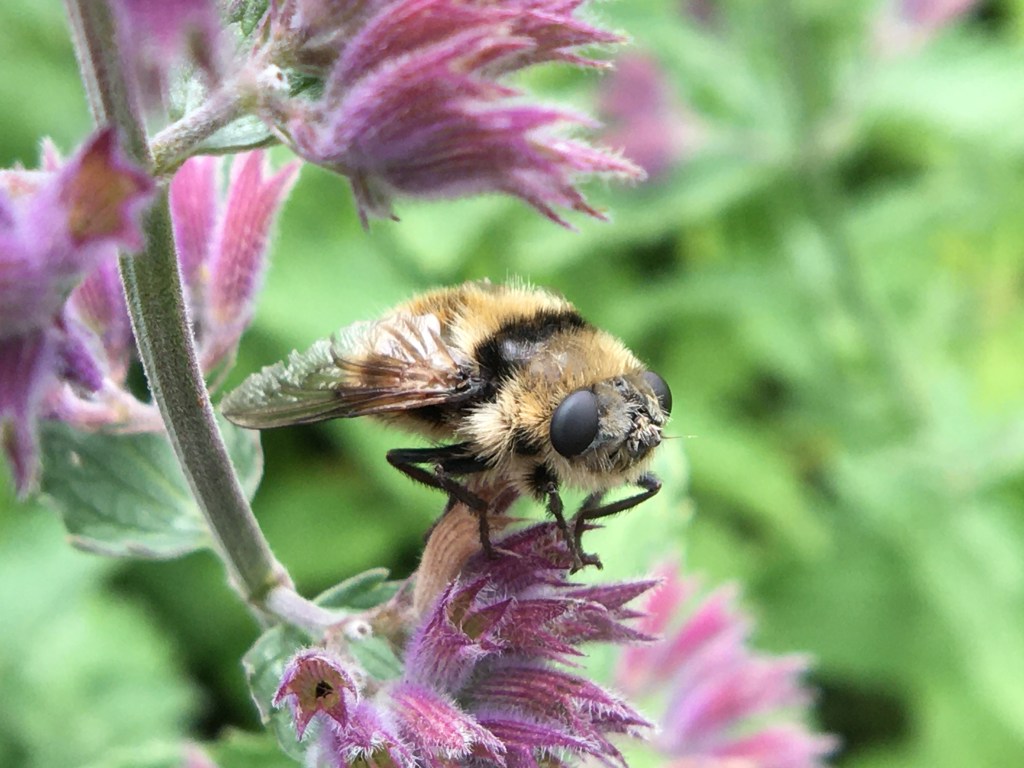
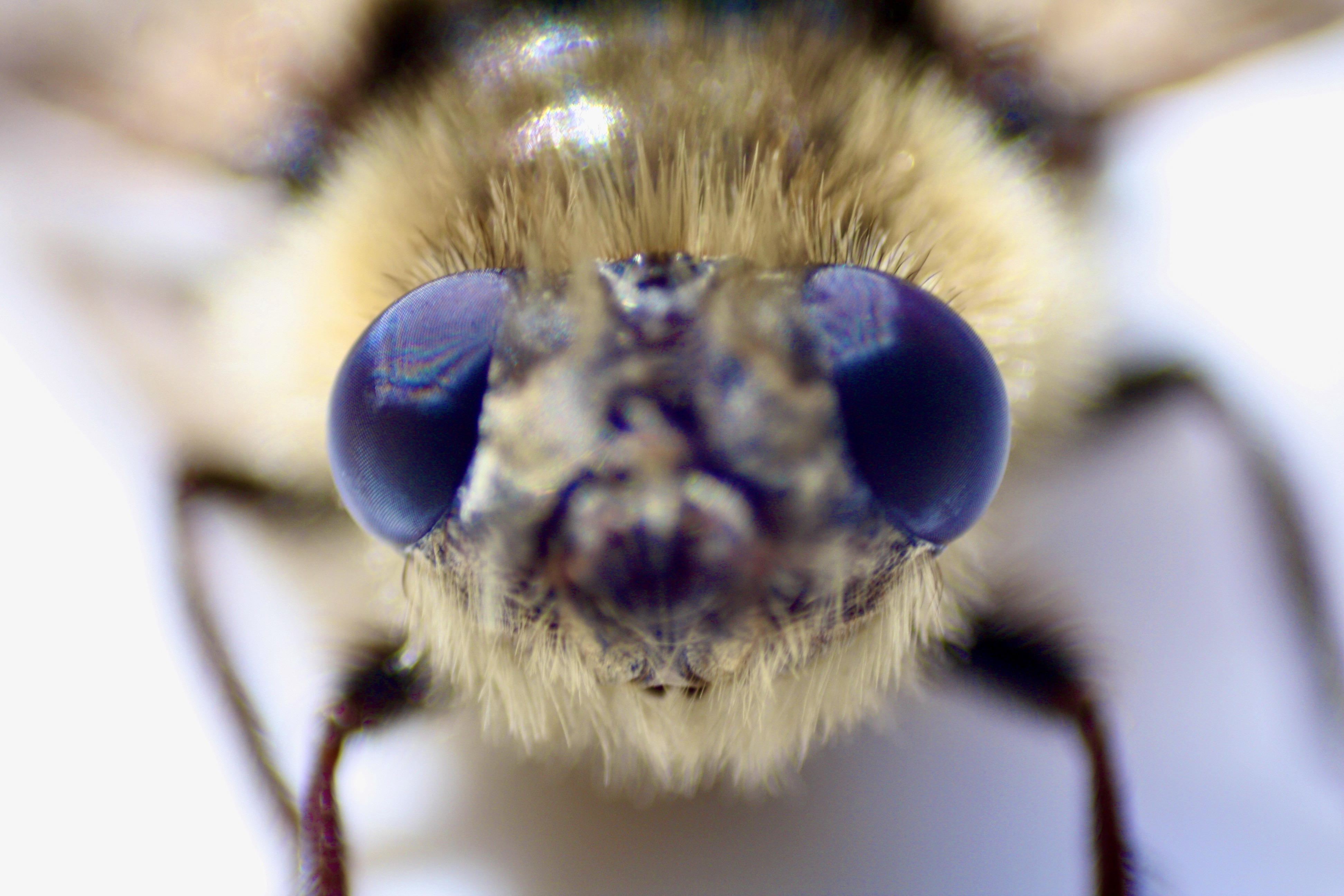
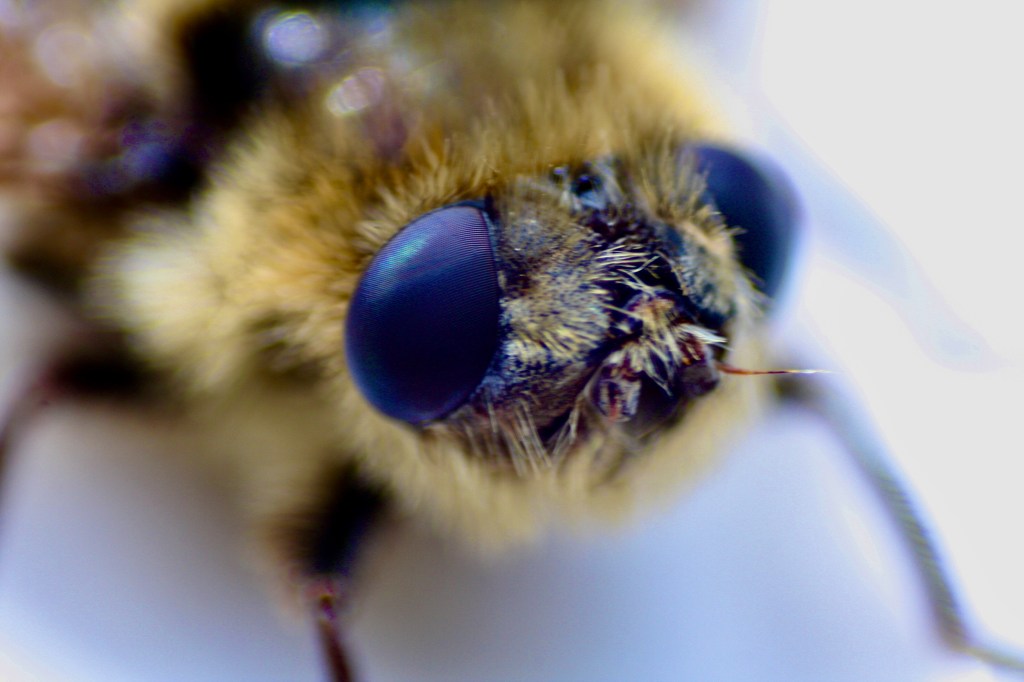
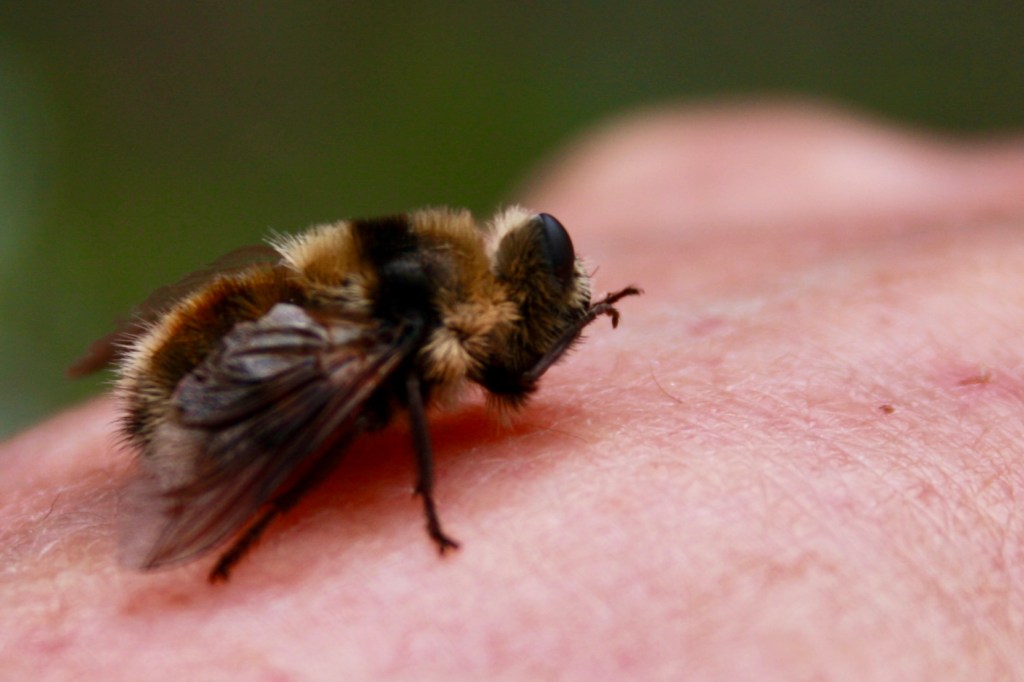
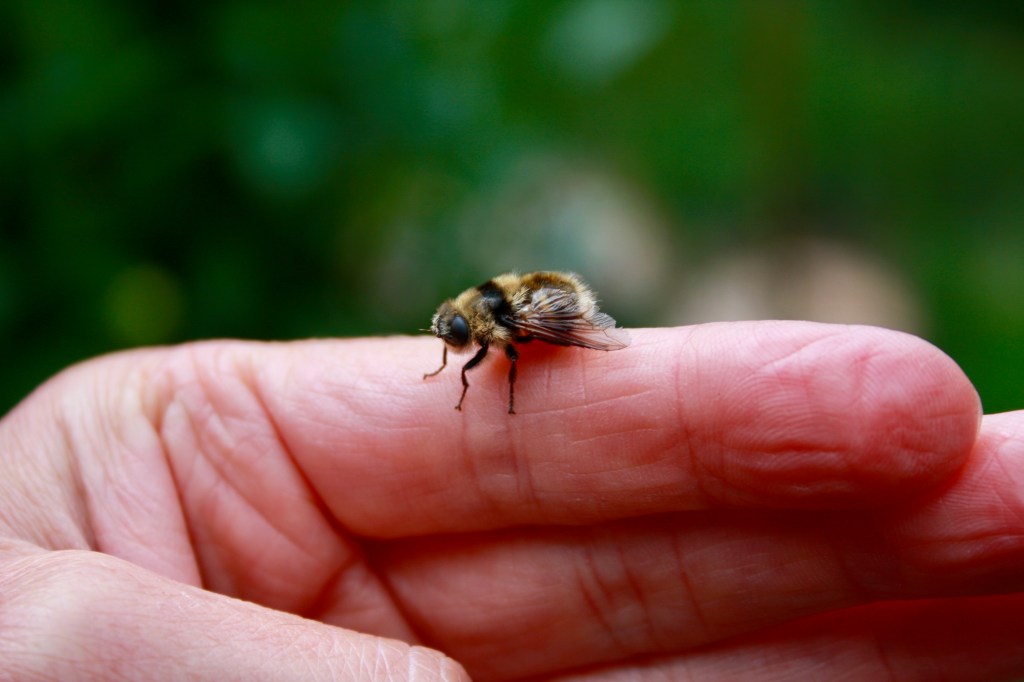
I made a video of one of my favorite insects you will see here in the San Juan Islands. This is a bumble bee mimic, but it’s not a bee at all. It’s a fly. Not only is it not your ordinary fly, it’s a fly with a very interesting life cycle that requires a host. This particular host relationship has evolved between the fly and our local black-tailed deer. It’s not feeding on the deer because these adult flies don’t even have mouthparts to eat. Their sole mission is to reproduce and they need an incubator for their “babies.” If you see a deer and notice it coughing, watch the video to find out why. **Edit *** Update to post… I misspoke in the video and state that the fly oviposits onto the deer which is incorrect. The eggs actually hatch inside the fly body and the fly larviposits onto the deer muzzle. Either way it’s got to be pretty terrifying to the deer! 🦌
Cephenemyia apicata 07.07.2020 video by Cynthia Brast-BormannCephenemyia apicata 07.07.2020 photo by Cynthia Brast-BormannCephenemyia apicata San Juan Island, WA 07.07.2020 Photo by Cynthia Brast-BormannCephenemyia apicata San Juan Island, WA 07.07.2020 Photo by Cynthia Brast-Bormann
Cephenemyia apicata
San Juan Island, WA
07.07.2020
Photo by Cynthia Brast-Bormann
Cephenemyia apicata
San Juan Island, WA
07.07.2020
Photo by Cynthia Brast-Bormann
Cephenemyia apicata
San Juan Island, WA
07.07.2020
Photo by Cynthia Brast-Bormann
Cephenemyia apicata
San Juan Island, WA
07.07.2020
Photo by Cynthia Brast-Bormann
Cephenemyia apicata
San Juan Island, WA
07.07.2020
Photo by Cynthia Brast-Bormann
Cephenemyia apicata
San Juan Island, WA
07.07.2020
Photo by Cynthia Brast-Bormann
House Pseudoscorpion (Cheliferidae cancroides) 2/28/2020 San Juan Island photo by T. SantoraHouse Pseudoscorpion (Cheliferidae cancroides) 2/28/2020 San Juan Island photo by T. Santora
House Pseudoscorpion (Cheliferidae cancroides)
House Pseudoscorpion (Cheliferidae cancroides)
House Pseudoscorpion (Cheliferidae cancroides)
House Pseudoscorpion (Cheliferidae cancroides) 2/28/2020 San Juan Island photos by T. Santora
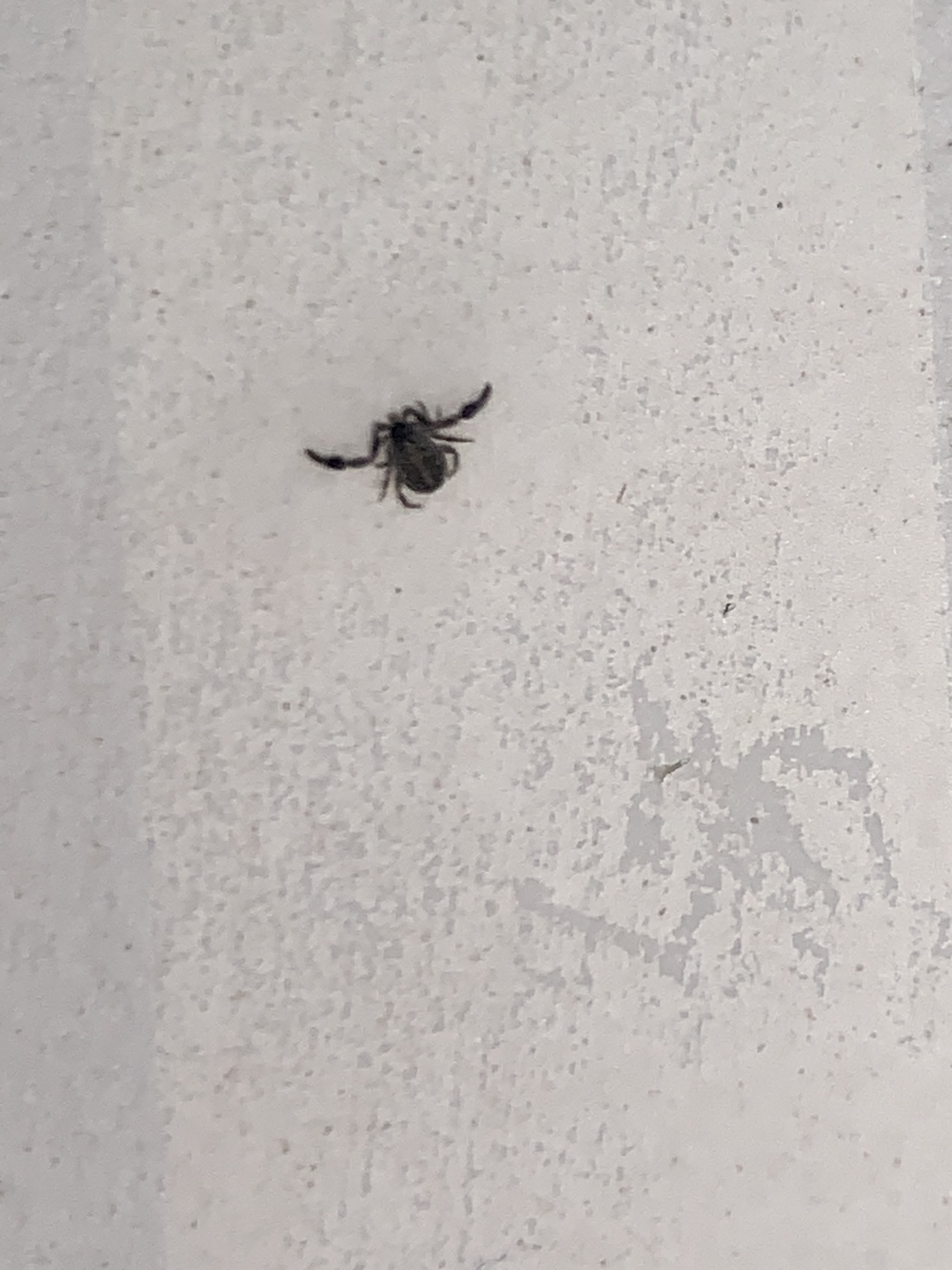
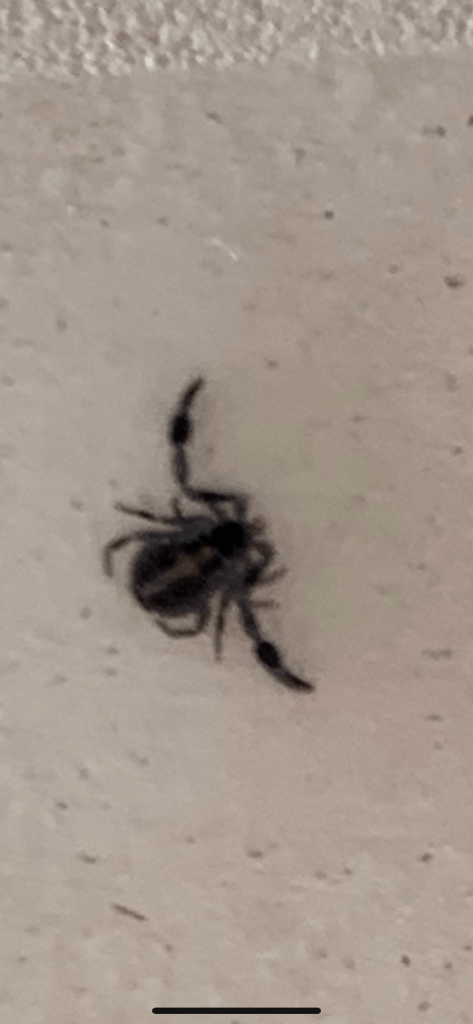
This little creature was photographed on February 28, 2020 by Trever Santora on San Juan Island, WA.
It’s a Pseudoscorpion! Found on the windowsill of his house and no larger than a tiny sesame seed, I believe it to be an immature House Pseudoscorpion (Cheliferidae cancroides).
Keep an eye out for these. They’re quite harmless to humans and can’t sting or bite you. Pseudoscorpions are predacious and beneficial because they eat other organisms that are pests. Some live in birds’ nests and eat the mites that can build up and harm nestlings.
Since they don’t have wings and can’t fly, pseudoscorpions move around by phoresy. That means they’ll hitch a ride on someone who can! Not just birds, but bees, wasps, and flies can also provide a free lift.
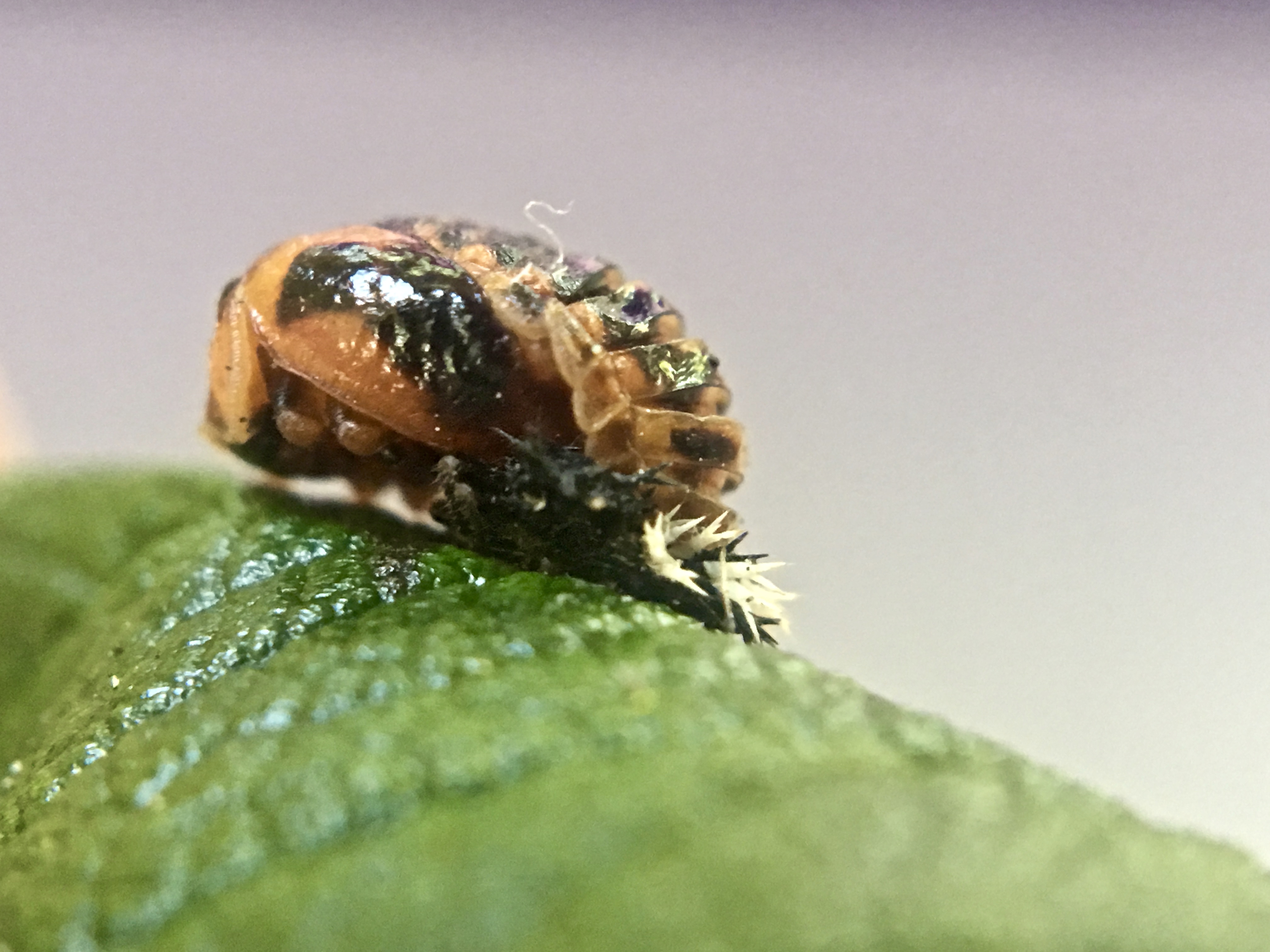
I found this weird little creature stuck to a leaf on a rose bush by the picket fence in front of the San Juan County Land Bank office on Monday, June 24, 2019 when I walked down Argyle and rounded the corner onto Caines (does anyone on the island actually use street names? Where the heck is Caines, right?)
Ladybird pupal case, June 24, 2019
Brought it home because I couldn’t resist the mystery of figuring out what it might be. What on earth are those spiny things at the end? Is it some sort of pest insect?
Ladybird pupal case June 24, 2010
After taking a few photos, I did what drives my husband crazy sometimes. I left the leaf with this little spiny-ended thing on the table, in a cup, without a lid. Yep. Just like when I left the really fat deer tick I had on my desk. The one that laid eggs…that hatched when I wasn’t paying attention. This is when it’s really handy to have sticky tape nearby, otherwise you have to vacuum every 10 minutes for about a month to finally sleep at night without feeling like things are crawling all over you and burrowing into your skin. This link should take you to my facebook page post about “Big Bertha.” https://www.facebook.com/buggingyoufromSJI/posts/2375866245969416
This morning, after my cat got me up with incessant meowing right in my ear, I sat down at the table with a cup of coffee. Millhouse (the cat) isn’t supposed to be on the table, but when my husband isn’t around, anything goes! He was staring something down that was m.o.v.i.n.g! Fortunately, I reacted faster than he did. I tipped over the little medicine cup I’d put the leaf in to thwart this little creature’s attempt at a fast getaway.
Asian Spotted Ladybird Beetle (Harmonia axyridis) July 27, 2019 San Juan Island, WA
Carefully sliding a piece of paper under the cup, I could see it looked like a ladybug. Ladybugs come in different colors, with different spots, and there are quite a few species one could encounter on San Juan Island. This beetle goes by an assortment of names. It’s often referred to as the Multi-colored Asian Lady Beetle or sometimes the Halloween Beetle because in some places they show up in large numbers at Halloween! 🎃😱
This beetle’s scientific name is Harmonia axyridis (The Asian-spotted Ladybird Beetle). It was imported to the United States as early as 1916 to help control pests as a biocontrol agent. While “Miss Harmonia” eats aphids, thrips, and scale insects (and manages these pests fantastically in soybean crops), she isn’t native and these pest insects aren’t all she eats. Asian-spotted Ladybird Beetles also eat native coccinellid beetles (native lady bugs) and even butterfly eggs. In the winter, she can bring her friends and invade your home. When handled, the ladybird beetles can excrete a stinky defensive chemical from their leg joints. This makes removal of large numbers of them from inside homes somewhat problematic. You don’t want to have them discharging this awful odor that will linger….all…winter!
Newly emerged adult (Harmonia axyridis) June 27, 2019 San Juan Island, WA
Another unfortunate consequence of importing these beetles is their love of wine grapes. 🍇 🍷 Asian-spotted ladybirds will eat grapes and then the grapes end up contaminated with an awful smell lingering on them. While I personally don’t drink wine, I know lots of people do and they’d be very unhappy if it tasted like essence of ladybug…a twist on a new aromatic bitter perhaps!
Did I squish her? Nope. I put her in the tree near our bird feeder. It’s possible she will become part of the food chain. While not all birds eat these beetles, some do. Insects and arachnids like robber flies, dragonflies, ants, various ground beetles, and cellar spiders also eat them.
If you see them, should you squish them? That’s up to you and how confident you are that you’ve identified it correctly. I wouldn’t want to mistake a helpful native ladybug as an invader. I recommend that instead of buying ladybird beetles at the garden store to release in your garden you establish native habitat to attract and support native species of ladybugs.
As I looked a bit more into the literature about Harmonia axyridis, I was intrigued with the publication of some research about the biochemistry of the liquid they secrete. It has been found to have strong antimicrobial action against strains of bacteria that are pathogenic to humans. This fluid has even been examined for its action against malaria. Perhaps these beetles don’t belong in the garden, but in your medicine cabinet instead.
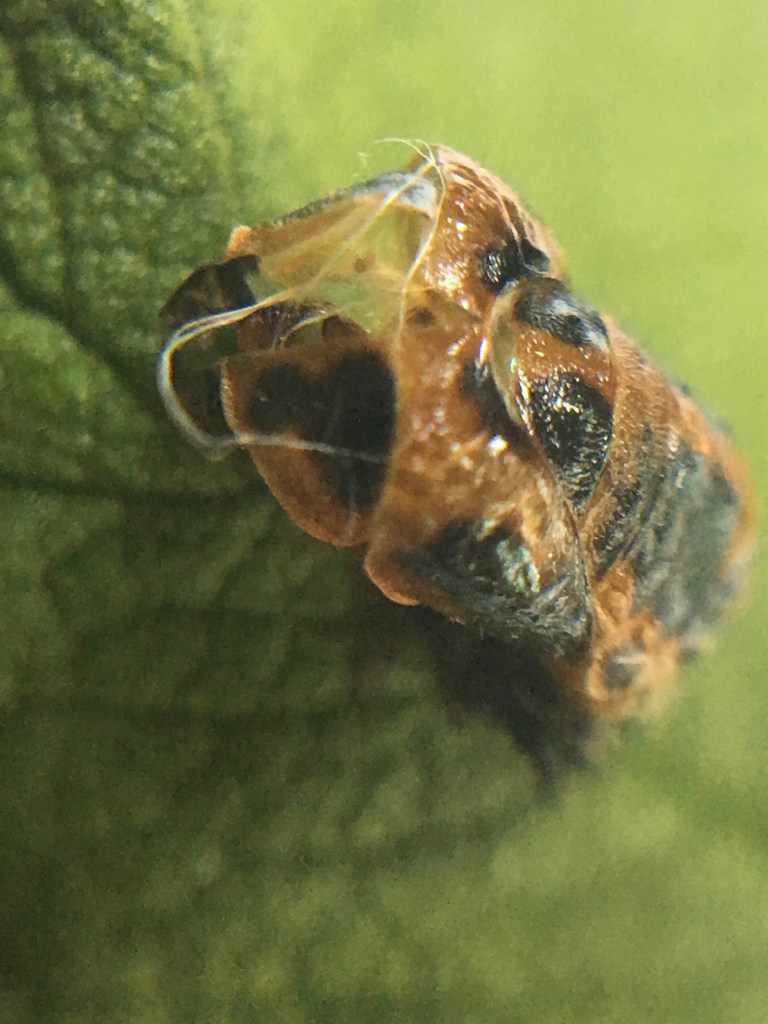
empty pupal case Asian spotted Ladybird Beetle (Harmonia axyridis) July 27 2019 San Juan Island, WA
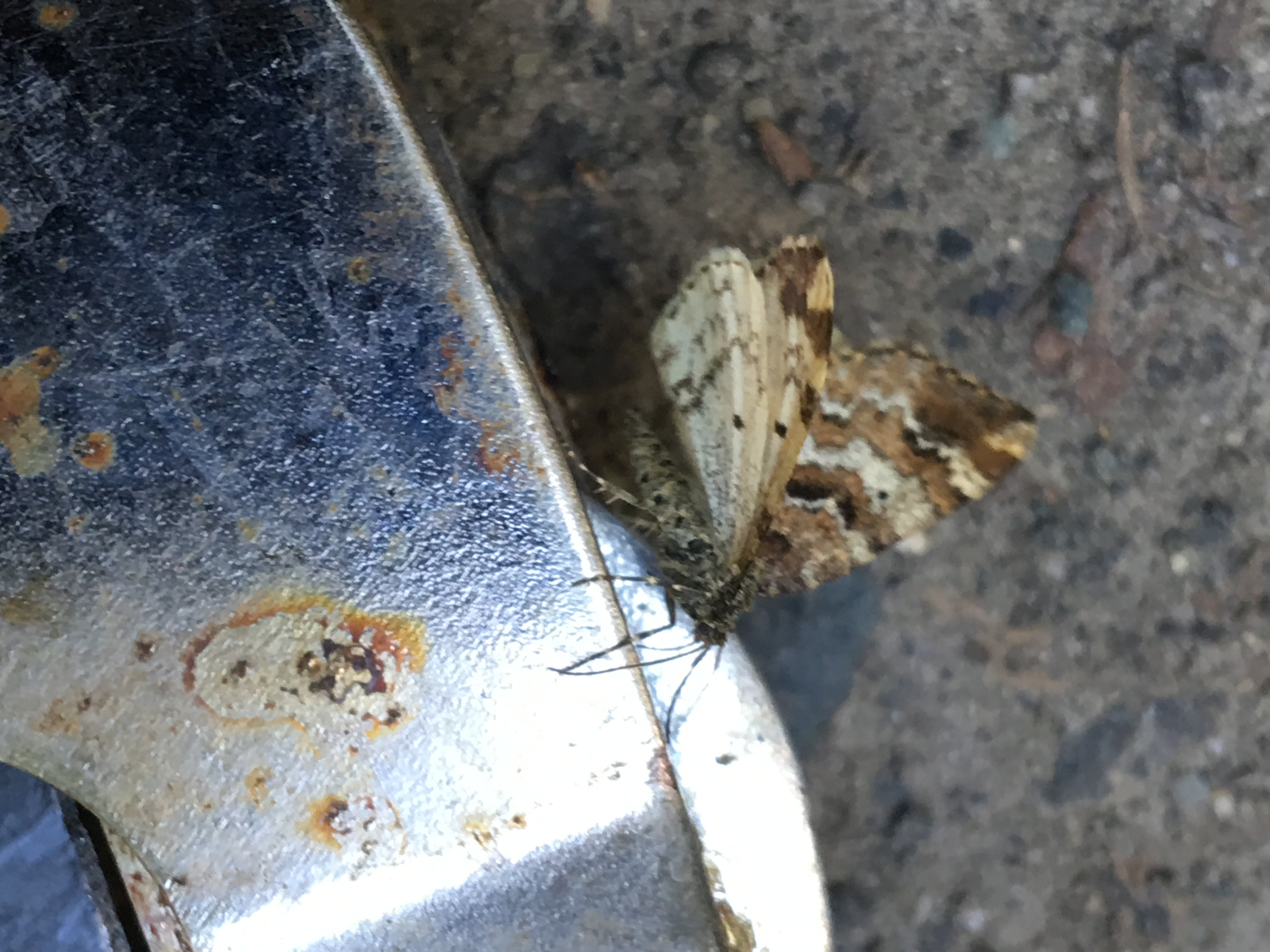
Enchoria lacteata (Packard) is a relatively small moth with forewings measuring only 0.9-1.1 cm in length. Adults have a remarkable zig-zag pattern on forewings made up of various shades of brown and buff. They are diurnal (daytime) fliers and emerge from late February to May. Sightings are often in grassy areas or edges of moist woodlands. Larval host plants are various species of miner’s lettuce, Claytonia (Portulacaceae). Check out the following link for more information on miner’s lettuce. It’s edible! https://www.ediblewildfood.com/miners-lettuce.aspx
Enchoria lacteata crawling onto my pruning tool.
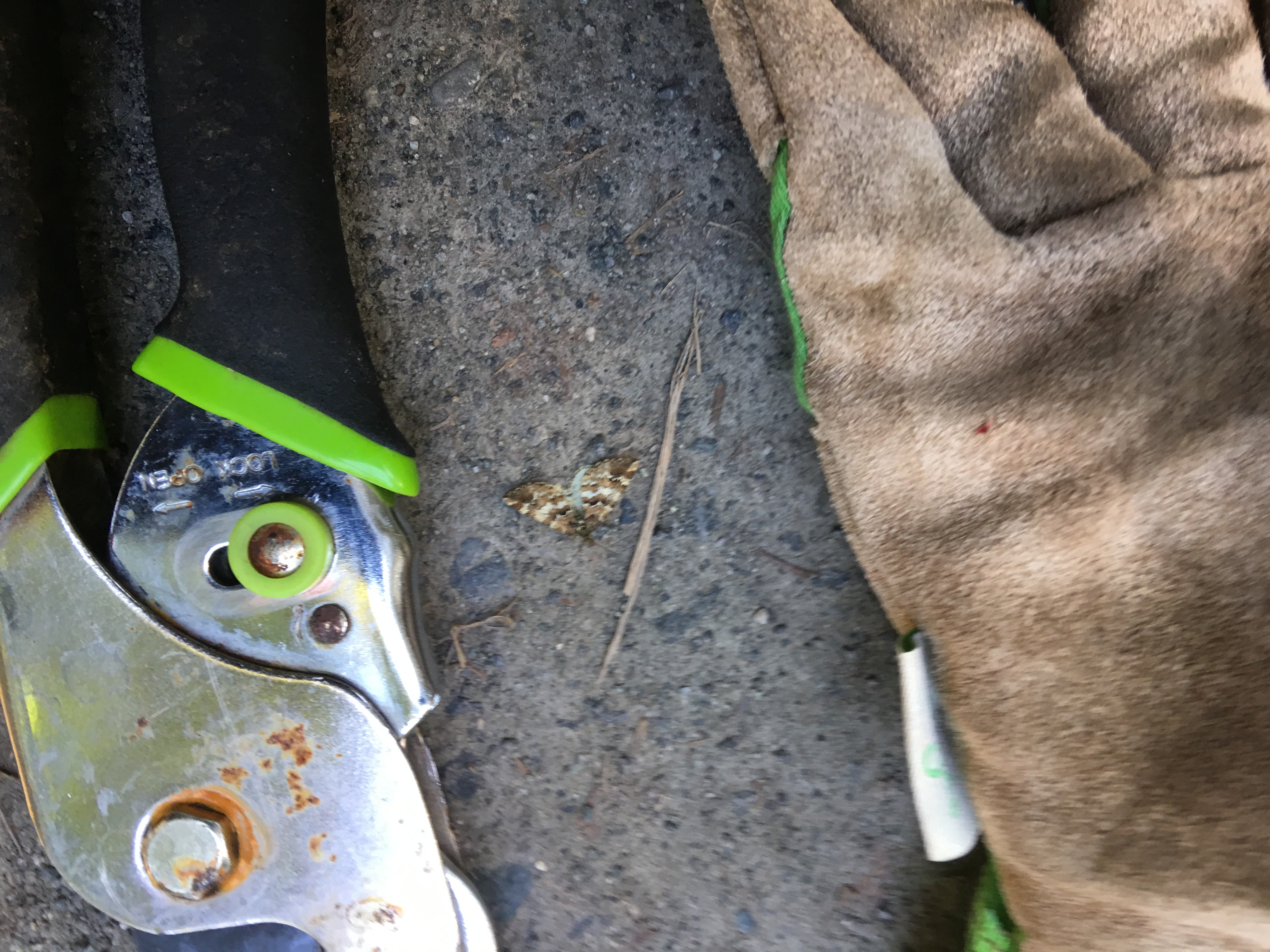
Enchoria lacteata between my work glove and pruning tool
References:
POWELL, JERRY A., and PAUL A. OPLER. Moths of Western North America. 1st ed., University of California Press, 2009.
Just in time for Halloween! Yesterday I was using the Scanning Electron Microscope (SEM) at Friday Harbor Marine Labs. I got to take some really cool photos but in order to use the SEM, your specimen has to be dried out. Well, I had some specimens that are really tiny and very delicate and they weren’t dried out because it is a complicated process that takes a certain chemical called Hexamethyldisilazane (HMDS). Also, drying out your specimen for viewing under the SEM renders it useless for viewing under a light microscope and you’ve lost the ability to preserve it in a collection.
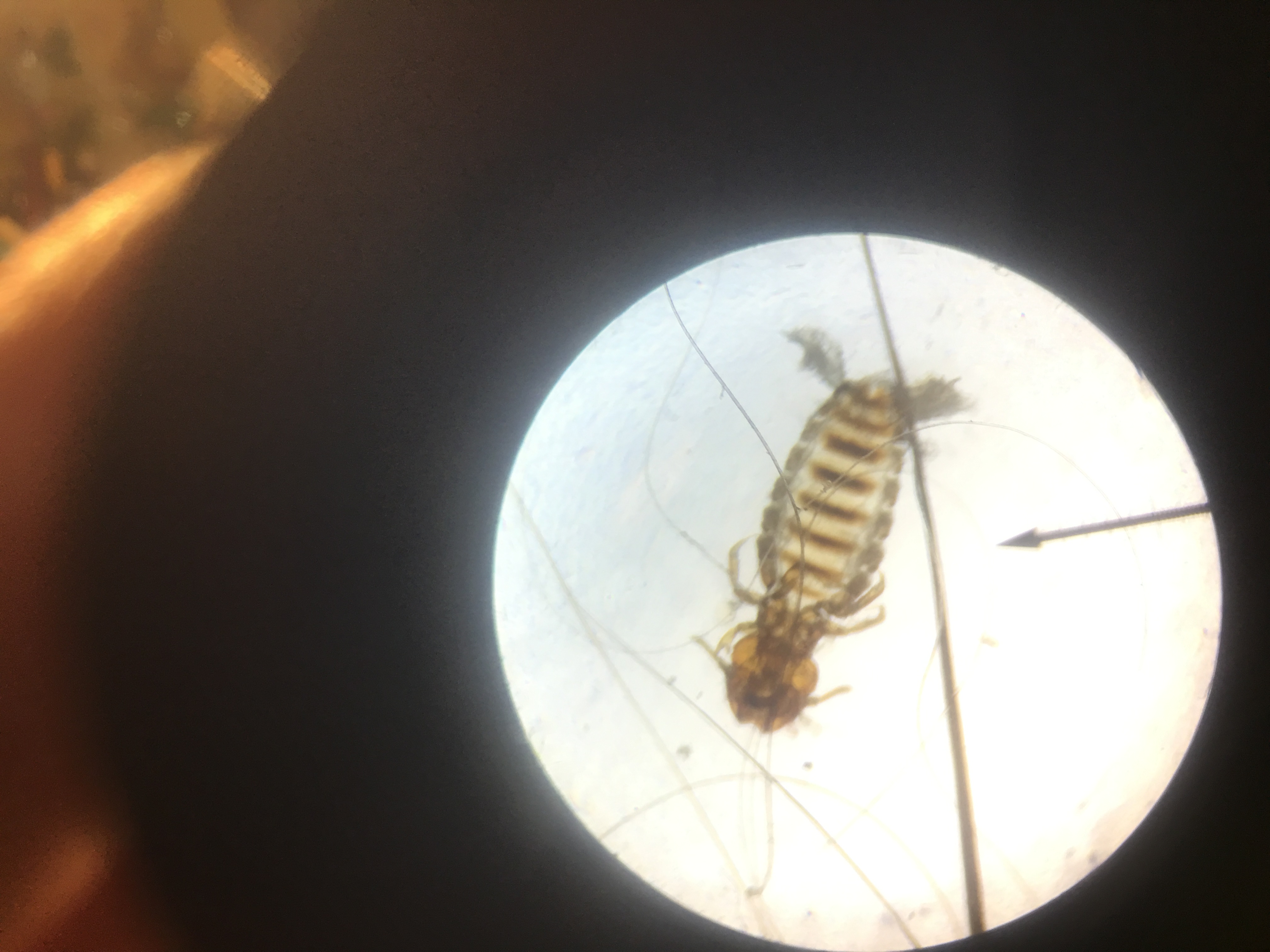
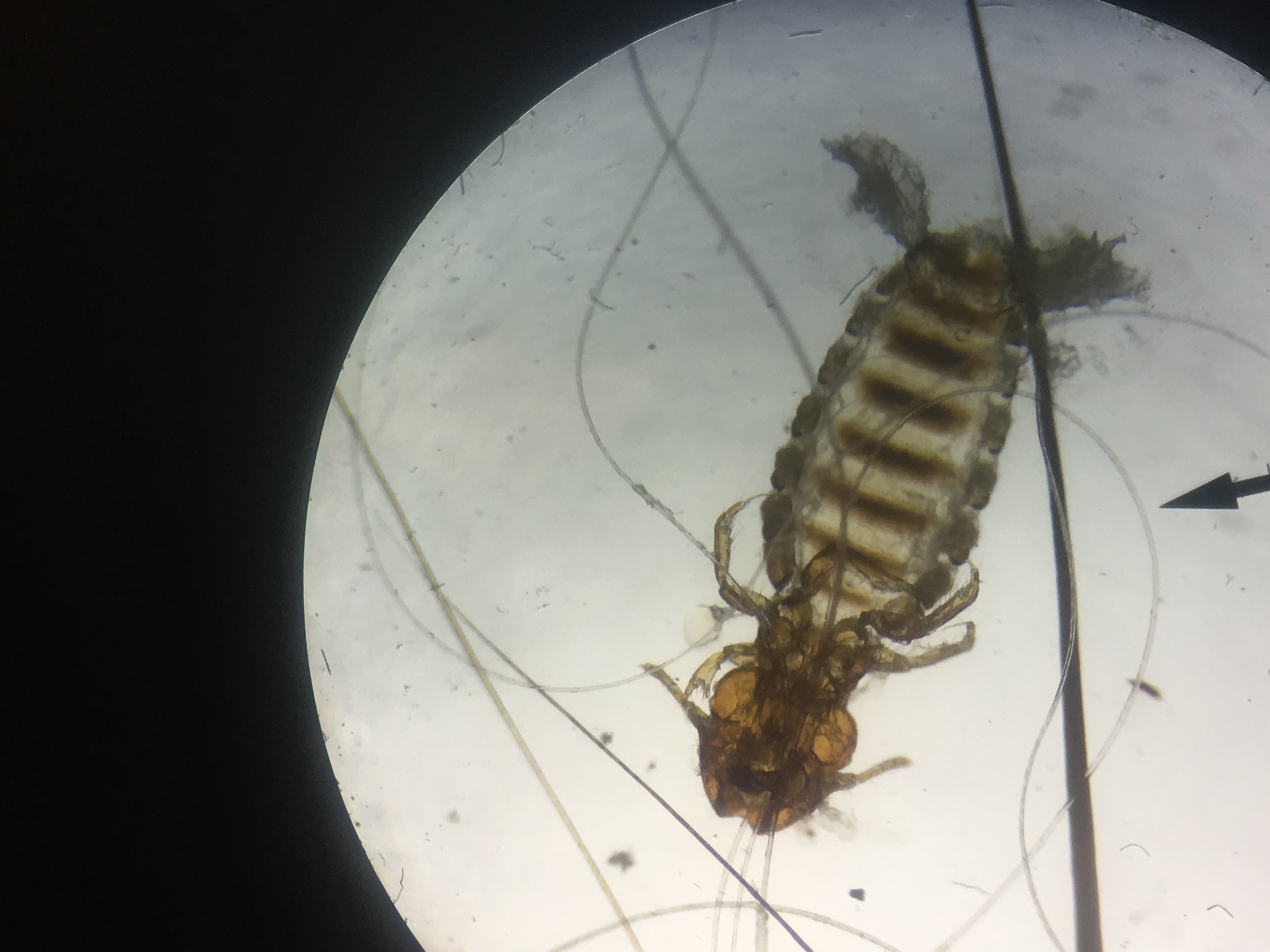
So I’m going to share how I took images of some of my specimens at home with a pretty old compound microscope, an iPhone, and a clip-on macro lens from Amazon. First, I’ll tell you a bit about the compound microscope image posted here. This specimen is in the genus Damalinia, most likely the exotic chewing louse, Damalinia (Cervicola).
Chewing louse Damalinia spp
It lives on black-tailed deer (Odocoileus hemionus columbianus) in Washington, Oregon and California, and has been indicated in what is called HLS (Hair-loss syndrome). They build up in large numbers on deer at certain times of the year. One factor thought to contribute to this is lack of adequate nutrition in the deers’ diet, particularly an absence or deficiency of Selenium.
In a nutshell, these lice can reproduce at high numbers in vulnerable deer (typically old, young, and those with weakened immune systems due to nutritional deficiencies or internal parasites). The lice cause extreme itching, irritation, and hair loss. The deer respond to the itchiness by excessive licking and grooming. Why hair loss? Well, these lice are called “chewing lice” because they munch on hair, skin fragments and secretions, and in some cases will feed on blood from skin wounded from scratching. It’s a miserable condition to have. This is what a deer looks like that is suffering from HLS caused by the chewing lice.
Photo by Brian Murray https://www.dfw.state.or.us/wildlife/health_program/hairloss/index.asp
Here is a larger version of my photo. It’s not as clear as I’d like, but I’m certainly going to practice to improve. Happy Halloween and I hope you don’t spend the night scrrraatching in bed!
Robinson, J. (2007). Transmission of the chewing louse, Damalinia (Cervicola) sp., from Columbian black-tailed deer (Odocoileus hemionus columbianus) to Rocky Mountain mule deer (Odocoileus hemionus hemionus) and its role in deer hair-loss syndrome. Masters Thesis. Oregon State University. https://ir.library.oregonstate.edu/concern/graduate_thesis_or_dissertations/1v53k0068?locale=en
Roug, A., Swift, P., Puschner, B., Gerstenberg, G., Mertins, JW, Johnson, CK, et al. (2016). Exotic pediculosis and hair-loss syndrome in deer (Odocoileus hemionus) populations in California. Journal of Veterinary Diagnostic Investigation, 28(4), 399-407. http://journals.sagepub.com/doi/10.1177/1040638716647154
Maude, R. J., Koh, G. C., & Silamut, K. (2008). Taking photographs with a microscope. The American journal of tropical medicine and hygiene, 79(3), 471-2. https://www.ncbi.nlm.nih.gov/pmc/articles/PMC2843439/
Eek! There’s a spider in the bathtub! Do you really want to turn on the water and drown it? Hopefully you are not nodding your head “yes,” but instead finding courage to overcome your arachnophobia and finding a tiny bit of compassion. Just take a deep breath. Get a towel, or a cup and a card, and find your brave inner self to save this poor little eight-legged individual to live out its life. Say this mantra with me….”Be NICE to spiders!” Then say it over and over and over to yourself. It will make you a much more confident person. You can tell your friends and co-workers about how YOU got a spider out of the BATHTUB!
At my house, the number one threat to spiders is my cat. Millhouse is determined his job is to be spider exterminator. He squashes them. He used to eat them! Once he ate one. He fainted. I had to rush him to the vet. He revived on the way. The next time, he bit one and spit it out. I don’t know if the spider was foaming from being punctured or if the cat was foaming because well….maybe cats foam at the mouth sometimes when they eat something they shouldn’t. In any case, he’s evolving his kill techniques. Now he eats too much cat food and uses his massive body weight (he thinks it’s muscle) to flatten them.
I’m on the other side. My job is to save them. It was a good thing I saw this one before Millhouse did. You see, Millhouse loves to drink his water out of the bathtub. I have to leave the water dripping for him. That’s why you’ll note the stain on the tub. It’s from hard well water. One day I will scrub off the yellowing, but for now, pretend it’s not there.
The first thing I recommend to get the spider out is to grab something like a hand towel or a plastic cup and some sort of paper (mailer, index card, envelop, etc.). I used a towel. Watch my video and see how easy it is! The spider isn’t going to bite you. It just wants OUT of the tub. Probably it was thirsty. See my post from October 27, and you can read all about how to give a dehydrated spider a drink. At this point, it needs your help. It is stuck. The sides of the tub are too slippery for it to crawl out. It’s really easy! Here goes…
The general idea is to be extremely gentle. You don’t want to injure the spider. Keep chanting your mantra…”Be nice to spiders!” Over and over and over!
Safe!
See! It’s not that hard. The spider didn’t attack me. Isn’t it so cute! By the way, this spider is a Hackelmesh weaver (Callobius severus) https://bugguide.net/node/view/7018. I checked later today and it has crawled off somewhere. Happy to escape the cat!
Here’s a clip of my little Wolf Spider, Tarentula kochii a.k.a. Alopecosa kochii (ID credit to Rod Crawford at Seattle’s Burke Museum). He ever-so-kindly responded to my email query for help. According to Rod, this spider is “a local native wolf spider and somewhat uncommon and rare.” I found it in the doorway two days ago (10-23-18) and worried the cat injured it, but as you can see, it is moving a little. After examining it carefully, it looks uninjured, but possibly suffering from another spider bite…recent molt…or dehydration. I attempted to get it to drink some water using a tiny syringe but was unsuccessful…or perhaps too late. I also got some great advice on the correct way to give spiders a drink of water from Rod, who says: “For future reference, the way to give a spider a drink is to rest the mouth area (under the front of the “head”) directly in a drop of water.”
If you are interested in learning more about this species of Wolf Spider, here are some links to check out: