Tag Archives: nature

Bird notes 🎶

Something happened in the yard yesterday afternoon. We have a fruitless cherry tree in a cage that I didn’t plant. At least I think it’s a fruitless cherry tree. It sort of popped up on its own.

In the beginning, I didn’t really want it there, so I cut it down – a few times. It kept coming back, intent on sticking around. A couple of years ago, I just stopped trying to get rid of it. I even put a little cage around it. That was actually for the juncos that built a nest in the grass below that little tree though, to keep them safe from the mower.

Aside from me personally whacking it down a few times, the little tree has suffered other adversities. It has been attacked by cherry slugs (sawfly larvae). They ate its leaves.

Sawfly larva or Cherry Slug

It has had a few tent caterpillars munching too. One year that it was super dry, it lost its leaves and I thought it was dead. Only it came back again. I started to pay more attention to this little tree, even watering it in the summer. It’s not very tall, but this year it looks more healthy than ever before.

Last year, I noticed in the spring that it put out these cool little red bumps on the stem just above the leaf.

extrafloral nectaries
Formica ascerva ant at extrafloral nectaries

Those little bumps soon had little red and black ants visiting. I learned the red bumps are extrafloral nectaries. They produce nectar that attracts pollinators to the tree. I haven’t seen any flowers, so I’m not sure what would be pollinated. Maybe the tree isn’t old enough yet. I’m still learning. I sure need to figure out if I’m right that it’s a fruitless cherry.

Well, the other thing that is interesting is shortly after the little red bumps attract the red and black ants, there are little black aphids. I’ve seen this for 2 years in a row now. The ants tend those little aphid flocks like sheep. They are guarding them in exchange for the sugary honey dew the aphids produce.

The aphids and the ants seem to multiply. I have seen 2 or 3 ants per leaf with aphids. Not all the leaves have aphids, but maybe 1/3 of the tree does, and each guarded by the ants. The ants are Formica ascerva species.

They are interesting in their own right because aside from guarding the “sheep,” they also are fierce warriors, driving away (and killing) the large Camponotus sp. carpenter ants that try to invade every spring.

This colony of Formica ants lives under a bedroom of our home. They are welcome to stay since they don’t eat wood.

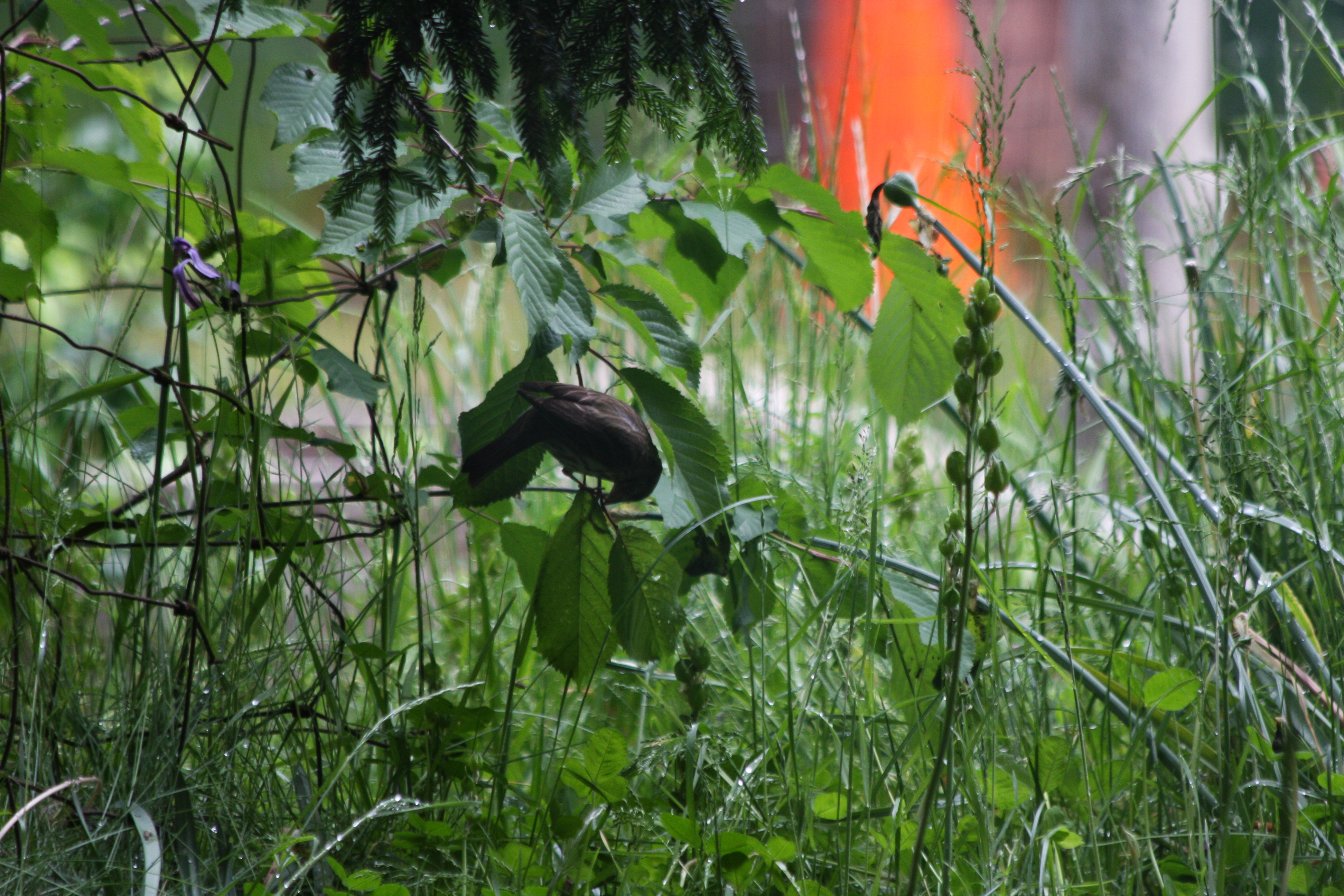
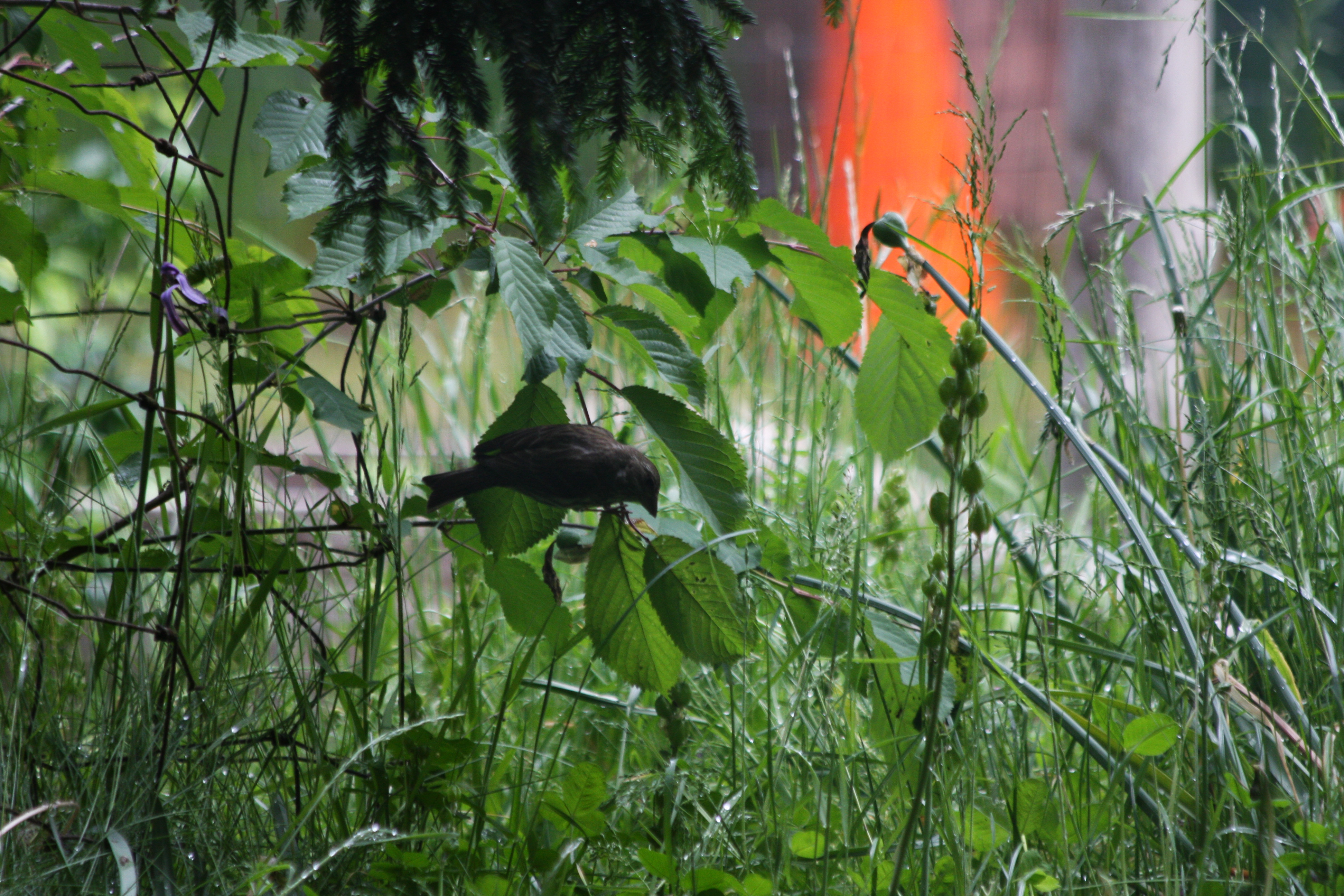
Today, when I looked out the window though, I saw something challenging the fearsome Formica ants. There were birds inside the tree caging and they were hungrily pecking and even tearing at the leaves with aphids. I grabbed and clumsily set up my camera to video the scene.

Birds attacking aphids farmed by Formica ascerva ants

I saw finches first, then there was a chickadee, and even a hummingbird. I thought I saw bumble bees, but they wouldn’t have been eating the aphids. Perhaps they were visiting the extrafloral nectaries or maybe even sipping honeydew produced by the aphids, but I wasn’t close enough to be certain.

Afterwards, I went out to survey the damage. I saw one leaf with lots of shreds. Aphid parts scattered about. Ants wandering somewhat aimlessly. Another leaf had an ant that died courageously in battle protecting his little flock.

I wanted to share my observations with you because a lot of folks really dislike aphids. Others also dislike ants and don’t understand their role in nature’s ecosystems. Maybe this will help others to understand there are a lot of hungry birds that eat aphids (and ants). Without them, the birds might not find enough food to feed their nestlings. It’s all part of the cycle of life.

If you see aphids your garden that you are worried about, you can mitigate some of their feeding damage by hanging a hummingbird feeder nearby. The hummingbirds have to have protein along with all that carbohydrate sugar water and they will most certainly find your aphids delicious. In fact, insects and spiders make up about 85 % of the diet of hummingbirds. Birds need bugs. And not all ants are pests. Some are extremely beneficial. I challenge you to take up bird and bug watching. You will not be disappointed!

Thanks for reading!

Below are more images of the birds feeding on the aphids inside the caged tree.

References and further reading

Bentley, B. L. (1977). Extrafloral Nectaries and Protection by Pugnacious Bodyguards. Annual Review of Ecology and Systematics8, 407–427. http://www.jstor.org/stable/2096735

Bugguide. 2024. Formica Ascerva. https://bugguide.net/node/view/497956

Salal (Gaultheria shallon), a native plant to nurture

Salal patch in forested area – San Juan Island, WA

I feel compelled to write up a short blog piece this morning before I move on to other tasks of the day. Last week, I tried to address some disturbing misinformation on social media about a native plant in the Pacific Northwest. The plant is a woody evergreen shrub, Gaultheria shallon or Salal. The misinformation is coming from a few folks insisting that Salal burns easily and should be removed in “fire-wising” around your home.

I have some genuine issues around the extreme measures some folks take in fire-wising, as well as the lack of knowledge around the impact these extreme measures have on ecological relationships. The fire-wise practices of removing all forest understory are incredibly destructive.

Removing the understory impacts your forest trees by exposing the soil to drying out much faster, it also removes habitat (shelter and food) for many many species of birds, lizards, flying squirrels, and others. When you pull out Salal, you are taking away an important winter food resource deer browse upon, the berries that feed birds, and the leaves that support the development of our native Brown Elfin Butterly (Callophrys augustinus).

Callophrys augustinus – May 27, 2023

But don’t just take my word on the importance of this native shrub. If you are still concerned about protecting your property, be resourceful and smart about what actions you take. Figure out how to cache enough water over the winter to irrigate around your property and keep things from drying out. Follow local guidelines during burn bans. Use common sense when things start to dry out more in summer/fall. Care a bit about the creatures (including the trees, shrubs, and plants) that call our island home.

For more assistance, see the various resources below. If you don’t still don’t find what you need, our local county conservation district is one of the best places to go for additional help.

References:

Brown Elfin Butterfly (Callophrys augustinus) https://bugguide.net/node/view/3049

Pacific Northwest Native Plants Magic Books (Gaultheria shallon) https://sites.evergreen.edu/nativeplantmagicbook/salal/

Salal, Galtheria shallon . Native Plants PNW http://nativeplantspnw.com/salal-gaultheria-shallon/

San Juan County Conservation District https://www.sanjuanislandscd.org

Fire Resistant Plants for the Puget Sound Basin. King County Forestry Program. https://your.kingcounty.gov/dnrp/library/water-and-land/forestry/forestfire/FirewisePlantsPugetSoundBasin-2011.pdf

Wildfire Preparedness San Juan County – https://www.sanjuancountywa.gov/DocumentCenter/View/21430/Wildfire-Fact-Sheet

Washington State DNR – Fire Preparedness. https://www.dnr.wa.gov/firewise

A Minute Scavenger

I found this very tiny (1mm) beetle on the rim of the pool outside yesterday (Dec. 8, 2023). In my investigational efforts to identify my specimen, I have concluded it should be one of the Minute Brown Scavenger Beetles in the family Latridiidae (pronounced la-trid-eye-i-dee). As to species, I think it is Cartodere bifasciata – based on the color pattern of elytra – black markings between 2nd and 5th stria in anteriour third and behind middle; lateral black spot in about middle. (Bugguide, 2014).

This particular species is an Australian native and likely introduced to North America via international shipping. Records show this species in Nova Scotia about 1989 (Majka et al 2009). Looking on iNaturalist for observational reports of this species, I see a few (about 15 or so) in the box I drew. You can see in the attached screenshot the general area where they are turning up in the Western US. Again, likely introduced via international shipping cargo.

Reported observations of Cartodere bifasciata in the PNW Region

Adults of beetles in this family are generally known to feed on the reproductive structures of fungi, plant and animal materials, and slime molds (Evans, 2021). They are found in association with wet or damp habitats in open or forested areas, especially in leaf litter, decomposing wood, on trees, herbaceous vegetation, and in bird, mammalian, or hymenopteran nests (Majka, 2009).

Cartodere bifasciata

References and Further Reading

Bugguide 2014. Cartodere bifasciata. Iowa State University. https://bugguide.net/node/view/108526

Evans, A. V. 2021. Beetles of Western North America. Princeton University Press, N.J.

Majka CG, Langor D, Rücker WH. 2009. Latridiidae (Coleoptera) of Atlantic Canada: new records, keys to identification, new synonyms, distribution, and zoogeography. The Canadian Entomologist. 141(4):317-370. doi:10.4039/n09-050.

Enchoria lacteata

fullsizeoutput_2289

Enchoria lacteata

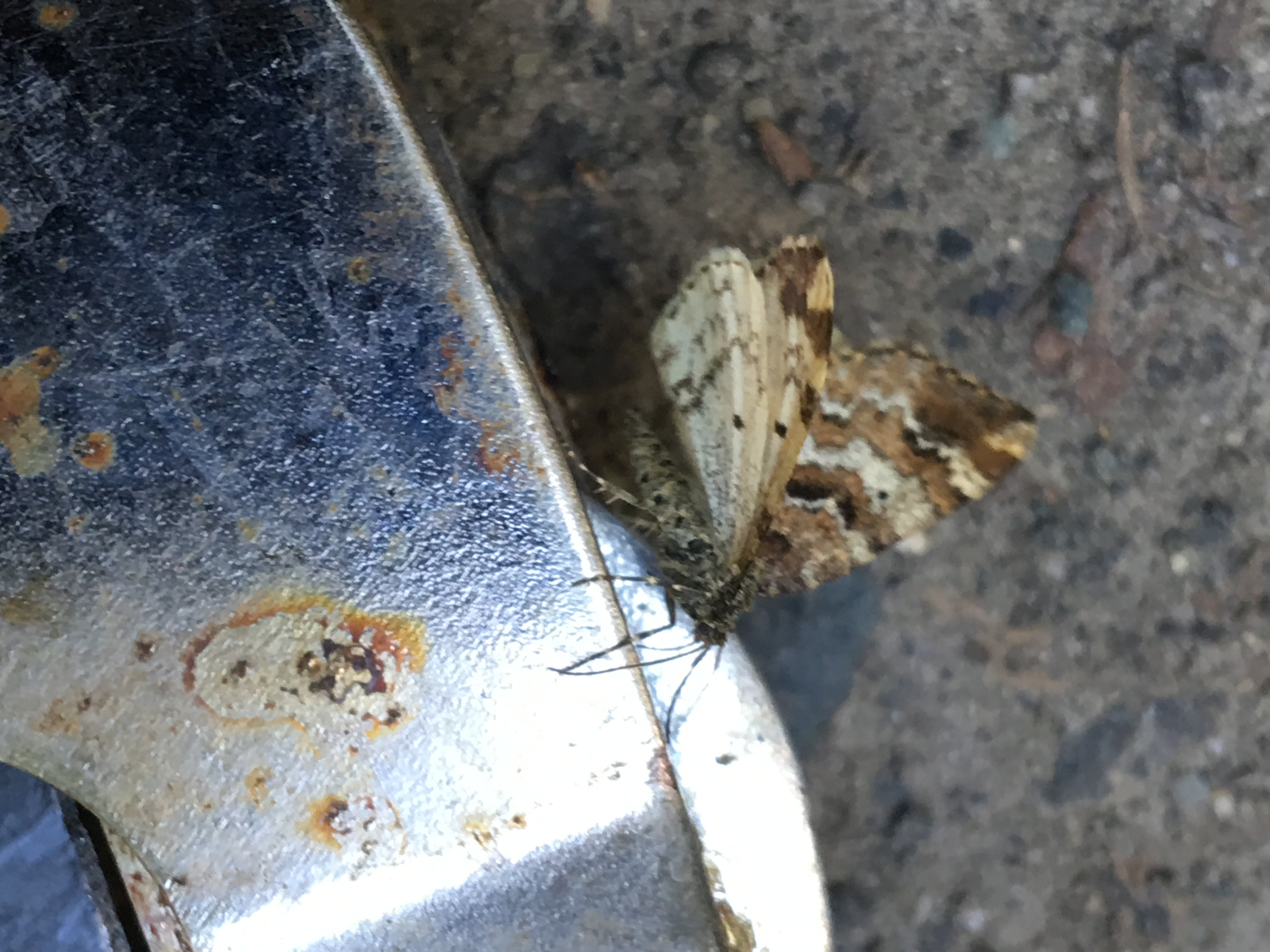
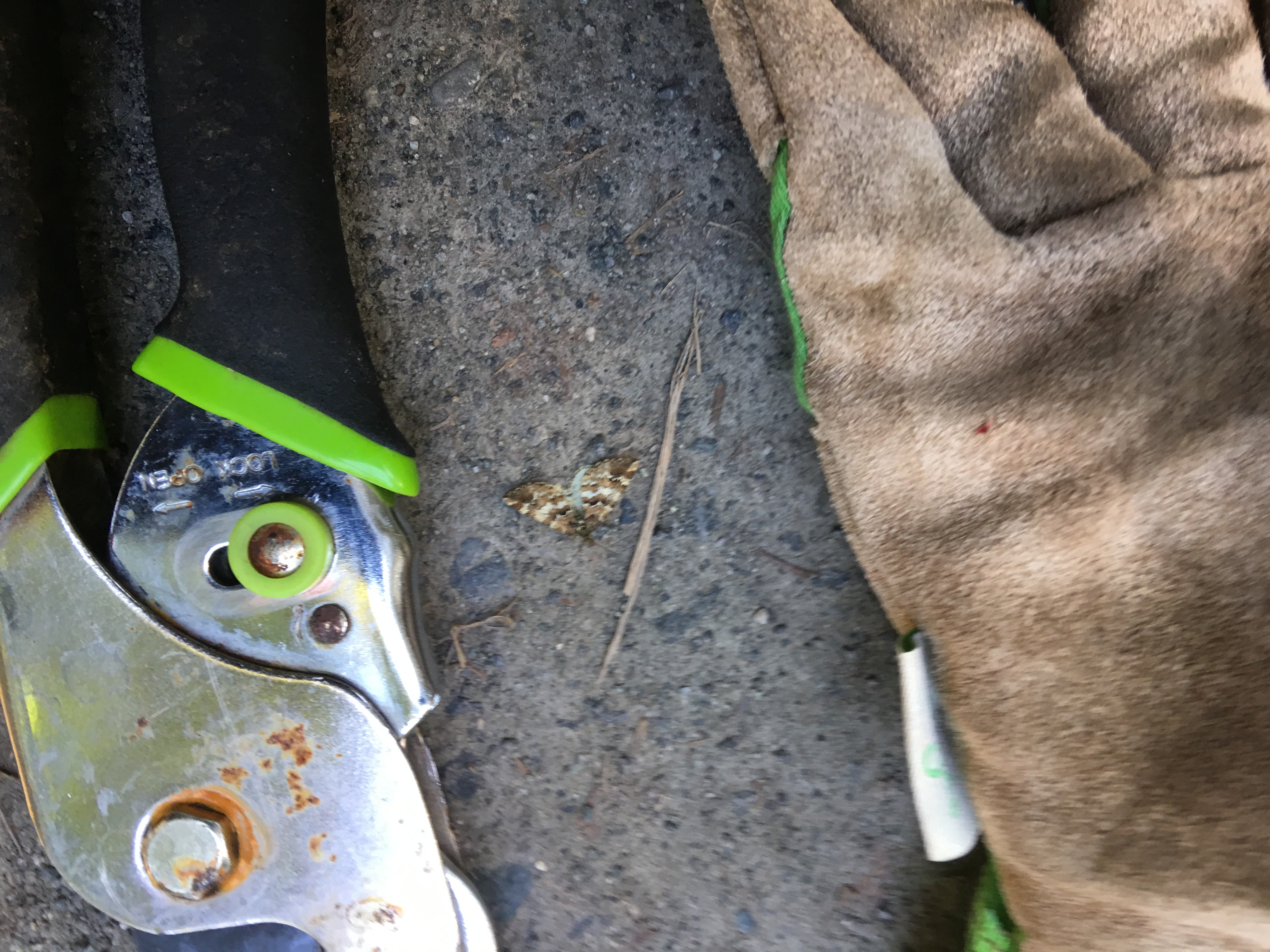
Enchoria lacteata (Packard) is a relatively small moth with forewings measuring only 0.9-1.1 cm in length.    Adults have a remarkable zig-zag pattern on forewings made up of various shades of brown and buff.  They are diurnal (daytime) fliers and emerge from late February to May.  Sightings are often in grassy areas or edges of moist woodlands.  Larval host plants are various species of miner’s lettuce, Claytonia (Portulacaceae).  Check out the following link for more information on miner’s lettuce.  It’s edible! https://www.ediblewildfood.com/miners-lettuce.aspx

Enchoria lacteata

Enchoria lacteata crawling onto my pruning tool.

IMG_9131

Enchoria lacteata between my work glove and pruning tool


References:

POWELL, JERRY A., and PAUL A. OPLER. Moths of Western North America. 1st ed., University of California Press, 2009.

https://bugguide.net/node/view/46115

http://mothphotographersgroup.msstate.edu/species.php?hodges=7403


All Wet! April 26, 2018

A water trough and cool morning temperatures equate with a desperate situation if your wings are wet and they aren’t the inflatable kind that keep you afloat.  I rescued two, soon to be drowned, little specimens yesterday morning and can tell you, they were “happy” to  dry off in the sunshine ☀️ .

The first rescue was a delicate, Green Lacewing in the family Chrysopidae.   Lacewings are in the insect order Neuroptera which means nerve-winged insect.  It is named for the intricate, sheer, net-like pattern of its wings.  They are valued because they prey on garden and orchard pests insects like aphids.  The intriguing thing about this specimen (make sure to pay close attention to frames 0.22 and 0.24 in the video) was its reaction to my voice when I stopped Millhouse the cat from interfering with my cinematography.  The Lacewing appears to have a look of surprise when it hears me.

The second rescue from the water trough is the beautiful, iridescent green cuckoo bee you see in the video below.  Cuckoo bees are actually wasps in the insect order Hymenoptera, and family Chrysididae.  While they are pollinators in that adults seek out nectar for food from flowers, they are named, like the cuckoo bird, after their habit of seeking out nests of other wasp and bee species to steal food, or the life of developing larvae as a host for their own young.   Never-mind that part of the life cycle of this bee.  It is truly a gem, glittering in the sunshine…a jewel worn by a new spring blossom in the garden.


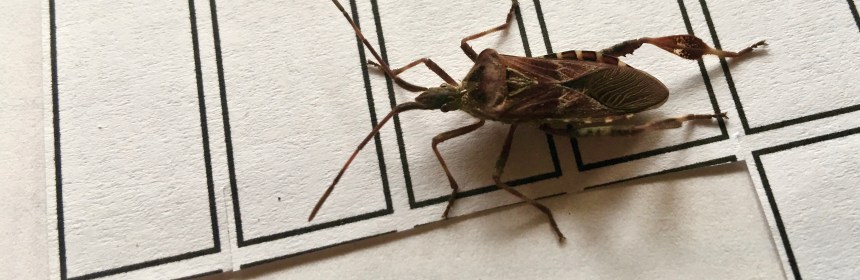
Western Conifer Seed Bug (Leptoglossus occidentalis)

I’ve been stuck in the house all week with the flu…a BAD case of the flu. You don’t want it! Trust me. So, what does the very bored, sniffling, coughing entomologist do to pass the time when she’s sick? Why play with bugs of course!

My honey brought me this from the back deck…(such a thoughtful man!). fullsizeoutput_184b.jpeg

I wonder if he knew that had he not been more careful, our house could have been filled with “le pew de le bug,” a very unpleasant odor! While I probably wouldn’t have suffered (since I’m all stopped up), he certainly would have noticed.

So, what is this bug? Well, it’s not a “bug,” it’s an INSECT. You know….6 legs, chitinous exoskeleton, antennae, three main body parts (head, thorax, and abdomen).  More specifically, THIS INSECT is a Western Conifer Seed Bug (Leptoglossus occidentalis).  It is classified in the order Hemiptera, family Coreidae (Leaf-footed Bugs and Squash Bugs).

No….please don’t take that literally.  I’m certain this fella (or femme) would not like to be “squashed!”  I don’t advocate squashing any insect.  They’re ALL interesting…in one way or another.

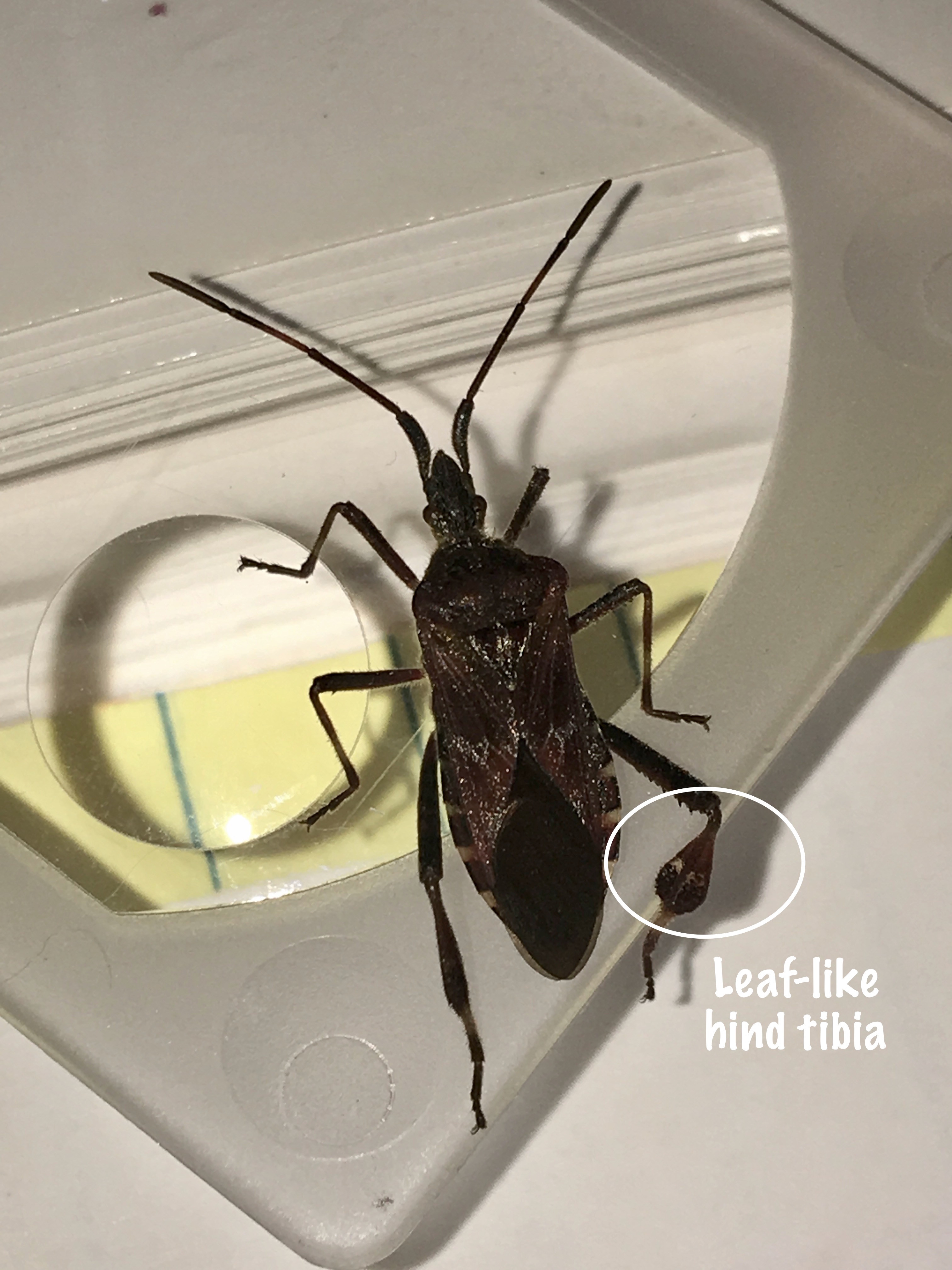
The Coreidae or Squash Bugs are medium to large in size.  They are usually brownish colored.  This one has what I would describe as the beautiful color, Bronze! Please also note the leaf-like hind tibia, a feature characteristic of some species in this particular family. img_1869-2

What does it eat? It feeds on vegetation.  Check out the very long, piercing Rostrum or Proboscis tucked carefully along the underside of this one’s body.  western-conifer-seed-bug-leptoglossus-occidentalis

The Rostrum is used like a straw to suck the juices from conifers including Douglas Fir (Pseudotsuga menziesii) and Lodgepole Pine (Pinus contorta).  Other species are vegetable pests.  Hence the “Squash Bug” moniker.  It also has the characteristic SCENT GLANDS that will secrete the particularly stinky odor if you poke it too much when you are trying to get it to pose for a picture!  “Le pew de le bug!”


Feathered Cacophony

This morning bright and early

Against the window pane,

I heard a loud commotion

That might make me go insane.


About the same time last year,

It went on for 100 days,

At five o-clock every morning,

And left me in a haze.


I think it is the same one

That came again this year.

It makes me dread the springtime

I once held very dear.


You see… HE sees another

Reflected in the glass.

And he body slams the window

In order to harass…


This feathered spring intruder

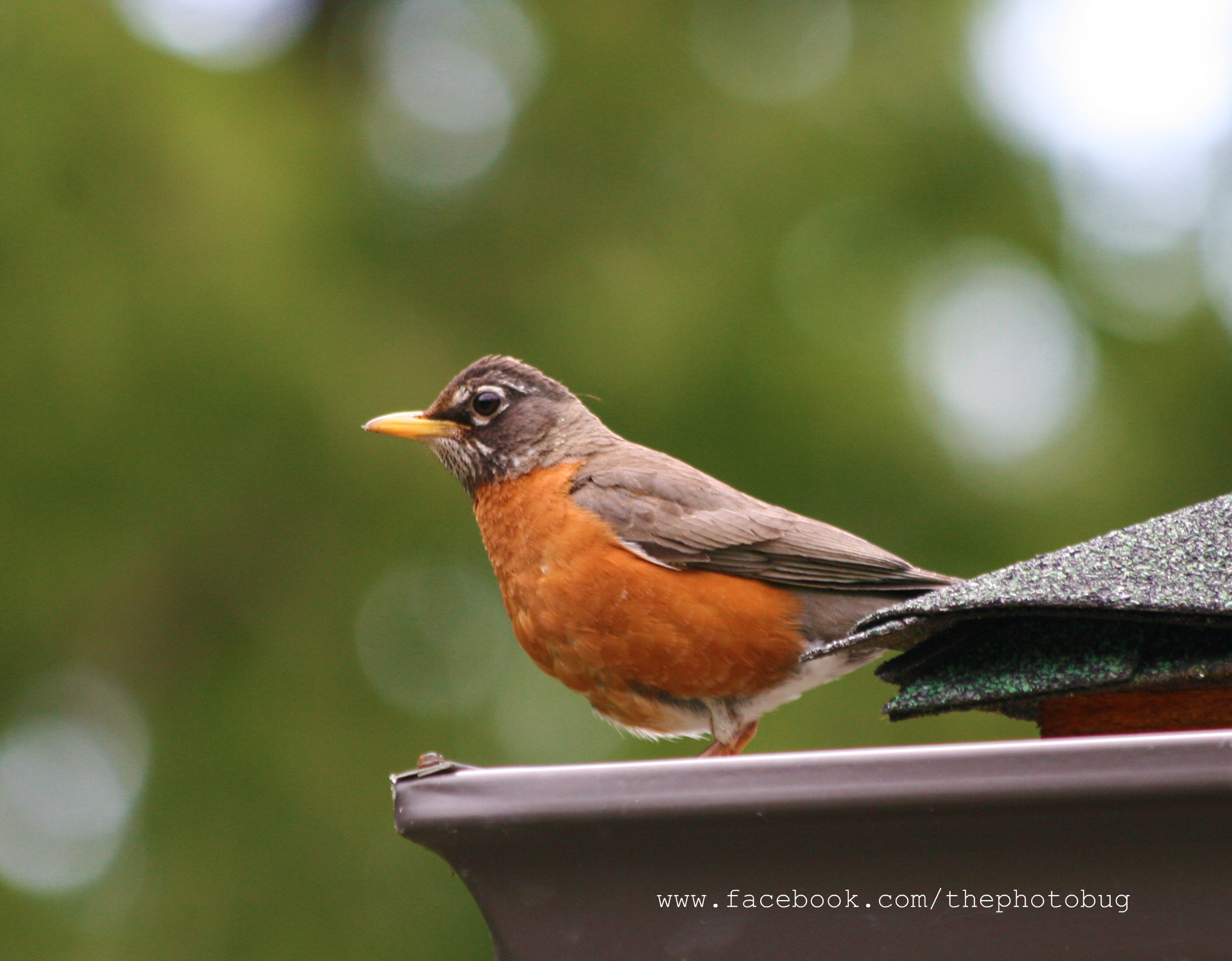
Dressed in a bright red vest,

Staring right back at him

Threatening his nest.


Banging on the window,

He tries to chase away

His very own reflection

From the eggs his mate did lay.


So until the eggs are hatched,

And the robins do migrate,

My mornings will be ruined

No more sleeping late!!!


Recent Entries »