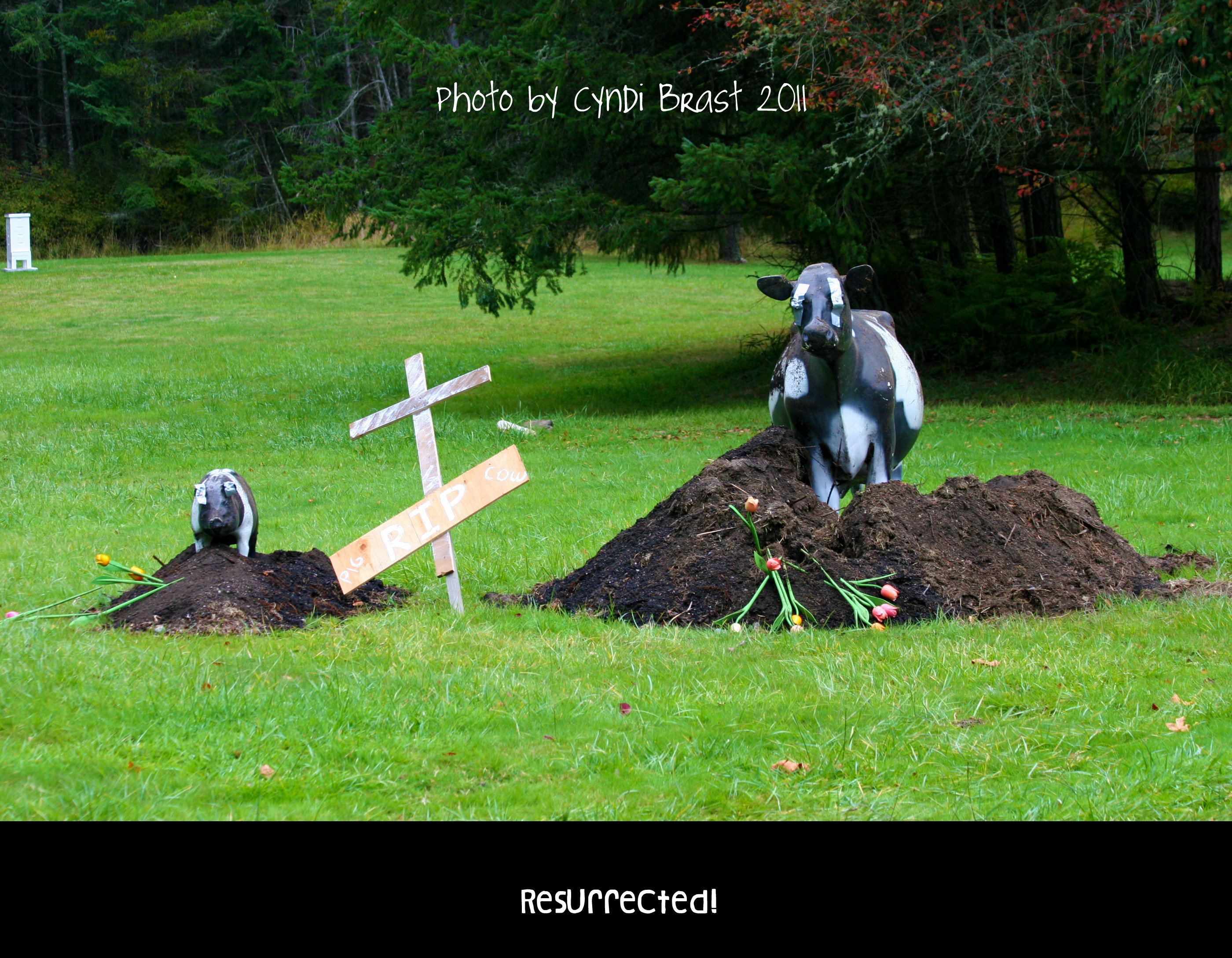
The dog isn’t dead, so that’s not how things ended!
***Text and photographs copyright 2011 by Cynthia Brast. No part of this story may be reproduced in any form without the expressed written consent of the author.
Last night I couldn’t fall asleep. Maybe it was the almost full moon outside There was a glow on the trees that cast shadows in my room. I believe that’s when the Sandman snuck in and sprinkled rhyming dust on my head. Whatever the case, it got the verse going and the words started flowing.
So this verse is in jest, as you all might have guessed. Not meant for offense, just good humor at best. The sandman has gone, so maybe now I can rest 🙂
Enjoy! xx
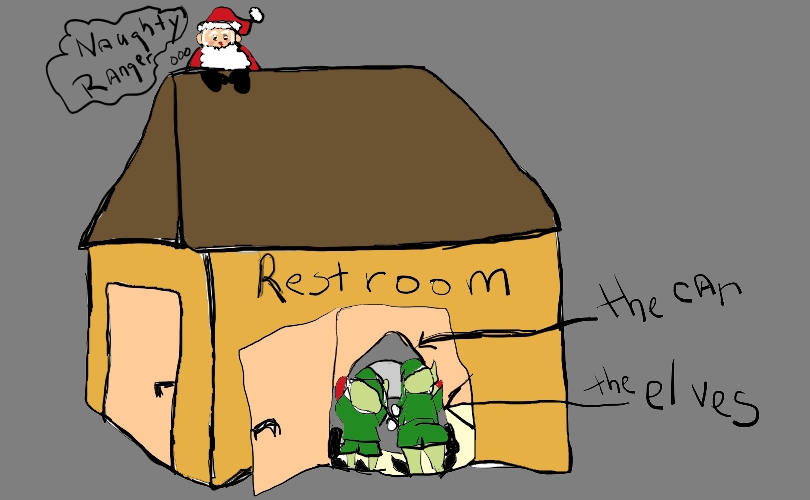
Be wary of Barry
He’s out on patrol,
Looking for people
With their dogs on a stroll.
You better have leashes
Attached to your pet,
Or he’ll give you a ticket
But that’s not all you’ll get.
Hands up in the air
Face down on the ground,
You better not move
And don’t make a sound!
Or out come those handcuffs
He’ll take you to jail.
You’ll have to call up your friends
To get you out on bail.
But the al-ter-na-tive
Is much worse you know,
He has a gun on his hip
And it’t not just for show.
If you make Barry mad
And you argue instead,
He might pull the trigger
And shoot your dog dead.
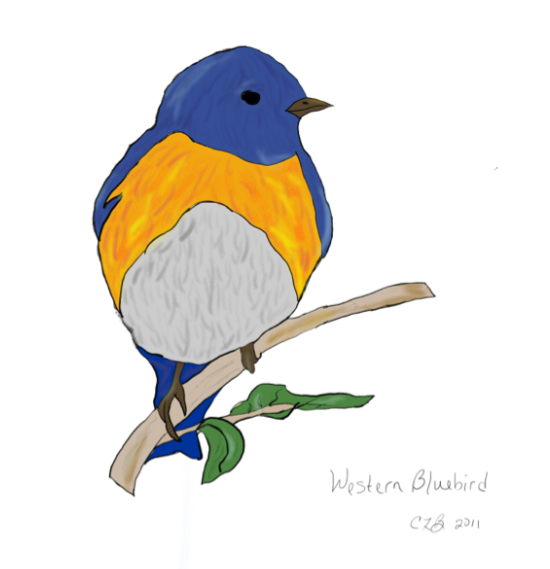
My daughter, Amanda gave me my birthday present today…about a whole month early! Not complaining here at all though…I LOVE it! This is what I worked on this evening to incorporate into my Wildlife Management Plan I have to write for my graduate class. It was a perfect evening to stay indoors and doodle and with this headache I’ve had for about 4 days and counting now, everything rhymes, so I wrote a poem to go with my picture. Enjoy!
There was a bird dressed in feathers of blue
That sang in the morn when the day was new
It feasted on insects
that ate the weeds
or pollinated flowers
so they’d have seeds
~
But that day they sprayed
The weeds all died
The insects went hungry
And the bluebirds tried
~
To find food for their young
But there was none to be had
They searched high and low
But the outcome was bad.
~
The foodchain was altered
With herbicide
The insects left
And the baby birds died.
~
The birds of blue
Didn’t come the next year
For fear that their food
Would all disappear.
~
Improving the prairie
Is a very good goal
But the point here to learn
Is that all things have a role
~
To play in the food web
They all interact
Survival of species
Depends on that fact.
***Text and photographs copyright 2011 by Cynthia Brast. No part of this story may be reproduced in any form without the expressed written consent of the author.
***Text and photographs copyright 2011 by Cynthia Brast. No part of this story may be reproduced in any form without the expressed written consent of the author.
***Text and photographs copyright 2011 by Cynthia Brast. No part of this story may be reproduced in any form without the expressed written consent of the author.
***Text and photographs copyright 2011 by Cynthia Brast. No part of this story may be reproduced in any form without the expressed written consent of the author.
***Text and photographs copyright 2011 by Cynthia Brast. No part of this story may be reproduced in any form without the expressed written consent of the author.
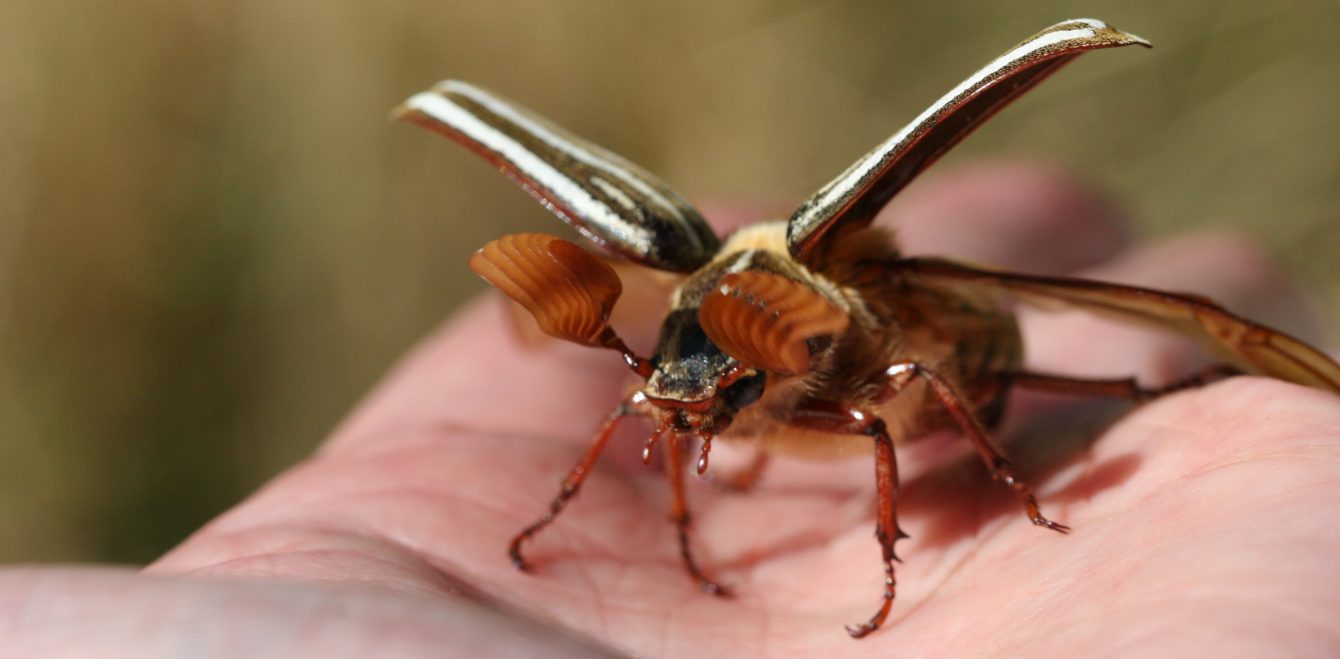
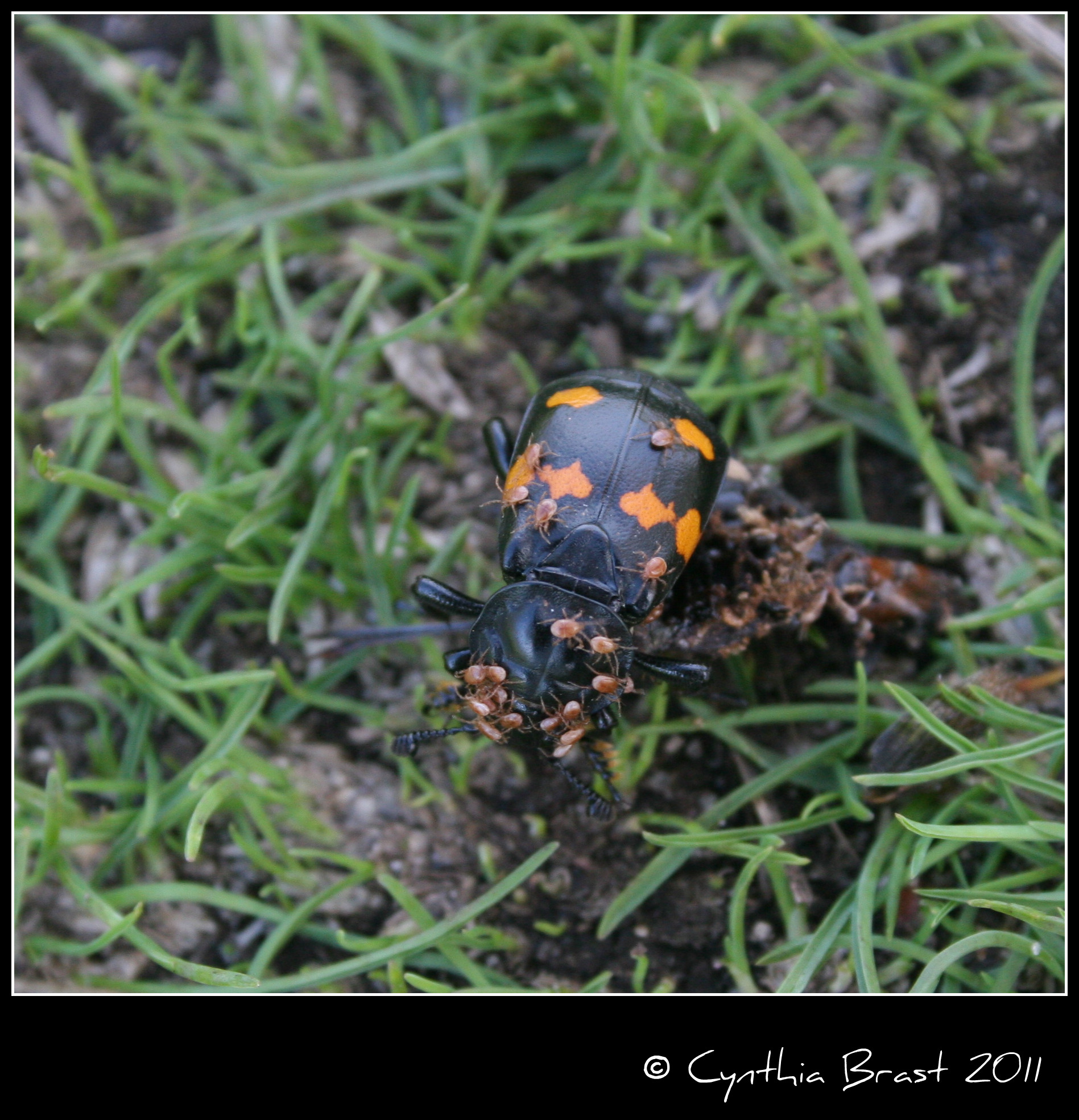
Have you ever seen this really interesting beetle that scavenges for carrion and buries it underground? Here’s one I photographed at San Juan Island National Historical Park’s American Camp. Traveling with a load of phoretic mites (phoresy means to hitch a ride), he was following his fine-tuned chemo-sensors (located on his antennae) on the trail of a dead animal.
If he was lucky that day and found rotting “Vinny vole”, he’d dance around with his tail up in the air to attract a mate. Lucky twice? The dance worked. She was interested! He’d then have her work to help him bury the “road-kill” underground. Once interred, they’d shape the carcass into a brood ball (looks like a bird nest) and the female beetle would lay her eggs in it.
Even more fascinating, the happy couple stick around to feed the larvae after they hatch. The parent beetles even play them lullabies! They stridulate (visualize a violin with a bow) to call the young in order to regurgitate food into their mouths. Curious to know more? Read my graduate literature review and see how fascinating these insects can be.
These tiny pear-shaped insects can be a serious garden pest. Aphids use their long slender mouthparts like a syringe, piercing the tender parts of plants and sucking out the juices….but this isn’t the only way they damage your plants. Feeding aphids also excrete a sticky waste byproduct called honeydew – honeydew helps the sooty mold fungus grow and sooty mold fungus blocks the plant from getting enough sunlight. No sunlight…no photosynthesis! The leaves of your plant can drop off and die. What other ways do aphids damage your plants? When they feed, they also can inject the plant with pathogenic viruses. These aphid-transmitted viruses can cause plants to yellow, leaves to curl and the plant’s growth will often be stunted.
Compounding the problem is the rate at which these “little devils” multiply. Why call them “devils?” I like to refer to them that way because it helps me remember they have something called cornicles. What are cornicles you ask? Cornicles are these unique anatomical structures, resembling little horns (or maybe old-timey rabbit ear TV antennae), sticking out of the back of the aphid’s abdomen. These “horns” or “antennae” emit alarm pheromones, an aphid secret messaging system! When a predator attacks, aphid fire off something called E-β-farnesene. This chemical signal is broadcast from aphid cornicles into the surrounding airspace as a warning to other aphids….”Run…jump…fly…for your lives!!!”
I mentioned there can be A LOT of aphids! So, exactly how fast do they reproduce? Adult female aphids can give birth to as many as 12 live offspring per day! No male needed. The young aphids, called nymphs, are born looking like a junior-sized version of the parent. They will molt (shed their skin) several times before they reach a full-size adult. If the weather is warm, these nymphs can achieve adulthood, and the ability to reproduce, in as few as 7-8 days. When I think of 80 offspring per adult aphid, per week, sucking the life out of my garden plants, I have my own alarm pheromones going off!
So, what to do about the “little devils?” Monitor your plants often. Look for invading aphids near the upwind edges of your garden and be sure to check the undersides of leaves. Learn about the aphids natural enemies. These are your friends! Lady beetles, syrphid fly larvae, and lacewings all aid your efforts to reduce aphid populations. When monitoring, also look for ants. Ants love to feed on aphid honeydew and will lead you to the source. You may have to deal with the ants some way as they will try to defend the aphids from predators and parasites. It’s garden warfare, so pull out your best strategy here!
What about insecticides? Well, they will work, but remember the part I mentioned about aphids spreading viruses? Aphids can infect the plants with pathogens before the insecticide has a chance to work. You’ve spent money on a product and your plant still gets sick and dies…AND, you’ve also killed off all your friends (the good bug soldiers). Instead, try prevention. Before you start your garden, remove any weeds or plants (sowthistle and mustard in particular) that might harbor aphids. Check your transplants for aphids (and wash them off if you find any) before planting. Localized aphid problems can be handled by pruning or pulling up plants and disposing of them.
Don’t fertilize heavily with nitrogen. You might as well be giving the aphids fertility drugs. Nitrogen just helps them reproduce faster. Use fertilizer sparingly. Try organic urea-based formulations that are time-released. Protective coverings or reflective mulches will help your plants in the seedling stage when they are most susceptible to damage from aphids. If you can, keep your seedlings in a greenhouse or under cover in the garden until they are older and able to withstand some feeding by aphids. Reflective mulches aid in repelling aphid populations by visually disorienting them from landing with the added benefit of increasing plant biomass through solar energy reflected back into the leaves. Your warfare strategy keeps the little devils off your garden runway and your plants turn into bigger soldiers able to sustain later invasion. It’s a win-win!
Another strategy to try…the garden hose! You can call in the Navy…or the Marines and send the aphids away with a strong spray of water. Once dislodged they usually won’t be able to return. No one is going to throw them the life preserver. Use this strategy early in the day so you also get the honeydew off your plants and prevent the onset of sooty mold growing. If none of these options appeal to you, there is always all-out “nuclear warfare” i.e. the chemicals! We all remember the effects of Hiroshima and Nagasaki, so I would encourage you to rethink your strategy. You want to be able to eat your vegetables and be around to enjoy your rose blossoms don’t you?

 ***Text and drawings copyright 2011 by Cynthia Brast. No part of this story may be reproduced in any form without the expressed written consent of the author.




 Bugging You From San Juan Island