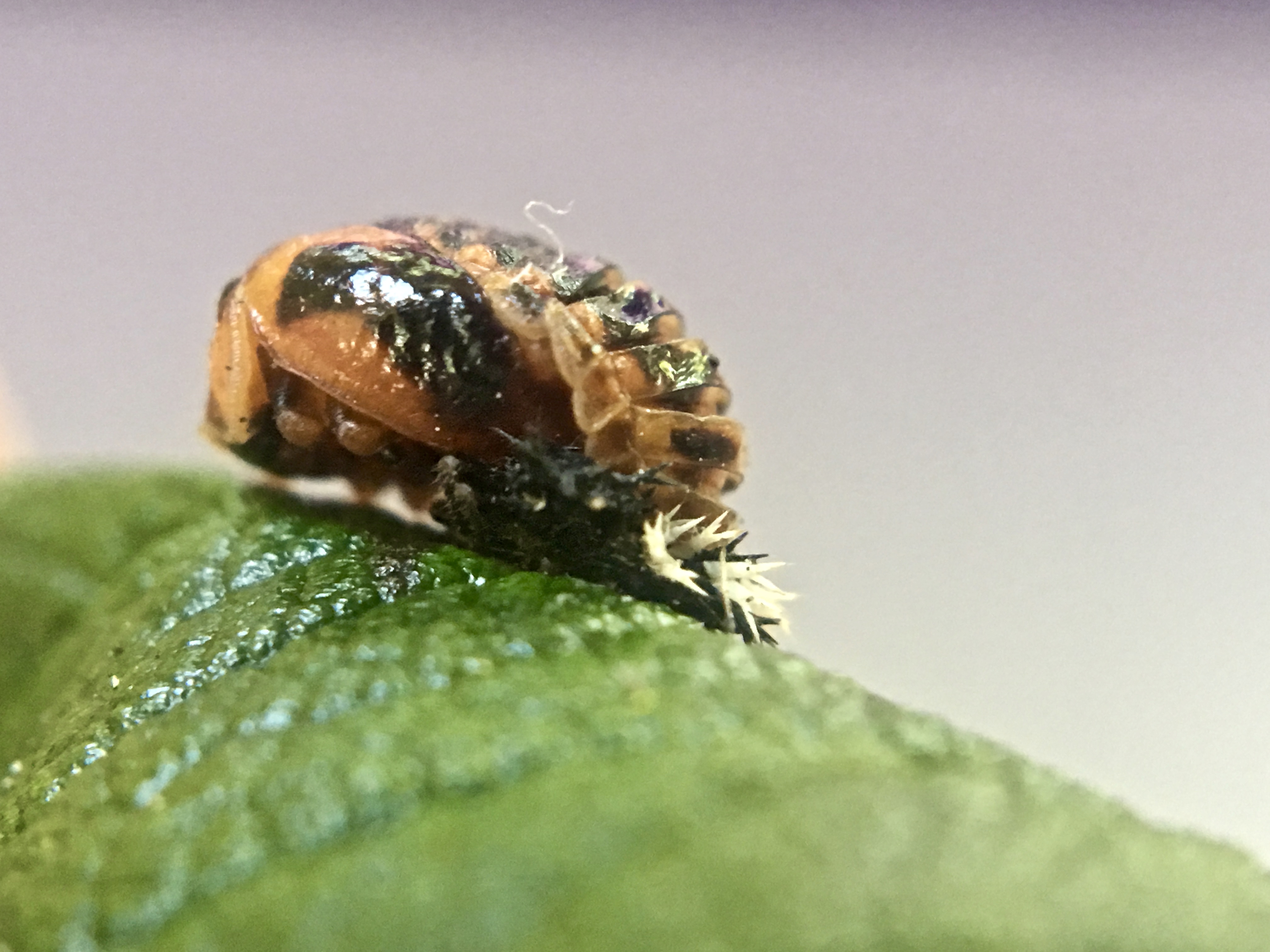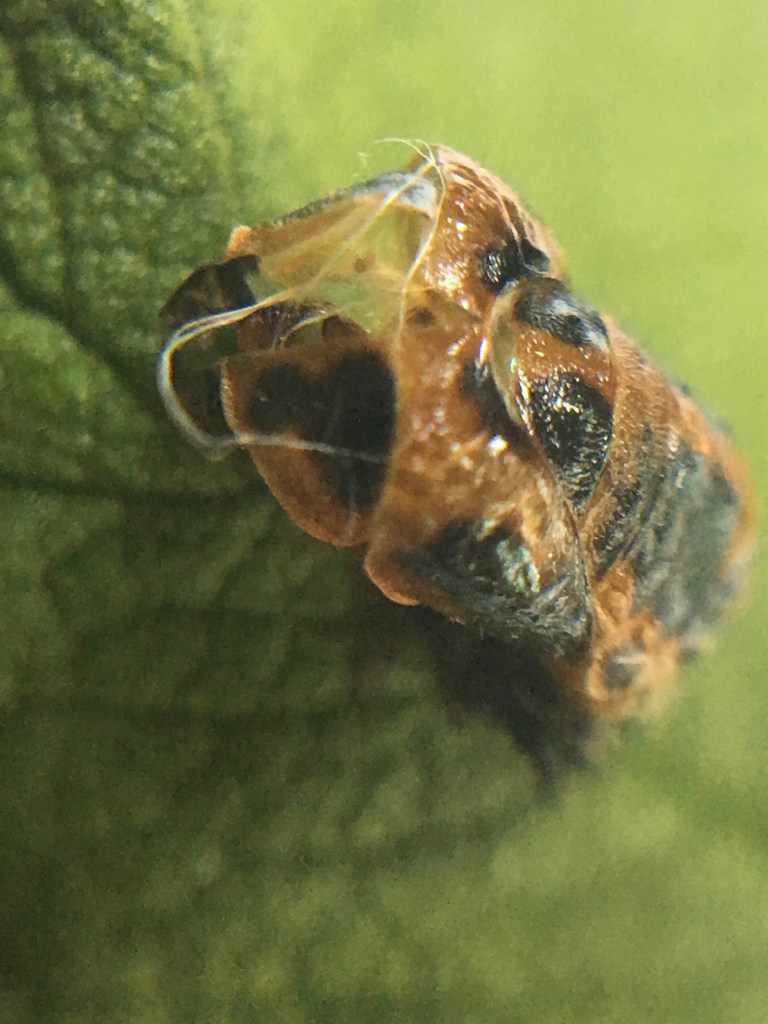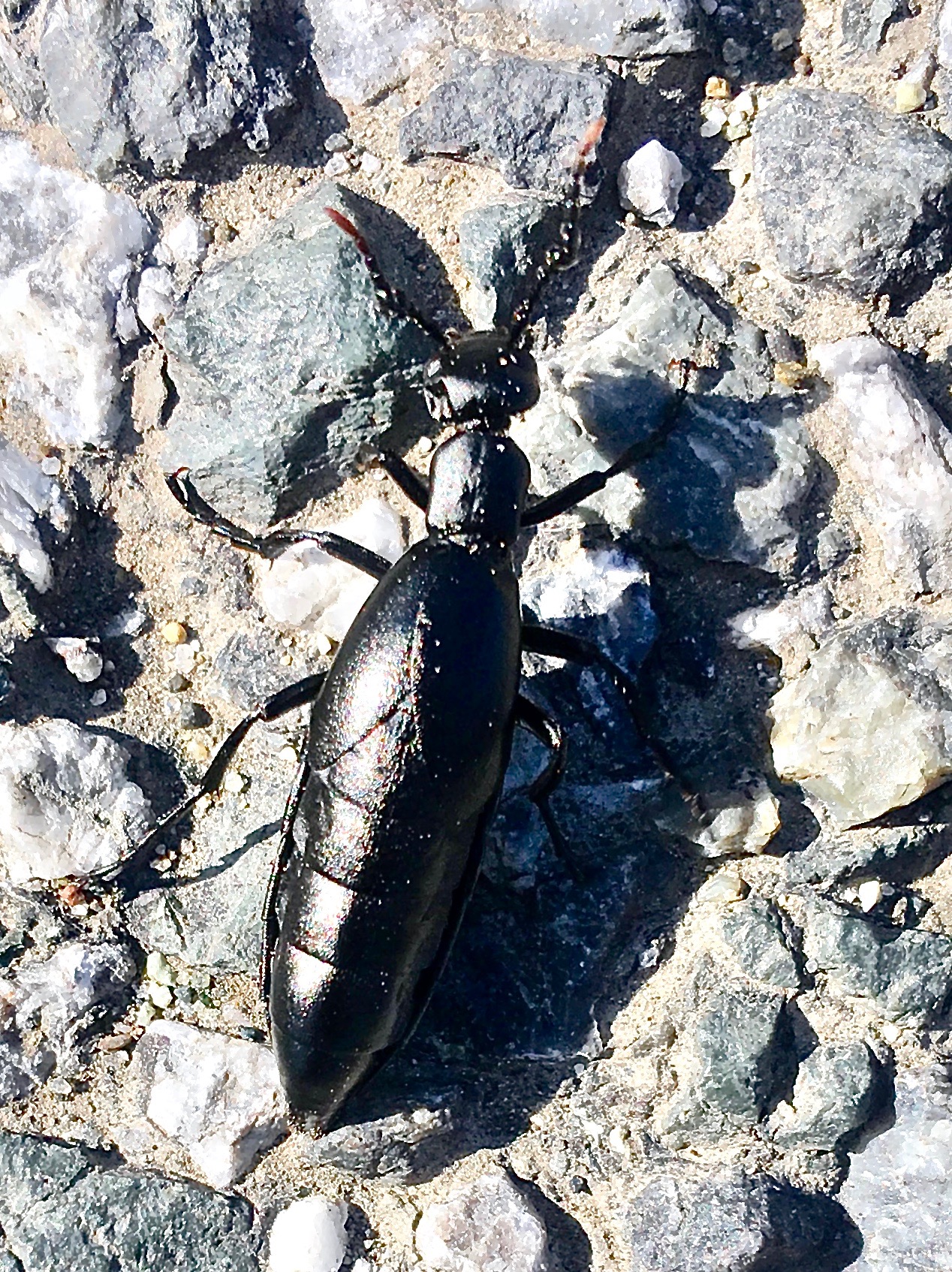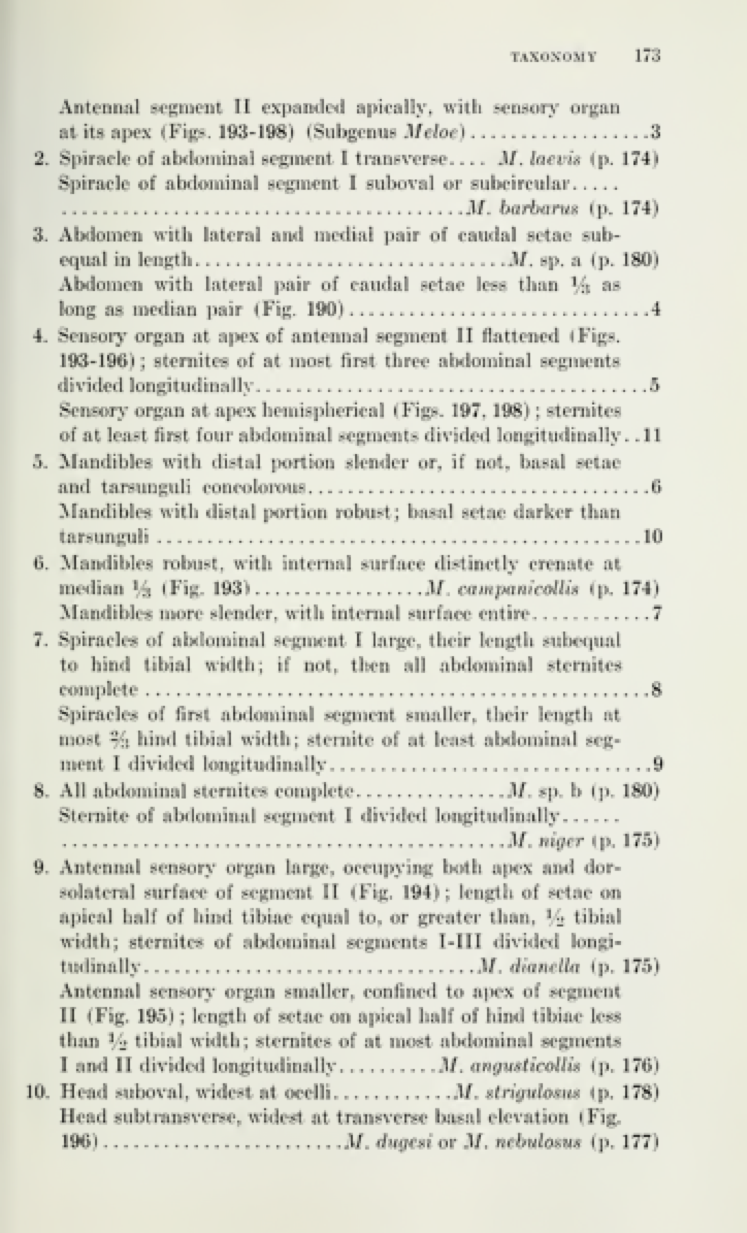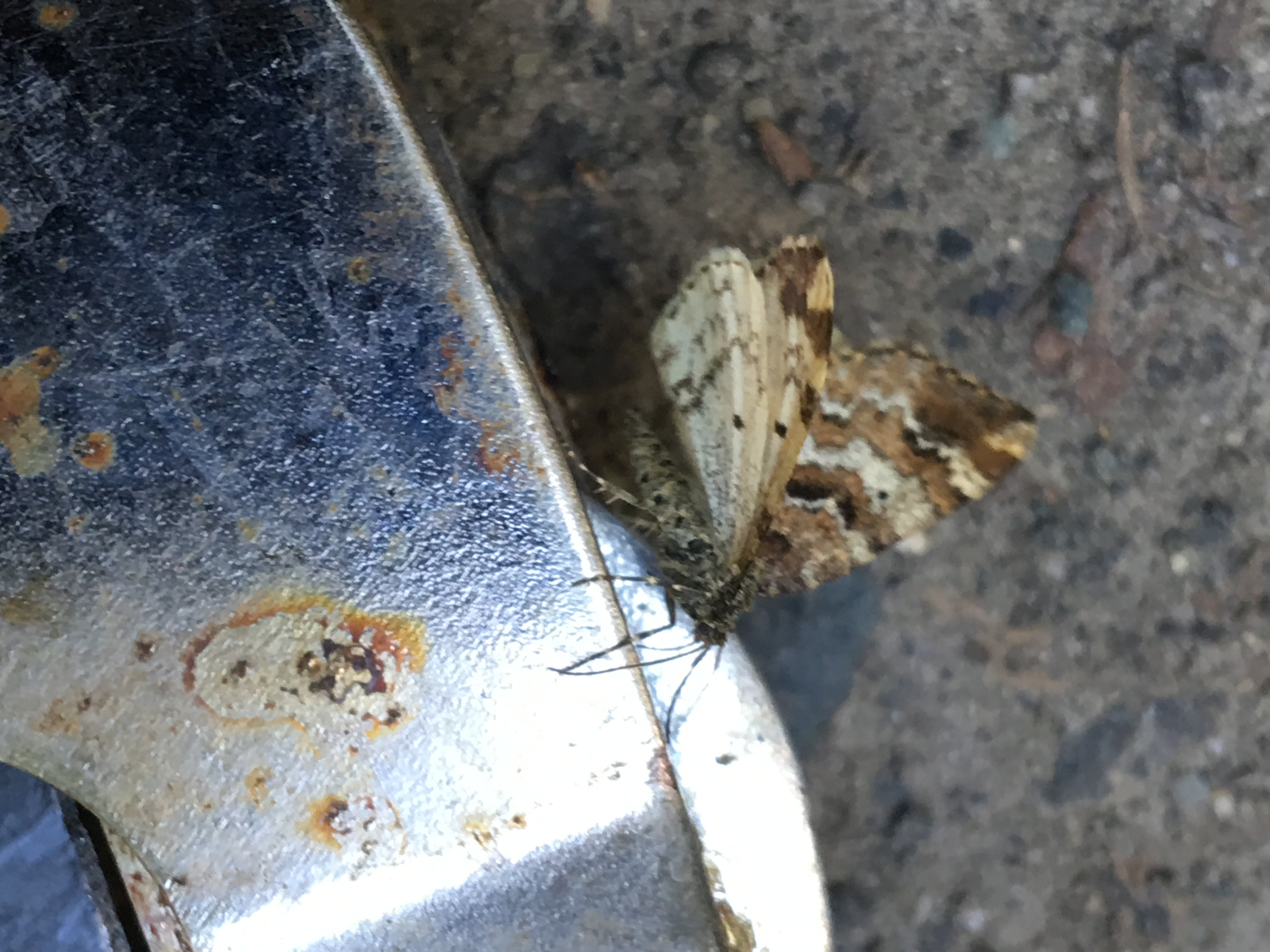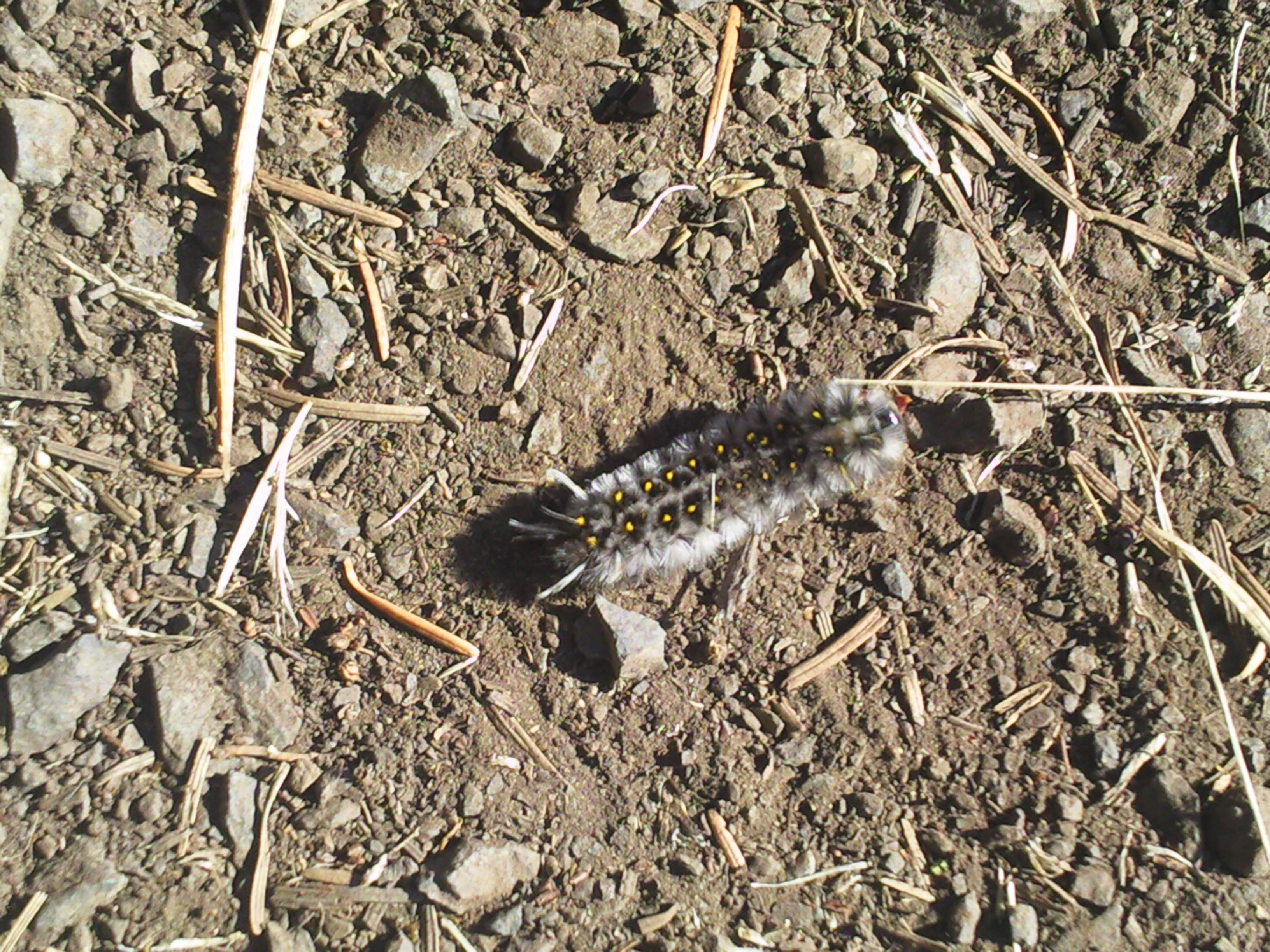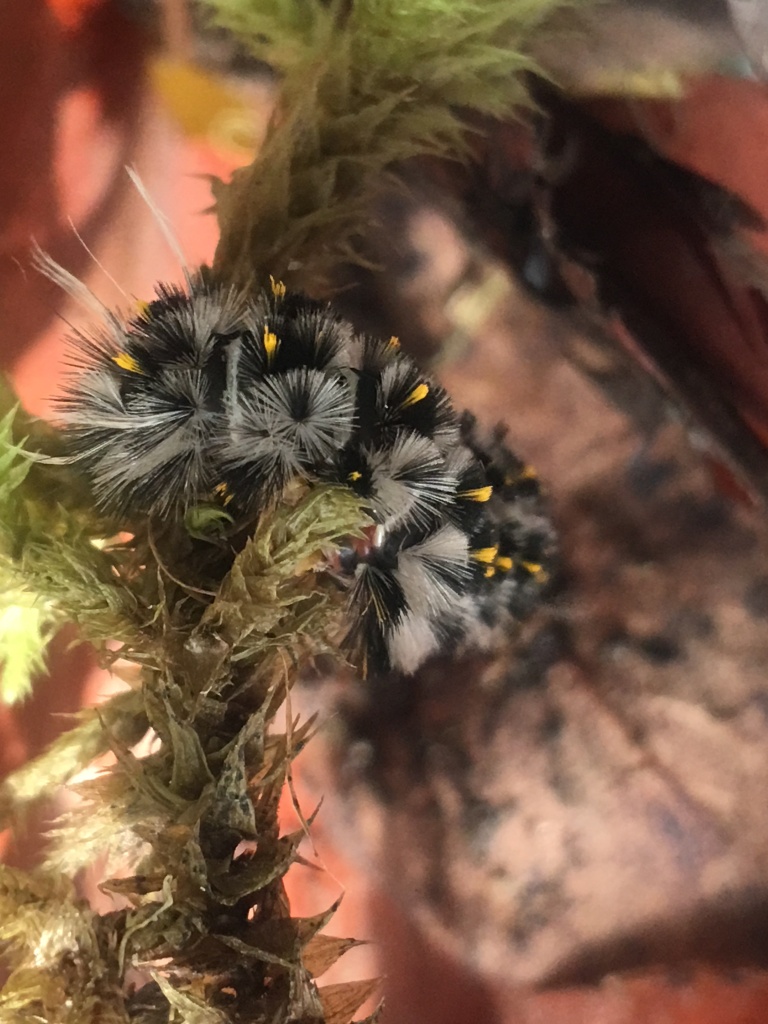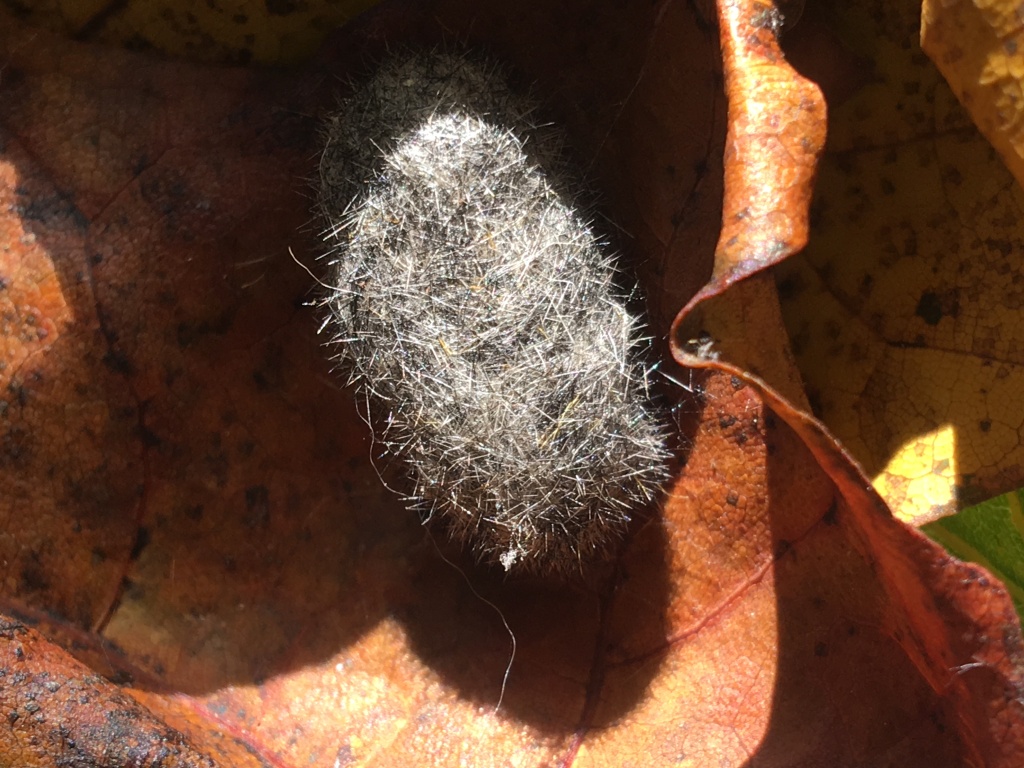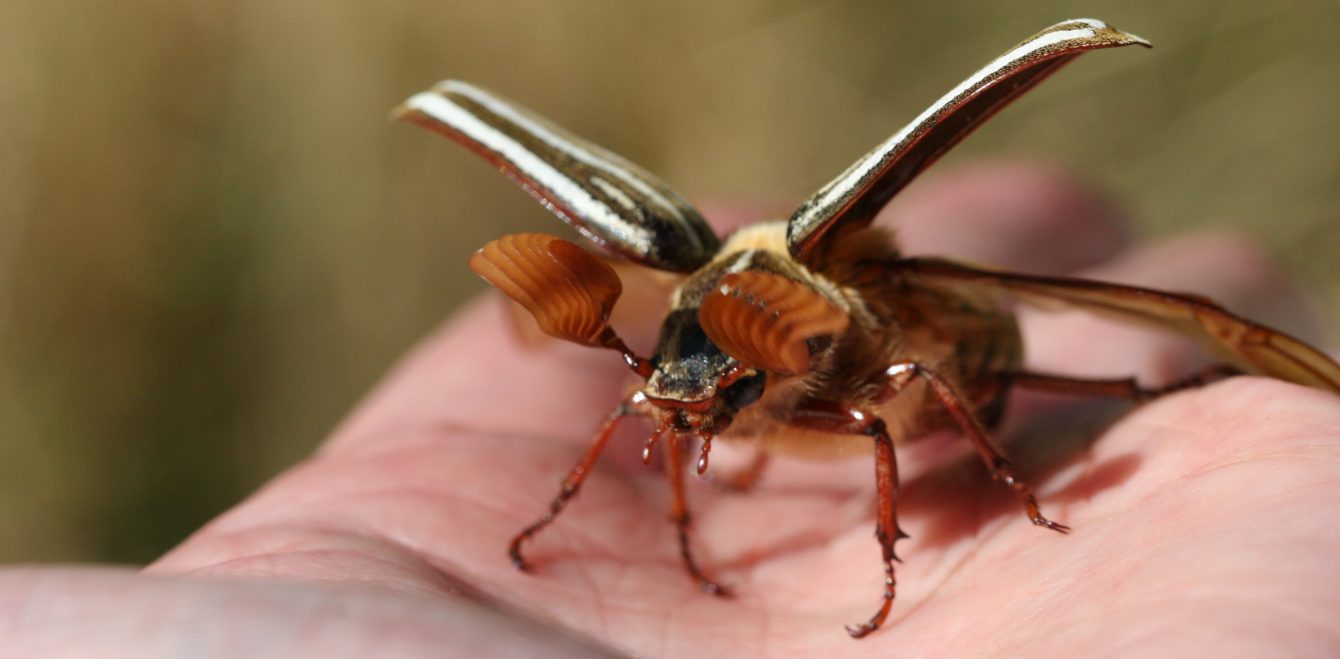
Enchoria lacteata (Packard) is a relatively small moth with forewings measuring only 0.9-1.1 cm in length. Adults have a remarkable zig-zag pattern on forewings made up of various shades of brown and buff. They are diurnal (daytime) fliers and emerge from late February to May. Sightings are often in grassy areas or edges of moist woodlands. Larval host plants are various species of miner’s lettuce, Claytonia (Portulacaceae). Check out the following link for more information on miner’s lettuce. It’s edible! https://www.ediblewildfood.com/miners-lettuce.aspx
Enchoria lacteata crawling onto my pruning tool.
Enchoria lacteata between my work glove and pruning tool
References:
POWELL, JERRY A., and PAUL A. OPLER. Moths of Western North America. 1st ed., University of California Press, 2009.
Just in time for Halloween! Yesterday I was using the Scanning Electron Microscope (SEM) at Friday Harbor Marine Labs. I got to take some really cool photos but in order to use the SEM, your specimen has to be dried out. Well, I had some specimens that are really tiny and very delicate and they weren’t dried out because it is a complicated process that takes a certain chemical called Hexamethyldisilazane (HMDS). Also, drying out your specimen for viewing under the SEM renders it useless for viewing under a light microscope and you’ve lost the ability to preserve it in a collection.
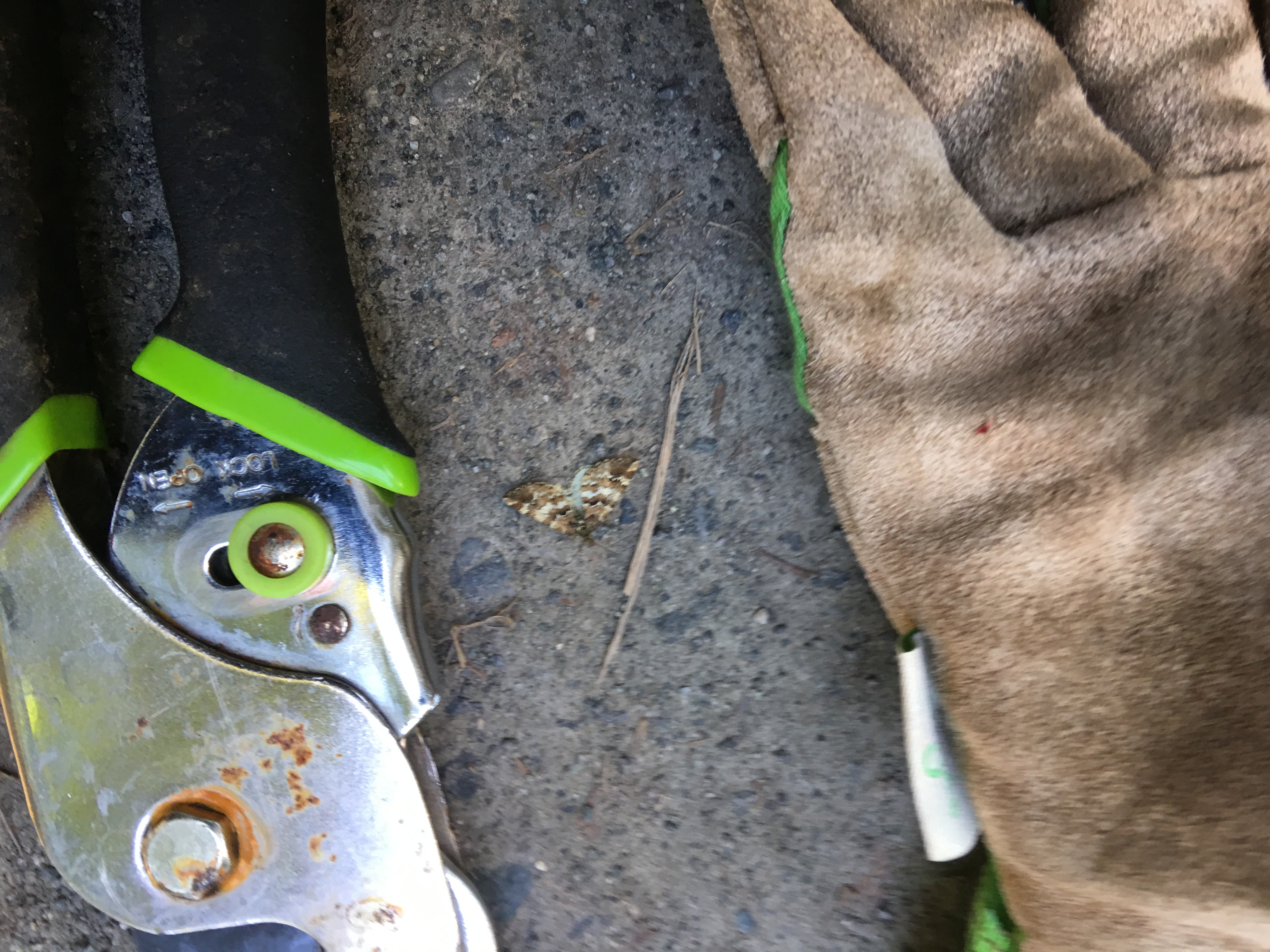
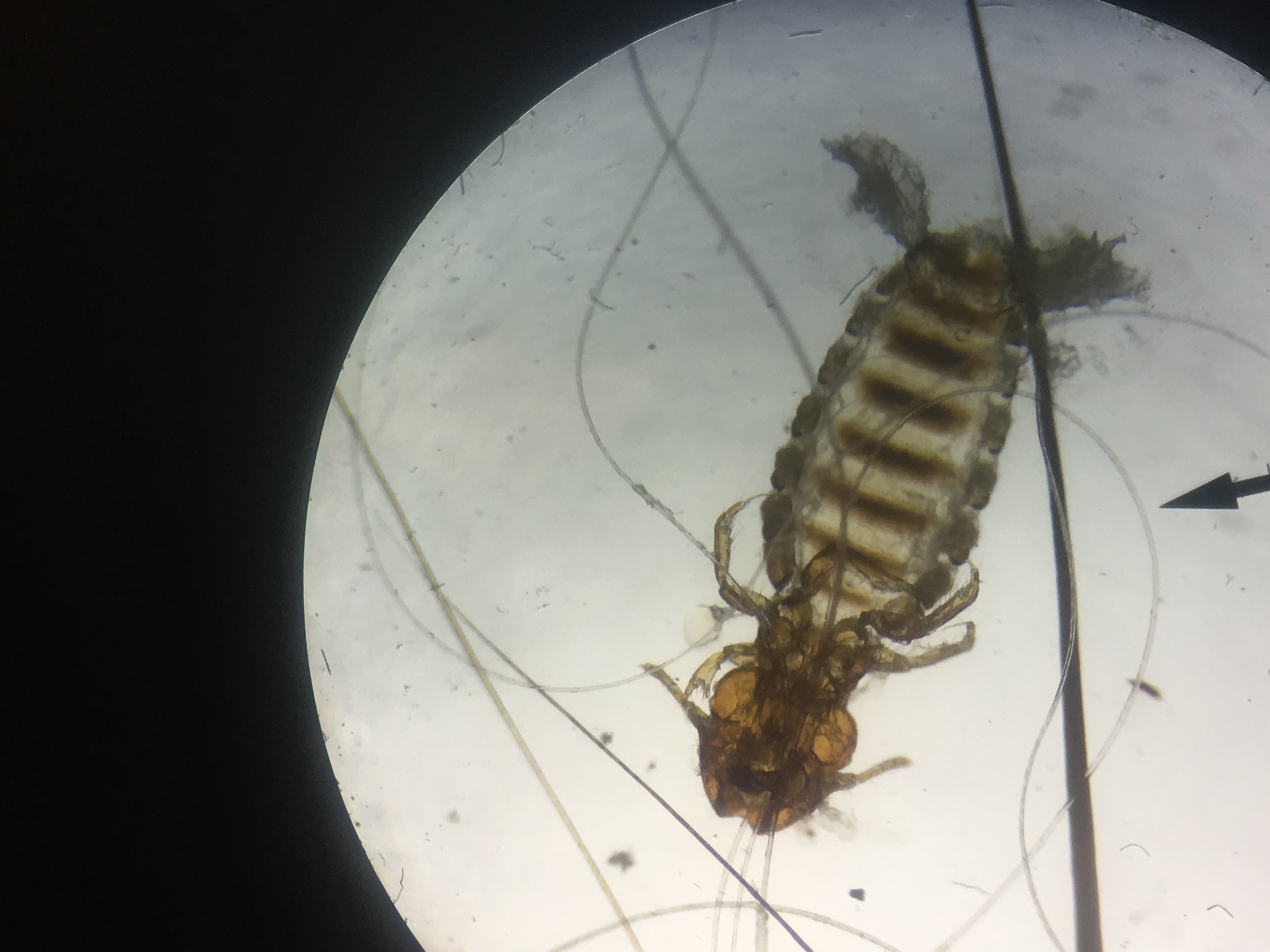
So I’m going to share how I took images of some of my specimens at home with a pretty old compound microscope, an iPhone, and a clip-on macro lens from Amazon. First, I’ll tell you a bit about the compound microscope image posted here. This specimen is in the genus Damalinia, most likely the exotic chewing louse, Damalinia (Cervicola).
Chewing louse Damalinia spp
It lives on black-tailed deer (Odocoileus hemionus columbianus) in Washington, Oregon and California, and has been indicated in what is called HLS (Hair-loss syndrome). They build up in large numbers on deer at certain times of the year. One factor thought to contribute to this is lack of adequate nutrition in the deers’ diet, particularly an absence or deficiency of Selenium.
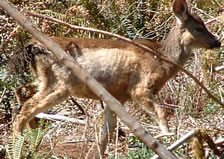
In a nutshell, these lice can reproduce at high numbers in vulnerable deer (typically old, young, and those with weakened immune systems due to nutritional deficiencies or internal parasites). The lice cause extreme itching, irritation, and hair loss. The deer respond to the itchiness by excessive licking and grooming. Why hair loss? Well, these lice are called “chewing lice” because they munch on hair, skin fragments and secretions, and in some cases will feed on blood from skin wounded from scratching. It’s a miserable condition to have. This is what a deer looks like that is suffering from HLS caused by the chewing lice.
Photo by Brian Murray https://www.dfw.state.or.us/wildlife/health_program/hairloss/index.asp
Here is a larger version of my photo. It’s not as clear as I’d like, but I’m certainly going to practice to improve. Happy Halloween and I hope you don’t spend the night scrrraatching in bed!
Robinson, J. (2007). Transmission of the chewing louse, Damalinia (Cervicola) sp., from Columbian black-tailed deer (Odocoileus hemionus columbianus) to Rocky Mountain mule deer (Odocoileus hemionus hemionus) and its role in deer hair-loss syndrome. Masters Thesis. Oregon State University. https://ir.library.oregonstate.edu/concern/graduate_thesis_or_dissertations/1v53k0068?locale=en
Roug, A., Swift, P., Puschner, B., Gerstenberg, G., Mertins, JW, Johnson, CK, et al. (2016). Exotic pediculosis and hair-loss syndrome in deer (Odocoileus hemionus) populations in California. Journal of Veterinary Diagnostic Investigation, 28(4), 399-407. http://journals.sagepub.com/doi/10.1177/1040638716647154
Maude, R. J., Koh, G. C., & Silamut, K. (2008). Taking photographs with a microscope. The American journal of tropical medicine and hygiene, 79(3), 471-2. https://www.ncbi.nlm.nih.gov/pmc/articles/PMC2843439/
Yesterday I had the extreme good fortune to be able to use the scanning electron microscope (SEM) at University of Washington’s Friday Harbor Labs (San Juan Island). We put a Cerambycid beetle under the SEM and “WOW,” the photos were phenomenal! Here’s a few for you to see. Below is a photo of the beetle’s compound eye. Just think of all the information each of those facets receives and processes.
Cerambycid beetle compound eye, imaged under scanning electron microscope at Friday Harbor Labs, San Juan Island, WA
Next, you see an image of the beetle head. It shows the antennal insertion points, the compound eyes, frons, clypeus, labrum, mandibles, and bristly setae.
SEM anterior, dorsal view of cerambycid head.
If you’re interested in learning more about the morphological features, here’s a pretty good diagram below for reference.
image from http://www.faculty.ucr.edu/~legneref/biotact/bc-51b.htm
The last image for you is of the beetle’s tarsi (the foot). This is an important identification feature for many insects. Imagine that! When I was working on my masters degree from the University of Florida, I had an amazing taxonomy professor who was an expert on Coleoptera (the beetles). He created identification keys for Florida beetles and you can take a look at them here: http://www.entnemdept.ufl.edu/choate/beetles.pdf Well, I’m looking forward to using the SEM again and my next imaging will hopefully include the sponging mouthparts of a fly. Stay tuned!
Eek! There’s a spider in the bathtub! Do you really want to turn on the water and drown it? Hopefully you are not nodding your head “yes,” but instead finding courage to overcome your arachnophobia and finding a tiny bit of compassion. Just take a deep breath. Get a towel, or a cup and a card, and find your brave inner self to save this poor little eight-legged individual to live out its life. Say this mantra with me….”Be NICE to spiders!” Then say it over and over and over to yourself. It will make you a much more confident person. You can tell your friends and co-workers about how YOU got a spider out of the BATHTUB!
At my house, the number one threat to spiders is my cat. Millhouse is determined his job is to be spider exterminator. He squashes them. He used to eat them! Once he ate one. He fainted. I had to rush him to the vet. He revived on the way. The next time, he bit one and spit it out. I don’t know if the spider was foaming from being punctured or if the cat was foaming because well….maybe cats foam at the mouth sometimes when they eat something they shouldn’t. In any case, he’s evolving his kill techniques. Now he eats too much cat food and uses his massive body weight (he thinks it’s muscle) to flatten them.
I’m on the other side. My job is to save them. It was a good thing I saw this one before Millhouse did. You see, Millhouse loves to drink his water out of the bathtub. I have to leave the water dripping for him. That’s why you’ll note the stain on the tub. It’s from hard well water. One day I will scrub off the yellowing, but for now, pretend it’s not there.
The first thing I recommend to get the spider out is to grab something like a hand towel or a plastic cup and some sort of paper (mailer, index card, envelop, etc.). I used a towel. Watch my video and see how easy it is! The spider isn’t going to bite you. It just wants OUT of the tub. Probably it was thirsty. See my post from October 27, and you can read all about how to give a dehydrated spider a drink. At this point, it needs your help. It is stuck. The sides of the tub are too slippery for it to crawl out. It’s really easy! Here goes…
The general idea is to be extremely gentle. You don’t want to injure the spider. Keep chanting your mantra…”Be nice to spiders!” Over and over and over!
Safe!
See! It’s not that hard. The spider didn’t attack me. Isn’t it so cute! By the way, this spider is a Hackelmesh weaver (Callobius severus) https://bugguide.net/node/view/7018. I checked later today and it has crawled off somewhere. Happy to escape the cat!
Here’s a clip of my little Wolf Spider, Tarentula kochii a.k.a. Alopecosa kochii (ID credit to Rod Crawford at Seattle’s Burke Museum). He ever-so-kindly responded to my email query for help. According to Rod, this spider is “a local native wolf spider and somewhat uncommon and rare.” I found it in the doorway two days ago (10-23-18) and worried the cat injured it, but as you can see, it is moving a little. After examining it carefully, it looks uninjured, but possibly suffering from another spider bite…recent molt…or dehydration. I attempted to get it to drink some water using a tiny syringe but was unsuccessful…or perhaps too late. I also got some great advice on the correct way to give spiders a drink of water from Rod, who says: “For future reference, the way to give a spider a drink is to rest the mouth area (under the front of the “head”) directly in a drop of water.”
If you are interested in learning more about this species of Wolf Spider, here are some links to check out:
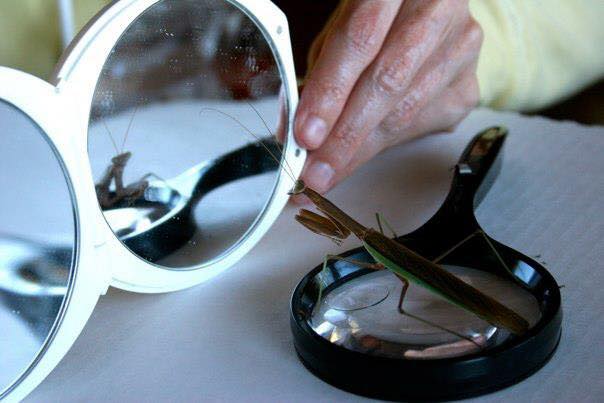
Check out my story about praying mantids on San Juan Island! They’ve been a victim of hyper-sensationalism. Seriously. Read my article before you squish one.
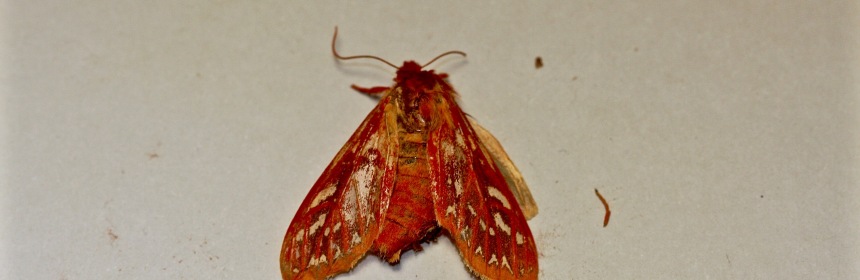
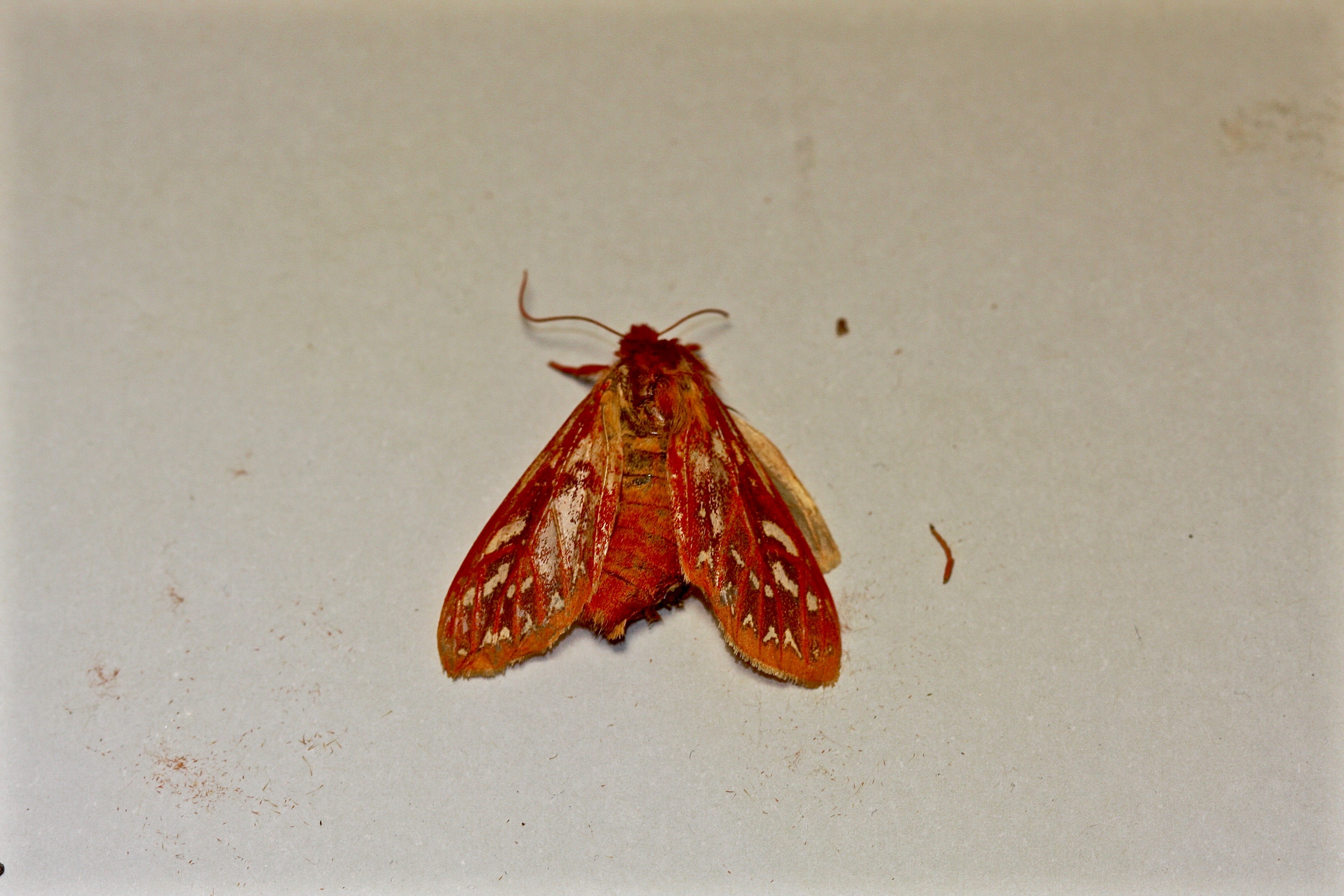
I spent a good part of the day combing through my insect photos from the past 9 years. There are thousands. Finally, I found the ones I was searching for. I credit Victoria Compton on San Juan Island, WA for helping me out on this one. She sent a photo the other day to my email with a caterpillar and had suggested an ID. Not only was she correct, but in ID’ing the caterpillar, it enabled me to match up one of my adult moth photos that had been sitting around nameless since 2016. The photos I found today were of the same caterpillar that had been a mystery to me since 2013. It’s a nice “aha” moment when you connect the dots! Below are the pics for you to see.
Lophocampa roseata Photographed July 10, 2016 San Juan Island, WA
Lophocampa roseata larva Photographed October 6, 2013 San Juan Island, WA
This is a Tiger moth in the family Erebidae, subfamily Arctiinae. The scientific name is Lophocampa roseata (also known as the Rosy aemilia). It was first described by Francis Walker in 1868. They are found in Western Oregon and Washington as well as in Southwestern B.C. and are associated with habitats of conifer forests and maple trees. The sources I checked list them as somewhat rare and Natureserve lists them as “critically imperiled.” So, I guess we have another beautiful Lepidoptera on San Juan Island to care for along with the Marble Butterfly!
***Critically imperiled Tiger Moth. Please post/email photos if you live in San Juan County, WA and come across one in the adult or larval stage. Thanks!
Lophocampa roseata larva Photographed October 6, 2013 by Cynthia Brast San Juan Island, WA
Lophocampa roseata larva Photographed September 26, 2018by Victoria Compton San Juan Island, WA
Found this specimen in the parking lot at Marketplace in Friday Harbor yesterday. Glad I didn’t turn into the “grabber” I can sometimes be and instead used a box to scoop up my big find. Probably if you were watching me, you’d have been scratching your head wondering WHY is this woman going through her grocery sacks and opening a snack box of tuna? That box made an excellent fly “trap!”
Big is an understatement! This is the LARGEST fly I’ve collected on the island. It measures over 1 inch long or more than 2 cm. The Western Horse Fly (Tabanus punctifer) can bite through your clothing, although it is the female that needs a blood meal (males feed on nectar and pollen). The adult female lays egg masses (over 300 per mass) on vegetation along ponds and lakes. When the eggs hatch, the larvae develop in the water and here is what I read about them from my sources at Bugguide.com…
“These larvae are aquatic. They have mouthparts that are identical to those of rattlesnakes in structure. A pair of hollow fangs that are connected to a poison/anaesthecic salivary gland further back in the body. These mandibles can easily break through human skin and inject the immobilizing contents of the salivary glands. Normally used to paralyse, and perhaps digest, prey. They are capable of quickly immobilizing/killing animals as large as frogs. They are strictly carnivores and eat ‘meat’.”
I guess this means that the toe-biters aren’t the only ones you should avoid when you go for that swim!
Last year I had to put together a collection of insects for my graduate course at the University of Florida. In this photo, I have a Ten-lined June Beetle that I pretty much stole away from a robin that was after it. The beetle came home with me and I’m sorry to say I put it in the freezer and later added it with the rest of the bugs that eventually got me an “A”.
A few days ago, a friend called me up. “Would you like another June Beetle?” he asked. I drove over to pick it up and afterwards, took a few photos with my new macro lens, fixed up a nice plastic box insect habitat and thought I’d take a few days to decide what to do with it next.
Daily, I peeked into the box. Not sure what to feed it, I thought a little about…
My mother used to read a book to me when I was a small child called Be Nice To Spiders! The little boy in the book brings a spider (named Helen) to the zoo in a matchbox because he isn’t allowed to keep her in his apartment. When the zookeeper opens the box, Helen escapes and sets up residence in the animal cages where she helps all the animals by eating the flies that make them miserable.
This story was one of many experiences I enjoyed that set me up for a lifetime of observing invertebrates and their behaviors. Today, I am sharing about a small crab spider I found in our house this week. It took me all week to identify it, but I persisted and even managed to keep the little guy safe from Millhouse. Millhouse is the resident cat. He likes to eat spiders. That’s another story and a good one, but I’ll save it for next time.
Today, meet “Carl” the Black Crab spider, also known more formally as Coriarachne brunneipes. Black Crab Spiders are classified taxonomically in the family Thomisidae (Crab Spiders), genus Coriarachne, and species brunneipes. They are found ranging across the Western U.S. from the Rocky Mountains to the Pacific Coast…and in my case, on San Juan Island, WA. 98250! The Black Crab spider is relatively small in size. About 1.9 cm or equivalent to the diameter of a penny if you include its leg span (see photo below from Wednesday, April 25, 2018).
(Coriarachne brunneipes)
You can also see in my photo that Carl is missing a leg! 3 + 4 only equals 7 and spiders have 8 legs! Maybe Millhouse DID do something to this spider after all!
I left Carl to go about things on Wednesday after taking this photo. Seems like I remember seeing him scurry towards the crack under the baseboard and safety from the cat. Thursday, my new “friend” was on the ceiling in the sunroom. I nearly stepped on Carl on Friday. He was back on the floor, skittering towards the baseboard along the wall again.
Coriarachne brunneipes
Saturday, Carl was on the table in the sunroom. I decided to take a few more photos and I also decided that Carl might be getting hungry since I haven’t seen anything suitable for him to eat in the house. Also after reading about this species of spider, I understood it was possible he came into the house accidentally on some wood and might like it better if he was outside, but it was cold and rainy on Saturday, so I fixed him a nice spider hotel room for the night. He liked the view from the “balcony.” Sorry Carl, no room service available!
Coriarachne brunneipes
On Sunday after it warmed up a little, I took Carl down to our orchard. It was easy to coax him onto a twig. I held him up against a low branch on the apple tree and up he went. There was a veritable feast waiting for him in the apple tree. Tiny little morsels just the right size for a spider!
Some interesting facts about Coriarachne brunneipes, the black crab spider:
Their coloring helps camouflage them perfectly on tree bark
They don’t build webs, but wait perfectly still to ambush their prey