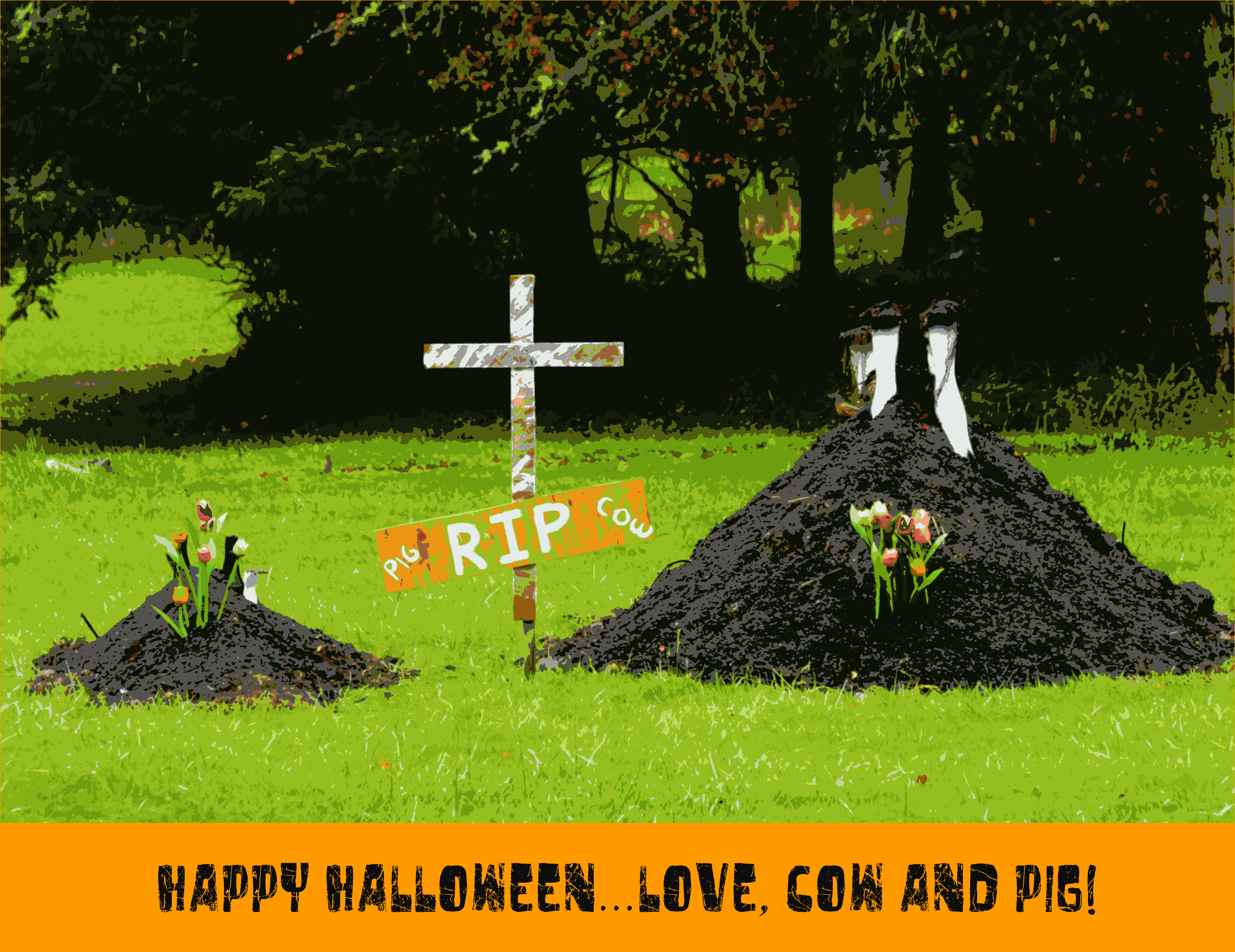
The Epithaph of Cow & Pig


Here lies Cow & Pig

Underneath a mound

Of blackest dirt piled up so high

O’er their bodies upside down.

~

It’s Halloween tonight and all

The spooks come out they’ve said,

To dance ‘round under the moon

And celebrate the Dead.

~

Check back tomorrow to find out

For this is what I’ve heard…

That Cow & Pig will rise again

From where they’ve been interred!

~

Happy Halloween San Juan Island!                  

~~~

~

  ***Text and photographs copyright 2011 by Cynthia Brast.  No part of this story may be reproduced in any form without the expressed written consent of the author.

Untitled by Cynthia Brast

The Gallows


They came to get him in the night

When everything was black

A lantern cast an eerie glow

Down from the horse’s back

~

They said he was a wanted man

Guilty of the crime

The rope they held for all to see

He had but little time.

~

No judge or jury to advocate

Against the angry mob

There was nowhere for him to run

His wife began to sob.

~

The man he kneeled to pray to God

“Save my eternal soul…

Help my family when I’m gone

It’s all in your control.”

~

He kissed his wife and son goodbye

And then he stepped outside

To face his fate from the angry men

About him who had lied.

~

They led him to the rounded knoll

Where the gallows stood

The rope was slipped around his neck

Over his head they placed a hood.

~

That night he left the home he’d known

And the family he had loved.

But God had heard his prayers that night

From heaven up above.

~

His family was provided for

God watched over them for him.

And promised that they would one day be

Together once again.                                      


 ***Text and photographs copyright 2011 by Cynthia Brast.  No part of this story may be reproduced in any form without the expressed written consent of the author.


The Empty Barrels…a Halloween Poem, by Cynthia & Amanda Brast


The Empty Barrels…a Halloween Poem

What happened to the apples?
They’ve all disappeared.
~
It was the spooks and goblins came,
That was what I heer’d.
~
They tiptoed through the yard
In the dark of night.
~
That’s when I heard the rustling leaves
That gave me such a fright.
~
But on my doorstep in the morn,
There was a package left.
~
They didn’t want to be accused
Of ingratitude or theft.
~
For when they took the apples
They made a little swap,
~
And left behind for me to see
A be-ribboned yellow mop.
~
Taped on the mop, there was a note
And this is what it said,
~
If we’d left a broom behind
You’d try to fly and then you might…
~
End
~
Up
~
Dead!  

***Text and photographs copyright 2011 by Cynthia Brast.  No part of this story may be reproduced in any form without the expressed written consent of the author.

A literature based key to the subfamily Nicrophorinae (Coleoptera: Silphidae) of Washington State by Cynthia Brast

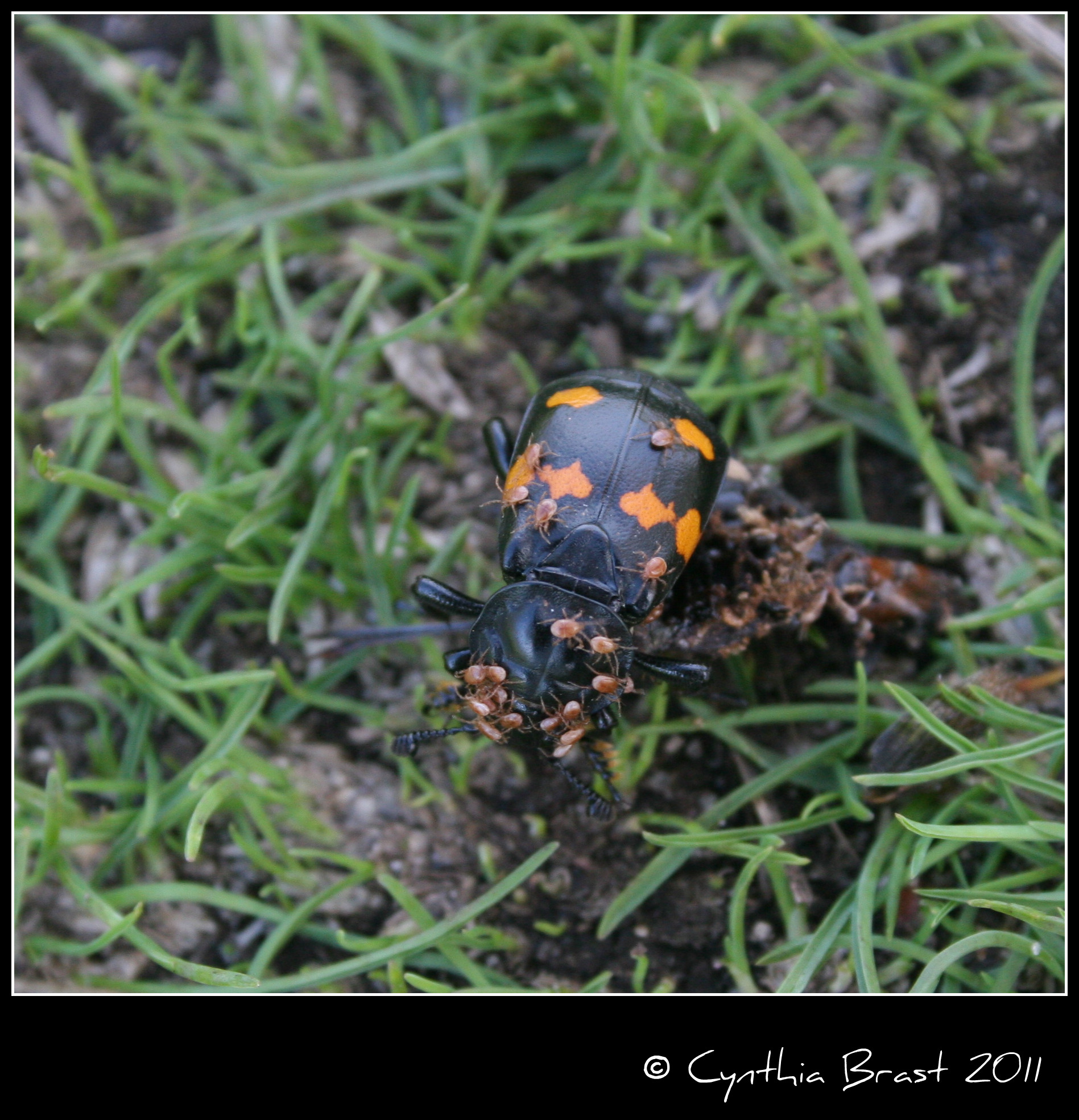
Have you ever seen this really interesting beetle that scavenges for carrion and buries it underground?  Here’s one I photographed at San Juan Island National Historical Park’s American Camp.  Traveling with a load of phoretic mites  (phoresy means to hitch a ride), he was following his fine-tuned chemo-sensors (located on his antennae) on the trail of a dead animal.

If he was lucky that day and found rotting “Vinny vole”, he’d dance around with his tail up in the air to attract a mate.  Lucky twice? The dance worked.  She was interested!  He’d then have her work to help him bury the “road-kill” underground.  Once interred, they’d shape the carcass into a brood ball (looks like a bird nest) and the female beetle would lay her eggs in it.

Even more fascinating, the happy couple stick around to feed the larvae after they hatch.  The parent beetles even play them lullabies!  They stridulate (visualize a violin with a bow) to call the young in order to regurgitate food into their mouths.  Curious to know more?  Read my graduate literature review and see how fascinating these insects can be.

A Literature Based Key to Silphidae-Nicrophorinae in Washington State-1

Nicrophorous defodiens at San Juan Island National Historical Park


Got Aphids? Honey, Dew I!

Black Aphids

These tiny pear-shaped insects can be a serious garden pest.  Aphids use their long slender mouthparts like a syringe,  piercing the tender parts of plants and sucking out the juices….but this isn’t the only way they damage your plants. Feeding aphids also excrete a sticky waste byproduct called honeydew – honeydew helps the sooty mold fungus grow and sooty mold fungus blocks the plant from getting enough sunlight.  No sunlight…no photosynthesis!  The leaves of your plant can drop off and die. What other ways do aphids damage your plants?  When they feed, they also can inject the plant with pathogenic viruses.  These aphid-transmitted viruses can cause plants to yellow, leaves to curl and the plant’s growth will often be stunted.

Compounding the problem is the rate at which these “little devils” multiply.  Why call them “devils?”  I like to refer to them that way because it helps me remember they have something called cornicles. What are cornicles you ask? Cornicles are these unique anatomical structures, resembling little horns (or maybe old-timey rabbit ear TV antennae), sticking out of the back of the aphid’s abdomen.  These “horns” or “antennae” emit alarm pheromones, an aphid secret messaging system!  When a predator attacks, aphid fire off something called E-β-farnesene.  This chemical signal is broadcast from aphid cornicles into the surrounding airspace as a warning to other aphids….”Run…jump…fly…for your lives!!!”

I mentioned there can be A LOT of aphids!   So, exactly how fast do they reproduce?  Adult female aphids can give birth to as many as 12 live offspring per day!  No male needed. The young aphids, called nymphs, are born looking like a junior-sized version of the parent.  They will molt (shed their skin) several times before they reach a full-size adult.  If the weather is warm, these nymphs can achieve adulthood, and the ability to reproduce, in as few as 7-8 days.  When I think of 80 offspring per adult aphid, per week, sucking the life out of my garden plants, I have my own alarm pheromones going off!

So, what to do about the “little devils?”   Monitor your plants often.  Look for invading aphids near the upwind edges of your garden and be sure to check the undersides of leaves.  Learn about the aphids natural enemies.  These are your friends! Lady beetles, syrphid fly larvae, and lacewings all aid your efforts to reduce aphid populations.  When monitoring,  also look for ants.  Ants love to feed on aphid honeydew and will lead you to the source.  You may have to deal with the ants some way as they will try to defend the aphids from predators and parasites.  It’s garden warfare, so pull out your best strategy here!

What about insecticides?  Well, they will work, but remember the part I mentioned about aphids spreading viruses?  Aphids can infect the plants with pathogens before the insecticide has a chance to work. You’ve spent money on a product and your plant still gets sick and dies…AND, you’ve also killed off all your friends (the good bug soldiers). Instead, try prevention. Before you start your garden, remove any weeds or plants (sowthistle and mustard in particular) that might harbor aphids.  Check your transplants for aphids (and wash them off if you find any) before planting.  Localized aphid problems can be handled by pruning or pulling up plants and disposing of them.

Don’t fertilize heavily with nitrogen.  You might as well be giving the aphids fertility drugs.  Nitrogen just helps them reproduce faster.  Use fertilizer sparingly.  Try organic urea-based formulations that are time-released. Protective coverings or reflective mulches will help your plants in the seedling stage when they are most susceptible to damage from aphids. If you can, keep your seedlings in a greenhouse or under cover in the garden until they are older and able to withstand some feeding by aphids. Reflective mulches aid in repelling aphid populations by visually disorienting them from landing with the added benefit of increasing plant biomass through solar energy reflected back into the leaves.  Your warfare strategy keeps the little devils off your garden runway and your plants turn into bigger soldiers able to sustain later invasion.  It’s a win-win!

Another strategy to try…the garden hose!  You can call in the Navy…or the Marines and send the aphids away with a strong spray of water. Once dislodged they usually won’t be able to return.  No one is going to throw them the life preserver.  Use this strategy early in the day so you also get the honeydew off your plants and prevent the onset of sooty mold growing. If none of these options appeal to you, there is always all-out “nuclear warfare”  i.e. the chemicals!  We all remember the effects of Hiroshima and Nagasaki, so I would encourage you to rethink your strategy.  You want to be able to eat your vegetables and be around to enjoy your rose blossoms don’t you?

Iggy and Ivey, the Island Marble Butterflies…a story by Cynthia Brast


Iggy and Ivey

the Island Marble Butterflies

by Cynthia Brast
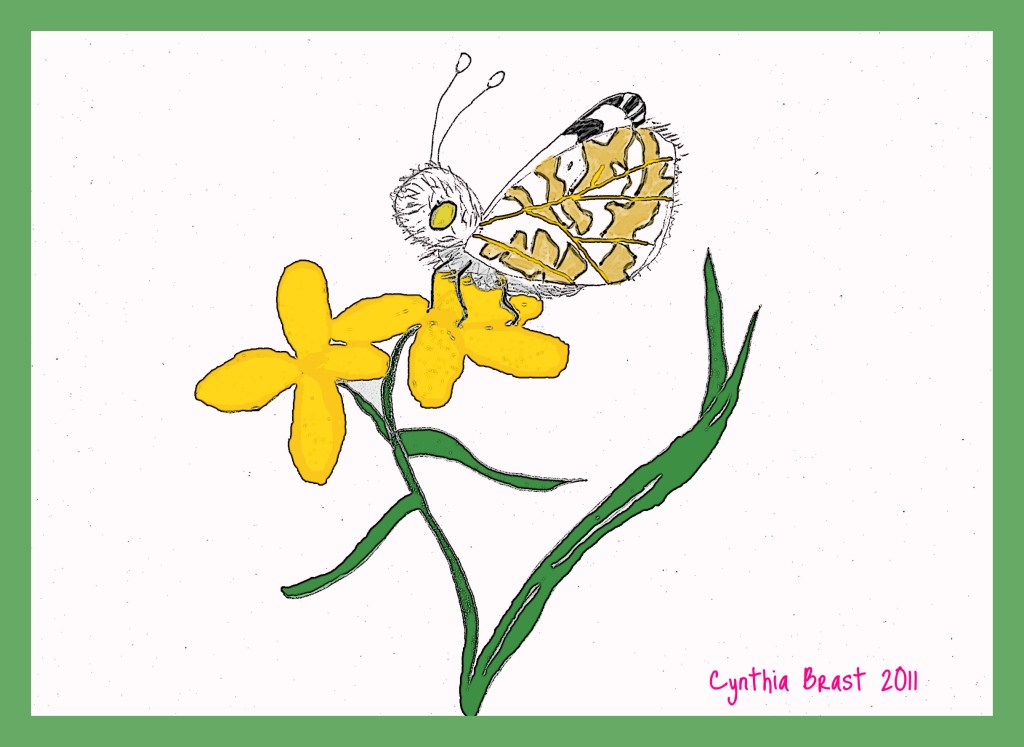
That spring on San Juan Island, the life of one special little butterfly named Iggy began.  Out on the prairie, at a place called American Camp, little Iggy was hidden inside a tiny green egg on the bud of a mustard plant.   Under the sun’s warming rays, everything began waking up from a long winter’s sleep.  It wasn’t long before Iggy began to grow.

With a blanket of colorful wildflowers surrounding it, Iggy’s egg changed colors.  First it turned red, and then an earthy shade of brown.  It was almost time for Iggy to hatch.  That night with only the stars twinkling in the sky, and the moon reflecting its yellow light on the sea, little Iggy chewed his way out of the egg.

The next morning, dewdrops sparkled across the prairie, glittering in the sunshine.   Iggy was hidden in the tall grass, but if you looked carefully you might see him on the mustard plant.   Surprise!  Little Iggy was a caterpillar, not a butterfly….at least not yet.

Wiggling and stretching his many stubby legs, little Iggy caterpillar realized he was hungry!  Starting right there, he had his very first meal.  Iggy took a bite of the mustard leaf where he had just hatched.  Nibble! Nibble! Munch! Munch! Munch!   It tasted so good.  Iggy kept eating, and eating…and eating!  He ate every leaf and flower on that little mustard plant.  And then he ate the leaves and flowers on another one.

While Iggy was chewing a bite of leaf, he heard a little voice ask him,  “Who are you?”  Right there next to Iggy was another little caterpillar just like him.  Her name was Ivey.  She and Iggy became friends.  All summer long, Iggy and Ivey ate lots and lots of mustard plants.

As the days began to change and grow shorter, Iggy and Ivey knew they had to get ready for winter.  Finding tall stems of Velvet Grass, they hid themselves near the bottom, each making a hardened covering over their bodies called a chrysalis (chrys·a·lis) to protect them and keep them warm until spring.

That year when winter came it covered the ground with a blanket of snow, but Iggy and Ivey were snug and safe while the winds blew salty sea spray across the prairie.  Eventually, the snow melted and rains came.  The days were dark and most of the time, all was quiet.    Eagles flew overhead searching for food.  Once a hungry fox hunting a small, mouse-like creature called a vole for his dinner, dug and sniffed near Iggy’s and Ivey’s hidden homes on the stalks.  Another day a cottontail rabbit munched grasses right next to them until the shadow of the hungry hawk frightened it into its burrow.

Finally the day came in May when Iggy and Ivey felt the warm sun again.  Spring was here and it was time to come out of their woven winter blankets.  Chewing open their chrysalis coverings, first Iggy then Ivey peeked out.   Something had happened!

Iggy and Ivey weren’t caterpillars anymore.  Unfolding behind them in the sun were beautiful wings.  Wet at first, Iggy and Ivey slowly stretched, then angled their new wings to dry as they basked in the rays of the warm sun.

Iggy tried opening his and looking over his shoulder, he saw them.  Fragile, creamy-white wings dappled with beautiful dark marble coloring.  Ivey’s wings were beautiful too.  Hers were yellowish-white, with the same marble patterns.  “Let’s see if they work,” said Iggy.   Off they went, fluttering straight across the prairie faster than they could have imagined!  “Look at me!”  Ivey called to Iggy.

That evening, the sun began to sink in the horizon.  Iggy and Ivey flew over to watch the sunset over the ocean as the day came to an end.  They didn’t see any other butterflies like them that day, or the next, or even the next after that.    Iggy told Ivey they were “rare.”  “That means we might be the last two Island Marble butterflies on the prairie, “ he said.   BUT…

Before long, there were tiny little green eggs dotting the leaves and buds on the mustard plants.  And do you know what? Next year, even though Iggy and Ivey were gone, hidden at the bottom of the stems on some Velvet grass, there were eight chrysalides (chry·sal·i·des) about to open and when they did….Iggy and Ivey’s children emerged with beautiful creamy white and yellow marbled wings.

 *******

While not endangered, the Island marble butterfly (Euchloe ausonides insulanus) is ranked as critically imperiled.  Thought to be extinct, the Island Marble butterfly was historically found on Gabriola Island and Vancouver Island, B.C. and had not been sighted since 1908.  However, in 1998, a population was found at San Juan Island National Historical Park ~ American Camp on San Juan Island, WA.  Surveys conducted indicated that Island Marble butterflies had a few other scattered populations on both San Juan Island and Lopez Island, but with no more than 5 individuals found at each location.  The only viable population existing is found at American Camp.  Conservation and recovery of the species is critical if it is to be preserved for future generations to appreciate.  Management of prairie habitats without use of harmful chemicals, protection of mustard plants on which Island Marble larvae feed, along with support of the Garry Oak ecosystems are vital to facilitate a recovery of the population.

New words for you to learn:


  • Chrysalis – The hardened form of a developing butterfly that provides a protective covering (like a winter blanket).
  • Vole – A small, rodent-like mammal that resembles a mouse and is sometimes called a field mouse or a meadow mouse

Text and photographs copyright 2011 by Cynthia Brast.  No part of this story may be reproduced in any form without the expressed written consent of the author.
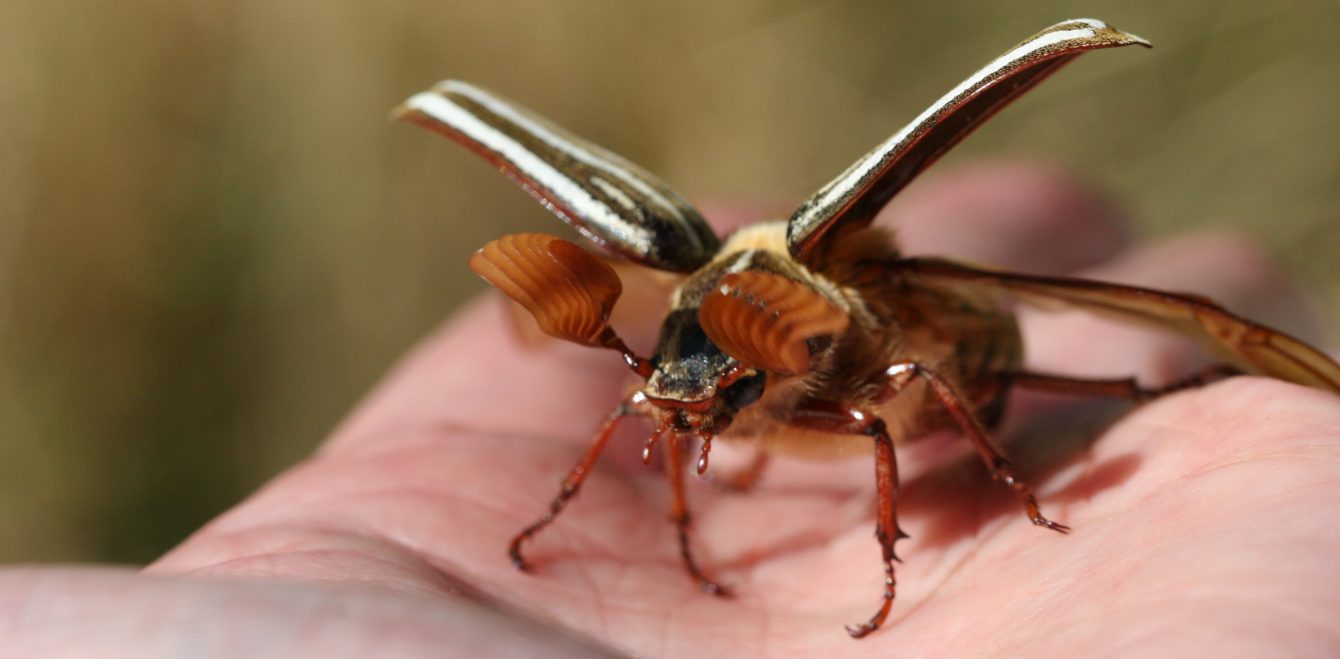
Bugging You From Friday Harbor…..a “peacock-feathered” moth!

Alucitidae or "many-plume moth" ~ Distinguished from other families of moths by their delicate wings, fringed like the "feathers of a peacock."  They are only 3-13 mm long, gray or brown in color, and lack abdominal tympana.  They have filiform antennae, a well-developed proboscis and are nocturnal.  About 130 species have been described but there are just three species in America north of Mexico.  Read more about them in Moths of Western North America by Jerry A. Powell and Paul A. Opler.Alucitidae or “many-plume moth” ~ Distinguished from other families of moths by their delicate wings, fringed like the “feathers of a peacock.” They are only 3-13 mm long, gray or brown in color, and lack abdominal tympana. They have filiform antennae, a well-developed proboscis and are nocturnal. About 130 species have been described but there are just three species in America north of Mexico. Read more about them in Moths of Western North America by Jerry A. Powell and Paul A. Opler.

The Little Gosling

All In a Row!

I was inspired to write this story after my daughter and I stopped to help a baby gosling this past spring that had been hit by a car and left cold and wet and unable to move along the side of the road.  It will hopefully inspire those who read it to slow down and take notice of the wonder of all the little creatures that share our space.  We should not be afraid to be good Samaritans when something needs our help.

The Little Gosling by Cynthia Brast

I was only a few days in the big world and never imagined I would have to leave my mom and dad and my brothers and sisters so soon. Not like this. I didn’t even get to see a day with the sunshine out. The big, black, rubber thing was so big…and my wings don’t work yet…I just didn’t get out of the way fast enough.

All of a sudden I felt awful. I couldn’t move. My brothers and sisters scattered away from that big thing. Where were my parents? There was nobody to help me.

The grass was wet and cold and I began to shiver. It was scary and I hurt. I heard a loud noise as another of those big rubber things rumbled by. I began to drift in and out of what seemed like a strange sleep.

The hurt was still there though. And the cold! My feathers began to soak through. They used to be so dry…and fluffy…and yellow. Now they were muddy and wet and stuck to my body. They weren’t keeping me warm anymore.

After a while, I heard a voice. It sounded kind and soft. I think it was a human. I don’t know much about people because my parents kept me away from them. Someone gently scooped me up out of the wet grass. Her voice was soothing and her hands were warm. That helped me not to shiver so much, but I still felt so awful.

Another voice with her said, “There’s another.” That person had found one of my little brothers. I didn’t know it, but he was nearby. Somehow the big rubber thing had missed him. He was just scared and didn’t know how to find our parents either. That person helped my brother. I listened as she softly spoke and told him not to worry. I heard him peeping and then he was gone. He had said “goodbye” to me. The voices let me know that he was back in the water and with the rest of my family. Safe.

But what was going to happen to me? The soothing voice took me to her home and nestled me into a box with something warm underneath. I heard her speaking softly to someone about a wildlife rehabilitation place. I didn’t know what that was, but guessed it was something like a hospital for little animals like me. She was going to take me there.

We rode in her car for what seemed a good while. It wasn’t what the voice had planned for her day, but being such a kind and gentle person she knew she needed to find help for me. All the way, the other voice spoke to me and gently  stroked my face. I still hurt, but it was comforting, like when my parents preened my feathers with their beaks.

I guess I slept a little, until I felt the box I was in lifted and carefully carried into this new place. The lid on my box was closed, so it was dark and I couldn’t see, but I trusted that I was in hands that were caring. The new voices were gentle too. They said I had been injured very badly from the car. Then I heard the voice that found me speaking again. Very softly she said I wouldn’t hurt anymore…

I am so glad she knew how to help. It wasn’t long before I finally started to feel the pain go away. I left behind that place where there wasn’t any sun out, but do you know what? I’m waking up in another place and even though my brothers and sisters and my parents aren’t here, there is a beautiful pond for me to swim in. My body doesn’t hurt anymore and now my wings and feathers are dry and fluffy. The water sparkles in the daytime, and at night the stars glittering in the sky come and dance across the water.

Now I’ve found a safe place where there aren’t loud noises or big rubber things to hurt me. There are people here too, and they are really nice. Do you know they all have wings too? Just like me! Except they are angels! Their voices are kind and gentle like the ones that found me along the road when I was hurt. Someday those soft‐voiced people will be here too. They belong to this world. Right now though, they have to stay where they found me because they help those that need to come here find the way. I asked them before I left to give a special message to my parents and to my brothers and sisters and let them know I am okay. I miss my family, but I know that someday I will see them again.


Text and photographs copyright 2011 by Cynthia Brast.  No part of this story may be reproduced in any form without the expressed written consent of the author.


A “Razzle-Dazzle Wingding!” Bigfoot at the Fair!

My “Razzle-Dazzle Wingding!” poem was my favorite of the three selections I entered in the San Juan County Fair.   The other two were in the category of children’s fiction.  One of them won a blue ribbon!  I will post that in my next blog for you to read.  Since this is my favorite, I wanted to share it first!  Enjoy!

A Razzle-Dazzle Wingding!

by © Cynthia Brast 2011

A razzle-dazzle wingding…

I got it at the store…

Opened it at home…where it rolled out on the floor.

It seemed to come to life then,

And open-mouthed I watched

As my razzle-dazzle wingding

Turned into a Sas-quatch!

You almost never see them

(Some people never do)

But standing there in front of me,

Decked out in red, white, and blue

Stood my razzle-dazzle Sasquatch

As real as me or you.

All hairy and a little stinky,

He looked me up and down,

And asked me if there was

Some-thing to do in town.

I said, “Why yes! The County Fair

Is op-en-ing today,

But if YOU go, then you might scare

Ev’ryone away!”

My razzle-dazzle bigfoot

Scratched his hairy head,

And then he looked at me again

And this is what he said…

“Razzle-dazzle bigfoots,

Should be welcomed at the fair.

You never should dis-crim-i-nate

Because of a little hair.

We’ll ride the ferris wheel,

And eat some candied cotton.

After that, we’ll find the main stage,

Where I’ll never be forgotten!”

My bigfoot took the mike

And this is what he said,

“Hello! County Fair Folk –

Bigfoot isn’t DEAD!”

So all those non-believers

Got to see the proof

That Bigfooot really does exist

And that’s the honest truth!

There really is a Bigfoot

And he can even sing,

He made our county fair this year

A “Razzle-Dazzle” Fling!


Text and illustration copyright 2011 by Cynthia Brast and may not be reproduced in any form without the expressed written consent of the author.

San Juan County Fair – It’s gonna be a Razzle Dazzle Wingding!

Catch a ferry and "Hop on over!" San Juan County Fair starts today...it's gonna be a "Razzle Dazzle Wingding" kinda thing!!!!! Get more info at http://www.sanjuancountyfair.org/ See you there!Catch a ferry and “Hop on over!” San Juan County Fair starts today…it’s gonna be a “Razzle Dazzle Wingding” kinda thing!!!!! Get more info at http://www.sanjuancountyfair.org/ See you there!

« Older Entries Recent Entries »