Tag Archives: san juan island

Cicurina spp. February 19, 2020

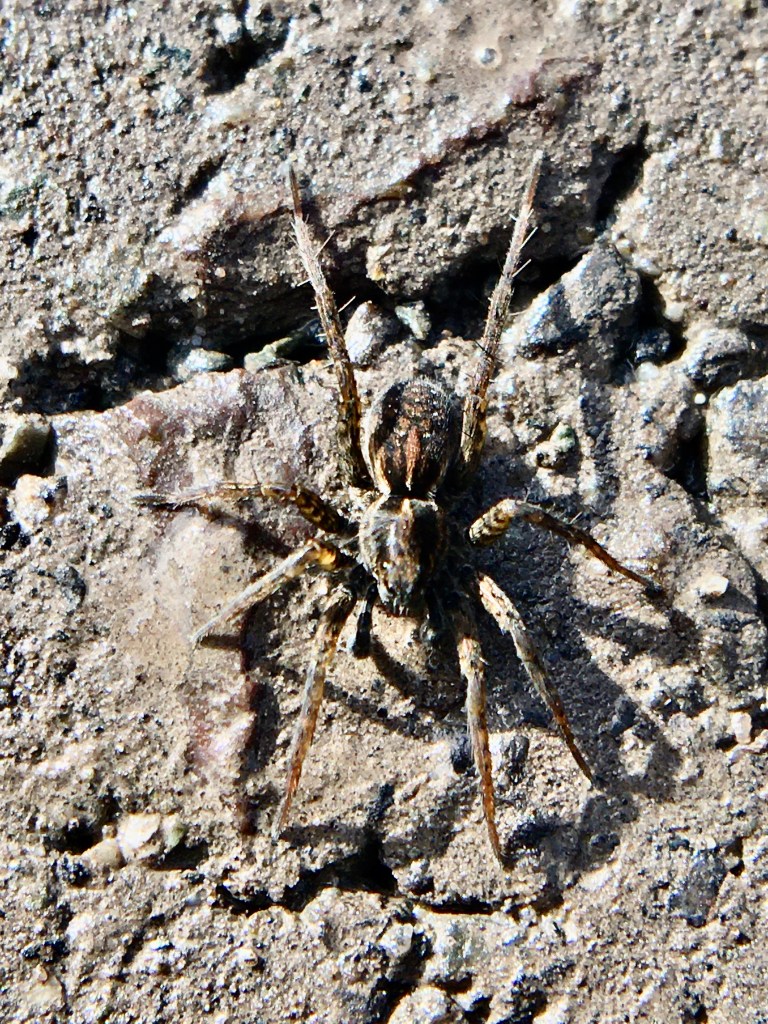
This spider is in the genus Cicurina, also known as the Cave Meshweaver or Cave Spider. Pronounced “sik-uhr-EYE-nuh,” the Latin name translates to “tame” or “mild.”

From Buggide.net and according to Rod Crawford:

Cicurina of Western Washington: “C. pusilla is by far the commonest. C. simplex and C. “idahoana” (really an undescribed species related to idahoana, in my opinion) are moderately common. Cicurina tersa is less common than the previous three. The other Cicurina of western Washington are actually rare here, C. tacomaand C. intermedia.” ~Rod Crawford

Cicurina spp.
Found in Rotting Fir log. 2.19.2020. Three Corner Lake Road, San Juan Island, WA
Size – approx 5mm
Photo by Cynthia Brast-Bormann
Identified by A. Pelegrin and L. Paxson at Pacfic Norwest Bugs
Cicurina spp.
Found in Rotting Fir log. 2.19.2020. Three Corner Lake Road, San Juan Island, WA
Size – approx 5mm
Photo by Cynthia Brast-Bormann
Identified by A. Pelegrin and L. Paxson at Pacfic Norwest Bugs

References:

Adams, R.J. 1970. Field Guide to the Spiders of California and the Pacific Coast States. California Natural History Guides. University of California Press. Los Angeles.

https://www.facebook.com/photo.php?fbid=10219387419670050&set=gm.3092310434134350&type=3&theater&ifg=1

https://bugguide.net/node/view/236713

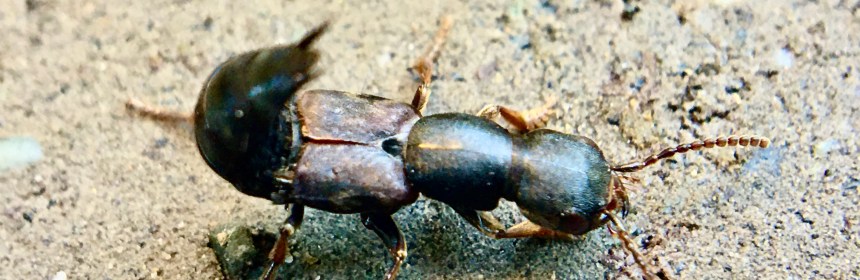
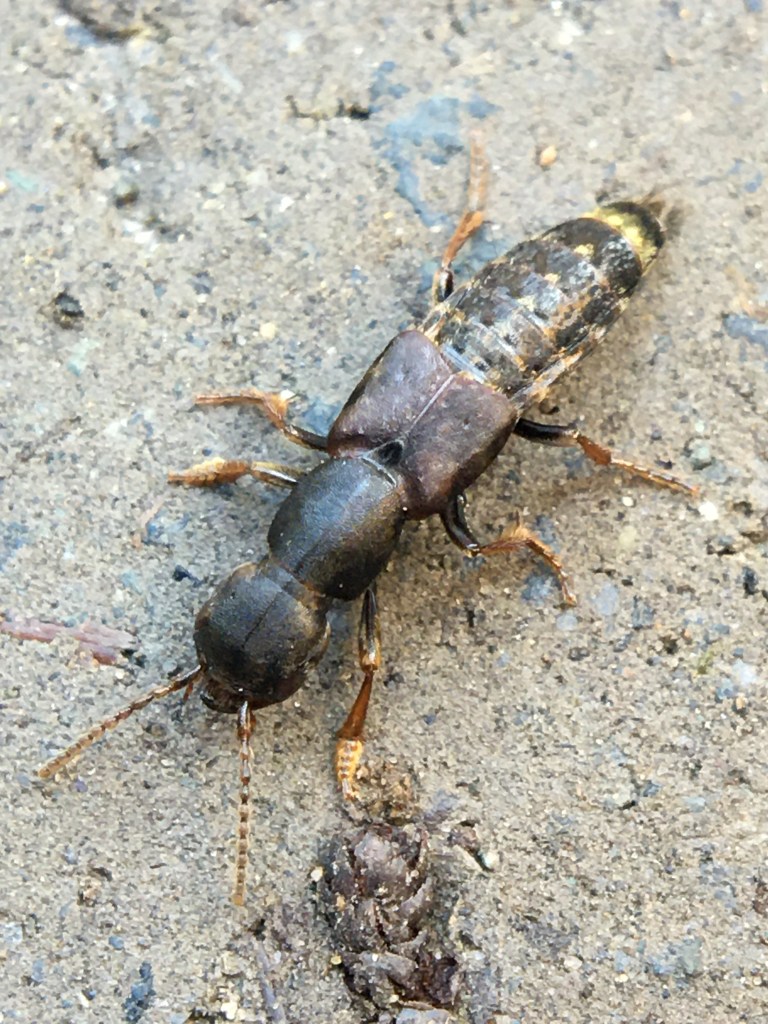
Gold and Brown Rove Beetle (Ontholestes cingulatus)

I only saw a handful of insects yesterday when I went out to look along the road near my home. The most remarkable of these (and the easiest to see) without magnifying tools, was the slender, brown rove beetle with the sunshine tail!

Gold and Brown Rove Beetles are fairly small, slender, and typically pretty agile. They have a brown body with little yellow hairs (setae) at the end of their “tail.” Another patch of this golden setae wraps around their “belly,” like a little yellow ‘belt,’ This one was indeed on the smaller side at about 12 mm. However, given the outdoor temperature was still pretty low, it wasn’t agile enough to escape a short photo session.

Ontholestes cingulatus (Gold and Brown Rove Beetle) 2.19.2020
Three Corner Lake Road, San Juan Island, WA

I’ll admit, I poked it (very gently) to see if I could get a photo of it with its tail up. When threatened, they have defense glands that emit a chemical fluid. I found out (after reading through the Journal of Chemical Ecology from 1990) that researchers found this defense fluid is made up primarily of a chemical called iridodial (Huth and Dettner, 1990).

Here’s a photo of my beetle exuding the defense fluid! Note the little white bubble at the end of its tail.

Ontholestes cingulatus Gold and Brown Rove Beetle emitting defense fluid
2.19.2020
San Juan Island, WA

Here in the next photo, you can see it without the defense fluid.

Ontholestes cingulatus Gold and Brown Rove Beetle
2.19.2020
San Juan Island, WA

Being curious, I had to investigate a bit about the chemical properties of iridoids. I was intrigued to learn that “iridoids are secondary metabolites present in various plants, especially in species belonging to the Apocynaceae, Lamiaceae, Loganiaceae, Rubiaceae, Scrophulariaceae and Verbenaceae families, Viljoen et al., (2012).” Tundis et. al., (2008) found that “iridoids exhibit a wide range of bioactivity, such as neuroprotective, antinflammatory and immunomodulator, hepatoprotective and cardioprotective effects.” Findings also included iridoid compounds also possessed anticancer, antioxidant, antimicrobic, hypoglycaemic, hypolipidemic, choleretic, antispasmodic and purgative properties (Tundis et al., 2008).

While I didn’t find much information (yet) utilizing iridoid secretions from insects, I did begin to wonder if that tiny drop of fluid could have provided some anti-inflammatory benefit for the migraine headache I’d been suffering from for days. I’ve been working with a friend of mine who is a research pharmacokineticist, helping to edit his papers and those of some associates he has in China. Probably, I’ll pass this along since they’re always looking for ideas on how to develop/synthesize new pharmaceuticals and biomimicry seems to be the new frontier.

Ontholestes cingulatus Gold and Brown Rove Beetle
2.19.2020
San Juan Island, WA

References:

Huth, A. and K. Dettner. 1990. Defense chemicals from abdominal glands of 13 rove beetle species of sub tribe Staphylinia (Coleoptera:Staphylinidae, Staphylininae). Journal of Chemical Ecology, 16:9, pp 2691-2711.

Tundis, R., Loizzo, M.R., Menichini, F., Statti, G.A., and F. Menichini. 2008. Biological and Pharmacological Activities of Iridoids: Recent Developments, Mini-Reviews in Medicinal Chemistry. 8: 399. https://doi.org/10.2174/138955708783955926

Viljoen A., Mncwangi N., Vermaak I. Anti-inflammatory iridoids of botanical origin. 2012. Curr. Med. Chem. 19:2104–2127. doi: 10.2174/092986712800229005

Forest Co-habitating Microfauna

Yesterday, my husband took me for a walk in the woods near our home and while I always enjoy the fresh air and the quiet beauty of the woods, I especially appreciate the opportunity to discover new bugs. I was really hoping to come across one beetle in particular, a ground beetle that I’ve only seen three times since September 2009, when I first moved to San Juan Island.

It’s called Matthews’ Angry Gnashing Beetle or Zacotus matthewsii. Zacotus means “very angry” in Greek, though I’m not sure why this beetle would ever act in an angry manner unless you were poking it with a stick. In that case, it’s likely it would attempt to defend itself by gnashing at you with its mandibles, and any bites you receive would be well deserved indeed!

The last sighting I had of a live Zacotus matthewsii was February 18, 2015 at 5:56 p.m. I’m hoping to walk along the same spot again this evening about the same time in hopes of sighting another.

These ground beetles are extremely unique. Their maroon-red metallic coloring is often ringed with a green shimmer along the margins of its body.

Zacotus matthewsii 2/18/15 Three Corner Lake Road San Juan Island, WA

Sadly, the life history of these beetles is understudied. We do know they are only associated with old growth forest ecosystems and rarely seen. When old-growth forests are cut down, the beetles disappear and our opportunity to know them is lost.

While I didn’t find one of these beetles yesterday on our walk in the forest, I did come across some equally interesting residents, cohabitating in a rotten log near a stream. I might have missed them entirely, but for my curiosity leading me to lift off a section of the log. It was a bit like lifting the roof off a house, and being able to see all the rooms and inhabitants, only instead of being a multi-family unit, this was a multi-species, multi-family unit!

I’d packed my cellphone and my handy clip on macro lens, so I was able to take some video and photos to share with you. Here’s what I found!

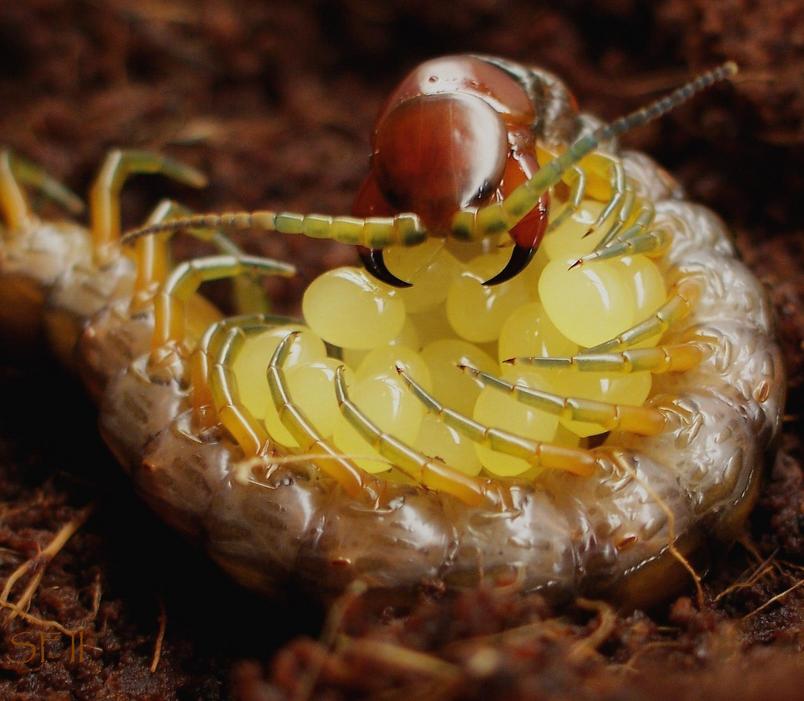
The first amazing creature that was exposed in the log was a centipede. This is Scolopocryptops spinicaudus. I noticed nearby, there was a grouping of eggs, so after a bit of internet searching, I discovered the very neat fact that these (and other species) of centipedes stay with their eggs.

The mother will wrap herself around the cluster to better protect them, staying with her brood even weeks after they hatch, leaving them only after they are able to fend for themselves. I believe this mother centipede moved away from her eggs when I removed the section from the log in order to draw my attention away from them.

***Eggs were not disturbed and I replaced the log section after taking my photos.

Scolopocryptops spinicaudus Centipede with eggs
Scolopocryptops spinicaudus with eggs
2/16/2020
Lester Parcel
Scolopocryptops spinicaudus (Centipede) eggs 2/16/2020 Lester Parcel

Below is a photo I found when I was searching about centipedes and parental care. I find it amazing that even invertebrates show such care for their offspring!

Centipede caring for eggs
https://www.ebaumsworld.com/pictures/19-pics-that-are-just-plain-fascinating/84587206/?view=list

The next resident in the log that caught my eye was the very tiny, whitish-translucent, globular creature that looked a lot like a bark or booklouse, but turned out to be a “baby” termite. These were larvae of the Pacific Dampwood Termite, Zootermopsis angusticollis. I wasn’t able to get a good view, but it looked as if these were being tended by an older family member.

Dampwood termites are widespread in Pacific Northwest forests. They rarely cause damage to structures, but play a very important ecological role, recycling nutrients from decaying trees. They are also food for Pileated Woodpeckers and other birds and animals.

Pacific Dampwood Termite (Zootermopsis angusticollis) larvae
2/16/2020 Three Corner Lake Road, San Juan Island, WA
Zootermopsis angusticollis larvae

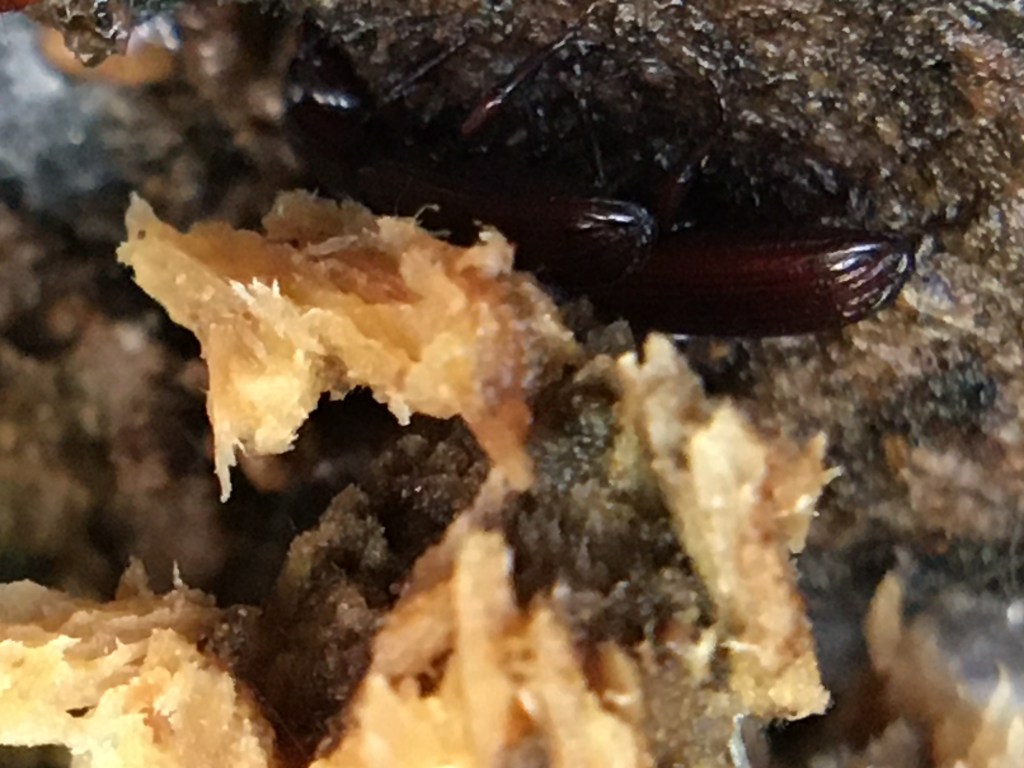
Finally, the last residents I spied cohabitating in this section of rotting log were the very tiny Wrinkled Bark Beetles (Clinidium spp.) Clinidium spp. of bark beetles feed on slime molds (Myxomycetes), found in decaying or dead hardwoods and conifers. They are in the Family Rhysodidae and there are only two genera and eight species in North America. Only two of these eight species range in the West (from California to B.C. ) (White, 1983).

At about 5mm in length, these were hard to detect with the naked eye. I took the following photos with my macro lens, showing the striations along the elytra and the lateral grooves on the basal half of the pronoun.

Wrinkled Bark Beetle (Clinidium spp) 2/16/2020

The next photo shows two adults together, presumably hibernating together in a cavity in the rotting log (White, 1983) .

Wrinkled Bark Beetle adults hibernating together (Clinidium spp) 2/16/2020

References

Lattin, John, D. 1993. Arthropod Diversity and Conservation in Old-Growth Northwest Forests. American Zoologist. 33 (6) pp. 578-587. https://www.jstor.org/stable/3883721

White, Richard. 1983. A Field Guide to the Beetles of North America. Peterson Field Guide Series. Houghton Mifflin Company, NY.

Corona-bug

Coronavirus

Someone in San Juan County is being tested by the CDC for possible infection with the novel coronavirus (COVID-19). The person’s ID and island of residence has not been released. If confirmed, this would be the first instance of the virus in San Juan County and the second case in WA state. https://www.sanjuanjournal.com/news/person-under-investigation-for-novel-coronavirus/

The Coronavirus is named after the crown-like spikes found on the surface of the virus. In Latin, “corona” means ‘crown.’ You can view microscopic images of the virus on NPR’s site here ~ https://www.npr.org/2020/02/13/805837103/images-what-new-coronavirus-looks-like-under-the-microscope

Information about the virus, symptoms, etc. can be found on the CDC website here ~ https://www.cdc.gov/coronavirus/about/index.html , with further information on the virus, published by the Coronavirus Study Group (CSG) of the International Committee on Taxonomy of Viruses found here – https://www.biorxiv.org/content/10.1101/2020.02.07.937862v1.full Researchers have also found that the coronavirus can live on fomites (surfaces) for 9 days https://eurekalert.org/pub_releases/2020-02/rb-hlc020720.php Pharmaceutical treatment of this virus is sketchy at best. Read about the difficulty of treating viruses and what research is happening here ~ https://www.livescience.com/possible-treatments-new-coronavirus.html

Lots of folks think living on an island is some sort of safe haven. I’ve spent a bit of time thinking about this and I just don’t believe that to be true. First off, if everyone got sick, we definitely do NOT have the capacity to care for people in hospitals. Probably we would quickly run out of supplies. It’s really doubtful that anyone would want to deliver things to the island if we had some type of epidemic. We could easily run out of food and fuel.

Image result for The Scream

If I’ve learned anything in the ten-plus years I’ve lived here, it’s that you should be prepared to care for yourself. Whether it’s an earthquake or other natural disaster, government breakdown (that could certainly happen given our current administration), or disease outbreak, a plan is essential! While I know we have some truly dedicated medical professionals on our island, they are limited. There’s also not any prescription drug that will cure you of coronavirus if you get it. This links to the limited treatment options that may be available or under development https://www.livescience.com/possible-treatments-new-coronavirus.html

So, my plan (if anyone in my household gets sick) is to have my self-treatment items in order. Here’s my list:

  1. Elderberry syrup. Elderberry contains Sambucol which has been clinically proven to reduce the severity and duration of viruses. For more information, see my extensive reference list below. I keep this brand for myself. Natures Answer Elderberry Syrup ~ https://www.amazon.com/gp/product/B0007CSCIS/ref=ppx_yo_dt_b_asin_title_o01_s00?ie=UTF8&psc=1
  2. Vitamin C. Vitamin C helps oxygenate your blood and supports your immune system. I take about 6000 mg of American Health Ester C in divided doses daily. I like this brand because it’s easier on my stomach ~ https://www.amazon.com/gp/product/B000MMWJHI/ref=ppx_yo_dt_b_asin_title_o05_s00?ie=UTF8&psc=1
  3. Quercetin. https://www.amazon.com/Thorne-Research-Quercetin-Antioxidant-Supplement/dp/B0797DQTVZ/ref=sr_1_1_sspa?keywords=Quercetin+Thorne&qid=1581704516&s=hpc&sr=1-1-spons&psc=1&spLa=ZW5jcnlwdGVkUXVhbGlmaWVyPUFON1Y3M0VRWDk4VFImZW5jcnlwdGVkSWQ9QTAzMjYzNTkxWVpCM1NZNThNRlpMJmVuY3J5cHRlZEFkSWQ9QTAzMjc0MTcxT1FNODRVOVJKR04wJndpZGdldE5hbWU9c3BfYXRmJmFjdGlvbj1jbGlja1JlZGlyZWN0JmRvTm90TG9nQ2xpY2s9dHJ1ZQ==
  4. Pedialyte, Gatorade, and Ginger Ale. For rehydration!
  5. Lemon Balm. Strong antiviral properties. Use a tincture or make a tea.
  6. Ginger. Also strong antiviral properties.
  7. Saltine Crackers
  8. White rice
  9. Licorice Tea
  10. Lysine
  11. Saline Spray
  12. Motrin/Tylenol
  13. Vick’s Vapor Rub

If you can think of anything I might have left off, please feel free to write and let me know! P.S. I’m not a doctor. These are my own HOME remedies. Use your own good judgement and wash your hands a lot!

References:

Barak, Vivian & Halperin, T & Kalickman, I. (2001). The effect of Sambucol, a black elderberry-based, natural product, on the production of human cytokines: I. Inflammatory cytokines. European cytokine network. 12. 290-6.

Castillo-Maldonado I, Moreno-Altamirano MMB, Serrano-Gallardo LB (2017) Anti-dengue serotype-2 activity effect of Sambucus nigra leaves-and flowers-derived compounds. Virol Res Rev 1: DOI: 10.15761/VRR.1000117

Chen, C., Zuckerman, D.M., Brantley, S. et al. Sambucus nigra extracts inhibit infectious bronchitis virus at an early point during replication. BMC Vet Res 10, 24 (2014). https://doi.org/10.1186/1746-6148-10-24

Ganjhu RK, Mudgal PP, Maity H, et al. Herbal plants and plant preparations as remedial approach for viral diseases. Virusdisease. 2015 Dec;26(4):225-236. DOI: 10.1007/s13337-015-0276-6.

Golnoosh Torabian, Peter Valtchev, Qayyum Adil, Fariba Dehghani (2019)
Anti-influenza activity of elderberry (Sambucus nigra), Journal of Functional Foods, Volume 54: 353-360, ISSN 1756-4646, https://doi.org/10.1016/j.jff.2019.01.031.
(http://www.sciencedirect.com/science/article/pii/S1756464619300313)

Karimi, S., Mohammadi, A.A., & Dadras, H. (2014). The effect of Echinacea purpurea and Sambucus nigra L. on H9N2 avian influenza virus in infected chicken embryo.

Krawitz, C., Mraheil, M. A., Stein, M., Imirzalioglu, C., Domann, E., Pleschka, S., & Hain, T. (2011). Inhibitory activity of a standardized elderberry liquid extract against clinically-relevant human respiratory bacterial pathogens and influenza A and B viruses. BMC complementary and alternative medicine11, 16. https://doi.org/10.1186/1472-6882-11-16

Porter, R. S., and  Bode, R. F. ( 2017)  A Review of the Antiviral Properties of Black Elder (Sambucus nigra L.) Products. Phytother. Res.,  31:  533– 554. doi: 10.1002/ptr.5782.

Roschek, Bill & Fink, Ryan & Mcmichael, Matthew & Li, Dan & Alberte, Randall. (2009). Elderberry Flavonoids Bind to and Prevent H1N1 Infection in-vitro. Phytochemistry. 70. 1255-61. 10.1016/j.phytochem.2009.06.003.

Zakay-Rones, Z., Varsano, N., Zlotnik, M., Manor, O., Regev, L., Schlesinger, M., & Mumcuoglu, M. (1995). Inhibition of several strains of influenza virus in vitro and reduction of symptoms by an elderberry extract (Sambucus nigra L.) during an outbreak of influenza B Panama. Journal of alternative and complementary medicine (New York, N.Y.)1(4), 361–369. https://doi.org/10.1089/acm.1995.1.361

Z ZAKAY-RONES1, E THOM2, T WOLLAN3 AND J WADSTEIN4. (2004). Randomized Study of the Efficacy and Safety of Oral Elderberry Extract in the Treatment of Influenza A and B Virus Infections. The Journal of International Medical Research. 32: 132 – 140. https://journals.sagepub.com/doi/pdf/10.1177/147323000403200205

Slime WHAT? I’m flux-moxed!

I knew the headline would be catchy! I was indeed flummoxed (or greatly bewildered) when I saw the foam blobs on our Douglas fir trees today after the rain subsided enough for me to walk around outside. We’ve had a DELUGE of rain in the Pacific Northwest this year. Rumor has it, the rain is record-setting!

Back to the giant spit-wad looking blobs of bubbles on those trees…. Here’s what I saw.

Pseudotsuga menziesii Douglas fir trunk with foam blob

I’m an entomologist, so when I saw this I thought, “it sure looks a lot like the foamy froth that spittle bugs make.” However, I quickly discounted this possibility (unless there was some sort of really LARGE undiscovered species hiding out on San Juan Island that is) because it’s way too early in the season for them.

What WOULD we do without Google? Seriously! I typed in a search. My first query was “what do Pacific tree frog eggs look like?” I was skeptical, but since I heard tree frogs around me in the woods and since it is REALLY wet outside, I thought maybe one or two of these frogs got confused and used the tree instead of one of the thousands of water puddles I was trying to avoid stepping in. Nope. Not tree frogs. My next query read like this…”weird, foam mass on Douglas fir tree trunk.” I got a few things, but quickly narrowed the possibility to the sites that had photos that looked like mine.

I discovered these oozing foamy spots are called SLIME FLUX, also known as a condition of the tree called WETWOOD. Sounds bad. Might be.

I’ve not had a chance to read through all of this material. It sure seems like there is a link between harmful bacteria, water, possibly insects, and the resulting foam. but will share it here for you to reference. https://www.fs.fed.us/pnw/pubs/pnw_gtr112.pdf

While scanning this document, the term that popped out at me was “slime-flux insects” on page 8. I’ll have to do some more reading to investigate this. If you beat me to it, please feel free to share your comments. Curious minds want to know!

***Update

I’ve been doing a bit more reading about slime flux and foamy trees this evening (check out this site http://www.wonderofeverydaynature.com/2016/03/26/155/) and found an alternative and possibly more probable cause. While the foam can be caused by bacterial infections, it also is known to form after periods of heavy rain when a chemical reaction of sorts occurs. The rain interacts with soap-like components found in the sap from pine trees (and probably this includes fir trees as well), creating foam similar to what I observed today. It can also form from air pollutants that land on the trees after dry periods and create foam when rain hits the tree bark.

Fi Fi Fo Foam! I learned the best way to tell the difference between friend or foe foam is to take a whiff. Bacterial infections produce a foul-smelling foam that bubbles out as tree tissue is broken down, forming alcohol and carbon dioxide gas. This foam will often attract insects like bees, flies, wasps, and ants.

The most-detailed explanation about what happens during this process I found on the Penn State Extension Website, and I’ve copied below from their site (found here ~ https://extension.psu.edu/bacterial-wetwood-or-slime-flux

“Bacteria, commonly found in soil and water, take up residence in young trees or gain entrance to older trees through wounds. The bacteria, including species of Clostridium, Bacillus, Enterobacter, Klebsiella, and Pseudomonas, grow within the tree using the sap as a nutrient source. As the sap is used, oxygen in the heartwood is depleted (creating anaerobic conditions), methane is produced, the pH of the sap is increased (pH 6 in healthy trees to pH 7 to 8 in wetwood), and a high pressure develops in the wood (60 psi in affected trees vs. 5-10 psi in wetwood-free trees). The resulting environment greatly inhibits the growth of fungi that can cause interior rots. The liquid kills grass and other herbaceous plants that it contacts at the base of the tree. The wood of affected trees has greatly reduced value as lumber because of the unsightly discoloration. Affected wood dries much more slowly than wood taken from wetwood-free trees.”

Another good page to check out if you want to read more about slime flux or Wetwood is found at forestpathology.org ~ https://forestpathology.org/bacterial-viral-diseases/wetwood/

P.S. Post YOUR best slime flux photos here! Thanks for reading.

Steotoda grossa (The False Widow)

It’s been raining a lot in the Pacific Northwest. Between the deluge and the cool temps, it’s definitely not the season for bug viewing. Being indoors, in rainy winter weather, when you live on an island equals boredom, cabin fever, and winter blues. You have to make your own sunshine or you get SADD.

I found my sunshine today in the barn. I went down to take better photos of the spiders I discovered over the weekend residing in the well pump house (inside the barn). I get really excited finding any sort of invertebrate this time of year.

This shiny arachnid had me fooled the first time I found one. She’s not a real widow, but a False Widow (Steotoda grossa). False widow spiders are not native to Washington. They were imported from Europe, but are widely distributed and considered a cosmopolitan species. We have lots in the basement of our house!

When I was in the well pump house, I found three females, each in her own corner, tending her egg sacks.

A very shiny Steotoda grossa female

I also found a lone Callobius severus (male?) on the wall… just hanging out. He was alive. I gently blew on him to see if he moved. He did.

Callobius severus (male?)

Steotoda grossa spiders are actually quite beneficial, preying on invertebrates like pillbugs, but they are famous for eating other spiders that humans don’t particularly want to encounter, like Hobo spiders or Black Widows. They construct flimsy or loosely woven, somewhat messy webs and seem to love corners in outbuildings and basements (at least from my personal experience). Female Steotoda grossa spiders have been recorded living as long as 6 years, while males have a much shorter lifespan no longer than 1.5 years.

Loosely constructed Steotoda grossa web with round egg sacks

While not aggressive, Steotoda grossa spiders will sometimes bite people. They see very poorly and react mostly to vibrations when responding to threats. A bite from a False Widow is not life threatening, but some individuals may have a localized reaction to the bite.

Thanks for reading! 🕸🕷

Steotoda grossa female with egg sack

Steotoda grossa female (upper center, above red mark) with egg sacks

Blister Beetles

Meloe strigulosus
Ventral view
San Juan Island, WA 11/2/2019

I posted back in April about an encounter with Blister Beetles not far from my house. You can read about that here ~ (https://cynthiabrast.wordpress.com/2019/04/16/a-blistery-spring-day/ ). Over the weekend of November 2-3, I came across quite a few more of these in the exact same spot as in April. This time I didn’t see any live beetles, but there were at least 25-30 dead in the road.

Meloe strigulosus
San Juan Island, WA
11/2/2019

Ever the opportunist, I scraped up as many that weren’t quite so smushed into a container and brought them home. Out of the 5 I collected, 2 were male, 2 were female, and one missed antennae altogether. Given the number of beetles in the road in this one spot, I believe this was a mating aggregation.

Meloe strigulosus (male)
San Juan Island, WA
11/2/2019

So, I’ve been reading about them and communicating with a two experts on blister beetles. If you don’t know what these are, they are significant because of a defensive chemical in them called Cantharidin. Cantharidin is quite toxic and it’s a blistering agent. This is where they got the name Blister Beetles in the first place.

antennal segmentation of male Meloe strigulosus
San Juan Island, WA
11/2/2019

Since my first sighting of these beetles back in April, I’ve learned quite a bit about them. The ones here (Meloe strigulosus) are black, flightless, tanker-like beetles, carrying around a cargo of toxic brew. They are sometimes a hazard to livestock (actually almost all mammals) that might eat them because the Cantharidin is toxic. Horses, goats, cows, and sheep that eat alfalfa hay can get really sick with colic if there are even parts of dead beetles in the hay.

While we don’t really know exactly how Cantharidin is produced in the beetle, we do know these two things: 1) it’s produced in the male and transferred to the female during mating. 2) the female transfers Cantharidin as a protective coating for her eggs during oviposition. It’s believed that the first instar larvae (called triungulin) are equipped with a supply of Cantharidin as well.

After hatching, the triungulin crawl up onto flowers to hang out and wait to attach to the hairs of a visiting bee, riding back to its nesting site. The later developmental stages of larvae are protected underground or in holes in wood where native bees are developing. They consume the developing bee eggs, larvae and nest provisions (pollen and nectar).

Is there anything good about blister beetles? Well, strangely, the populations of some species of blister beetles are timed to coincide with grasshopper abundance. Adult blister beetles feed on grasshopper eggs. That’s good, right?

What else? Humans have used Cantharidin for years to remove warts and to remove tattoos as well. For ages, it has been used as a sexual stimulant. Even birds called Great Bustards have picked up on this! Read more here: https://www.ncbi.nlm.nih.gov/pmc/articles/PMC6521026/

Blister beetles seem to be beneficial to some other species of beetles too. There is one beetle that actually has been found to chew on the blister beetle as a means of obtaining Cantharidin for its own protection. Other animals like toads, frogs, and armadillos are known to eat these beetles or use them in some way to confer protection. There is even a nuthatch that uses the beetle to “sweep” the wood where it wants to build a nest to protect it from parasites.

Back to my weekend sighting and collection of a few of these specimens. I had two that were intact enough to pin for my collection. I wore nitrile gloves to make sure I didn’t come into contact with any blistering agent. It’s a good thing I did. Some fluid made contact with one of the fingers of my gloved hand and actually started eating through it. That’s pretty caustic!

If you’re interested in more information about them, I’m happy to email some of my collected literature. There are also links you can check out in my previous post from April.

Thanks for reading!

Honeysuckle aphid (Rhopalomyzus lonicerae) on Reed Canary Grass being eaten by a Syrphid fly larva

Honeysuckle aphid (Rhopalomyzus lonicerae) on Reed Canary Grass
Honeysuckle aphids on Reed Canary Grass

I photographed and filmed these tiny white “lambs” over the weekend (Sept. 21, 2019). There is a patch of Reed canary grass growing in a wetland area near my house and I wanted to see what sort of insects I might find associated with this particular plant.

These “lambs” are actually Honeysuckle aphids (Rhopalomyzus lonicerae). The species epithet, lonicerae refers to honeysuckle. These particular aphids live on honeysuckle in the winter and in grasses (as in the Reed Canary grass) in summer (4,5). The creamy white form (pictured above) are wingless, sub-adults, the apterae (without-wings) ~ Aphid glossary here: https://influentialpoints.com/aphid/Aphid-glossary.htm . There were quite a few of them and they were huddled together somewhat herd-like (see video below) on the grass stems. I did spot an adult or two (photo below), dispersed in other patches of grass, but absent from the groups of young.

Adult Honeysuckle Aphid on Reed Canary Grass
Sept. 21, 2019

The most amazing part to me was the “wolf” disguised in my herd of aphid lambs. This big bad wolf was actually a syrphid fly larva devouring one little lamb after another. It surprised me that they all waited, rather obediently, without resistance, as one after another was sucked dry by the fly-wolf. Note the dried out skins remaining on the leaf when you view the videos of the little lambs I found in the grass below. 🐑

Honeysuckle aphid (Rhopalomyzus lonicerae) on Reed Canary Grass being eaten by a Syrphid fly larva

Baaad or Good? Give me a thumbs up or down and let me know what you think! Thanks for reading.

****

Reed canary grass (Phalaris arundinacea) is in the plant family Poacea. Historically, reed canary grass has been considered good fodder for livestock, especially in areas too wet to grow traditional hay crops (3). In Washington State, it is now considered a non-native, noxious weed by the Washington State Noxious Weed Control Board (1). However in further review of literature about this plant, I came across one publication contradicting this view. This one cites published research that, in the Pacific Northwest there is evidence that some varieties of this widespread “circumboreal” grass are native to Western North America (2) .

Native? Noxious? Invasive? If you want to read more about Reed Canary grass, please do take a minute to check out the referenced links below.

Honeysuckle aphid (Rhopalomyzus lonicerae) on reed canary grass being eaten by syrphid fly larva (Sept. 21, 2019) San Juan Island, WA

References:

1.https://www.nwcb.wa.gov/weeds/reed-canarygrass

2. https://www.fs.fed.us/database/feis/plants/graminoid/phaaru/all.html

3.https://plants.usda.gov/factsheet/pdf/fs_phar3.pdf

4. https://bugguide.net/node/view/358533

5.https://influentialpoints.com/Gallery/Rhopalomyzus_lonicerae_honeysuckle-grass_aphid.htm

We know what happened to him!

Avec sa tête
European Mantis (Mantis religiosa)
San Juan Island, WA 09-07-19

A picture says it all, right? I found this poor fellow when I attended the San Juan County Land Bank’s open house at the new Zylstra Lake Preserve on September 7, 2019 ~ http://sjclandbank.org/zylstra-lake-preserve-san-juan-island/ .

We know what activity he must have been participating in!

Lots of amazing artwork by Steve Thompson available on tees and posters here ~ https://www.redbubble.com/people/stevet3214/works/26202642-praying-mantis-family-photo?p=poster

Yes, it’s that time of year. You may be seeing lots of European Mantids (Mantis religiosa) about right now. They’re mate seeking. While not native, don’t worry, they aren’t taking over the island. If you’re curious about them, read my post from last year when there were rumors of them invading the San Juan’s and devouring hummingbirds (not true) https://sanjuanislander.com/news-articles/environment-science-whales/environment/28146/revenge-of-the-mantids .

While they are generalist feeders, they aren’t going to decimate our native pollinators OR eat birds. It’s far more likely they’ll be eaten (or beheaded) before they take over!

My pet mantis, Merlina
San Juan Island, 2010

The Meadow Spittlebug (Philaenus spumarius) aka “Foam Lover”

Meadow Spittlebug (Philaenus spumarius)
Zylstra Lake Preserve, San Juan Island, WA 9-7-19

I took this photo of a Meadow Spittlebug (Philaenus spumarius) on September 7, 2019 when I attended the San Juan County Land Bank’s open house at the new Zylstra Lake Preserve http://sjclandbank.org/zylstra-lake-preserve-san-juan-island/ . It was a bit cloudy, but fortunately it didn’t rain during the event.

While there weren’t many insects out and about, I was happy to get a shot of the adult version of this species. It was hanging out with some family members on the stem of a thistle growing alongside the walking path.

Meadow Spittlebugs on Thistle
Zylstra Lake Preserve
San Juan Island, WA
09-07-19

Spittlebugs are in the insect order Hemiptera and the family Cercopidae (1). You might recognize these as the mystery bug that hides as a nymph inside a frothy dollop of bubbles on stems of vegetation. This particular species is widespread in North America and very common in the Pacific Northwest (1). So, if you’re out for a walk in the springtime, you’ll see lots of vegetation that appears to have wads of spit stuck to it…and the tiny meadow nymph is hiding inside!

The Meadow Spittlebug (Philaenus spumarius) is also known as the Common Froghopper and it does indeed look very frog like to me. 🐸 Even more interesting, a Google search of the etymology of this little bug’s name yielded this (from Wikipedia):

“The genus name Philaenus comes from the Greek philein (“love”), while the species name spumarius is from the Latin spuma (“sparkling”), referred to the foam nests; the binomial Philaenus spumarius can be translated as “foam lover.”

The adult spittlebug is small (approximately 6mm in length). Both adults and nymphs (which go through 5 instars or developmental stages before reaching adulthood) feed on plant xylem and have been found to feed on over 450 species of plants (2,3,4). While they have the ability to transmit viruses and cause damage to plants from feeding, they are typically not considered serious pests unless they are present in large numbers. It was interesting to learn that the nymphs consume up to 280 times their own weight of plant sap in 24 hours (2,3,4).

Also interesting is that only the soft-bodied nymphs live in the foam. It provides them with protection from predation and from drying out (desiccation). The spittle is a fluid produced from their anus and combined with a surfactant secreted by epidermal glands near the end of their abdomen. Caudal appendages on the insect create air bubbles, turning the spittle into a frothy foam. The tiny (1/4″ long) spittlebug nymph usually rests on the plant facing downward. When the spittle is produced, it flows downward over the body and covers the nymph, concealing it and providing it with the moist habitat it requires as it develops (4).

Another interesting bit about the Meadow Spittlebug is that it is quite polymorphic with no less than 16 adult color forms (1). Andy Hamilton (2006) has contributed a wonderful chart, shared on Bugguide https://bugguide.net/node/view/72602 to illustrate the color varieties of the adult forms of this highly variable species (1, 2). Because of the diversity among adult specimens within this species, many researchers have been interested in Philaenus spumarius for genetic study (4).

Andy Hamilton 2006 ~ bugguide.net

*I wanted to include a personal observation about natural enemies of spittlebugs. Hamilton (1982) gives the most detailed account of these, but I didn’t note any mention of predation by yellow jackets (Hymenoptera: Vespidae), or dragonflies (2). I have observed both of these flying through meadow grasses appearing (but not confirmed) to glean spittlebugs from plants in early summer on San Juan Island.

References:

1. Bugguide.net https://bugguide.net/node/view/7452

2. Hamilton, K.G.A., 1982, The spittlebugs of Canada: Homoptera: Cercopidae, Insects and Arachnids of Canada Handbook Series, 10, 102 http://esc-sec.ca/publications/aafc/

3. Horsfield, D., Evidence for xylem feeding by Philaenus spumarius(L.) (Homoptera: Cercopidae). Ent. Exp. Appl., 24: 95-99, 1978.

4. Yurtsever, Selcuk. (2000). On the meadow spittlebug Philaenus spumarius. Turkish Journal of Zoology. 24. 447-459.

« Older Entries Recent Entries »